Last Updated: May 4th, 2026
Vehicle: 2013 Mitsubishi Lancer ES

Ignition Coil Replacement

Introduction:

This is a tutorial on how to replace ignition coils for a 2013 Mitsubishi Lancer. In this tutorial, the information of provided will convey fundamental understanding of the operation and functionality of ignition coil. Potential susceptibility to failure, and finally a step by step tutorial on replacing faulted ignition coils with photos and resources.

Ignition Coils Purpose and Functionality:

Ignition coils are made up of an iron core with sinusoidal wire(coiled copper wire). The ignition coil is an component in the ignition subsystem of the vehicle there are other components that make up this system. When diagnosing ignition problems make sure to take into account the entire system. The vehicles computer(ECM) controls and monitors the operation of the ignition coil and managing the timing of when to send messages to the ignition coil. The data transmission begins with a message to the ignition coils which sends strong enough current from the ignition coil that is transferred to the spark plug to create a spark. It is an essential component to the vehicle to fulfill its overall purpose

The diagram above the entire ignition this is applicable to the 2013 Mitsubishi Lancer. The E.C.M.(Engine Control Module) is powered by the ignition switch(car key insertion) and turn on. This enables a solid connection from the battery to the E.C.M. The E.C.M. is the brain of the operation it reads data point from the Crankshaft Positioning Sensor and the camshaft positioning sensor. The purpose of the two positioning sensors are to assess and measuring the timing and positioning of the crankshaft and camshaft. The positioning will indicate to the ECM accurate location of where the piston are at. This data point can be pulled from the position sensors and it is sent back to the ECM to indicate and communicate to the other components when to supply fuel, air and spark. If the timing is appropriate then the E.C.M. with send a message to ignition to send a enough voltage to the spark plugs in order to create a spark that will then be transmuted into a miniature explosion to created in the cylinder. The data transmission speed are nearly instantaneous and the timing of combustion must be accurate of optimal operations.

Potential Failure Points:

  1. Illumination of the Engine light on the dash. (OBD-II error code may be P0351 or may state something comparable to the ignition system)
  2. Hard Starts, the spark plugs need a sufficient amount of Amps to create a spark. If the voltage and timing isn't precise this could be a reason.
  3. Gas Mileage performance is hindered.
  4. Rough Idling- the vehicle may have a rough idle or sound or a drop in power.
  5. Misfiring Engine- this is a result of a jerking or sputtering sensation that could be experienced when driving the vehicle. When the vehicle is static, there may be excessive vibrations, or shaking.

Tools needed:

  1. 3/8" Torque Wrench (5 to 100 foot-lbs)
  2. 3/8" drive 10mm socket
  3. 3/8" drive rod extension
  4. 3/8" drive socket wrench
  5. Dielectric grease
  6. Q-tips
  7. 10mm hand wrench 6 or 12 point
  8. Clean dry Paper towels
  9. New Ignition Coils
  10. Magnetic Tray(storing hardware)
  11. Impact driver 1/4" hex drive with 3/8" socket holder
  12. Motorized 3/8" drive socket wrench

Removal:

  1. Loosen and remove negative battery terminal 10mm nut using a 10mm wrench
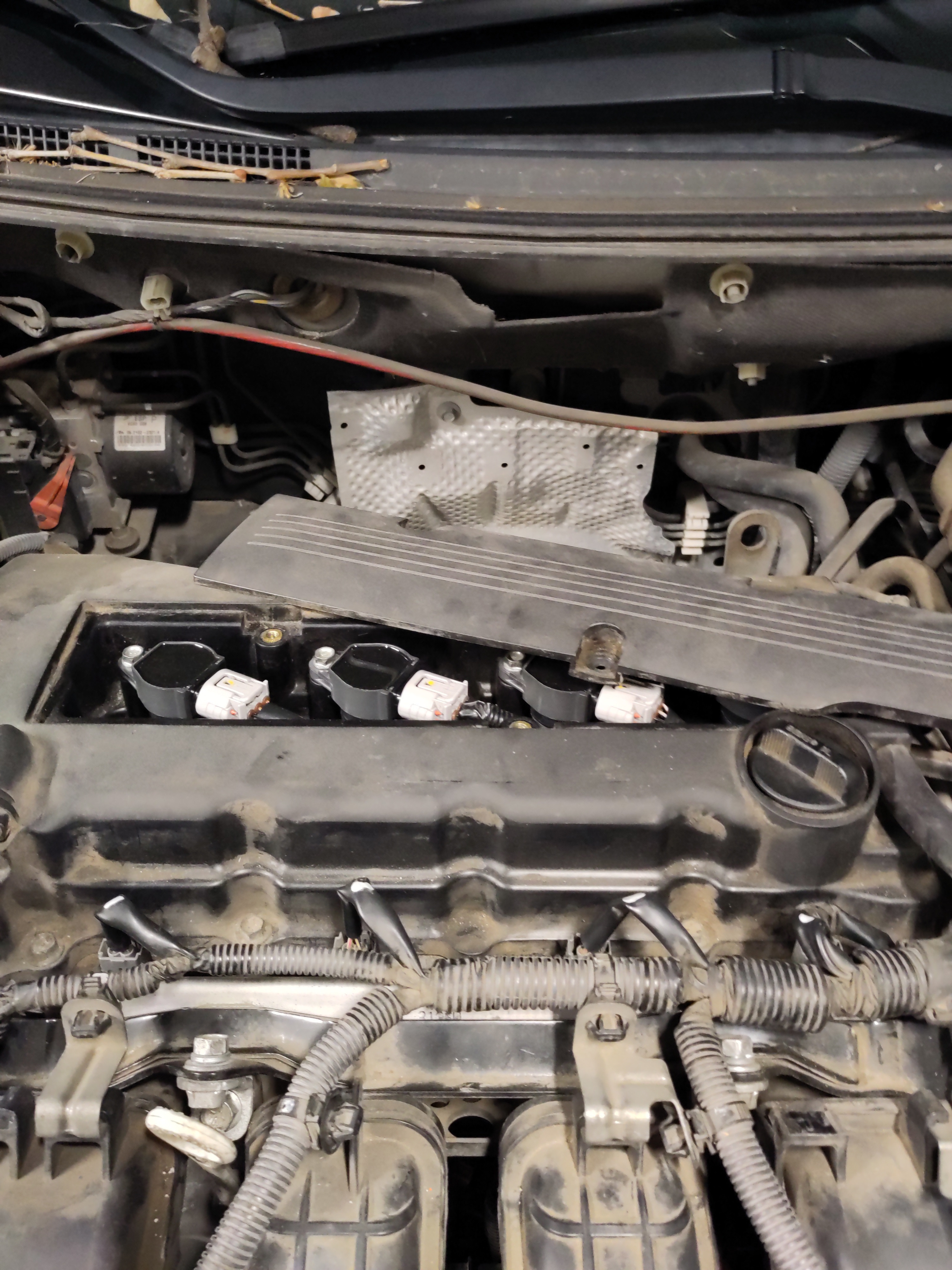
  2. Remove 3x 10mm bolts from plastic panel cover.Tip it would be a good idea to wipe all of the debris off of the ignition coils and surrounding areas. Do this to mitigate debris from falling the chamber and potentially causing harm.
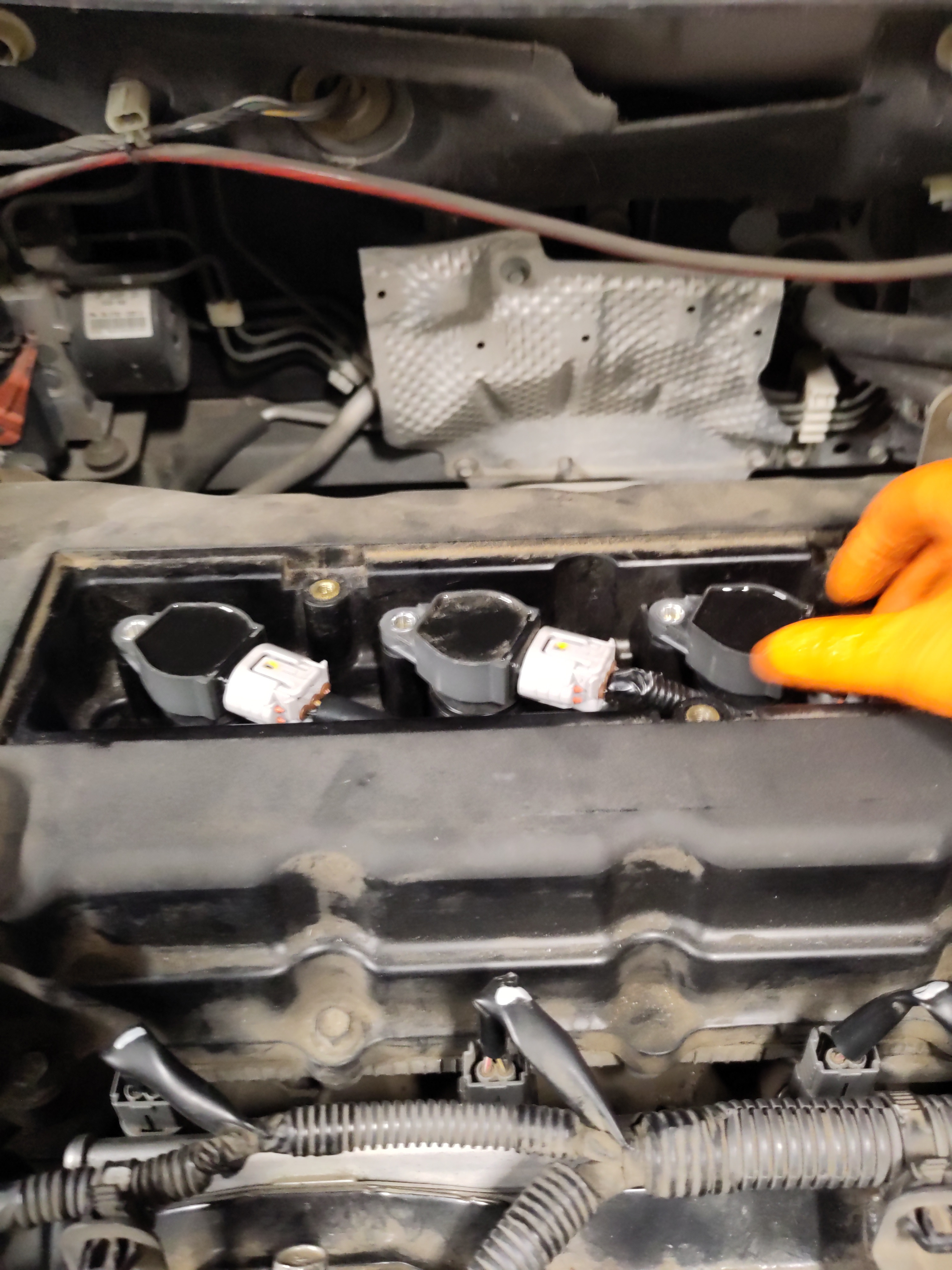
  3. Remove Electrical Connections(4x) from ignition coils
  4. Remove 4x 10mm bolts from Ignition coils. For now, refrain pulling out the four ignition coils. Each one will be pulled out when installing the new ignition coils begins. If you do pull them use a clean dry paper towel and insert the paper towel into the hole of where the ignition coil is located. This is tip is strongly recommended if the holes are gonna be open for long periods of times. Want to mitigation the collection of debris falling to into the hole.

Installation:

  1. Unpack the new ignition coils.
  2. Use a Q-tip and put dielectric grease up into the ignition coil holes this will prevent corrosion build up and establish a solid connection. Also, apply dielectric grease to the electrical connections. Repeat this step for each ignition coil
  3. Replace each ignition coil one at a time and swap out the old one with the new one. It would be easier to reconnect the electrical connections and secure electrical connections, it will be confirmed with an audible click. Repeat this step for each ignition coil.
  4. Secure and fasten the ignition coils to 7 ft-lbs or 10 N-m for each individual ignition coil. Perform this step for each individual ignition coil. Note: initially hand thread them in to avoid cross threading.
  5. Put the plastic panel cover back on and secure it with the 10mm bolts.
  6. Reconnect the negative battery connection to the battery terminal and tighten to where there is no wiggling movement coming from the connection.

Method of Diagnosing System:

This tool tests to see if there is ignition coil is sending a strong enough voltage to the spark plugs. If the system is fully operational then light bulb will light up. The testing tool will be require two people on sitting in the vehicle and turning the key and the other to assess whether or not there is an illumination. The following steps will be useful and setting it up.

  1. Plug one end into the ignition coil.
  2. Plug the longer end to the spark plug make sure connection is solid by pushing down on the wire.
  3. Connect the electrical connection to the ignition coil.
  4. Make sure the battery is connected and have second person sitting in the vehicle and actively engaging with the ignition key. While the vehicle is cranking/ turned on there should be a brief illumination from the diagnostic tool. This means the vehicle is fully operational. If not this can help in further inspecting the individual components to ascertain why there isn’t no illumination. NO illumination means no spark. Verify the connections are fasten for the tool.

References:

  1. Torque specs: https://mitsubishi-specs.com/lancer/2007-2017/torque-specs/
  2. Purpose: https://profireenergy.com/how-ignition-coils-work/
  3. https://www.autozone.com/diy/ignition/signs-of-a-bad-ignition-coil
  4. https://www.smpcorp.com/standard/training-insights/a-closer-look-ignition-coils/
  5. https://www.theengineerspost.com/distributorless-ignition-system/