Date Updated: May 22th, 2026
Vehicle: 2013 Mitsubishi Lancer ES
Starter Replacement
Introduction:
The starter is a key component that constitutes to the ignition system of the car. It is causes the cranking sound when turning the key. Sometimes the starter can be a cause of failure if the car doesn't crank. The starter is a DC current electromotive.
Functionality & Purpose:
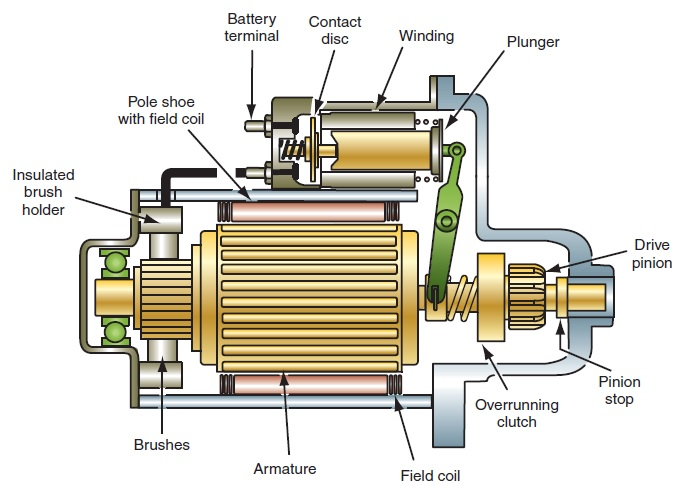
The function is to initialize the flywheel which begins the combustion process. When the vehicle is static, it take a significant amount of force to start the engine. When the key is turned to the "on" position it will send voltage from the battery to the starter to begin the engine. The flywheel is connected to the crankshaft which is responsible for the getting the rest of the engine started. There are some basic components of the starter in the picture below and a fundamental idea of how it operates. It will be imperative to get familiar with them if attempting to ascertain the failure point of the starter.
The inner operation of the starter begins with having the 12V cable connecting to the solenoid which transmute the voltage into a mechanical energy that transfers it to the armature shaft which causes the armature to rotate and causes the cog rotate as well.
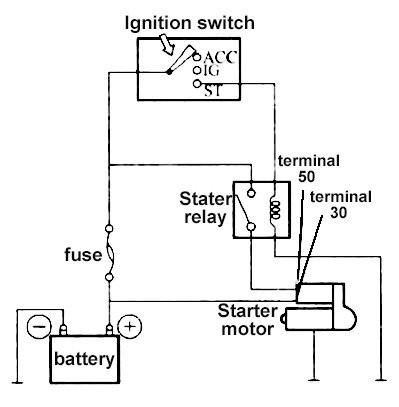
This is a diagram to show how the starter is operated with in the ignition subsystem of the car. When the key is inserted it sends a signal to starter relay and goes to the ECM(Engine Control Module) which sends another signal to the battery to send a voltage to the starter. The signal wire is what initialized the starter and without it the starter will not start.
Potential Symptoms of a Malfunctioning Starter Impact on the Vehicle:
Slow to crank
Intermittent clicks instead of cranking
A blown fuse or relay
A grinding noise after the key is release from cranking
Abnormal noises while turning over
There maybe no cranking at all(check the battery and the connections make sure there is not any corrosion).
Tools Needed:
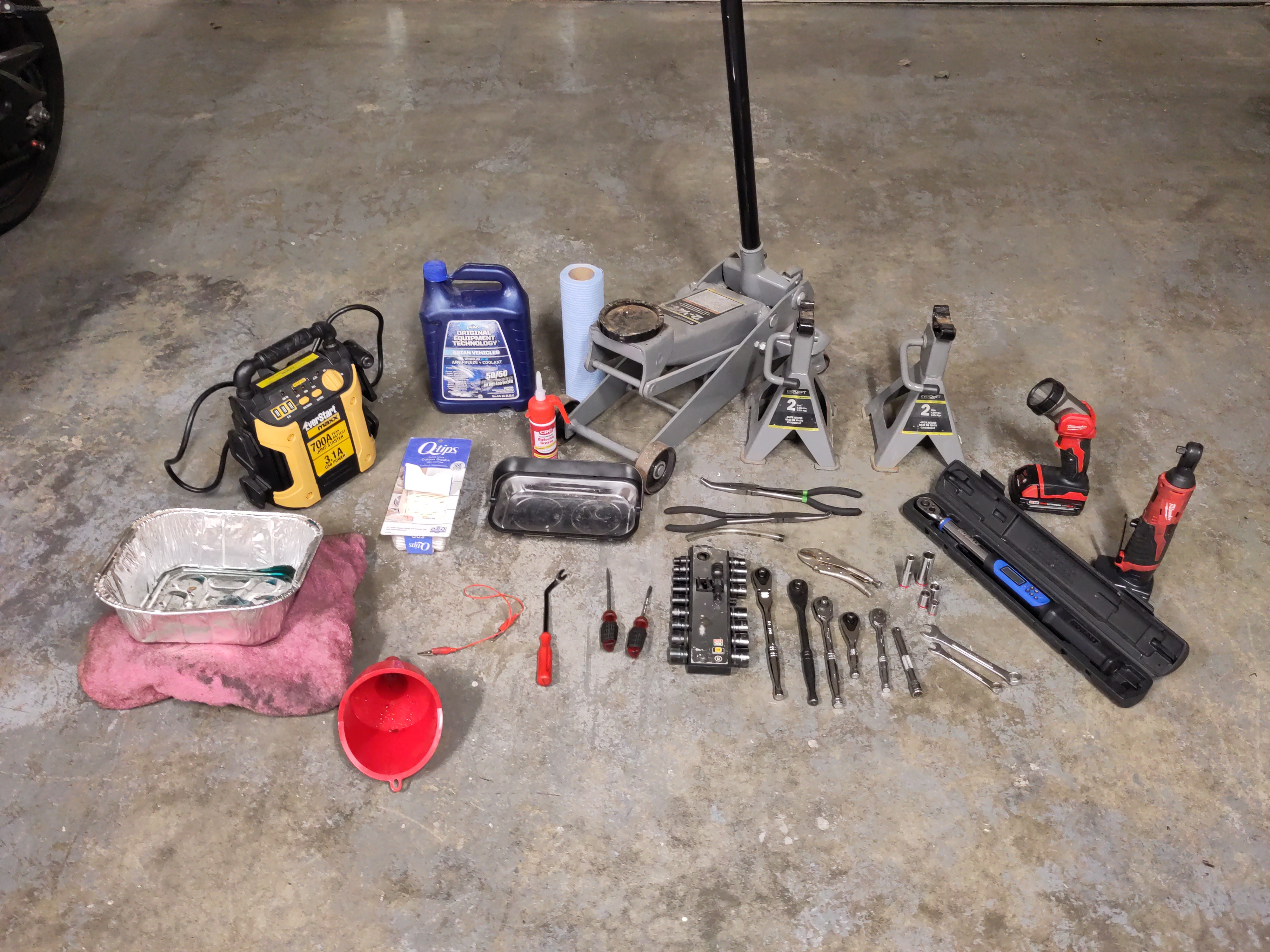
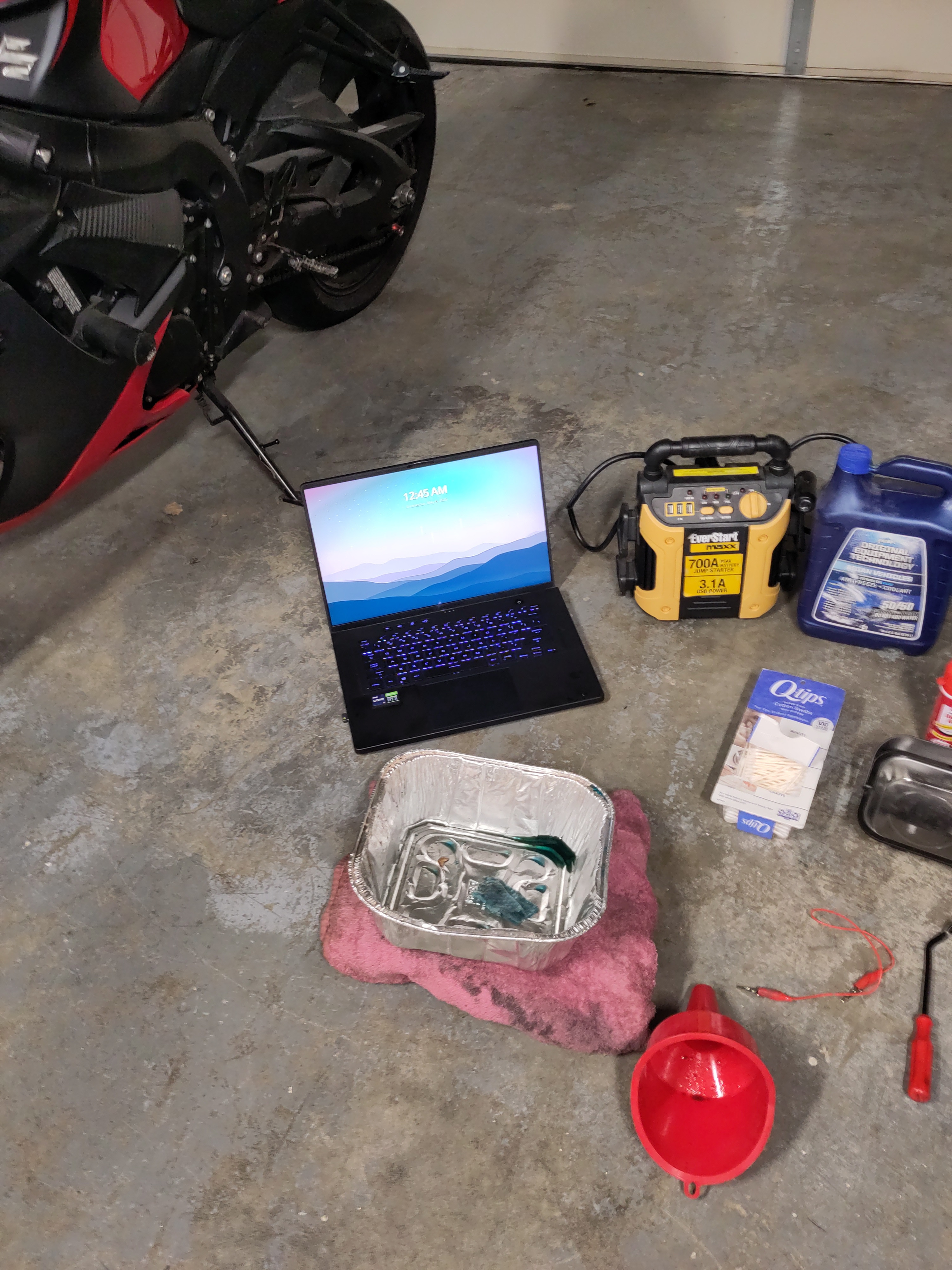
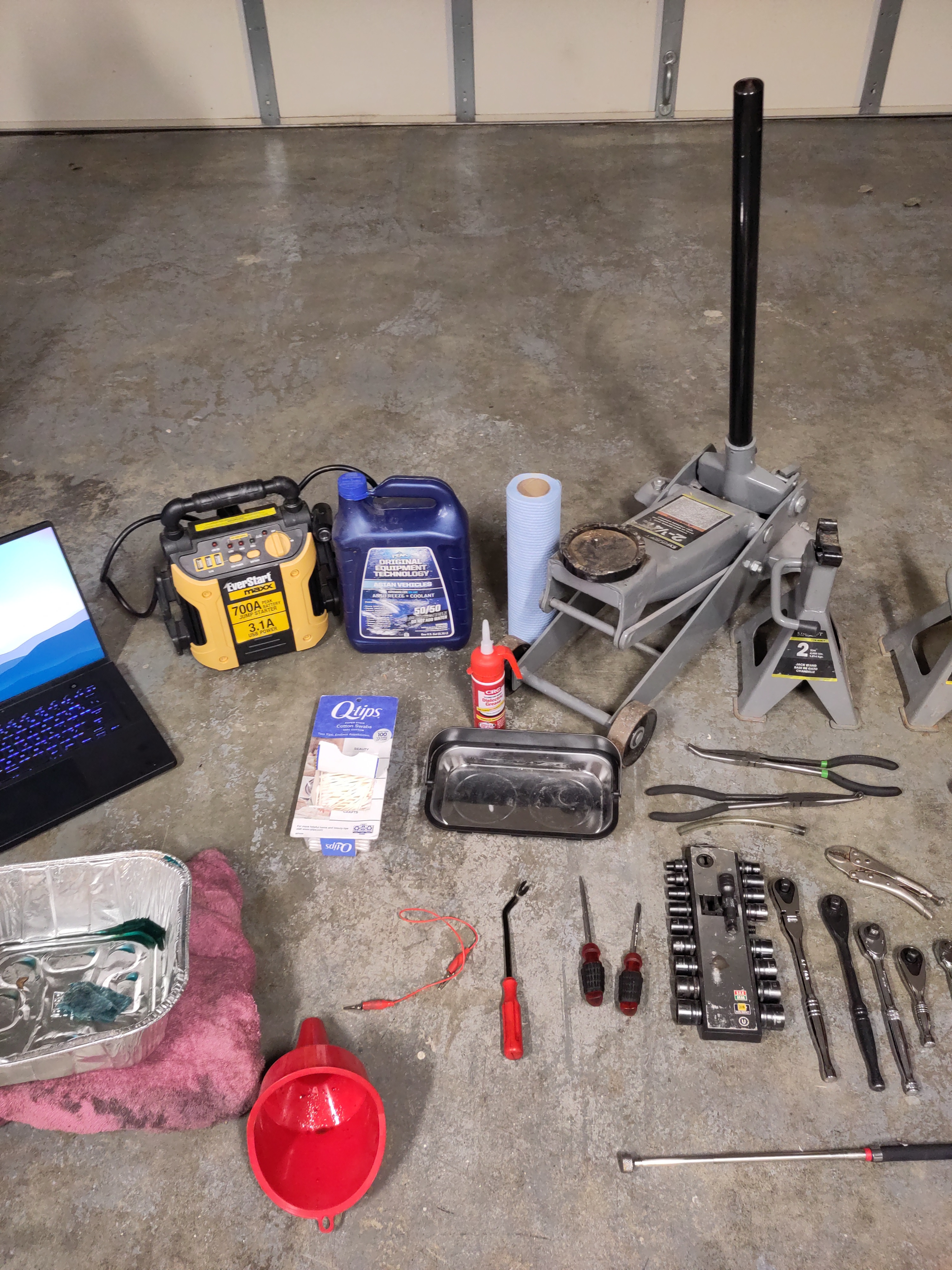
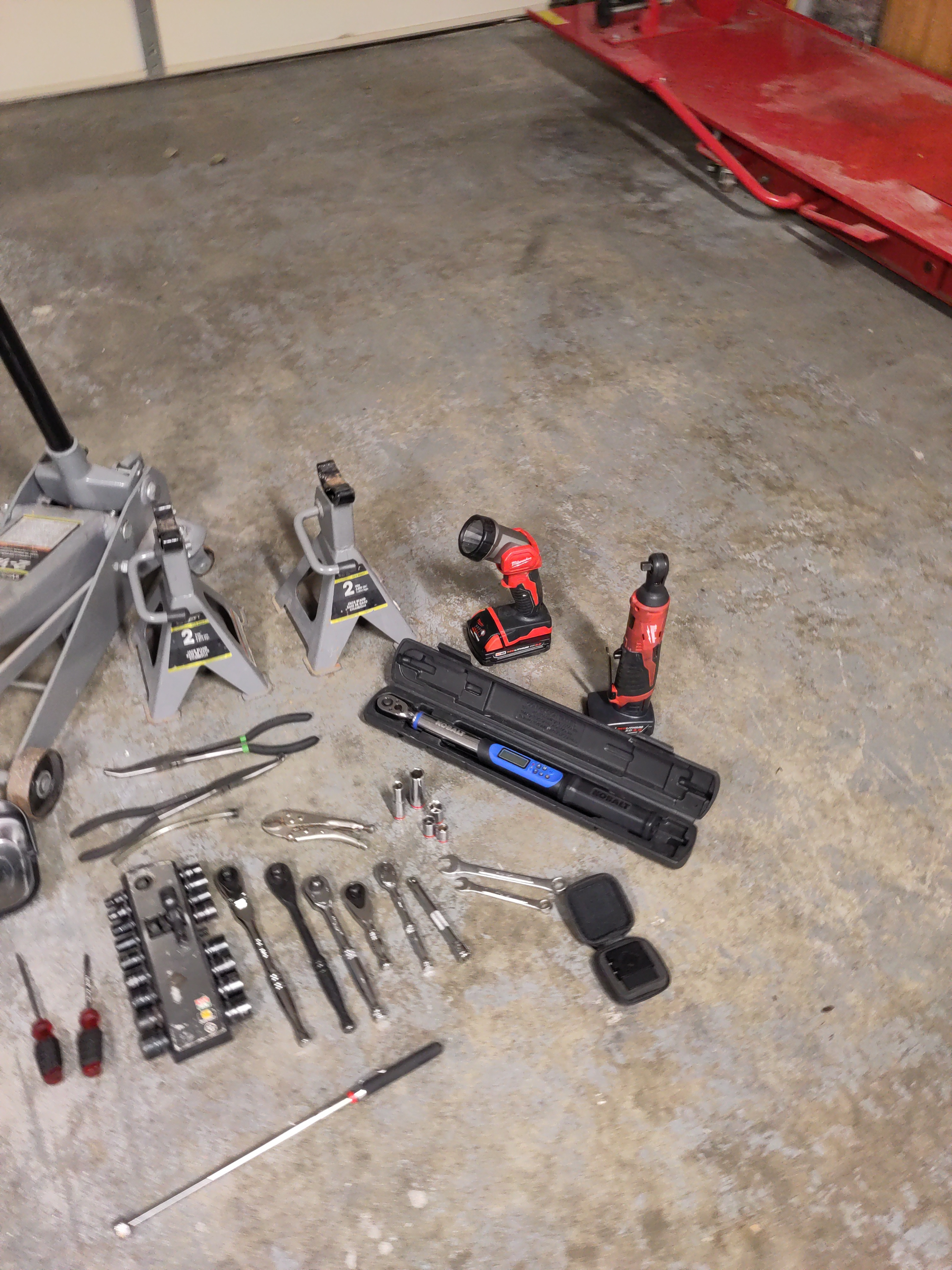
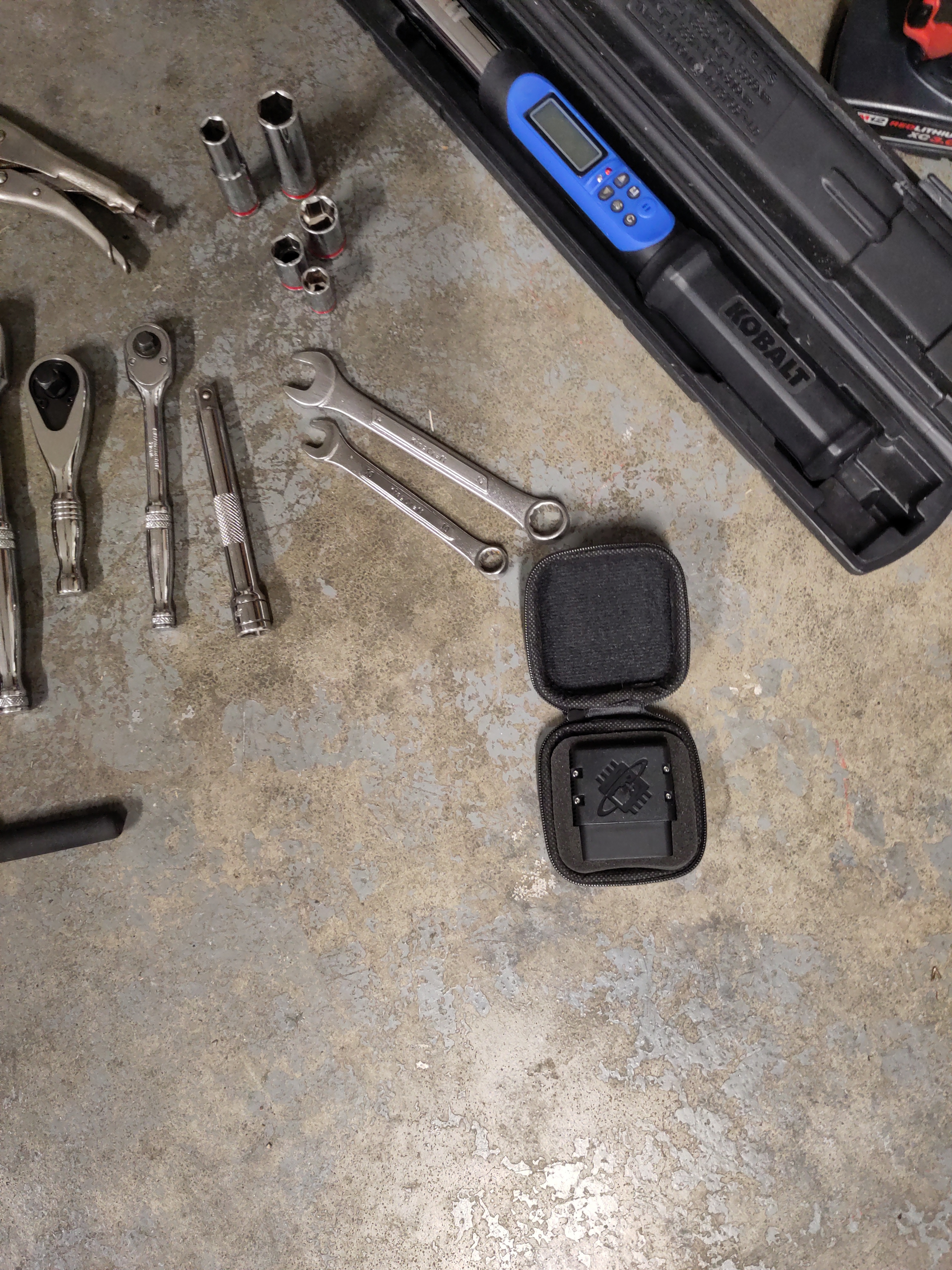
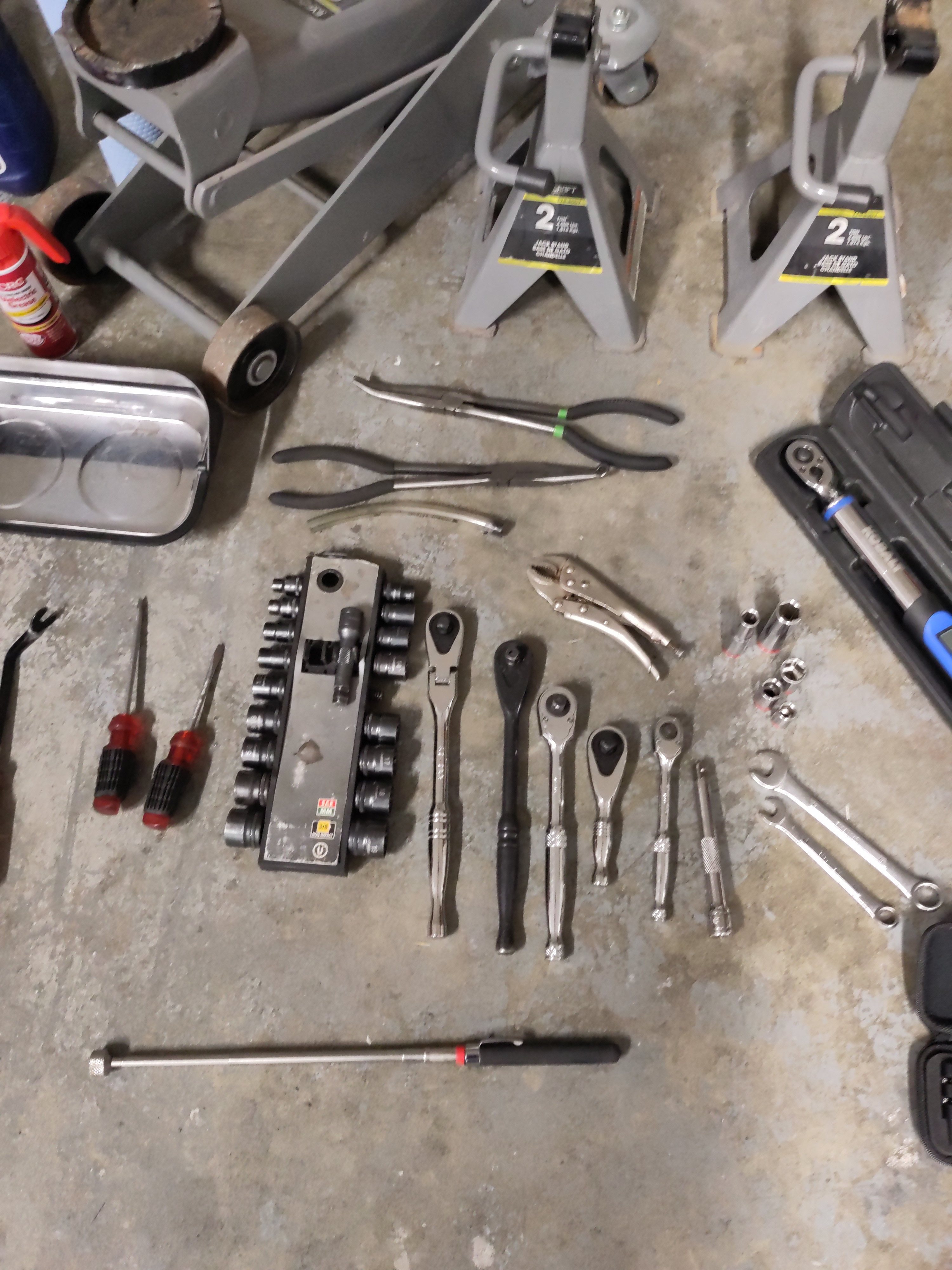
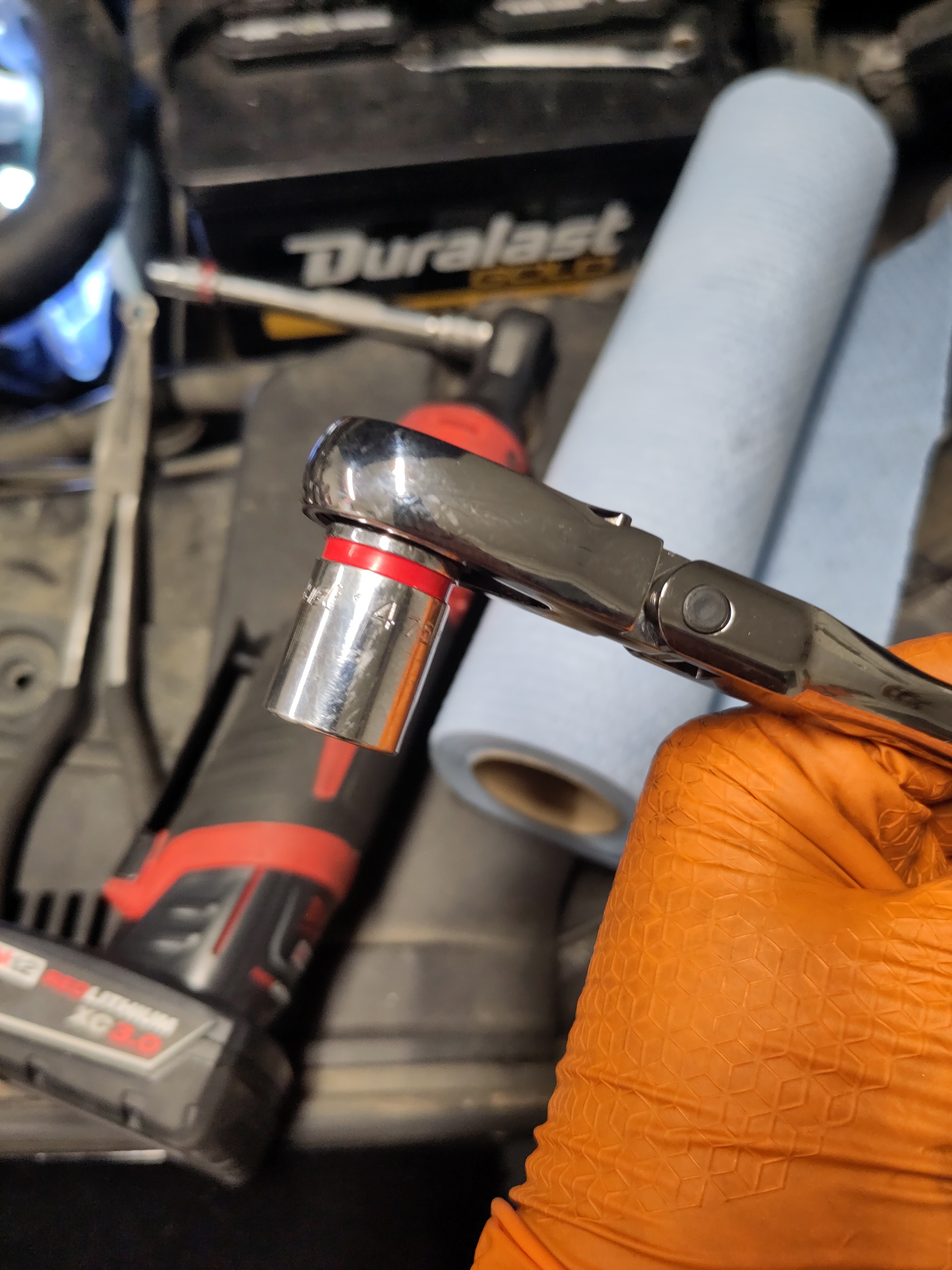
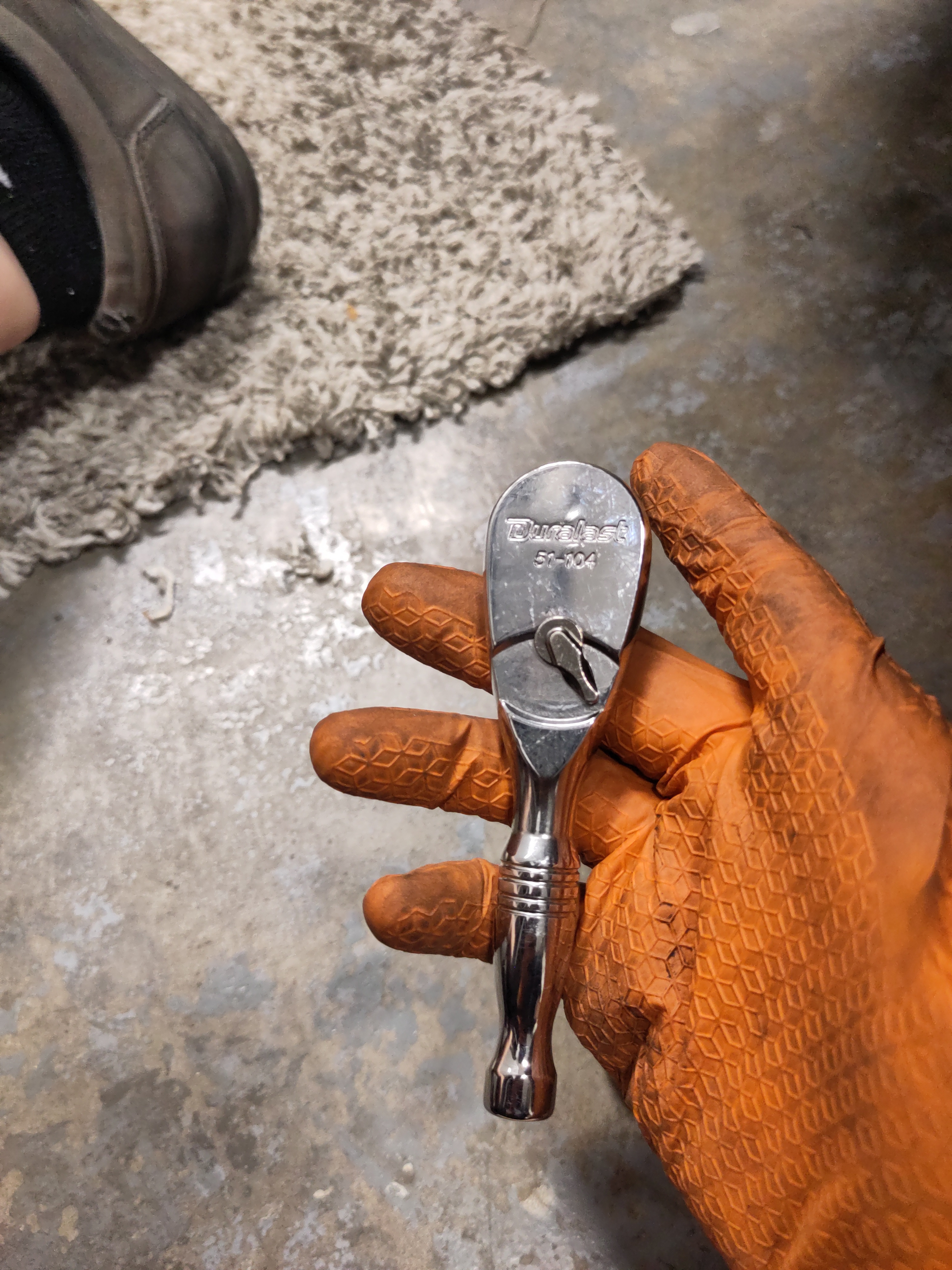
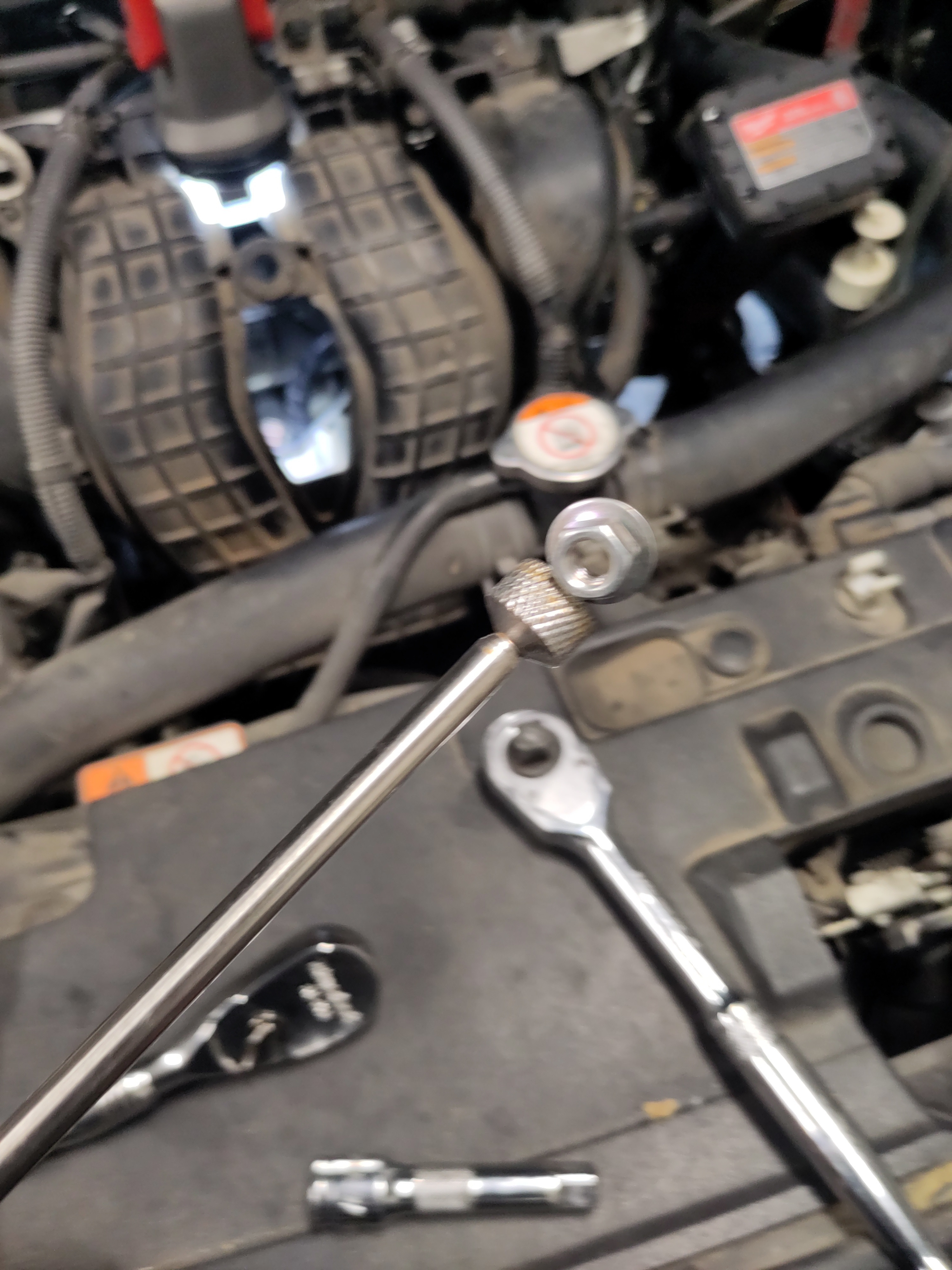
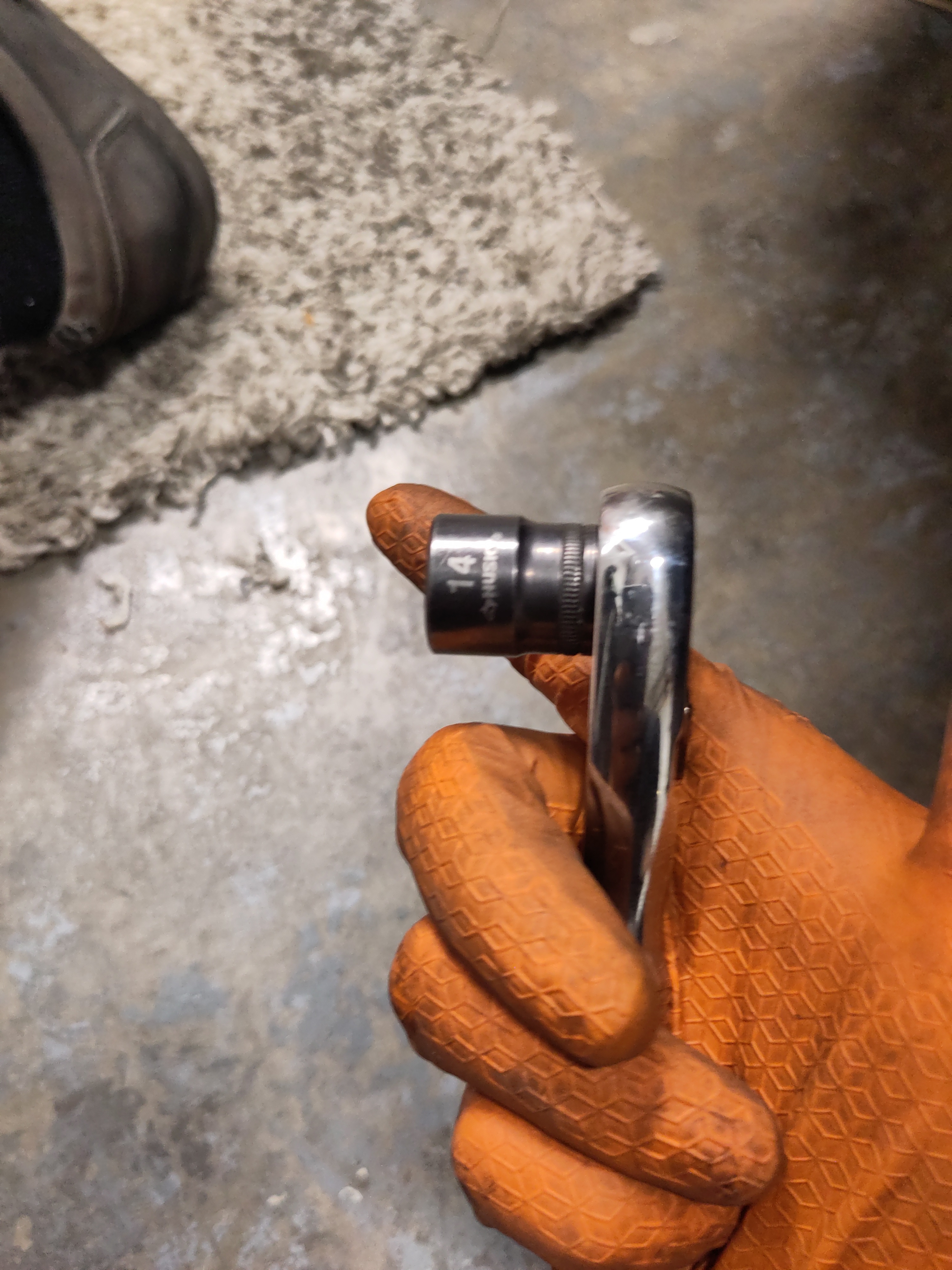
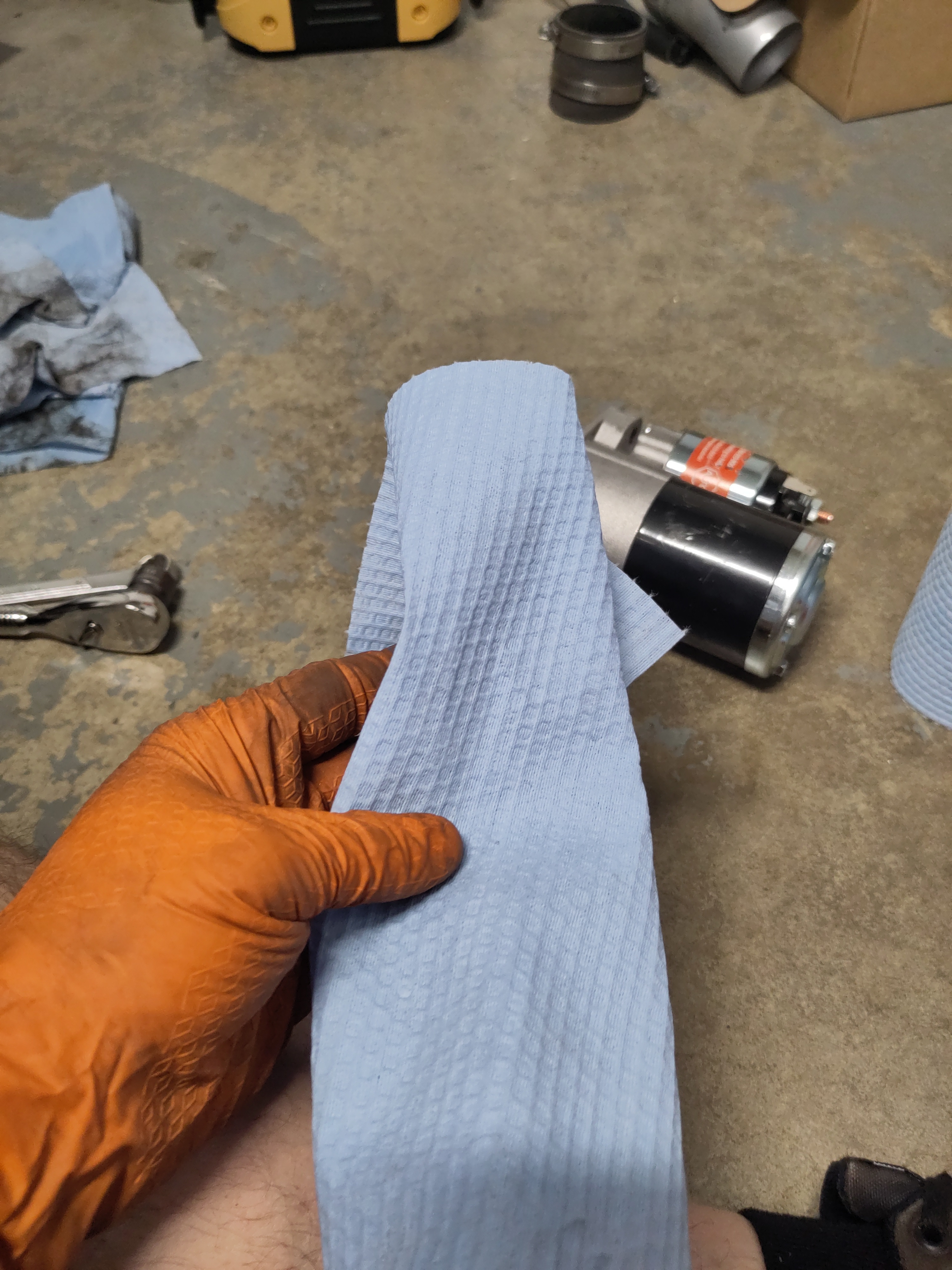
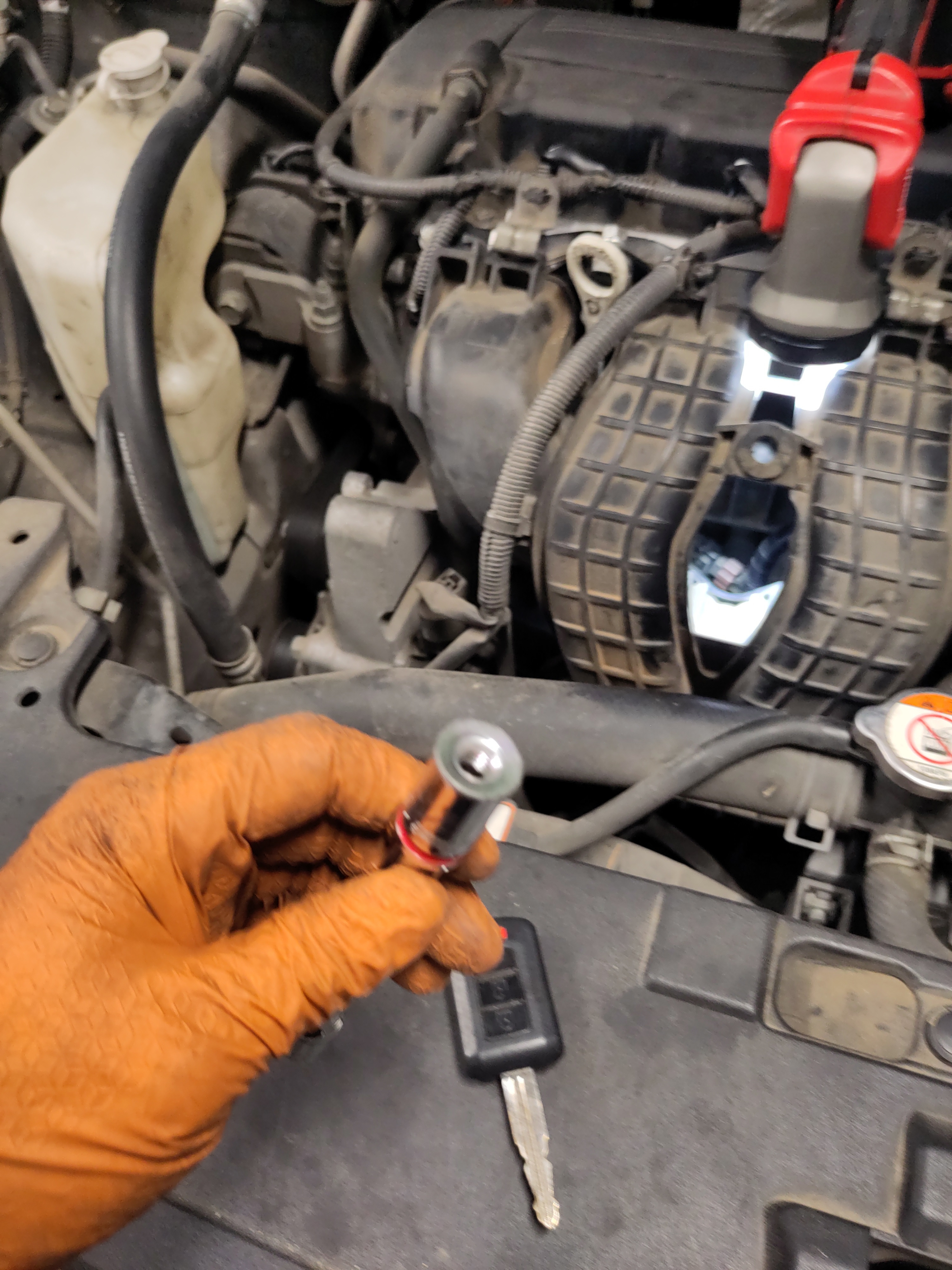
There are some tools missing in the first photo below because I forgot to include, but I added them in other zoomed in photos of the tools.
2 ton Hydraulic Lift
Original Equipment Technology: Asian Vehicles Antifreeze/Coolant 50/50 mix
2x 2 ton Jack Stands
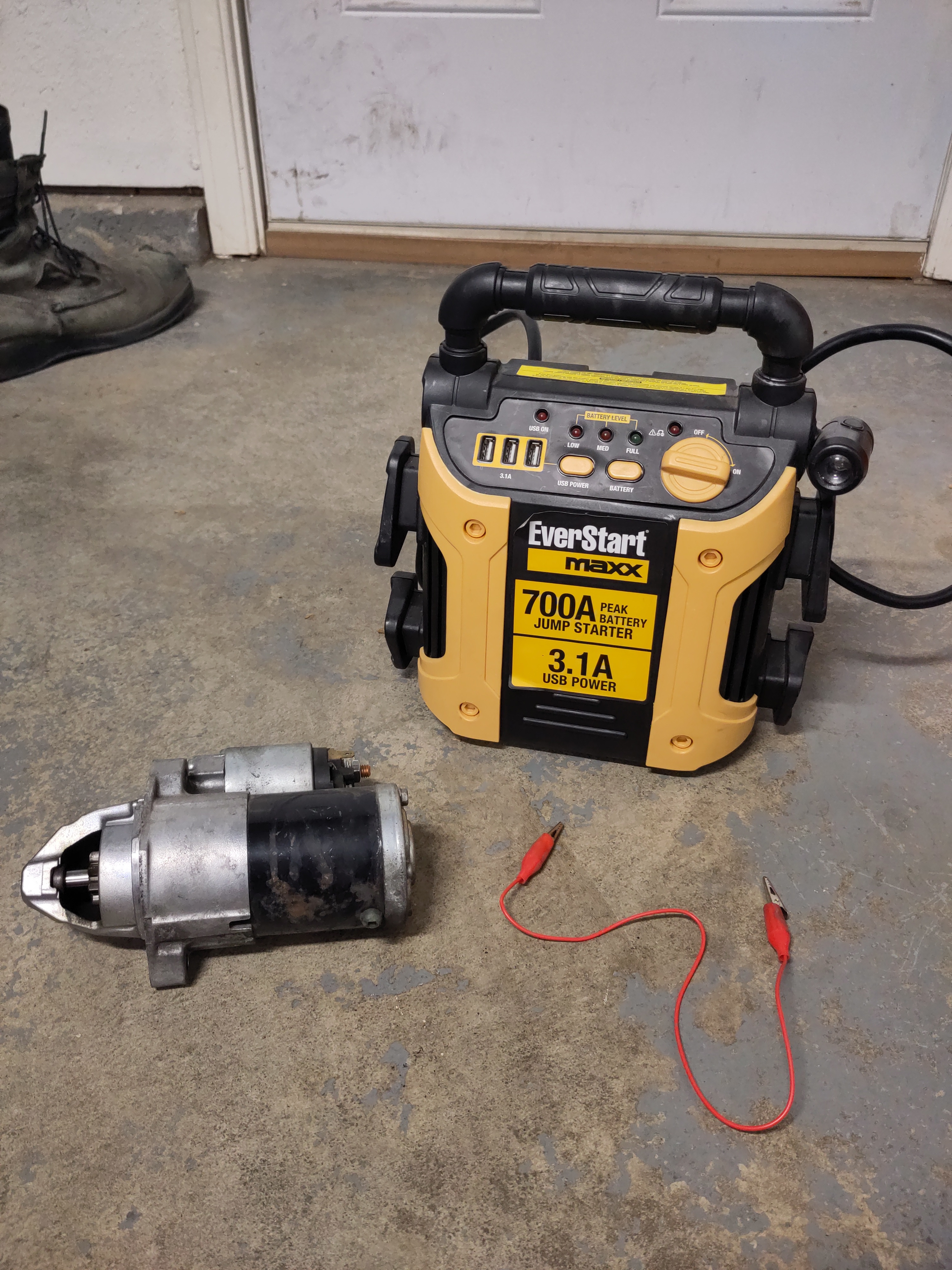
Jumper Pack
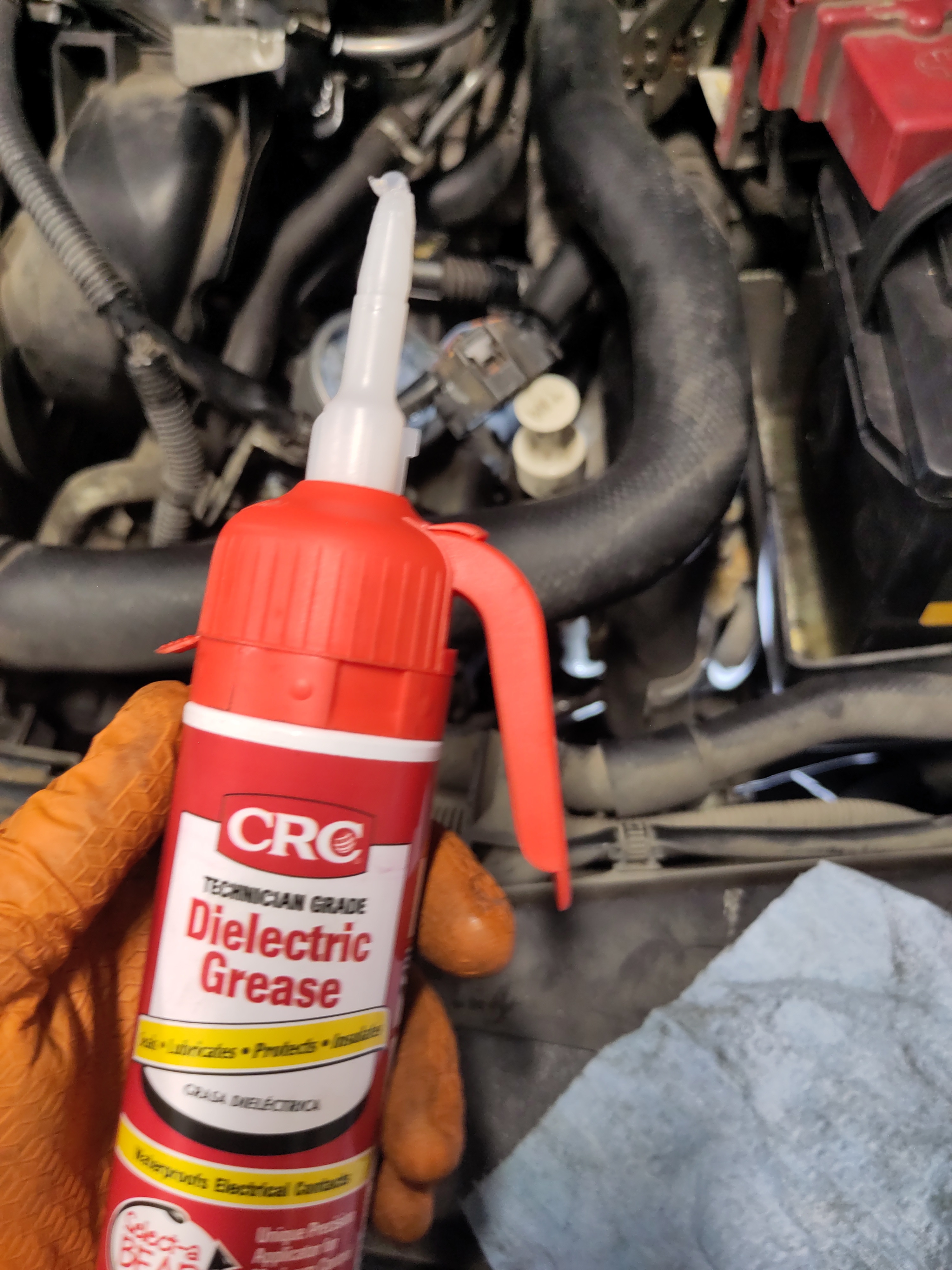
Dielectric Grease
Wire with alligator clips
Magnetic Pan
Paper towels
Drip Pan
Paper Towel
Q-Tips
Funnel
Push Pine Fastener Removal Tool
Various in length flat head screwdrivers
Flashlight
Torque Wrench
10mm wrench 12 point
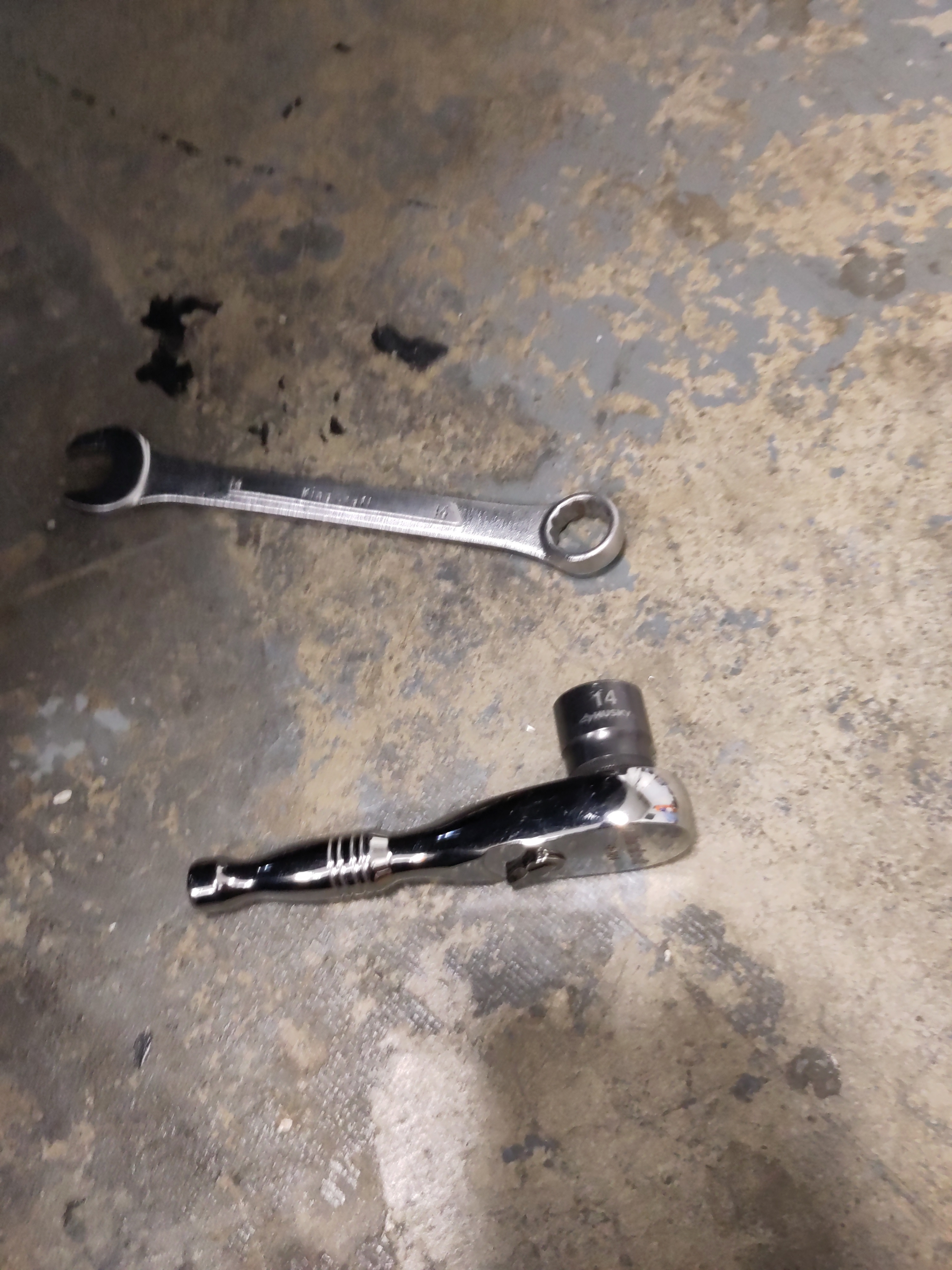
14mm wrench 12 point
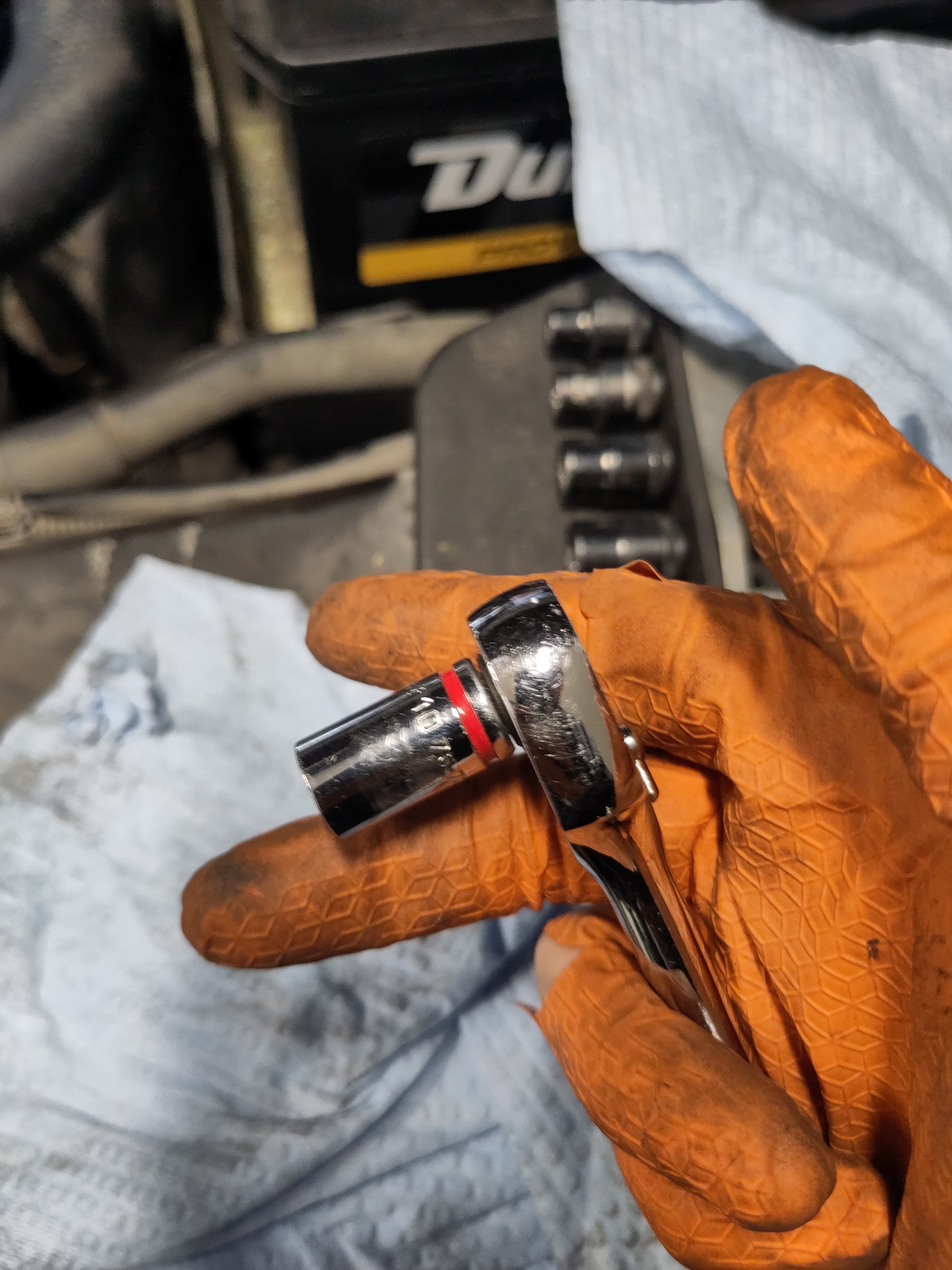
3/8" drive 14mm deep and short sockets 6 point
3/8" drive 12mm deep and short sockets 6 point
3/8" drive 10mm short socket 6 point
1/4" silicon hose, 5" in length
2x long reach bent needle nose pliers
Telescoping magnetic pickup tool
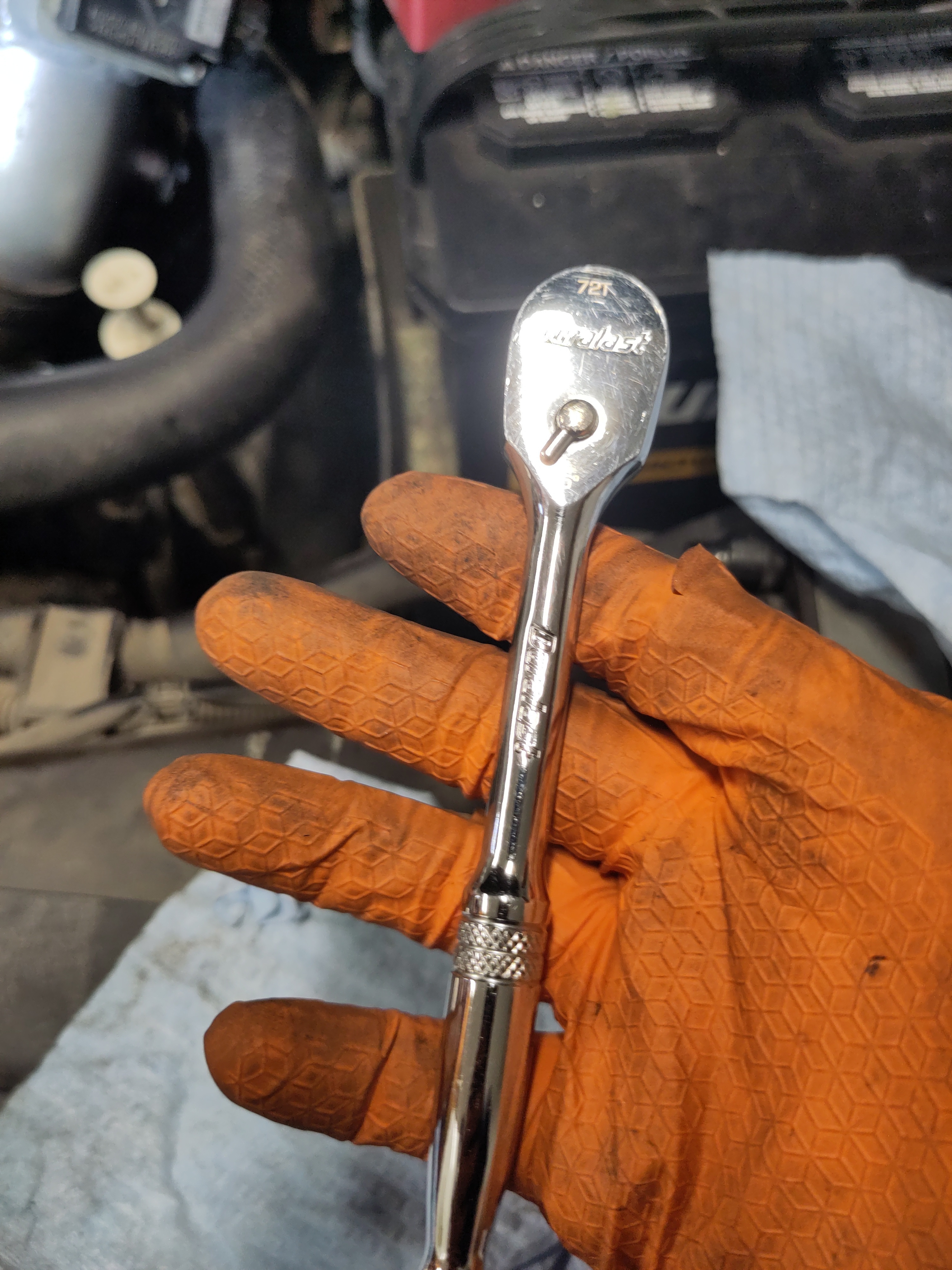
3/8" Drive socket wrench in various lengths, short, angular adjustable
3/8" drive extensions in various sizes
Milwaukee M12 3/8" socket wrench cordless with M12 battery
3/8" Drive socket set 12 point
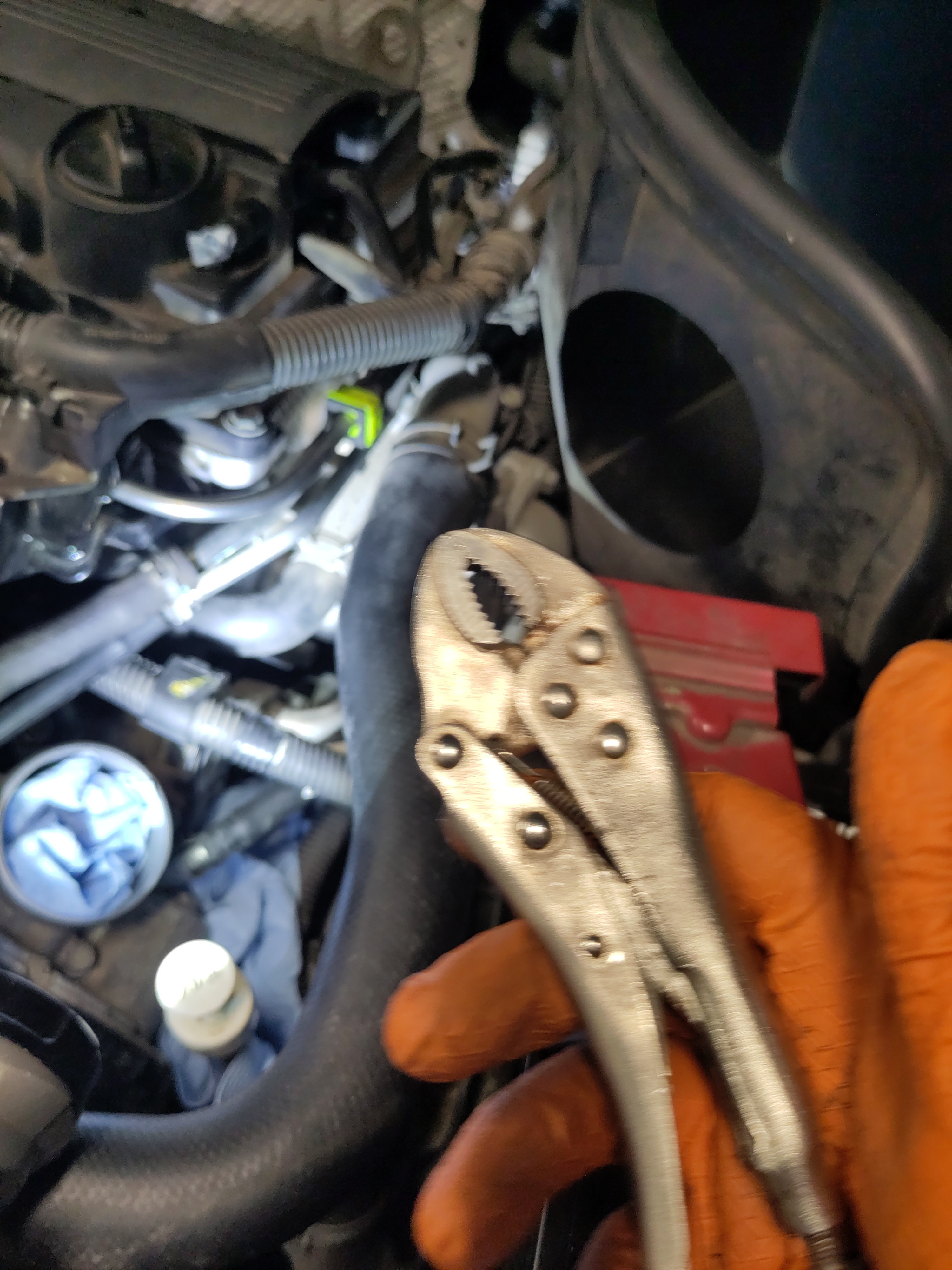
Curved jaw locking pliers
OBD II Reader
Laptop with OBD Reader II software
Removal:
This job has many in depth steps and valuable information applicable to the starter, but some steps will not be included for the simplicity of the tutorial and length. For example, lifting the vehicle up and putting it up on jack stands or removal of the plastic shields of the vehicle. This job will take some time to complete there may be further complications, but be patient and it will come to fruition. There are some modifications performed to the Lancer causing the procedure to change out the starter to be nuanced. The steps of this tutorial are a little different from what maybe the standard. At the time of performing this job, the Lancer was inoperable for the time being so there were some components such as the plastic shield underneath the vehicle was already removed.
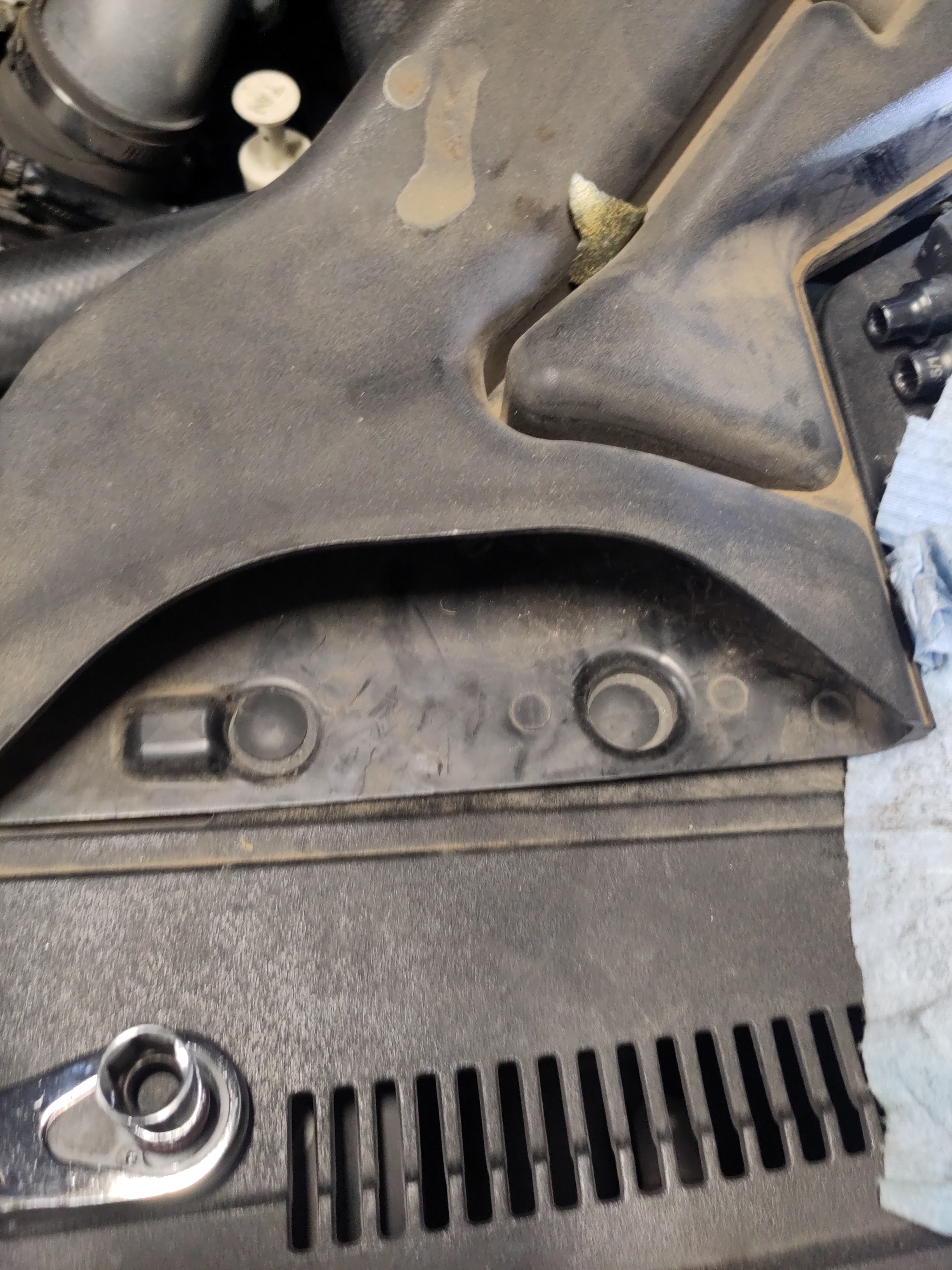
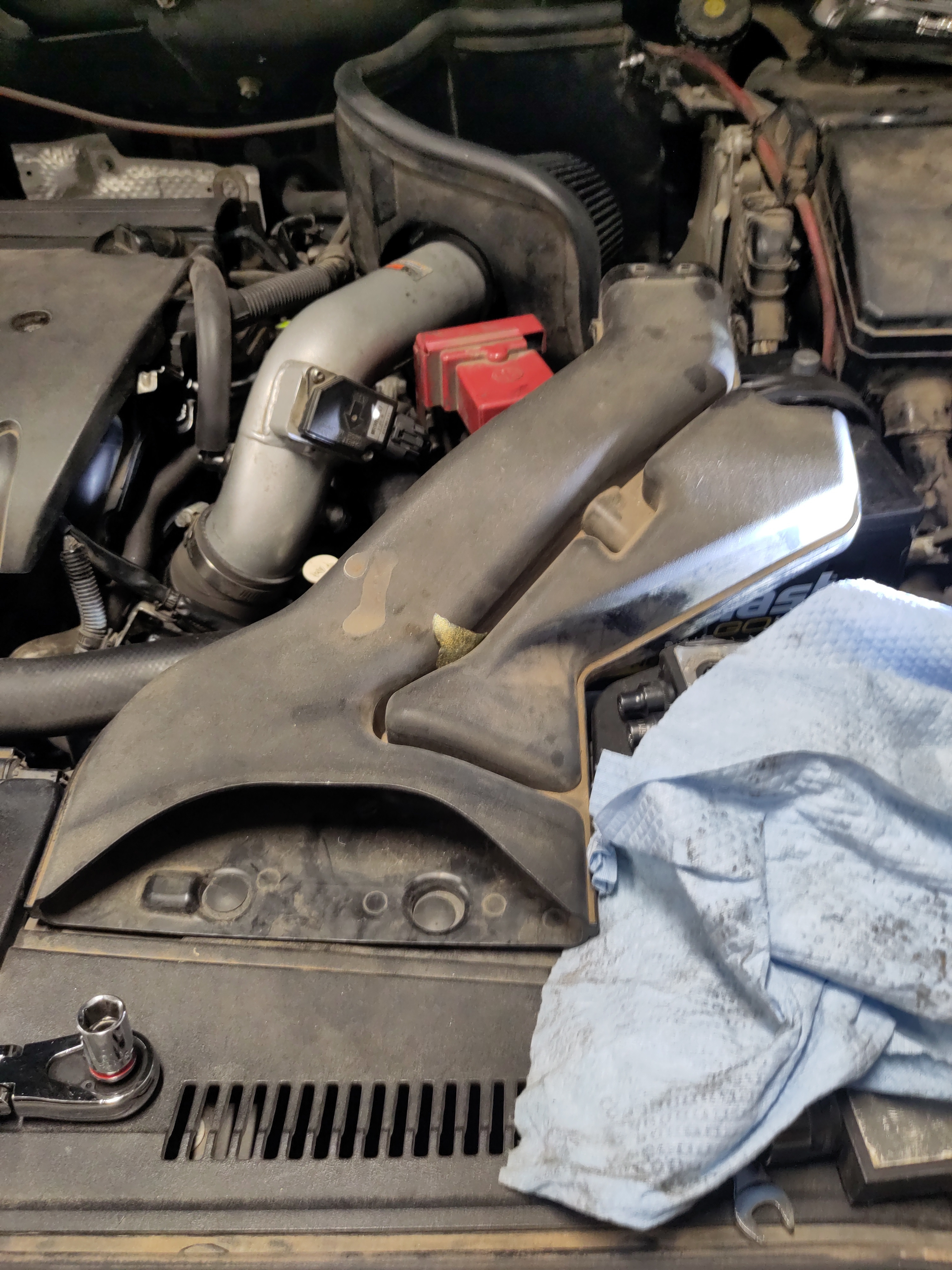
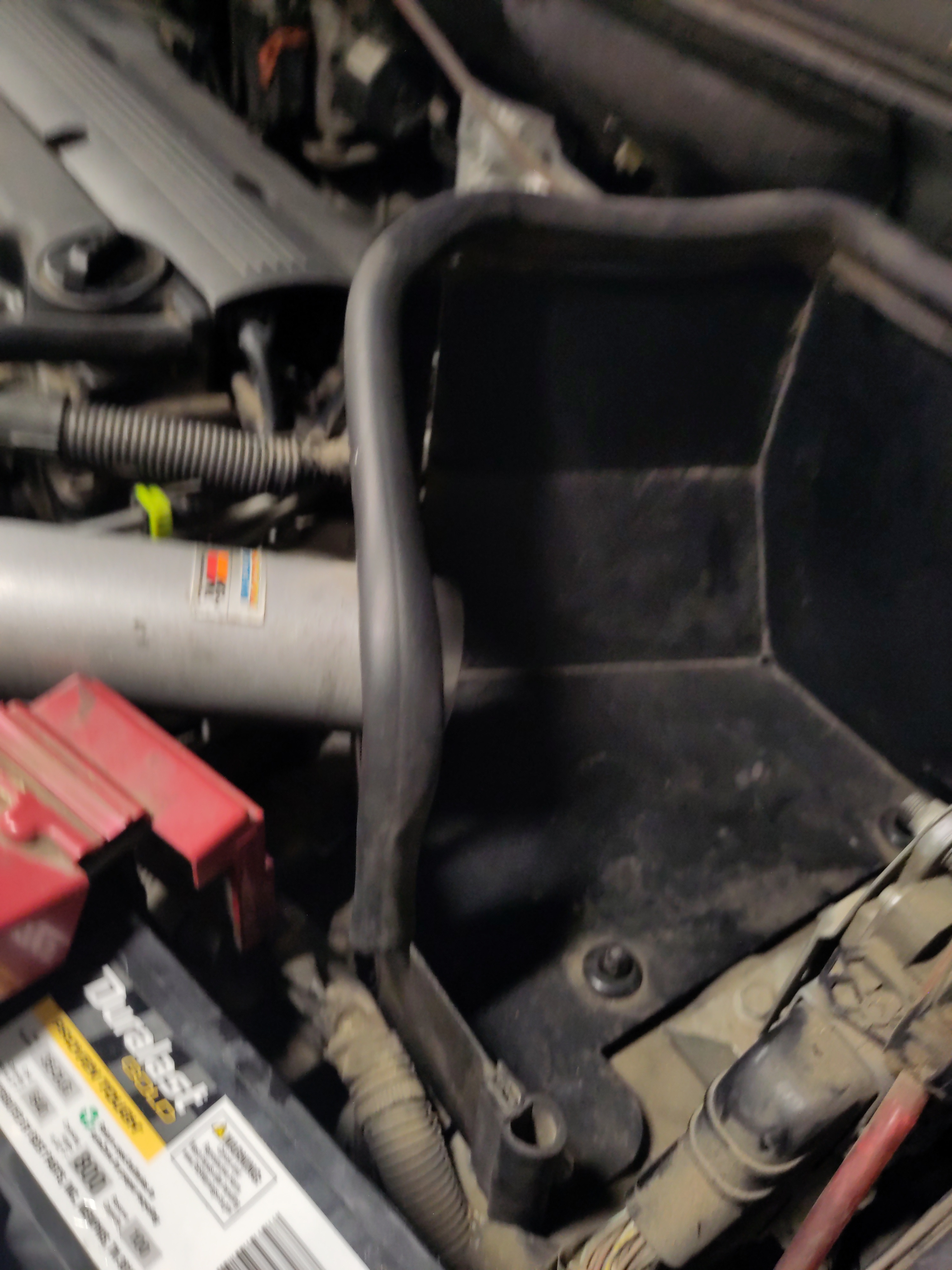
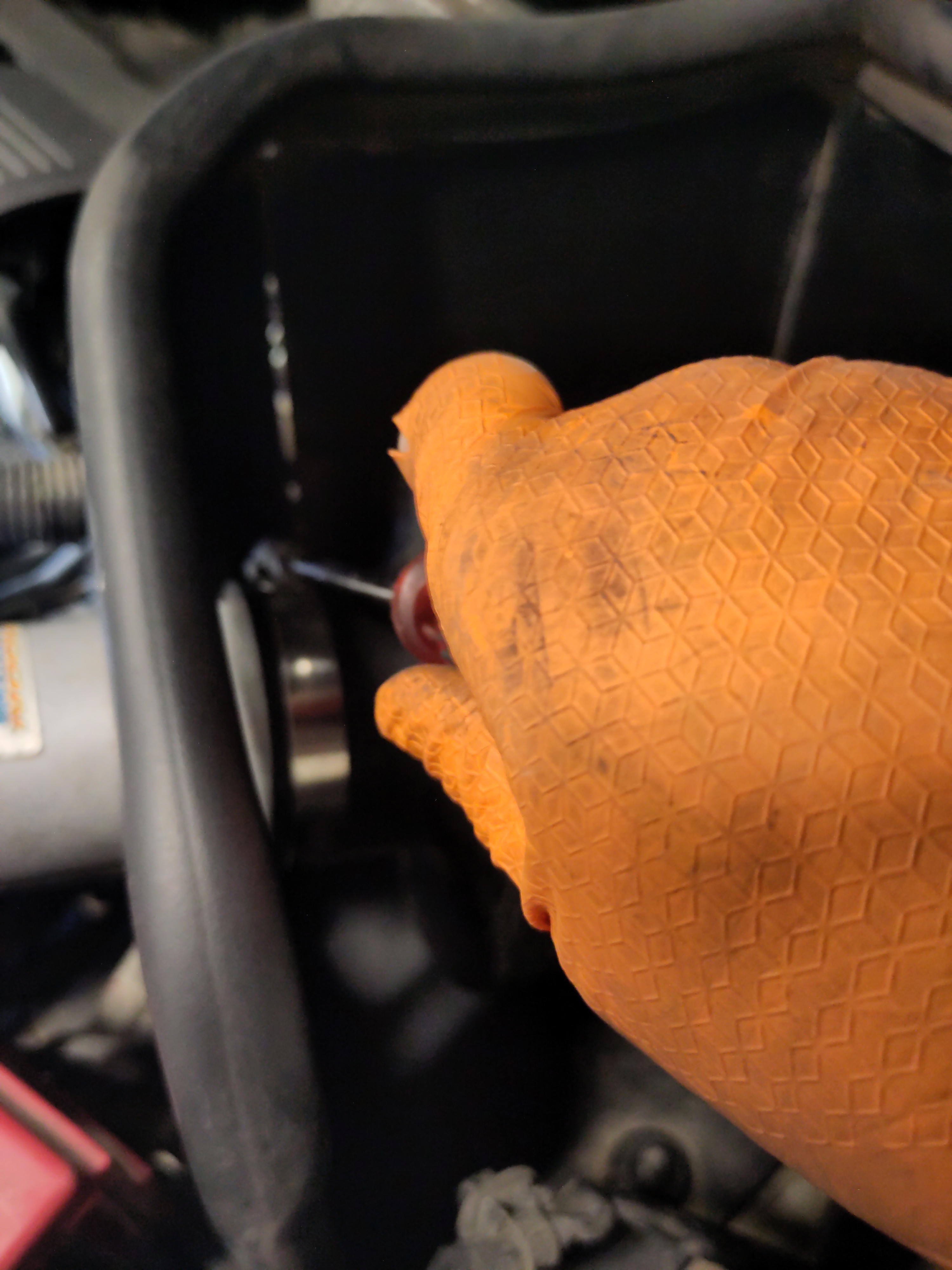
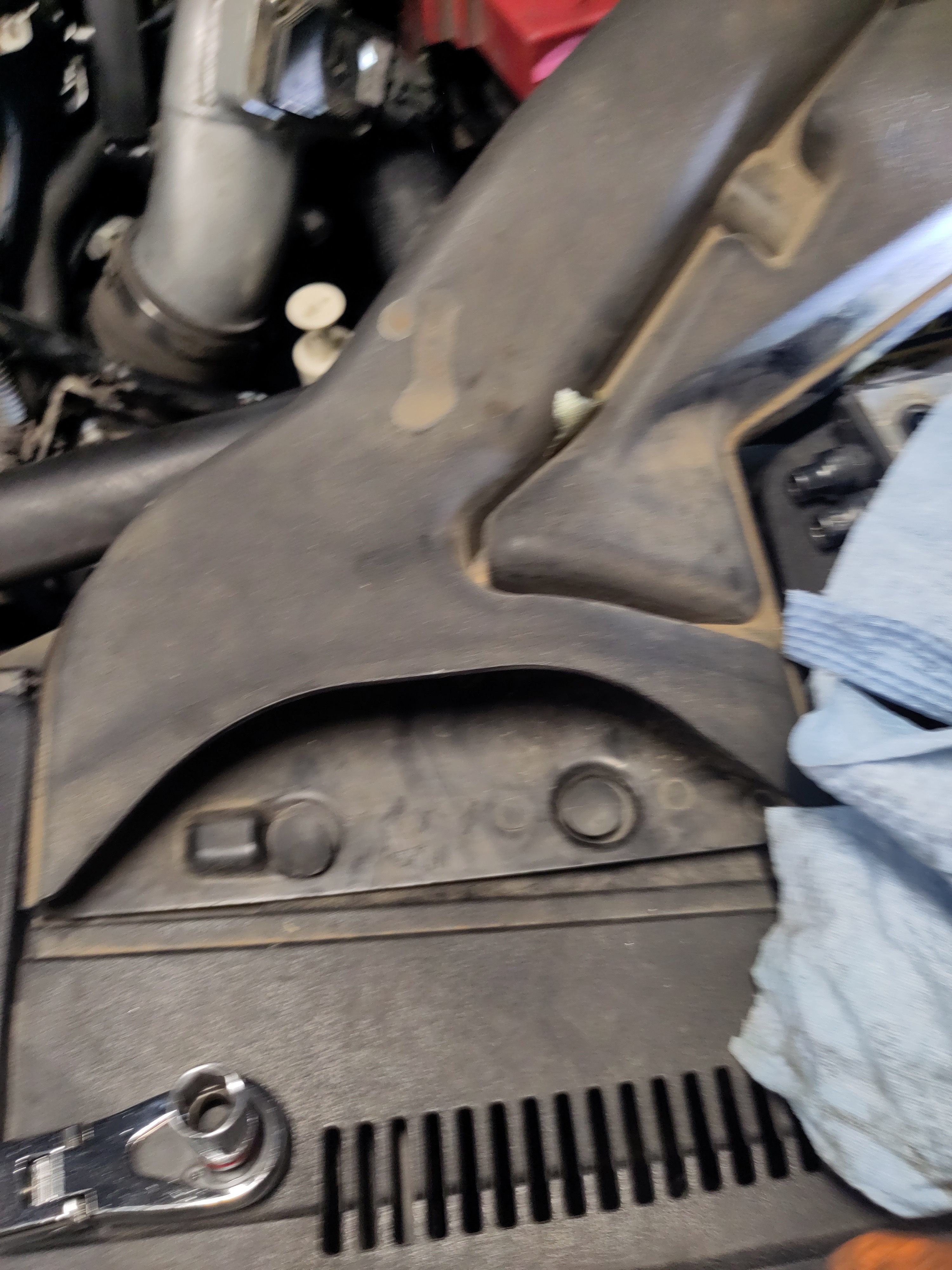
Remove the plastic air intake by pulling up on the clips with the either a flat screw driver or push pin fastener removal tool. Store them in the magnetic pan for safe keeping.
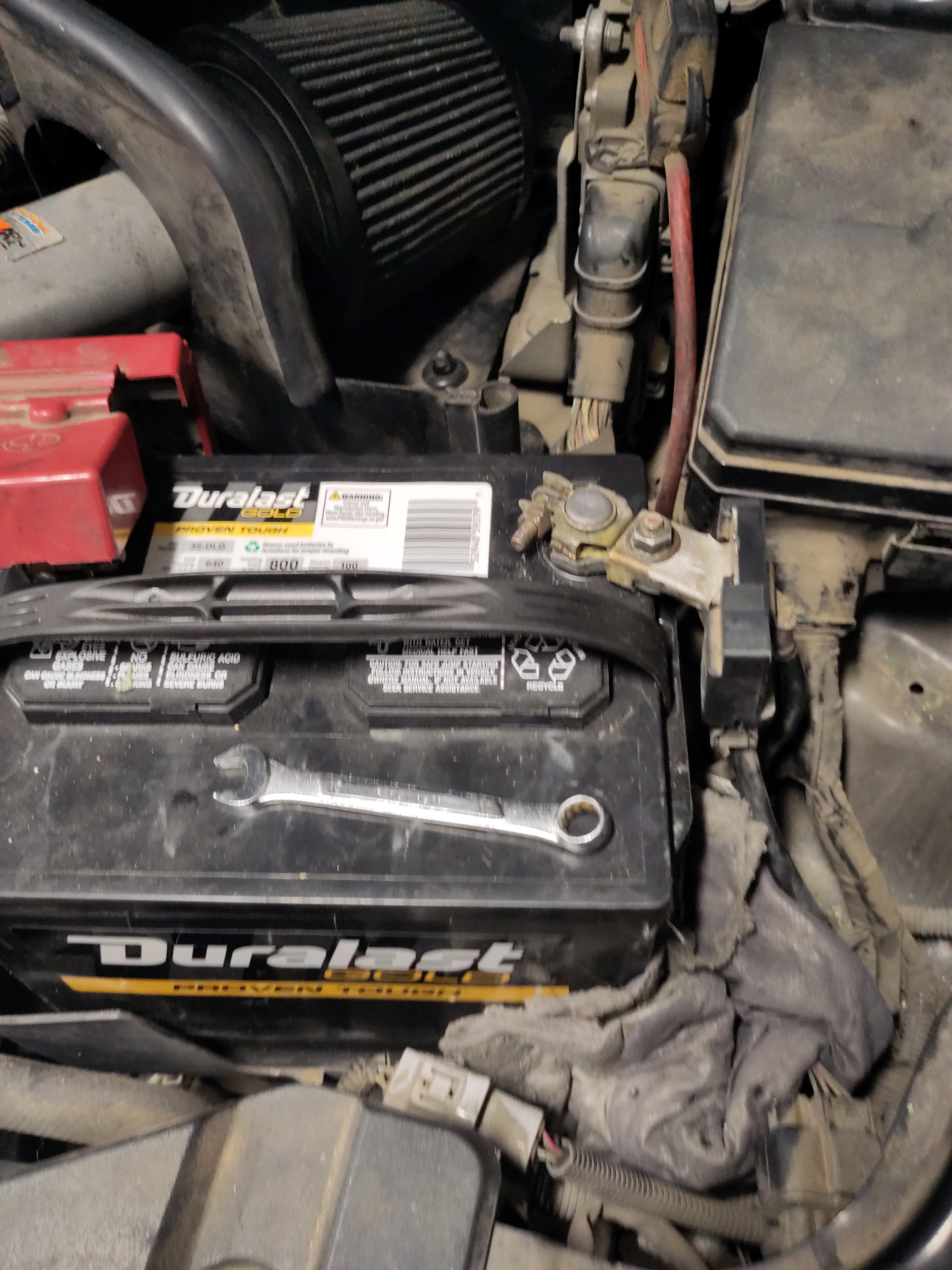
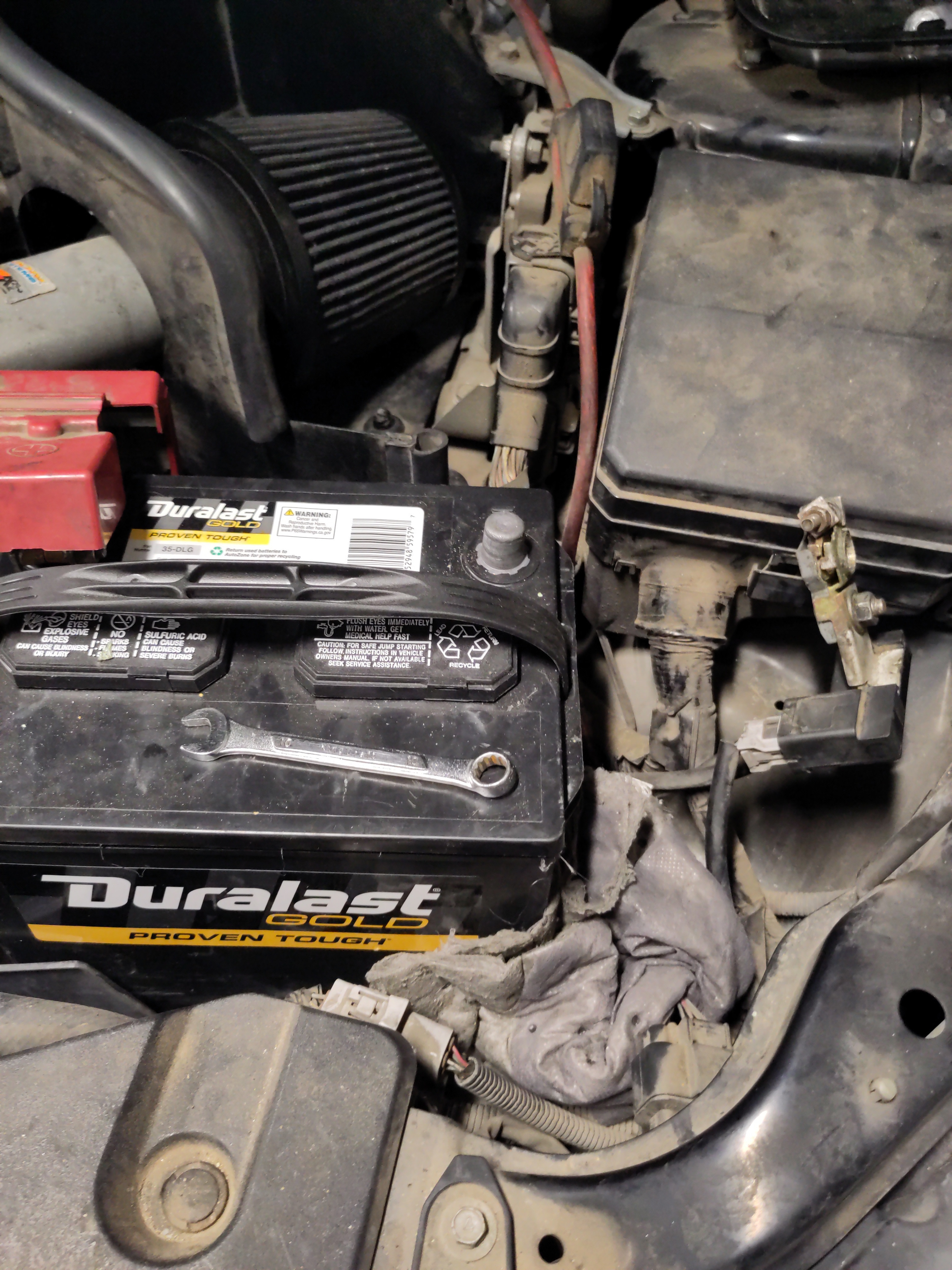
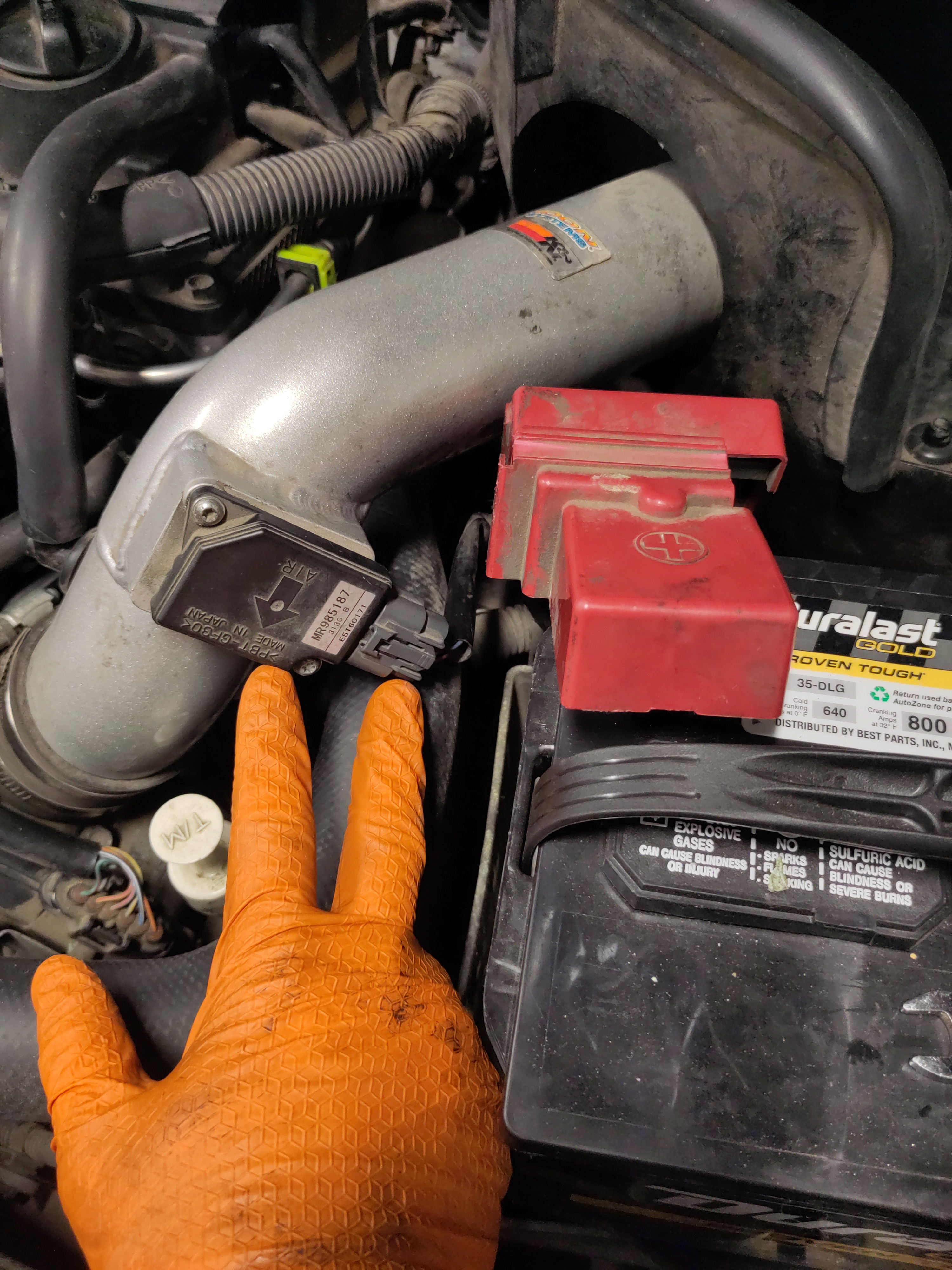
Disconnect the ground electrical connection from the battery terminal using the 10mm wrench.
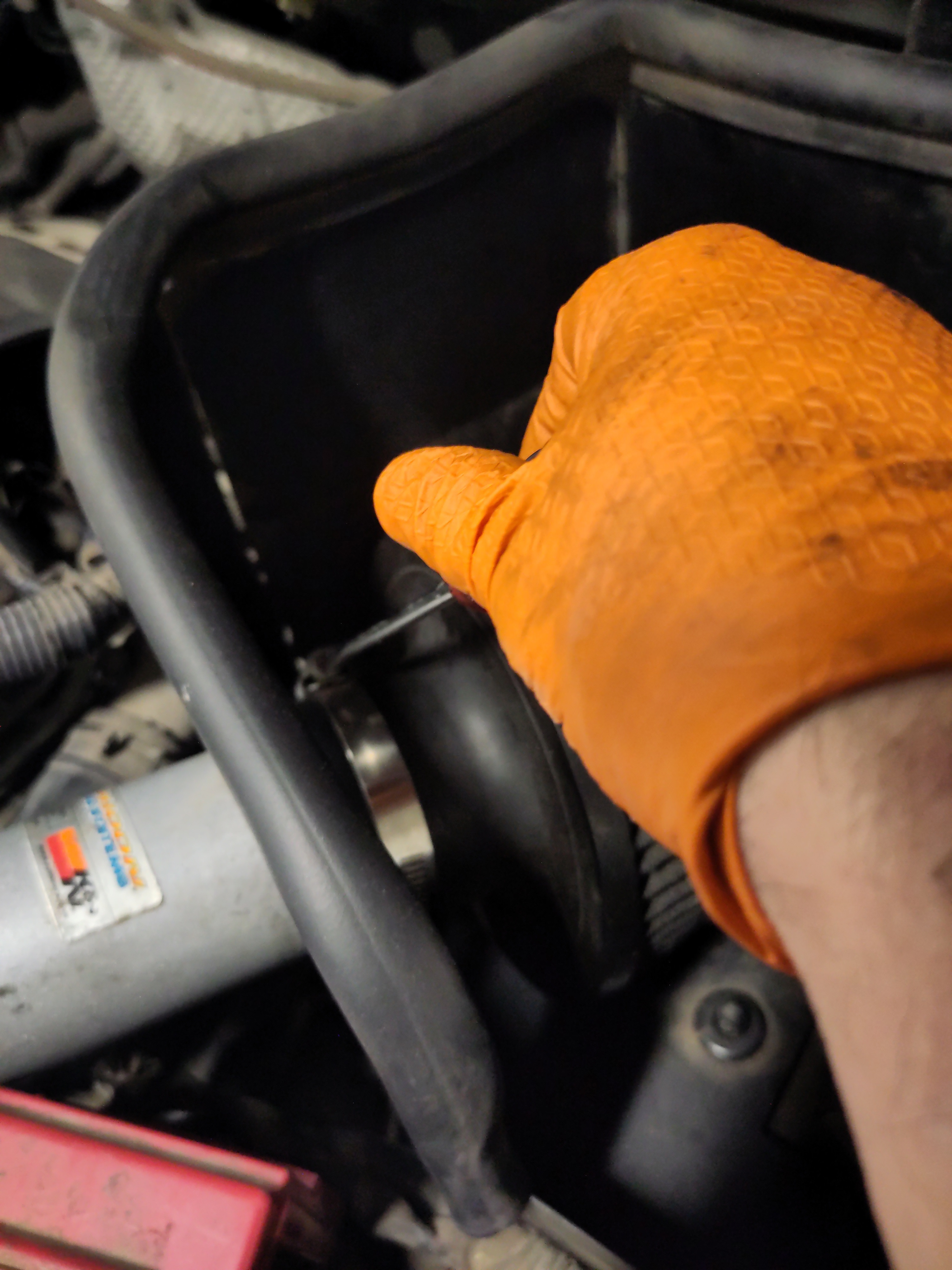
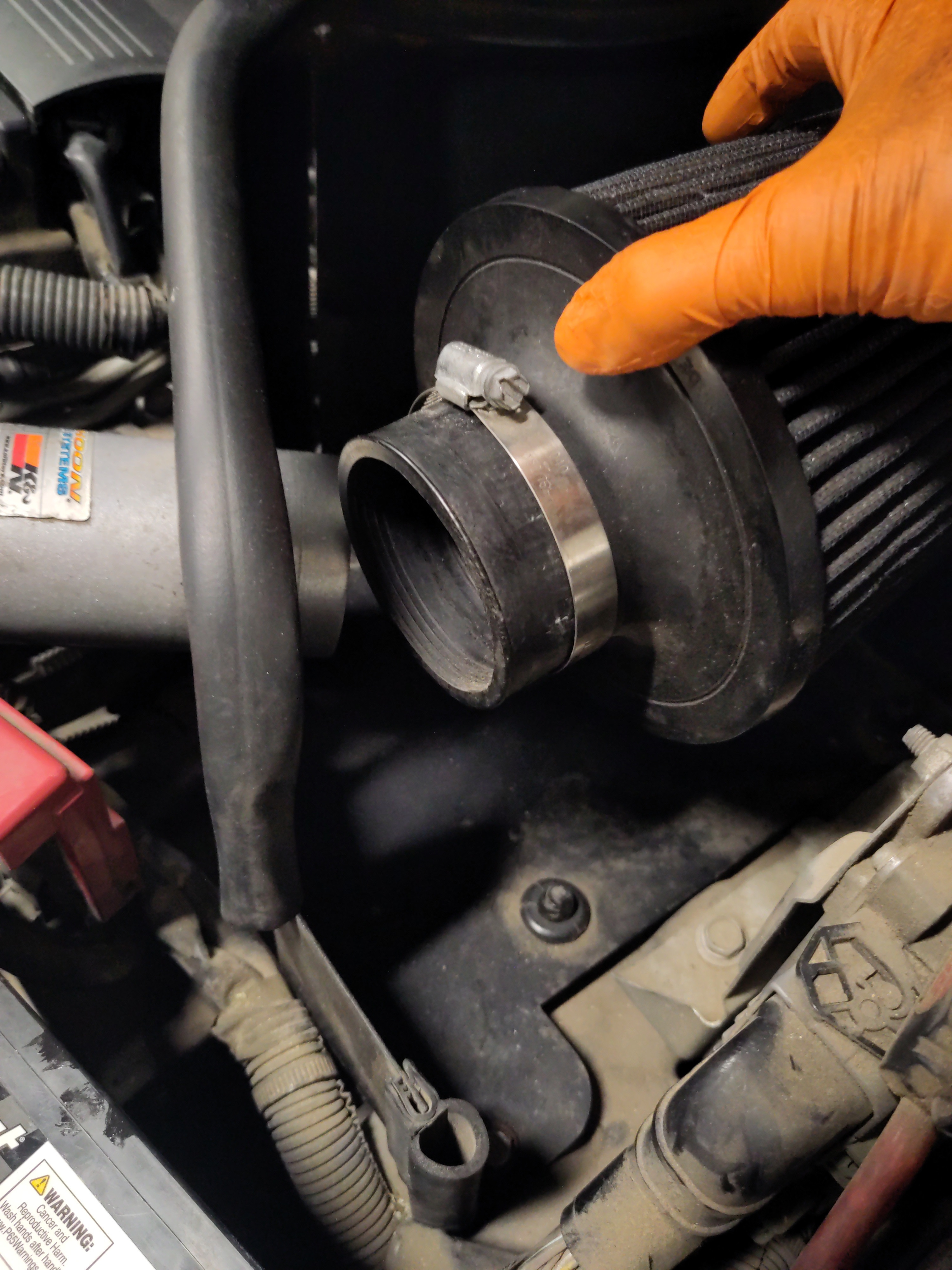
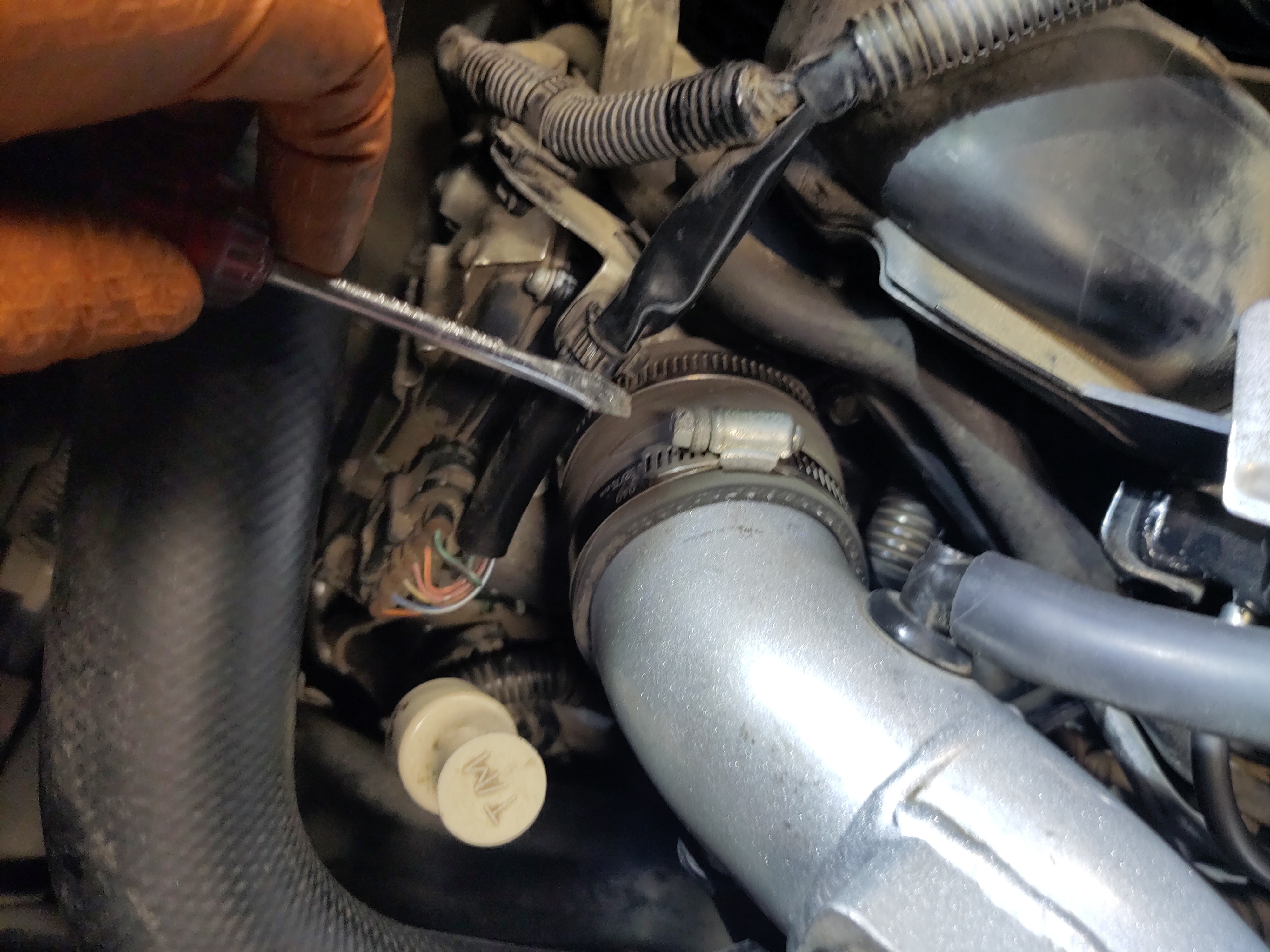
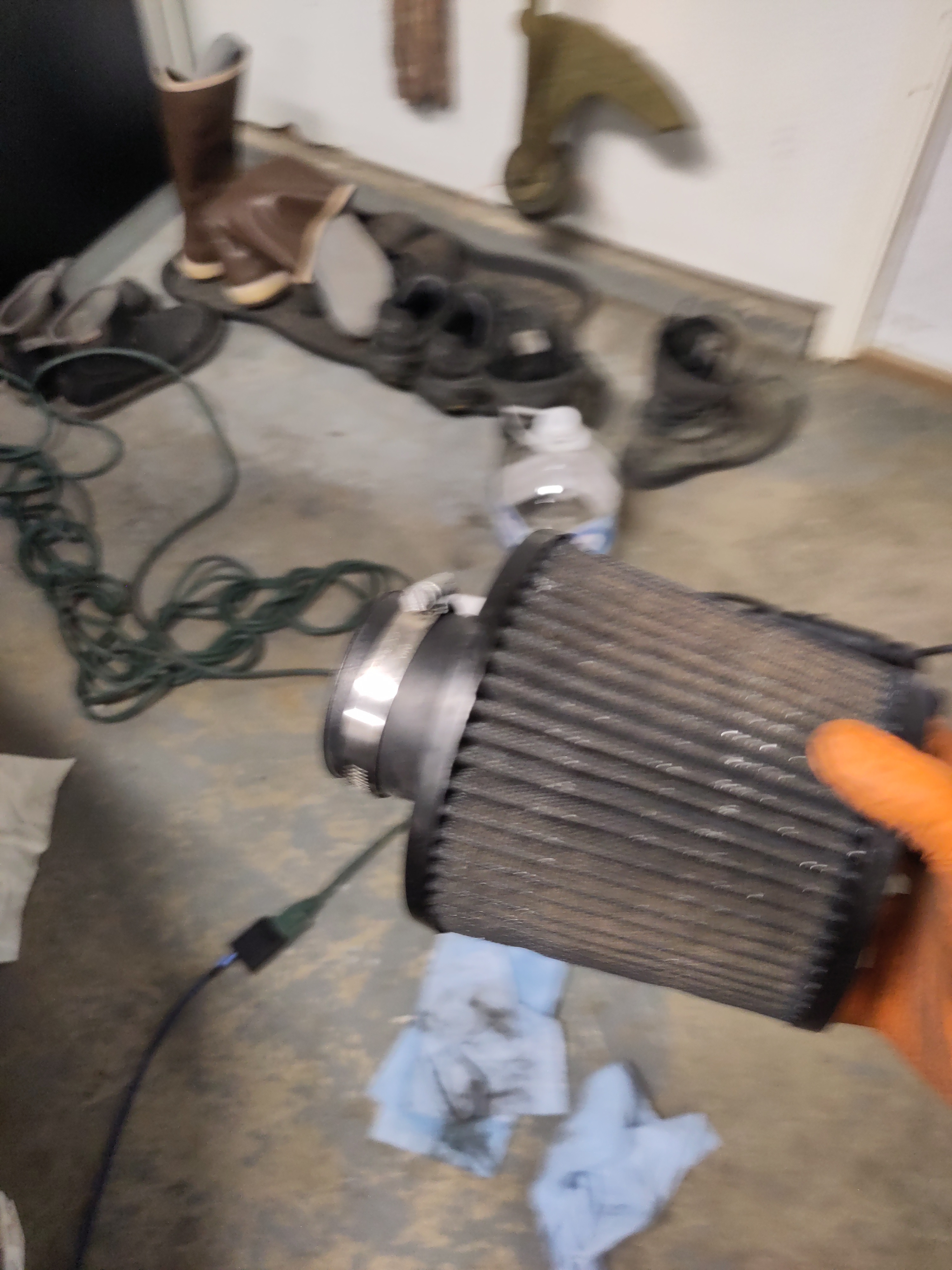
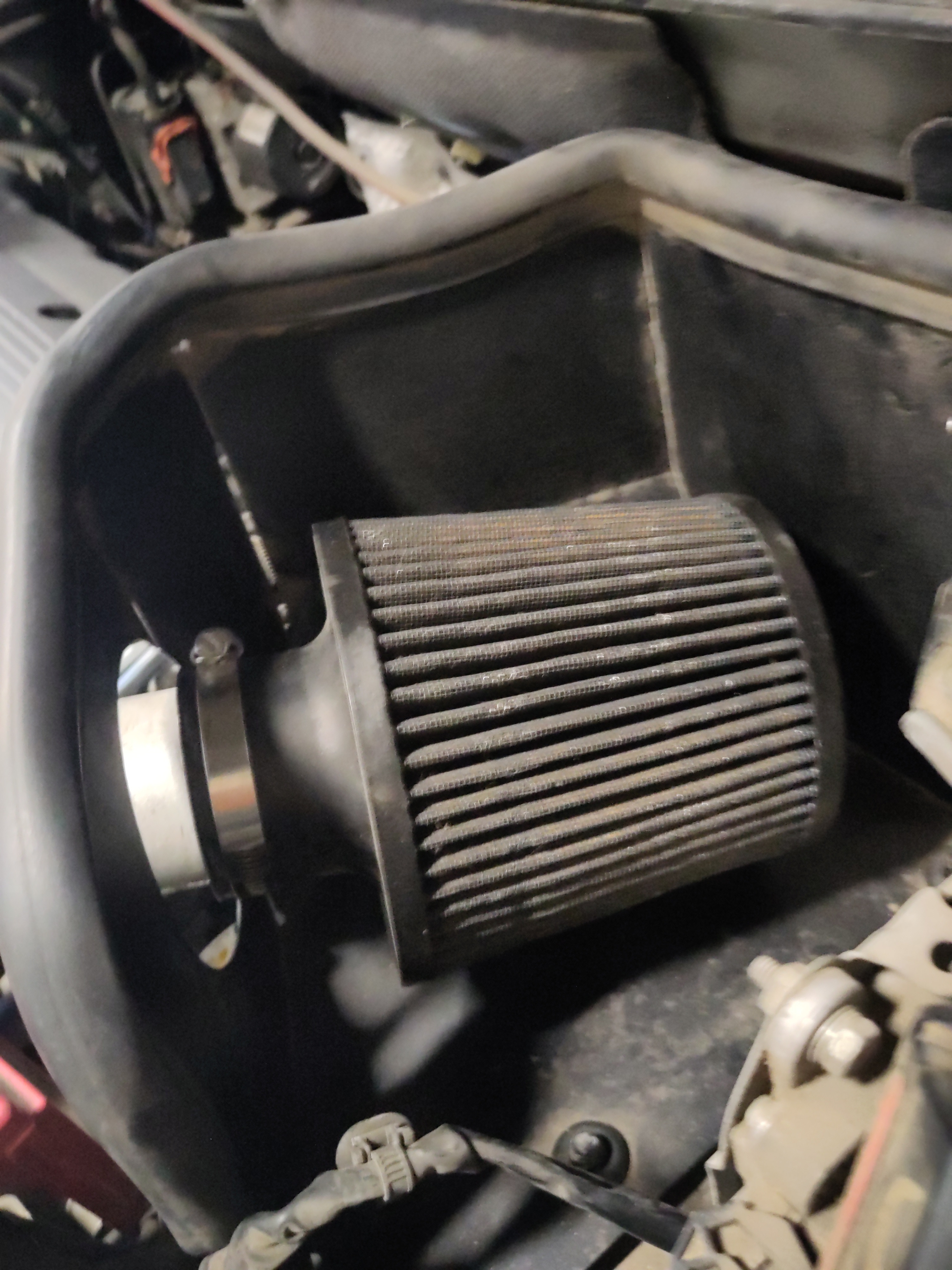
Using a flat screwdriver loosen the hose clamp, and then wiggle and pulling off the the air intake filter from the pipe.
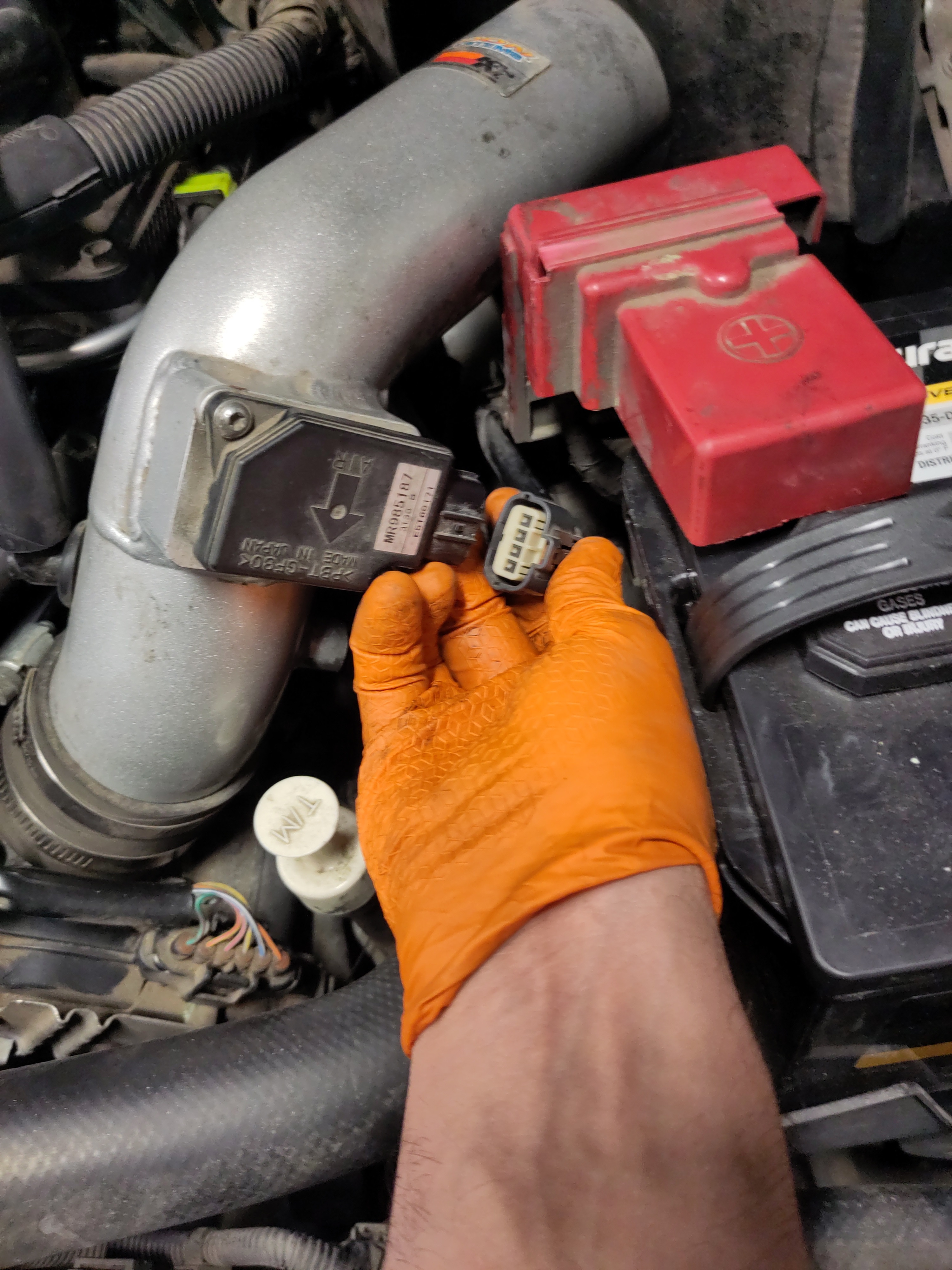
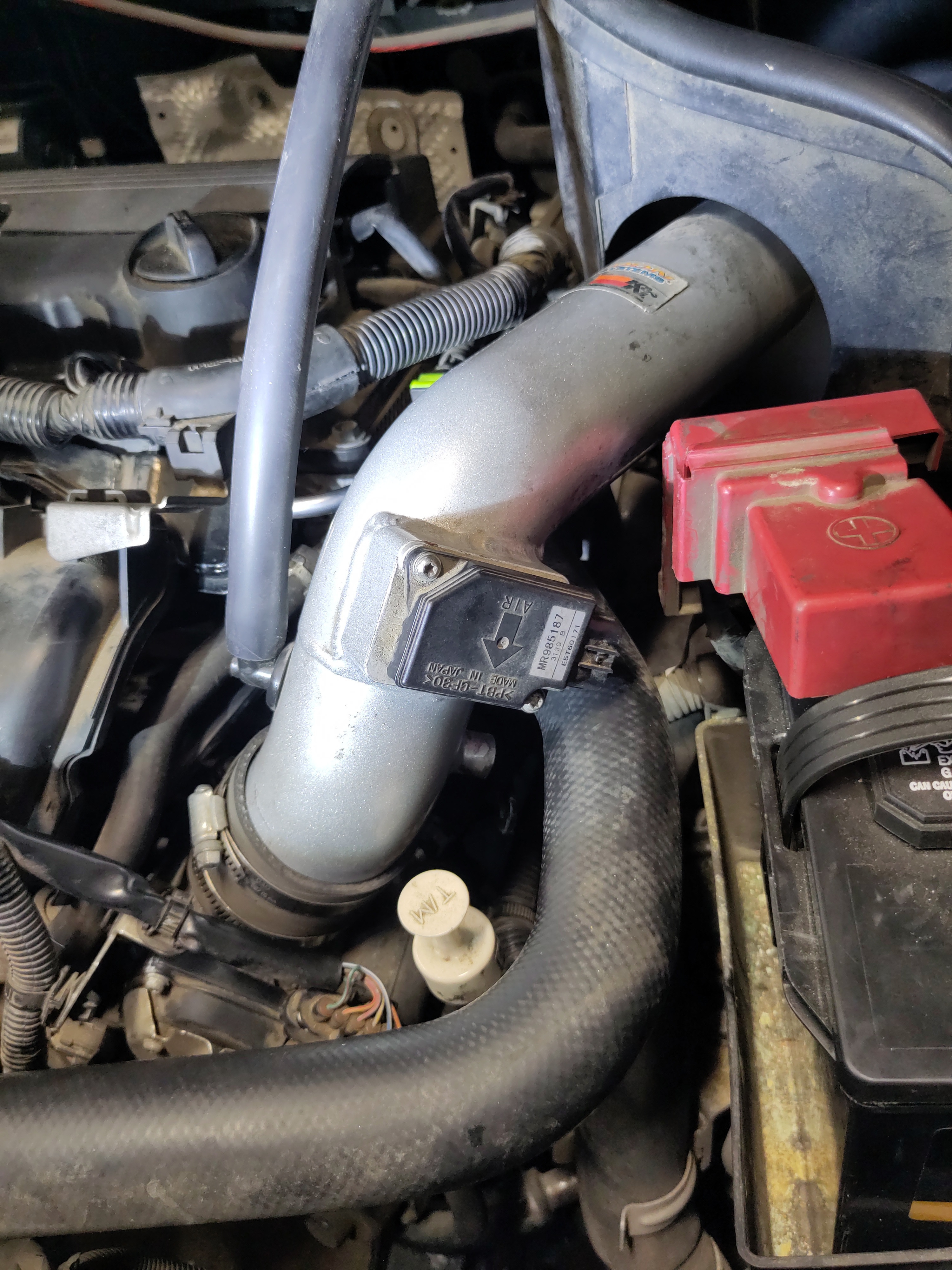
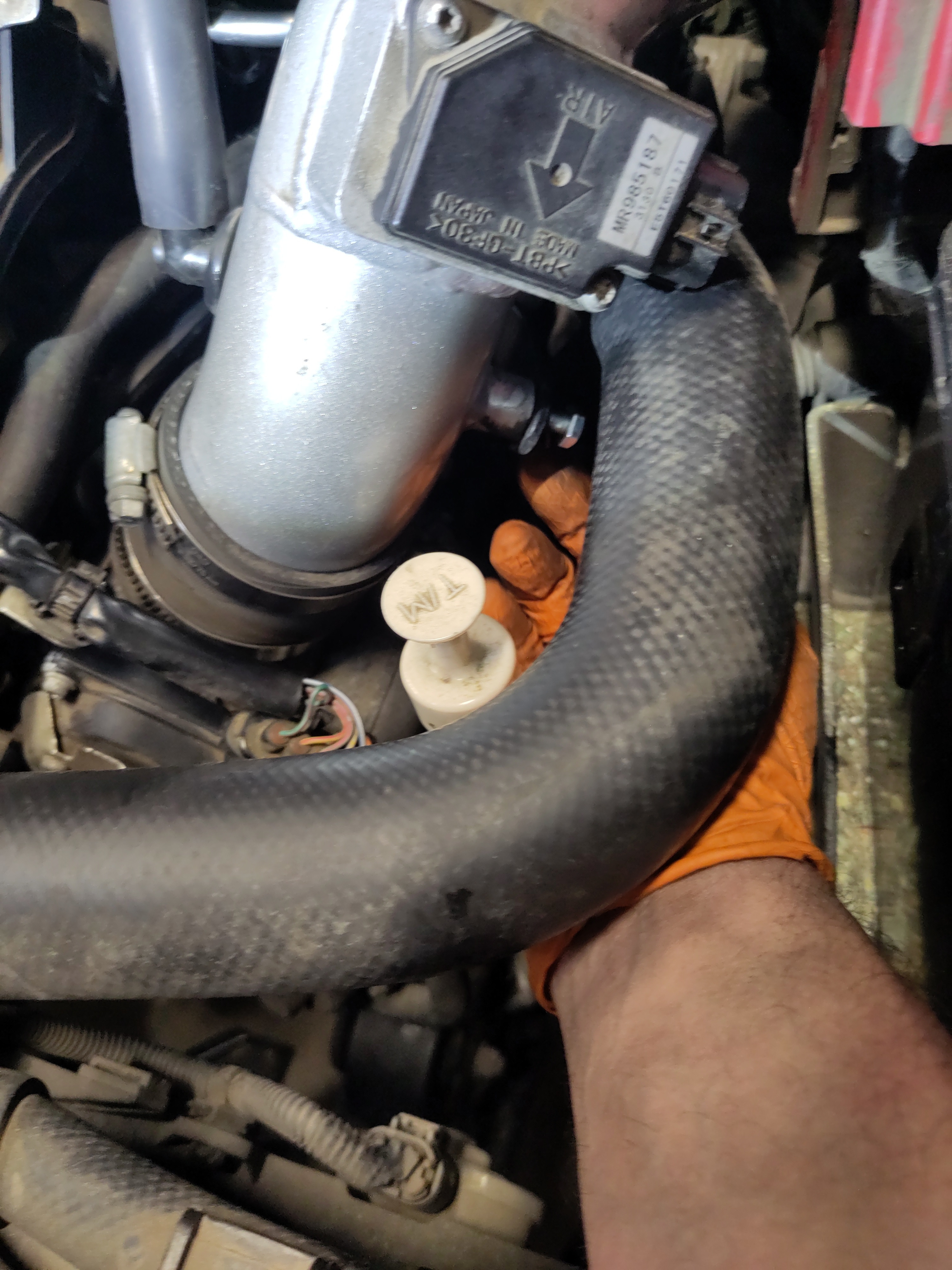
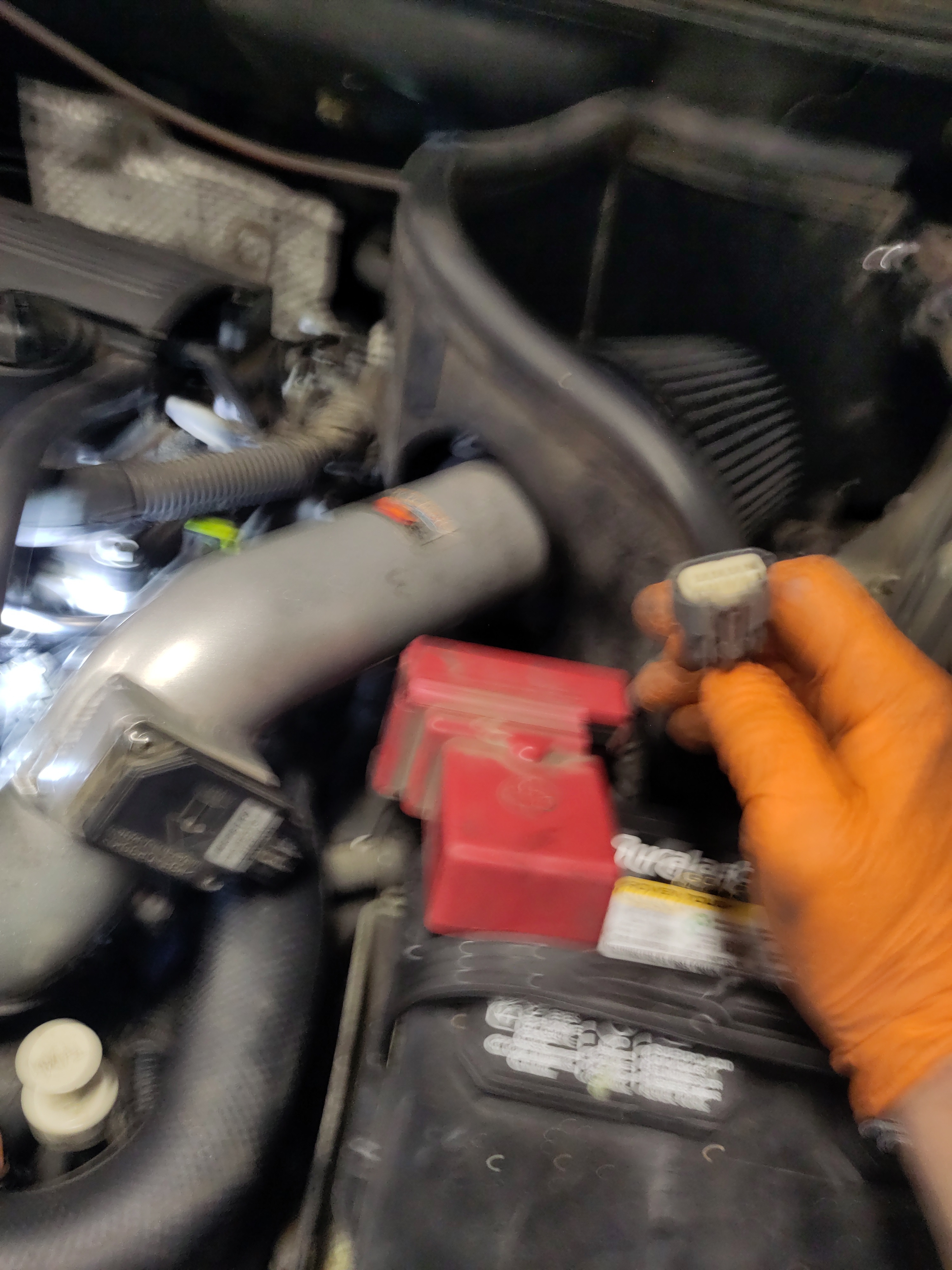
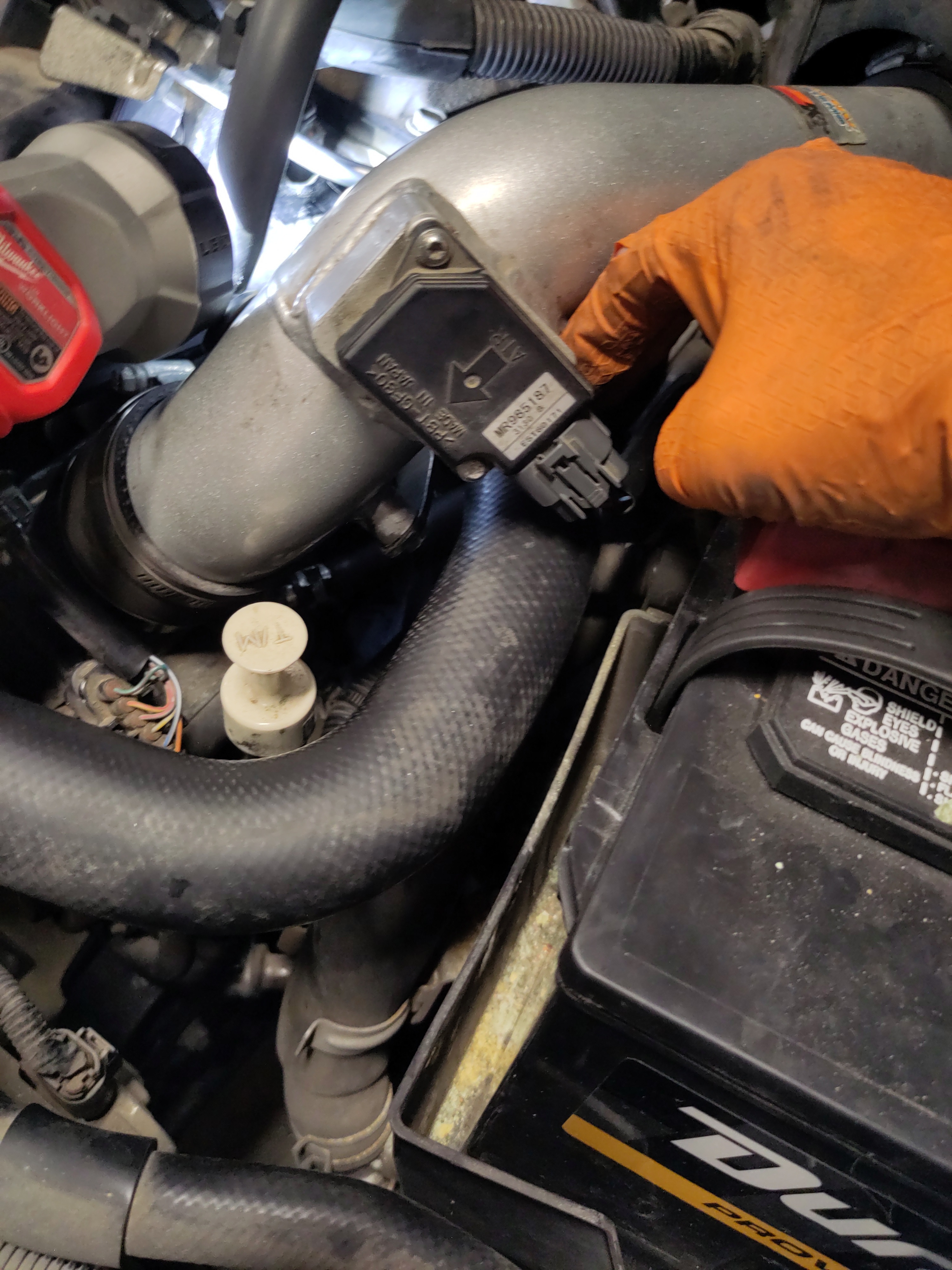
Next remove the electrical connection from the Mass Air-Flow Sensor by pushing in the clip and pulling the connection away from the Mass Air-Flow Sensor.
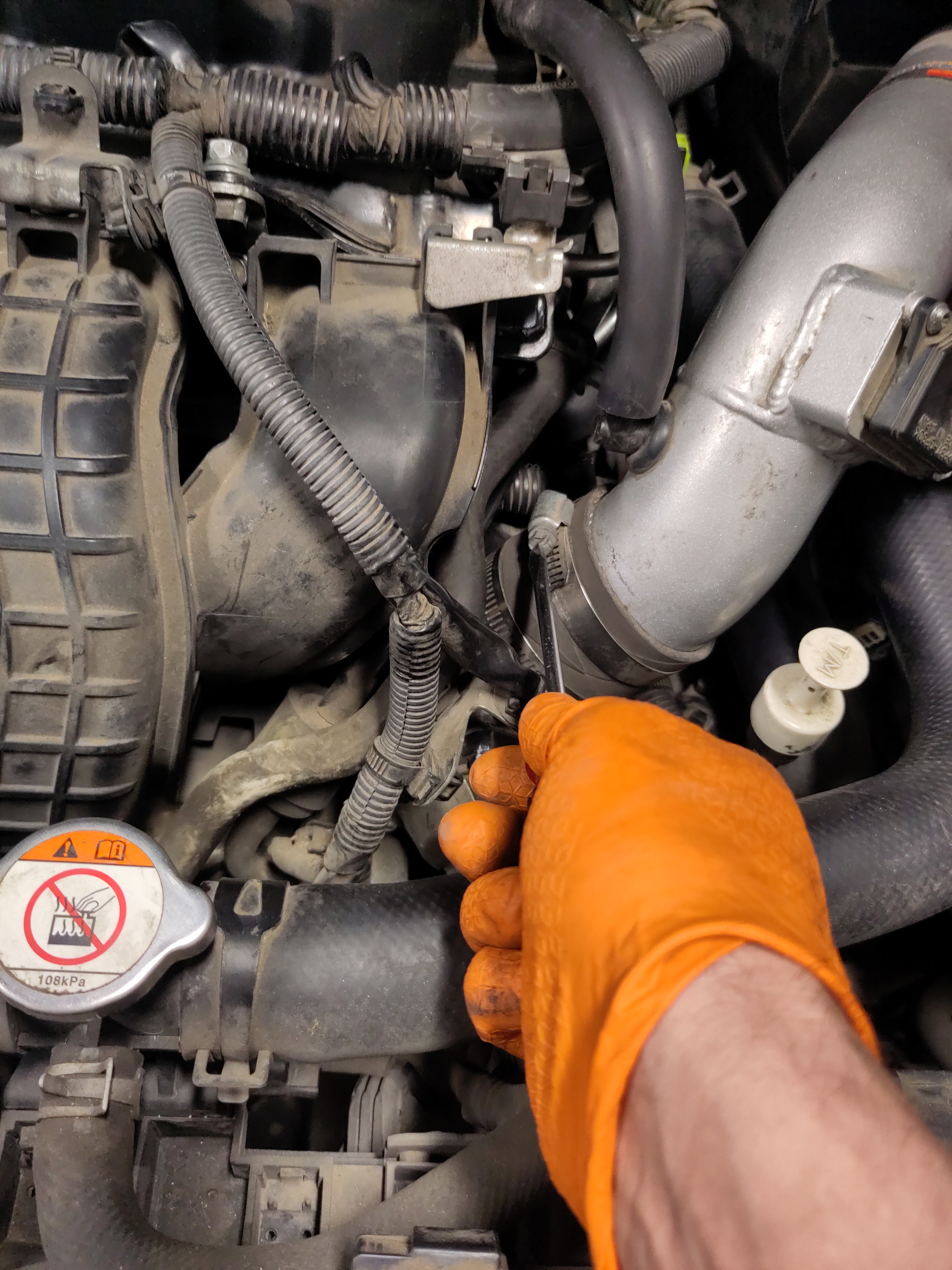
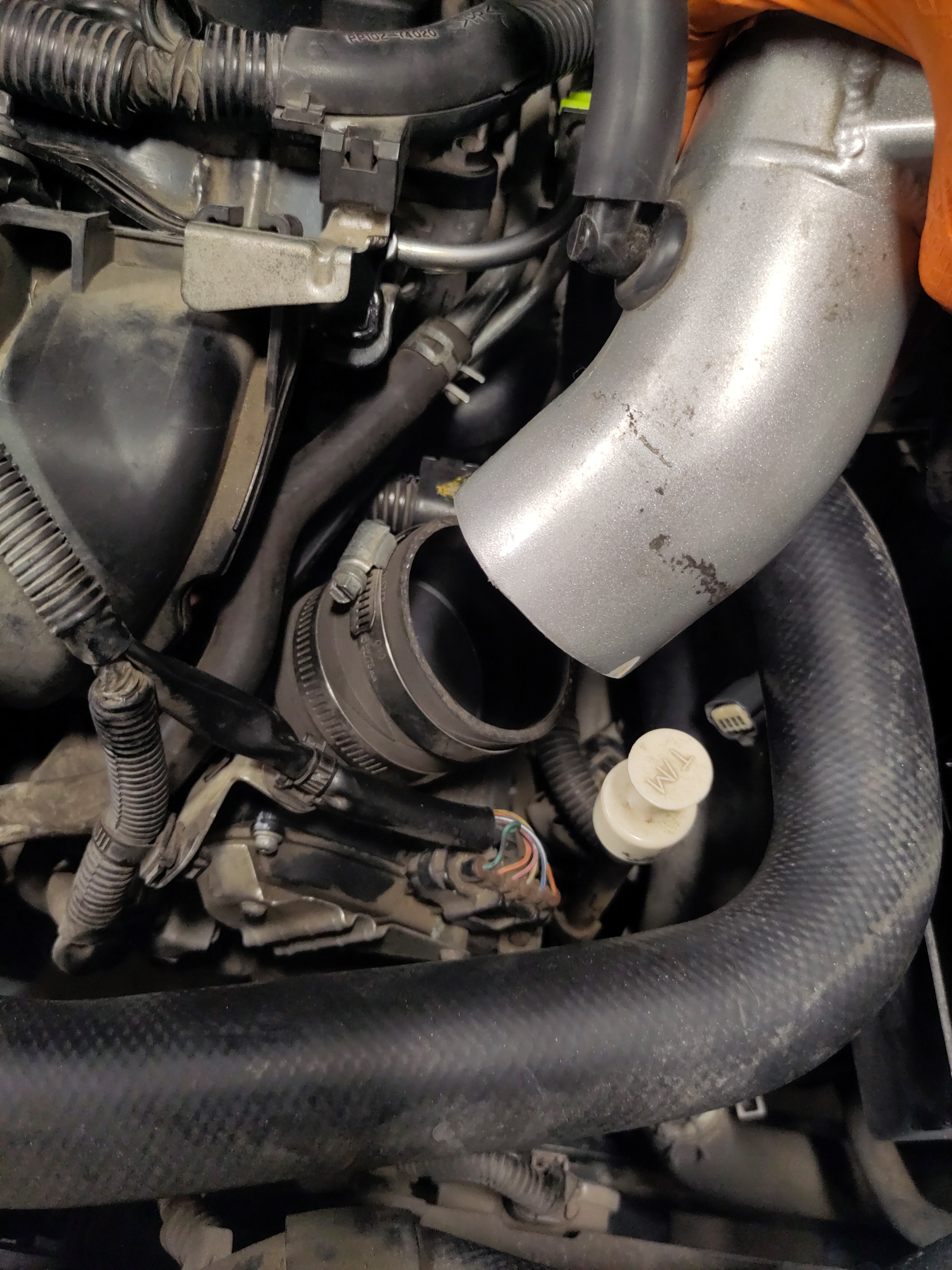
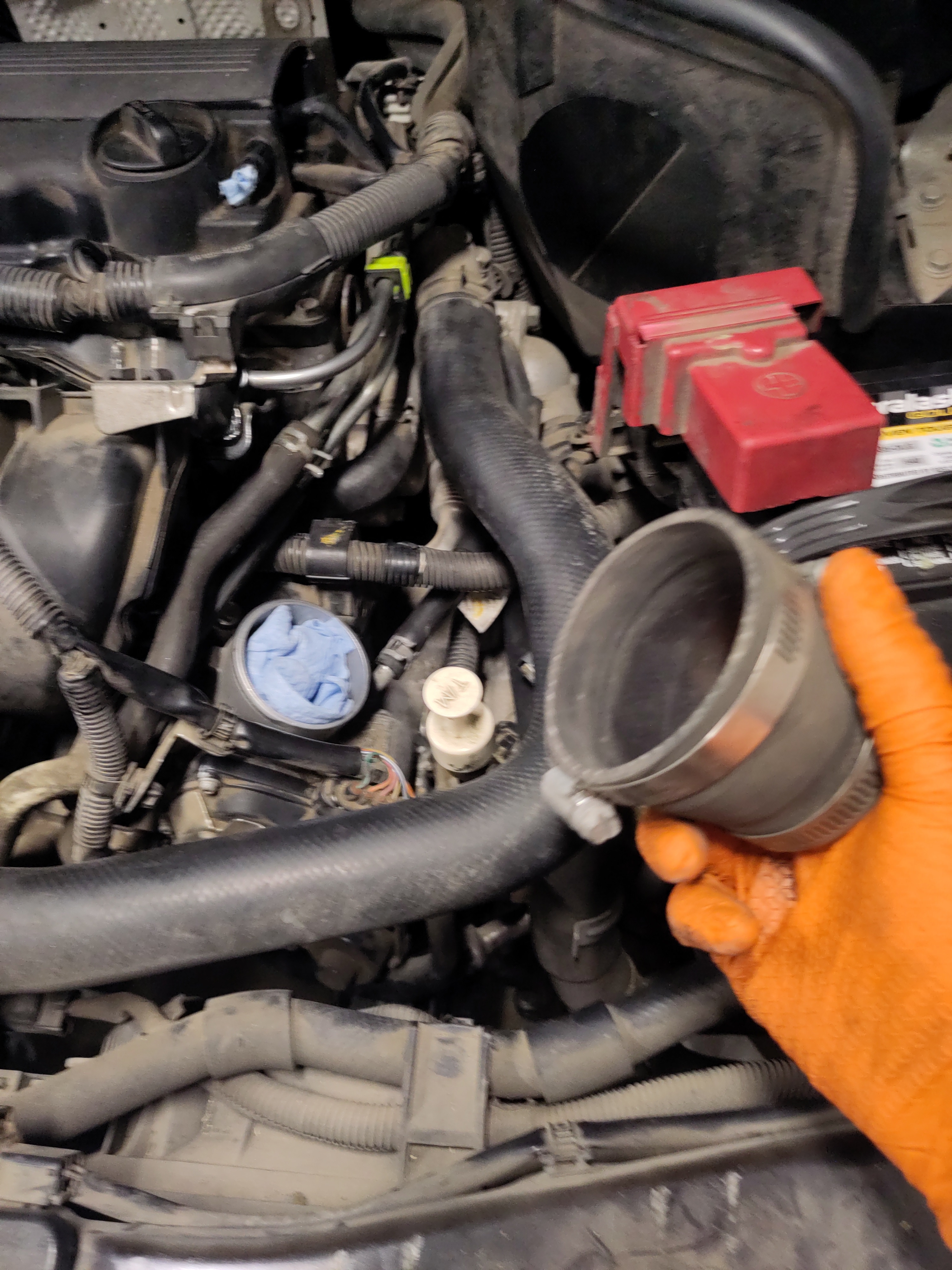
The hose clamp securing the air intake pipe to the throttle body needs to be unscrewed. Using a flat head screwdriver, unscrew the top hose clamp and loosen it just enough to remove the air intake pipe by pulling it up and wiggling it if necessary.
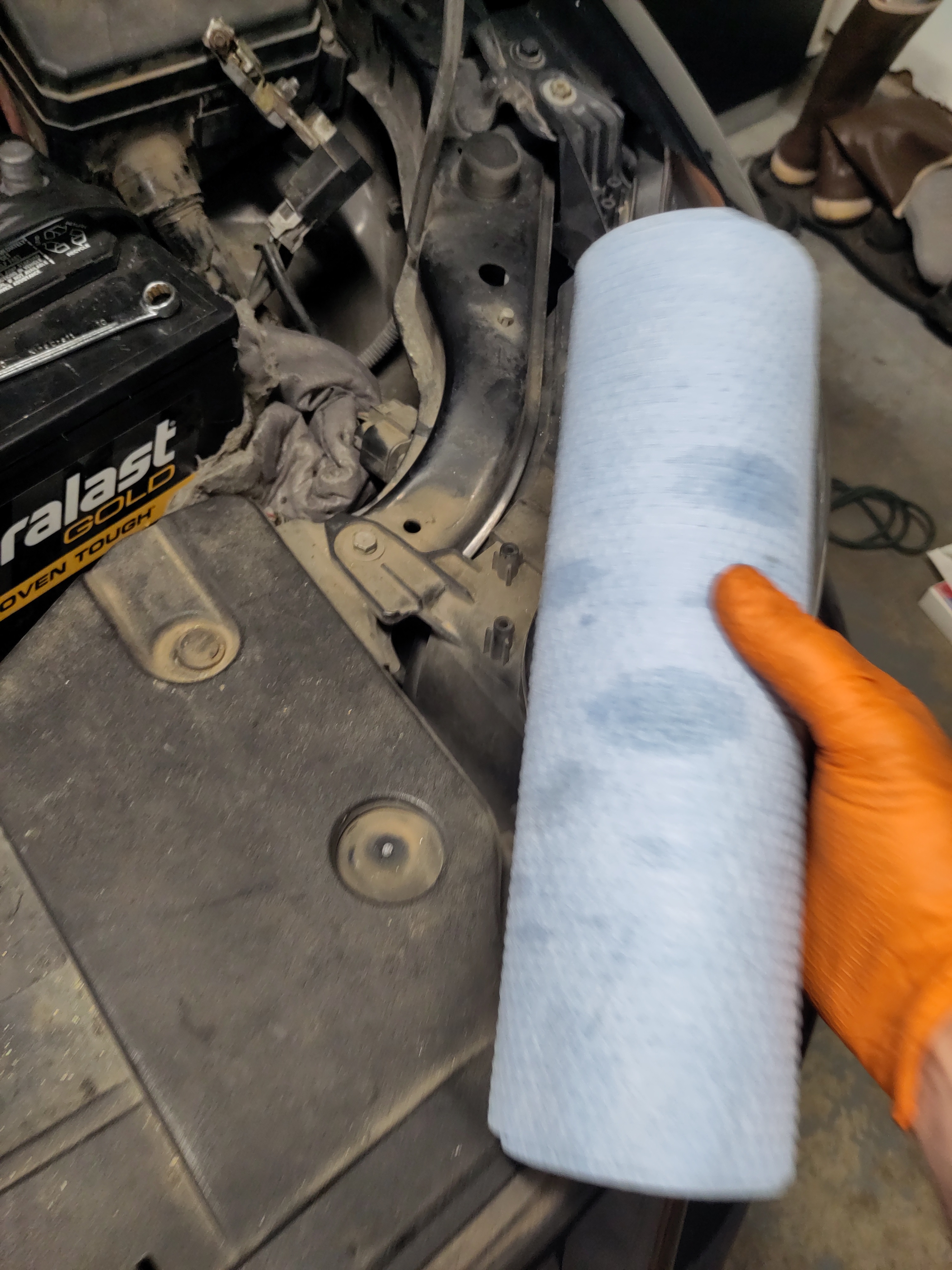
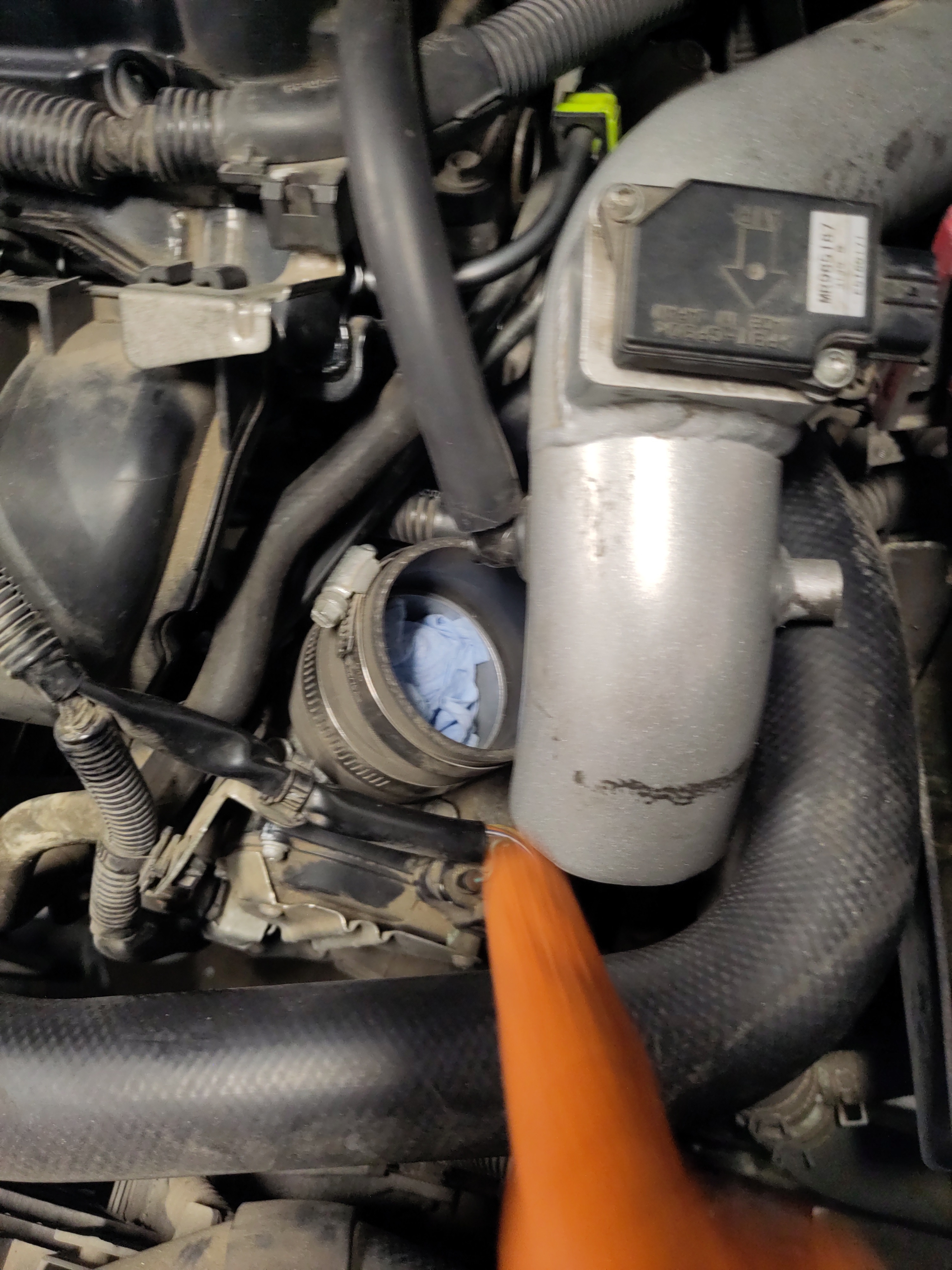
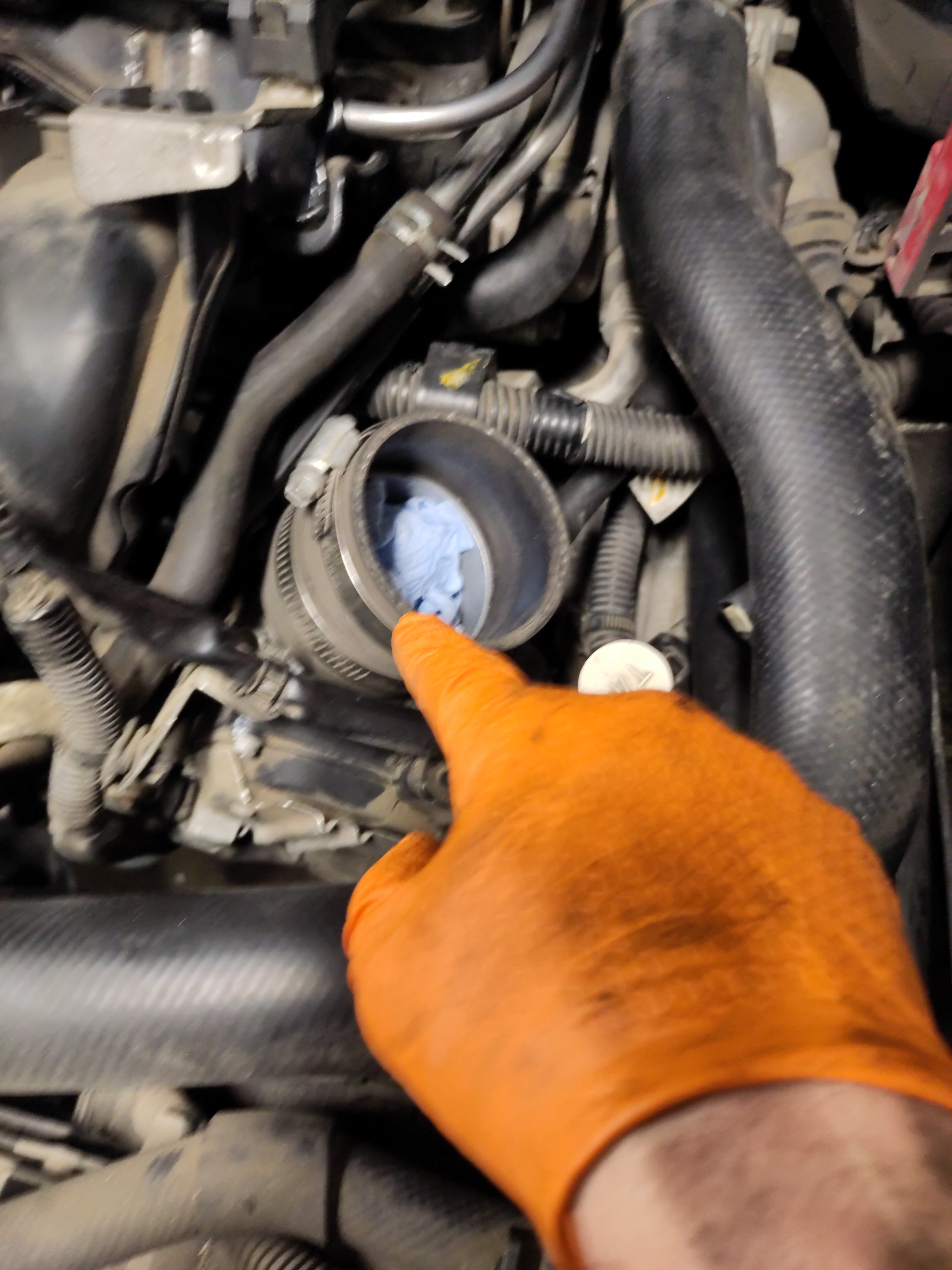
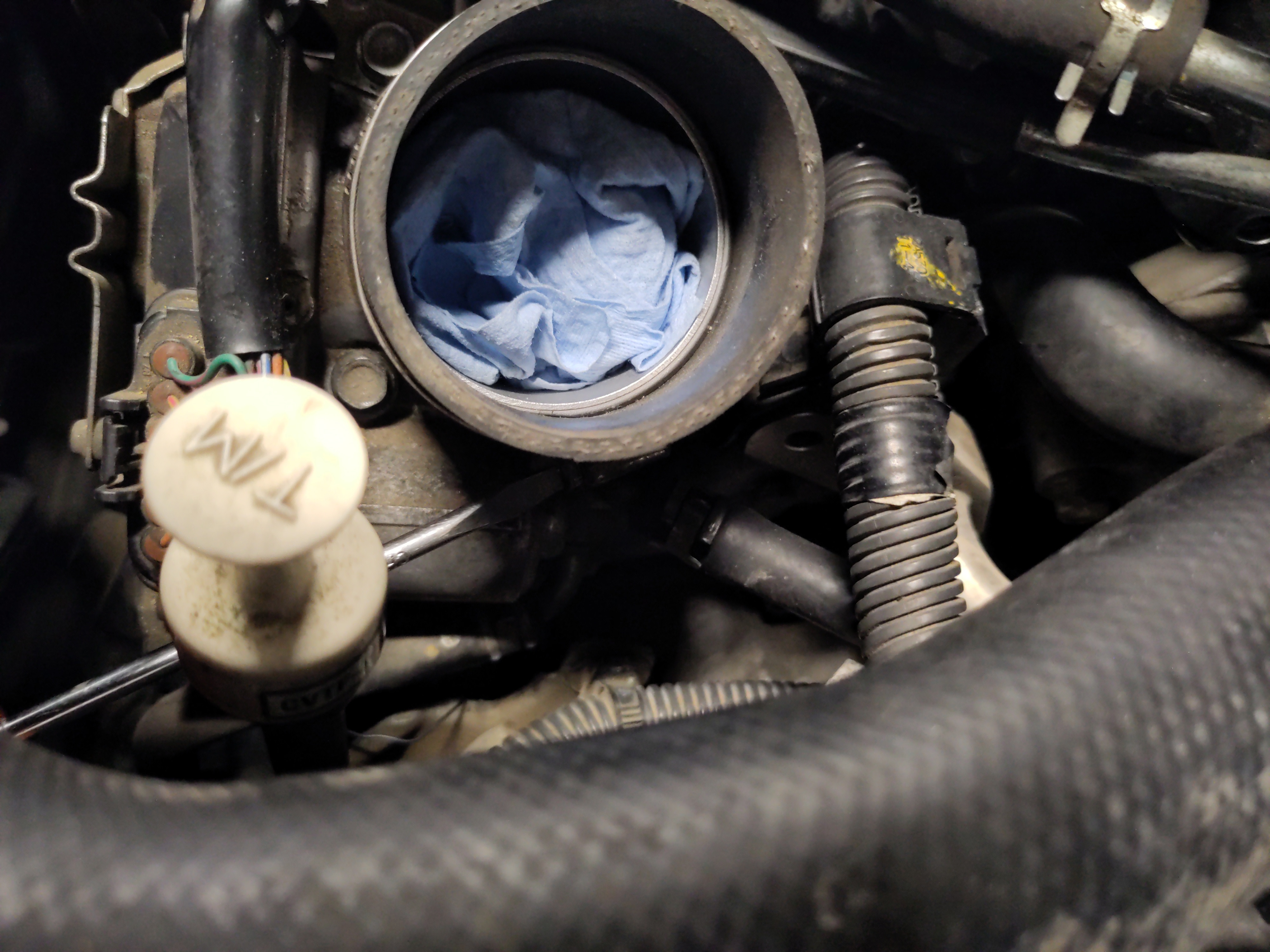
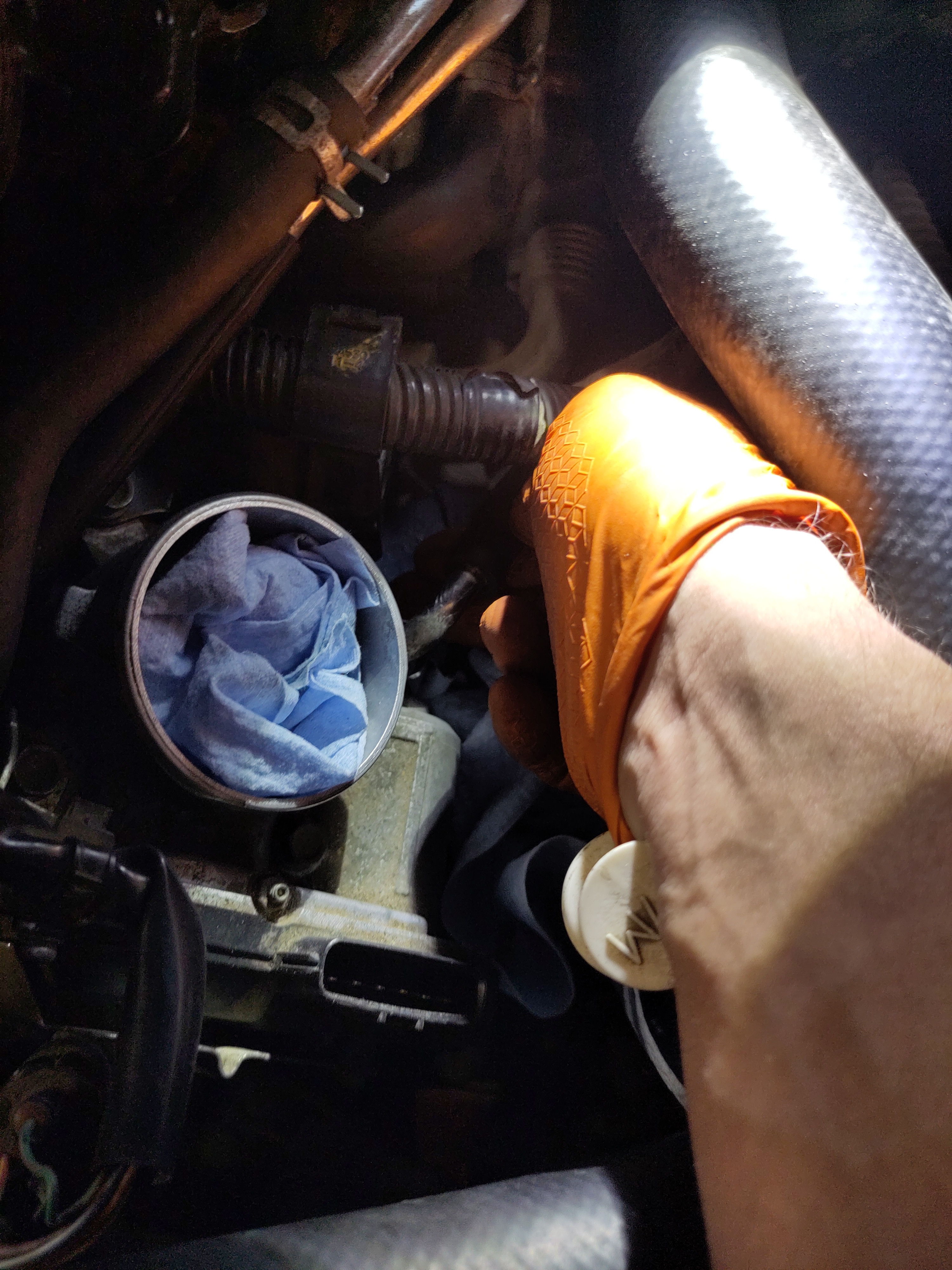
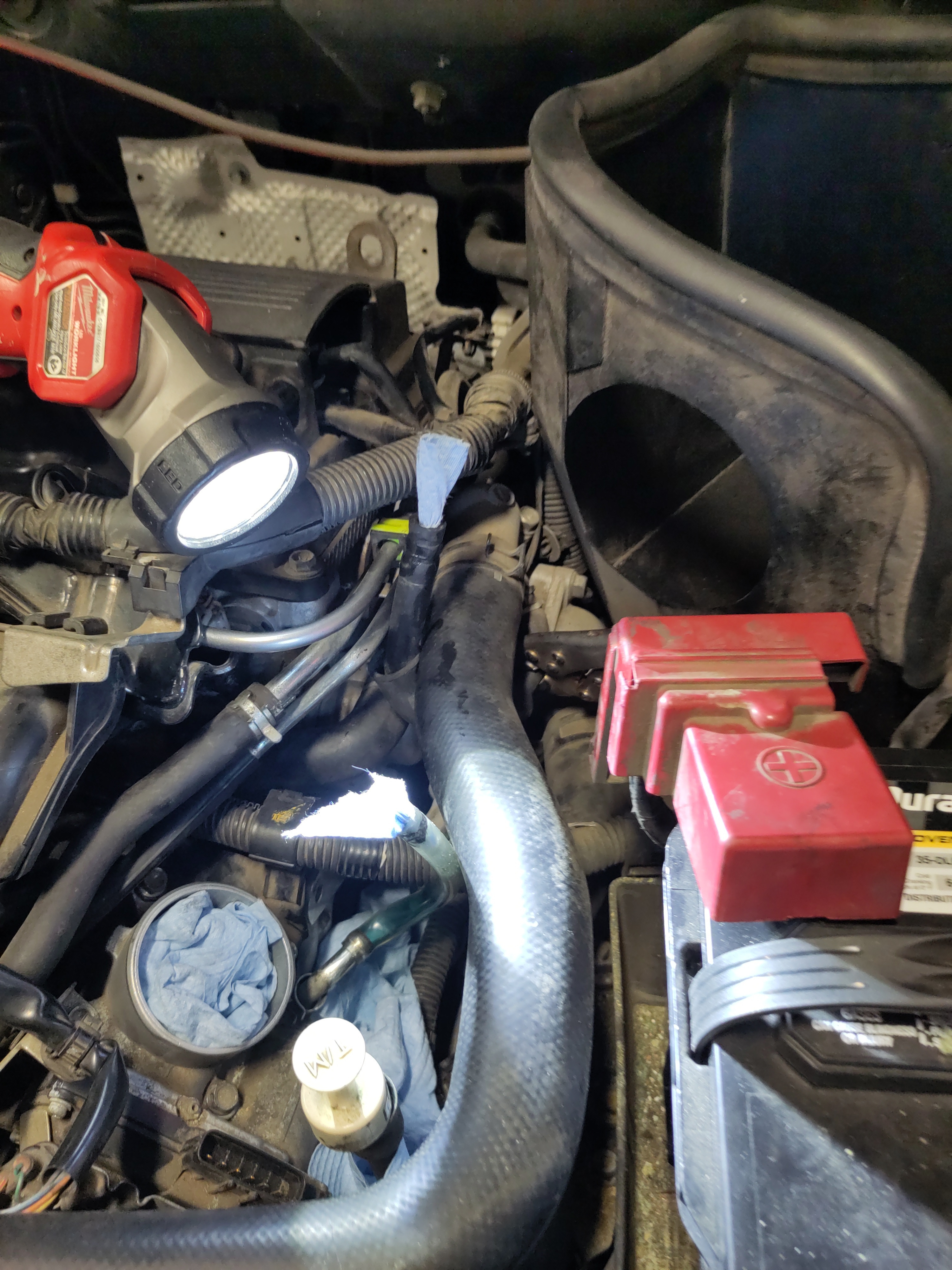
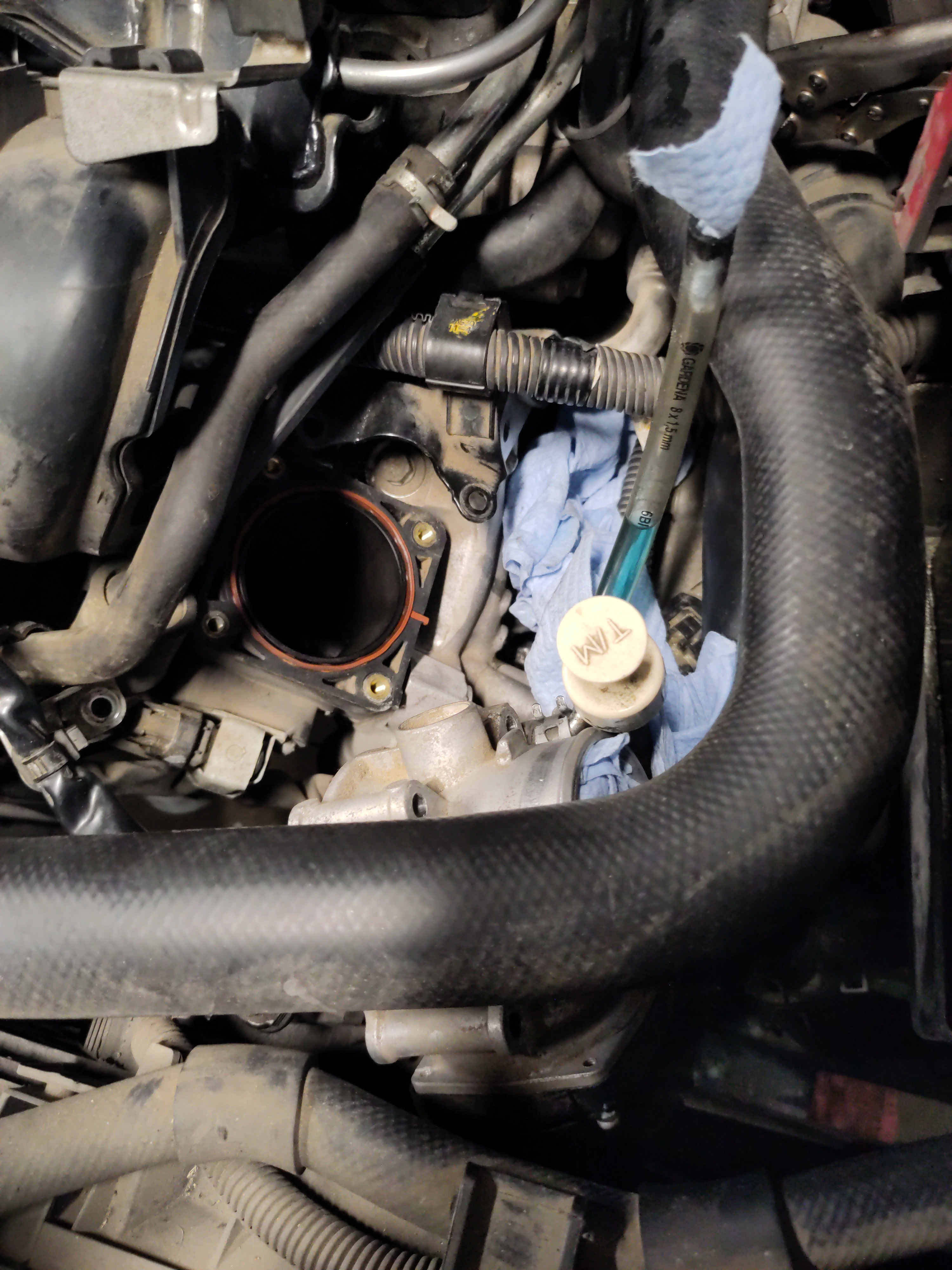
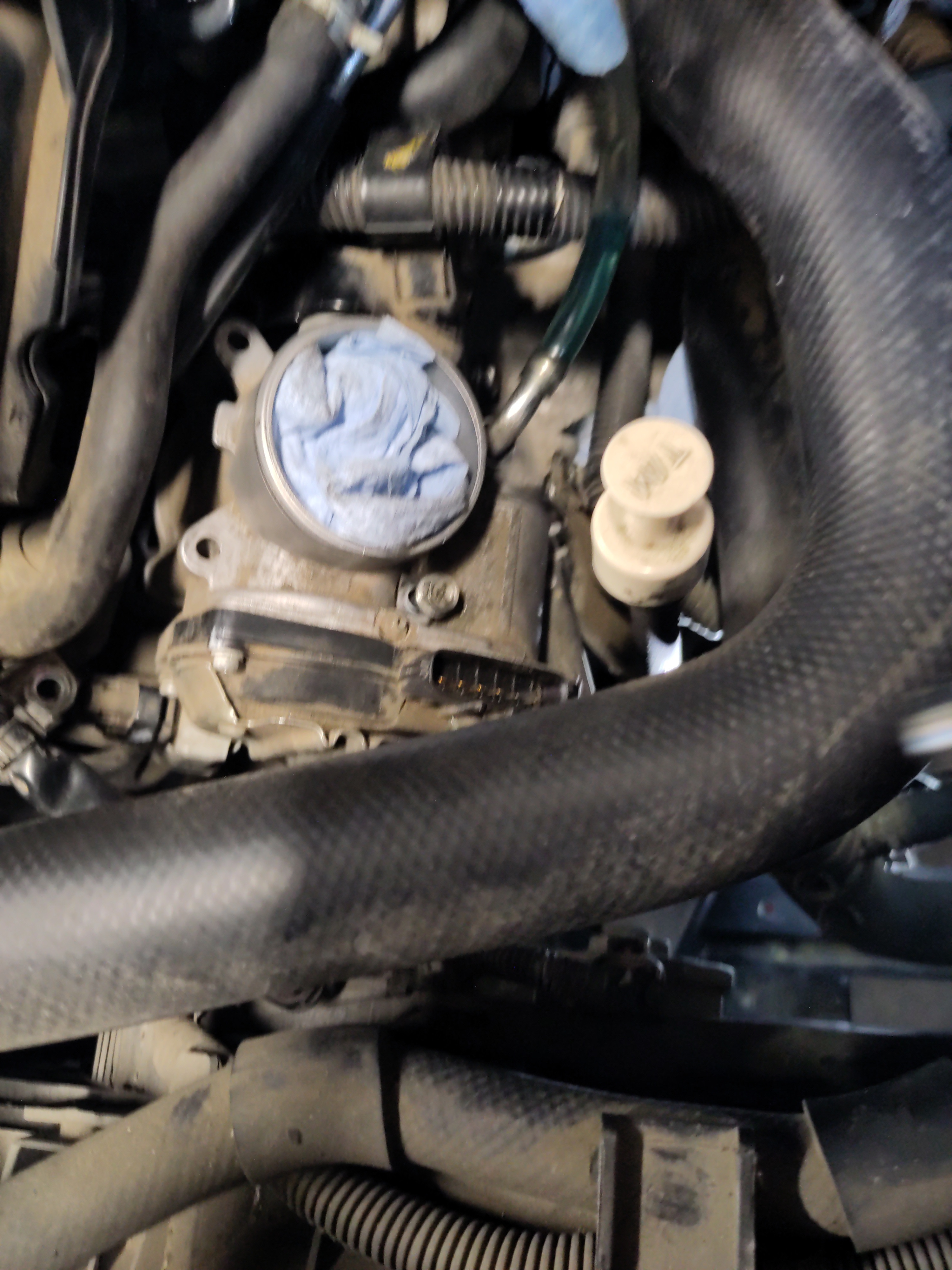
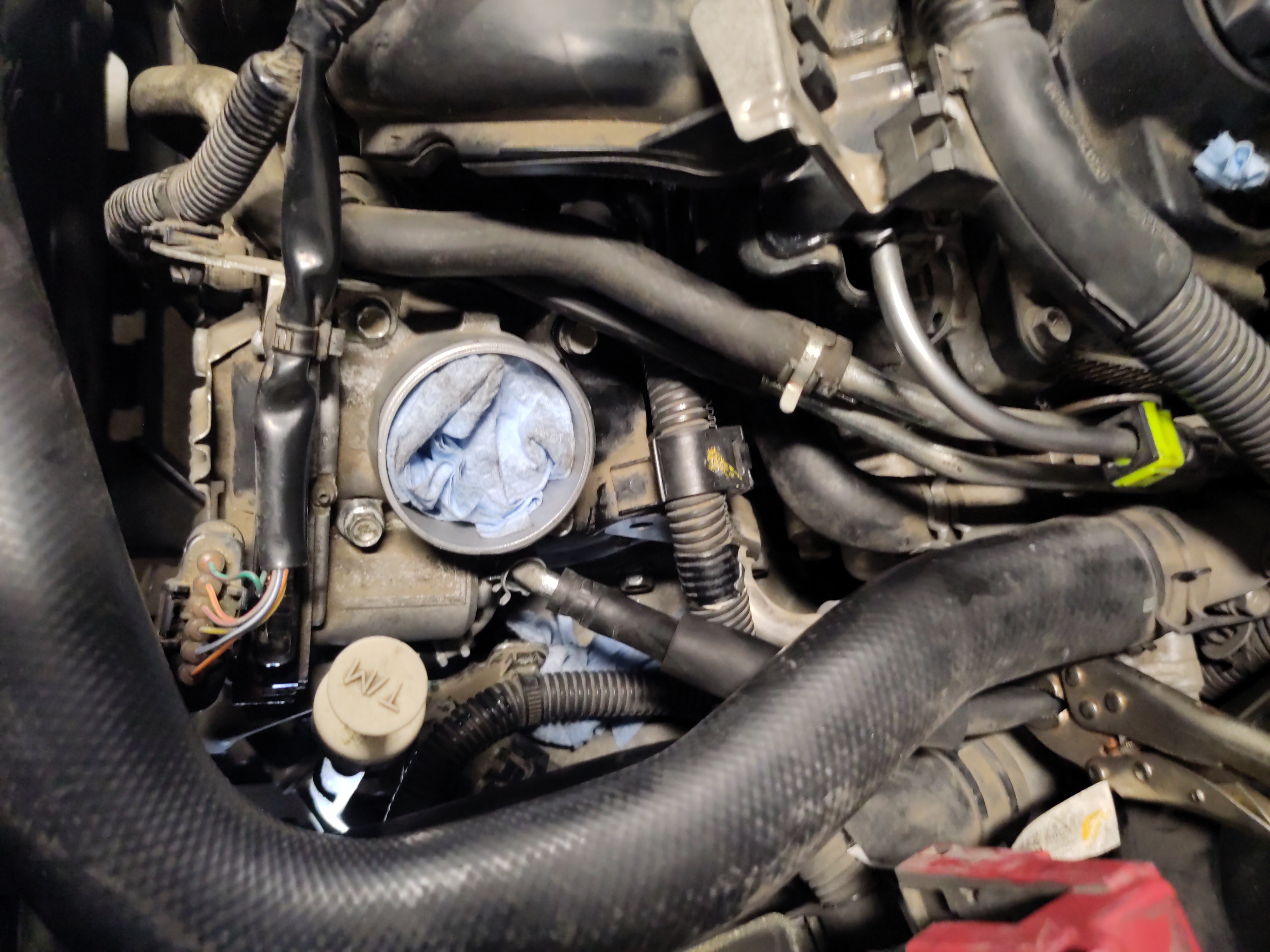
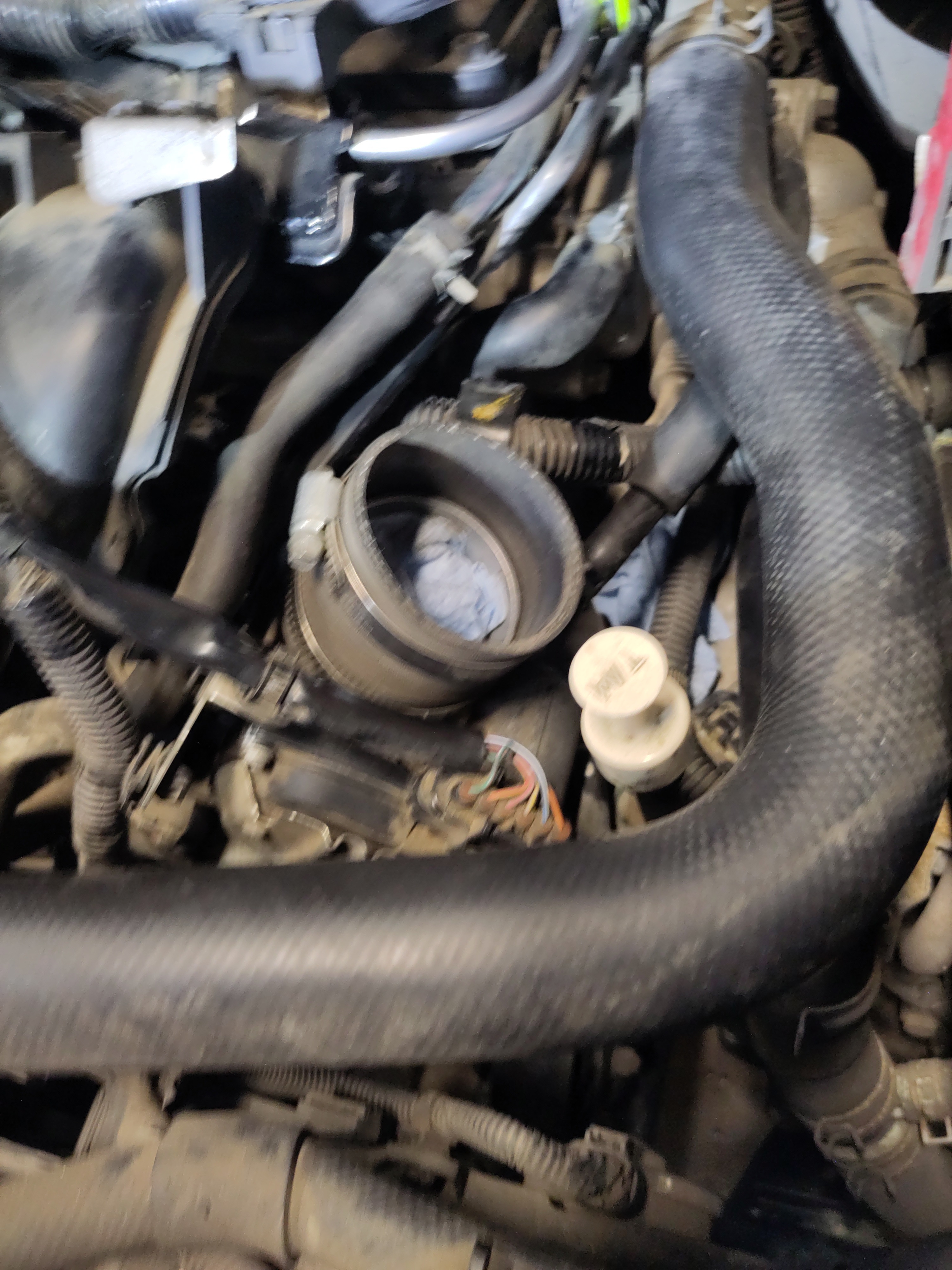
IMPORTANT! Take a piece of paper towel and stick it into the throttle body entry point. This is to prevent any debris entering the engine.
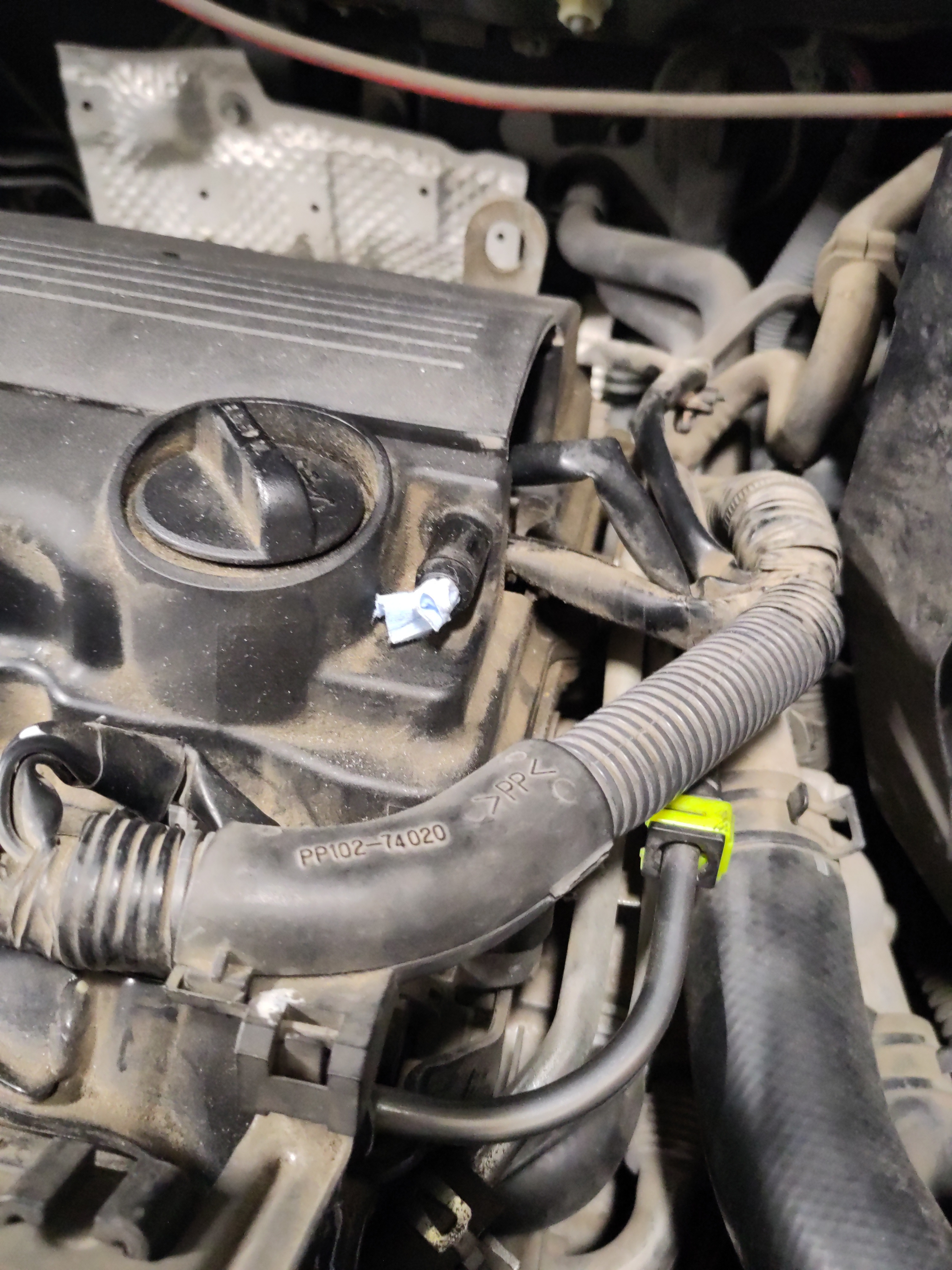
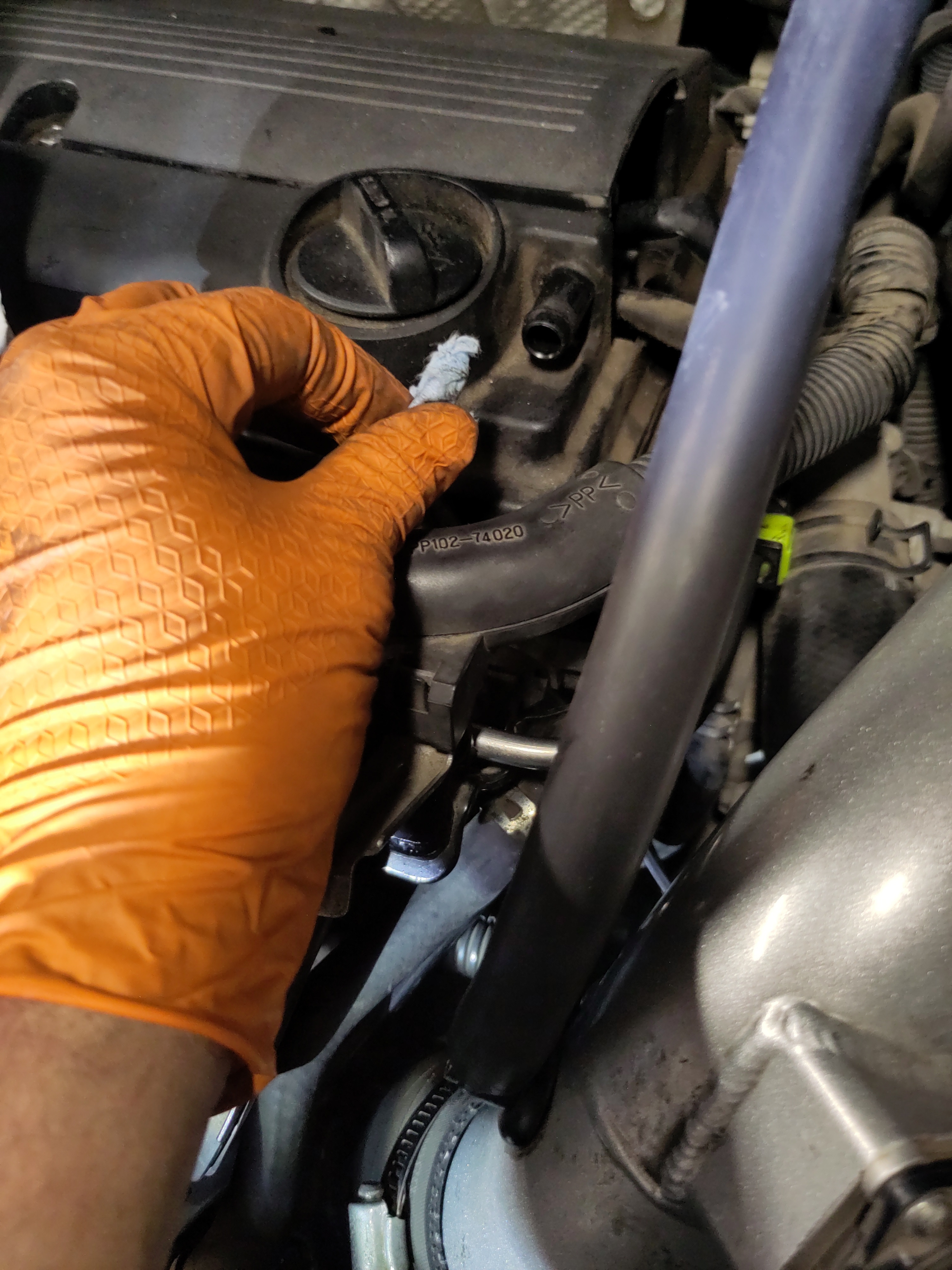
Next remove the suction hose(small black hose) connecting from engine to the intake pipe. Remove the hose by pulling on it. Rip a small piece of paper towel off and stick the piece into the entry point. This prevention from debris entering the vehicle. Now the air intake pipe off to the side.
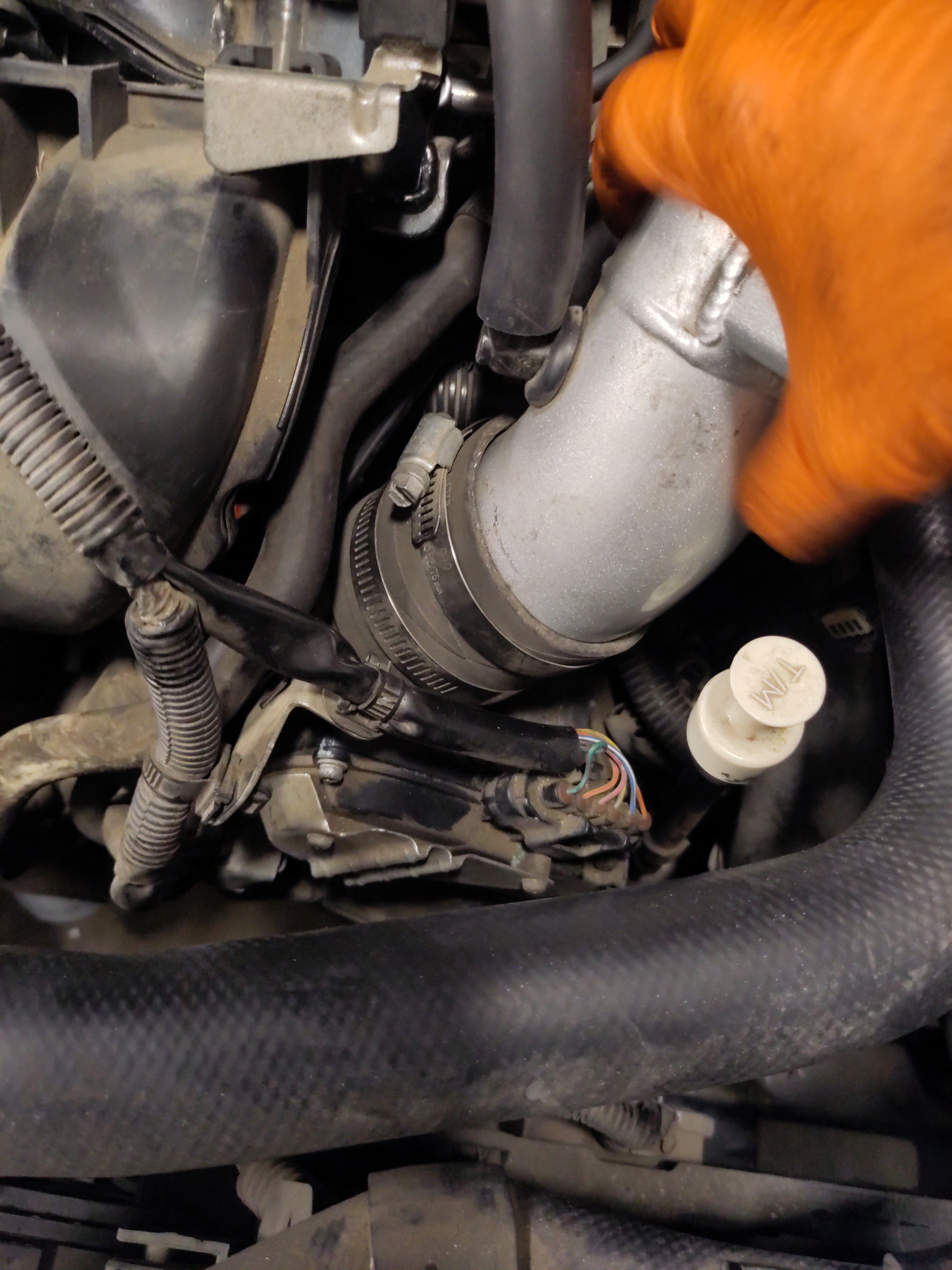
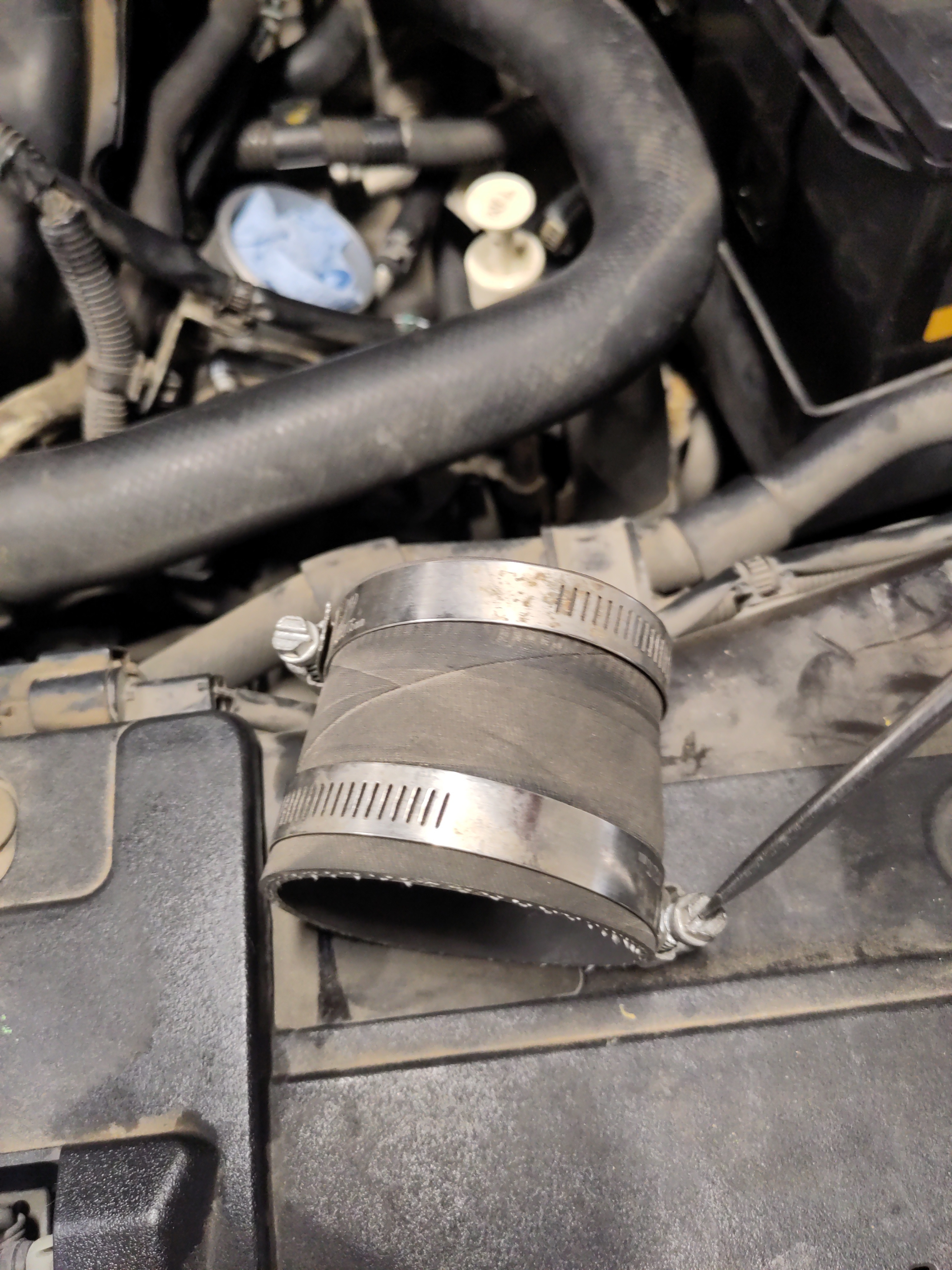
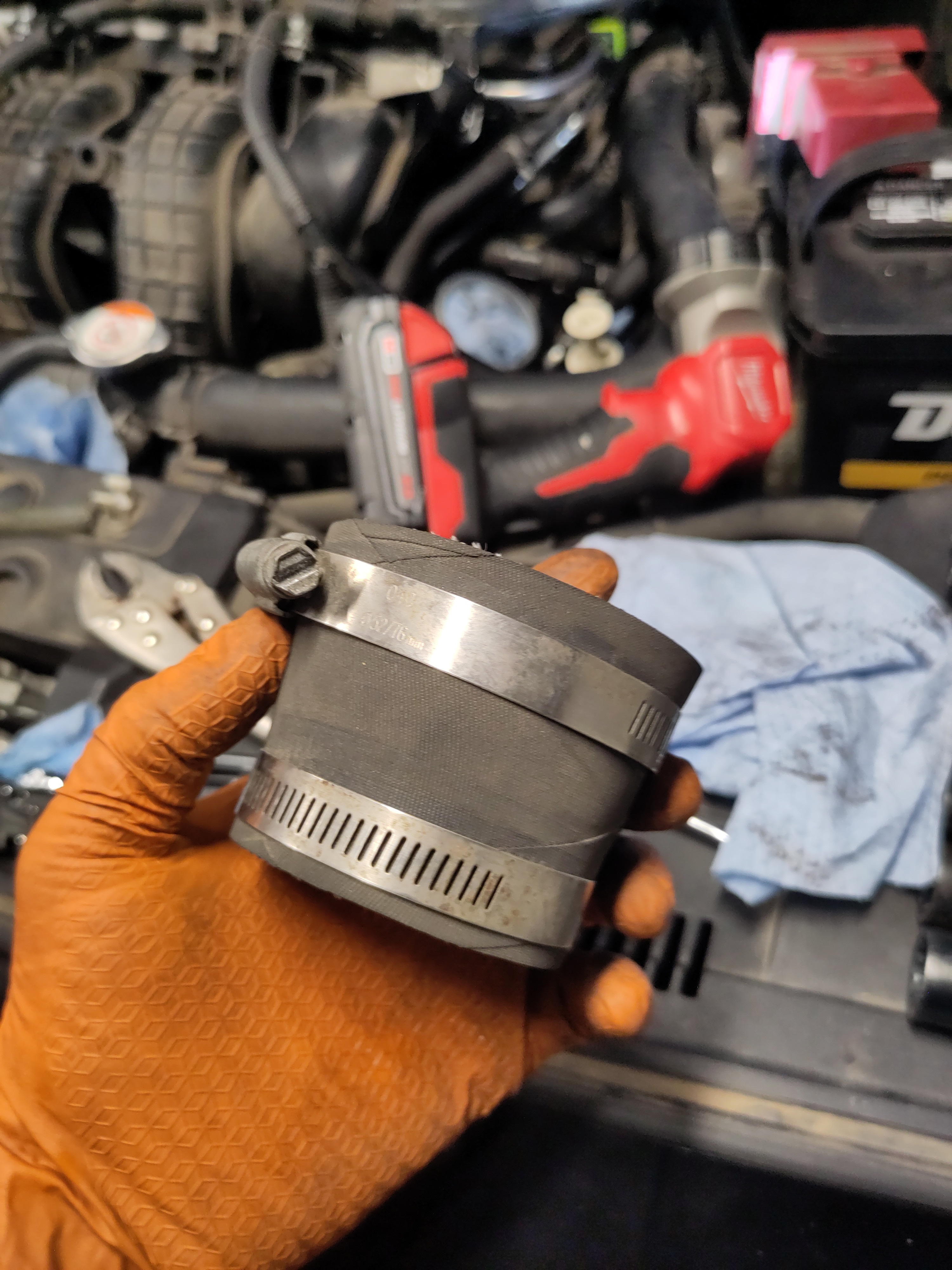
The removal the hose connecting the throttle body and the air intake pipe will be removed by unscrewing the bottom hose clamp. Unscrew the hose clamp just enough to where the hose clamp to tight around the hose clamp, but loose enough to remove the hose. Set aside the hose.
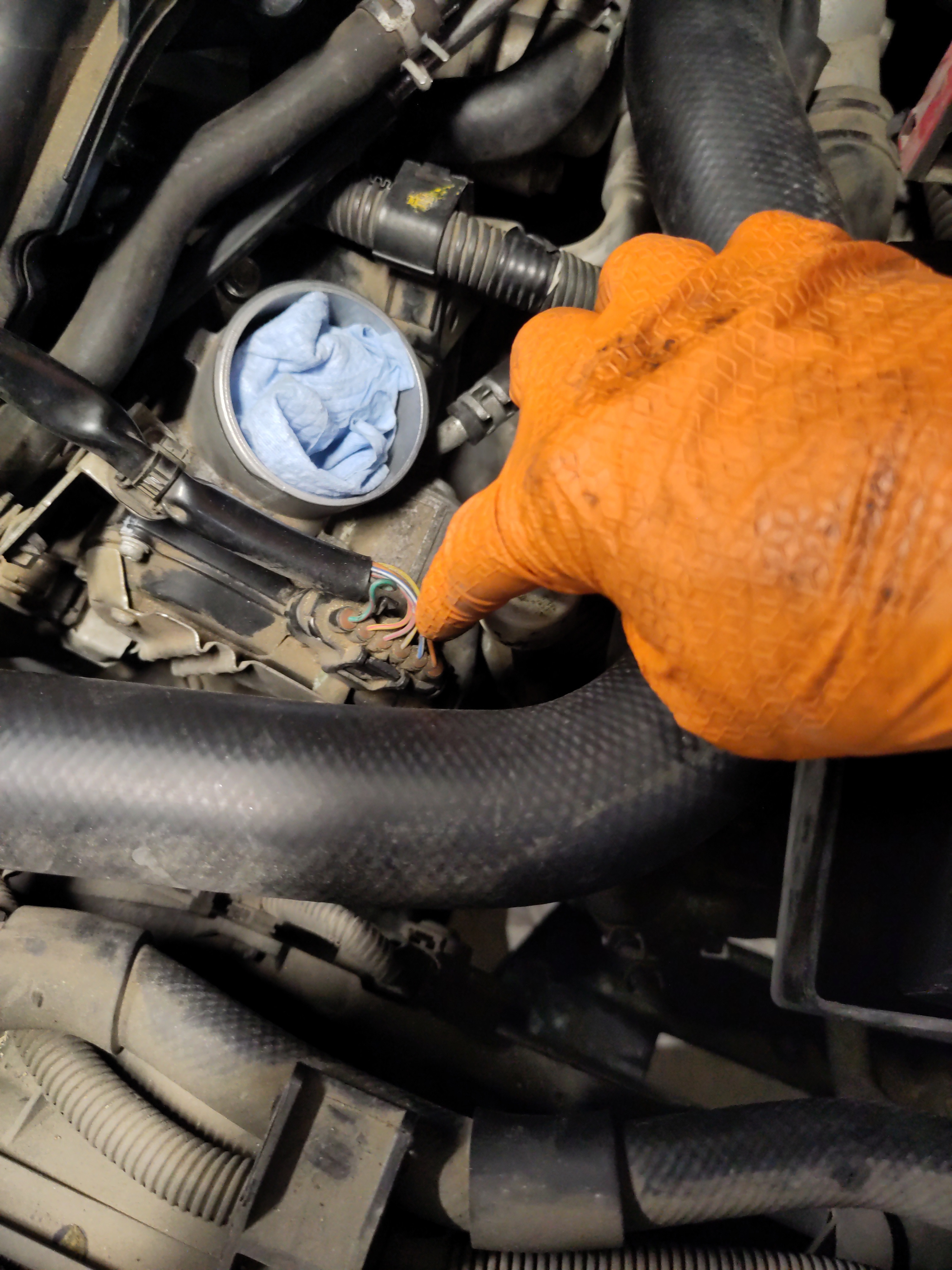
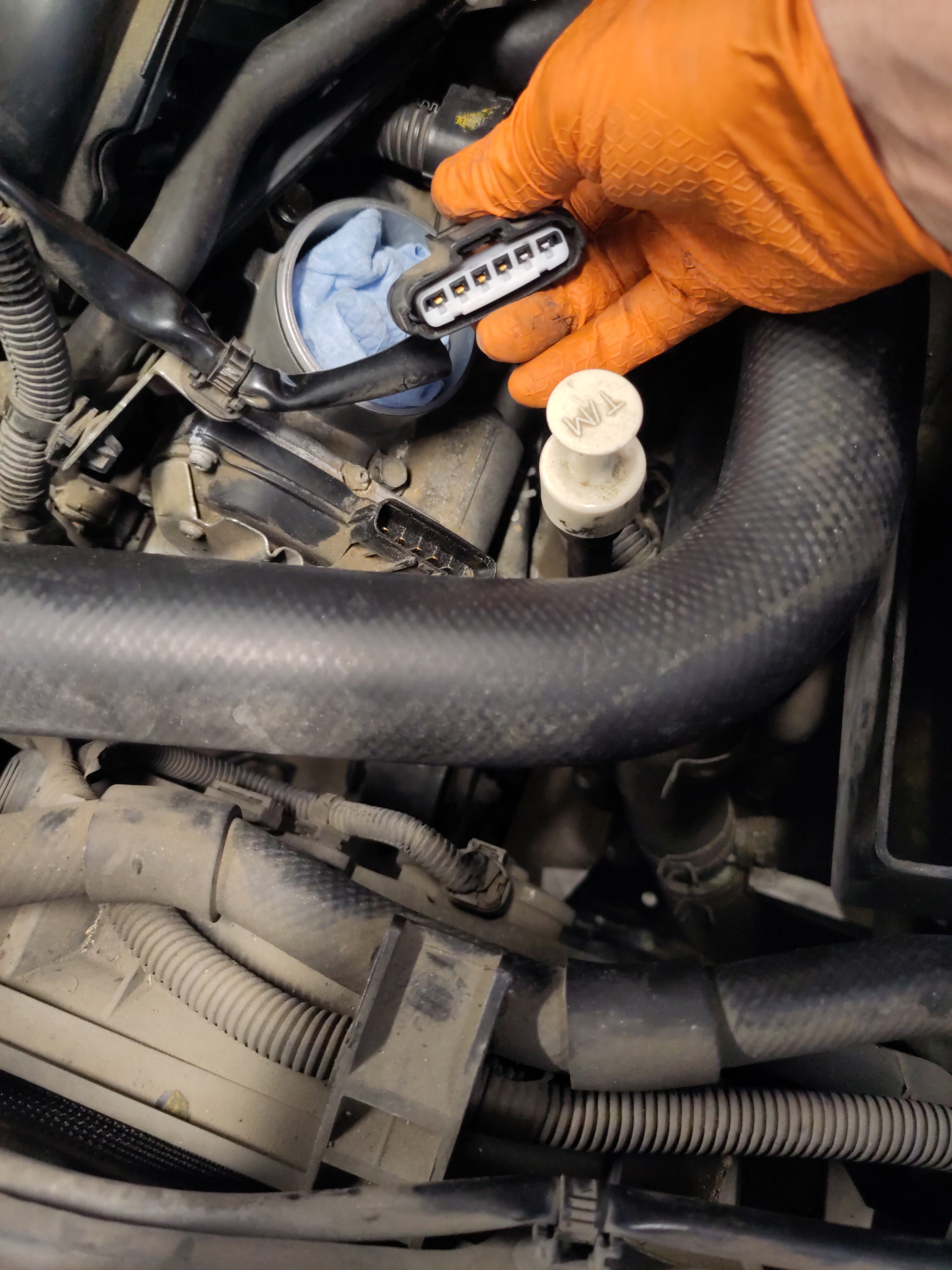
The throttle body electrical connection will need to be disconnected and set off out of the way. Similar to disconnecting the mass air flow sensor. Push the pin in then pull up on it to remove it. It is important to put the male electrical connection end out of the way because in the next coming steps coolant will be getting drained out and want to prevent it from getting on the any electrical circuitry.
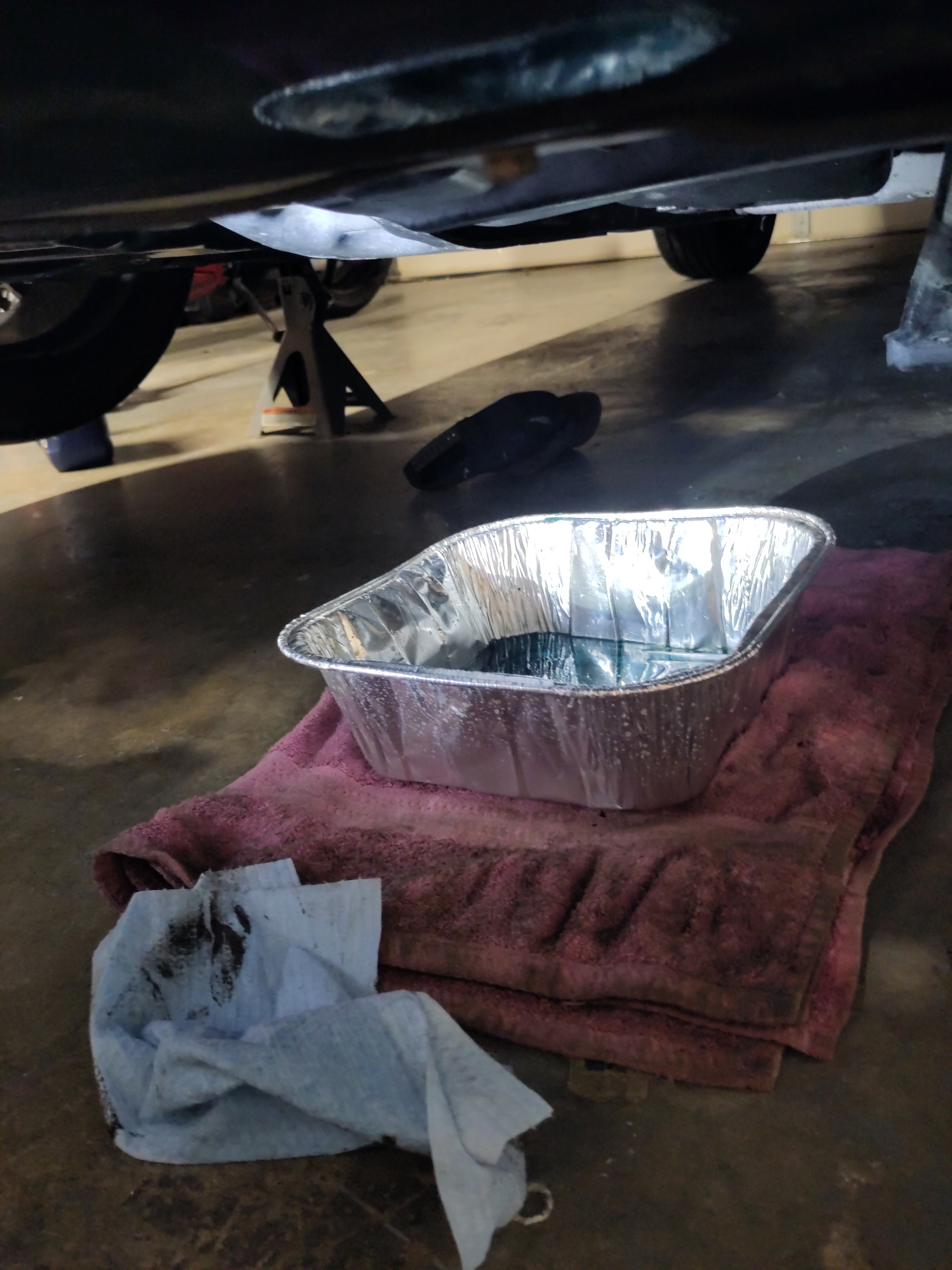
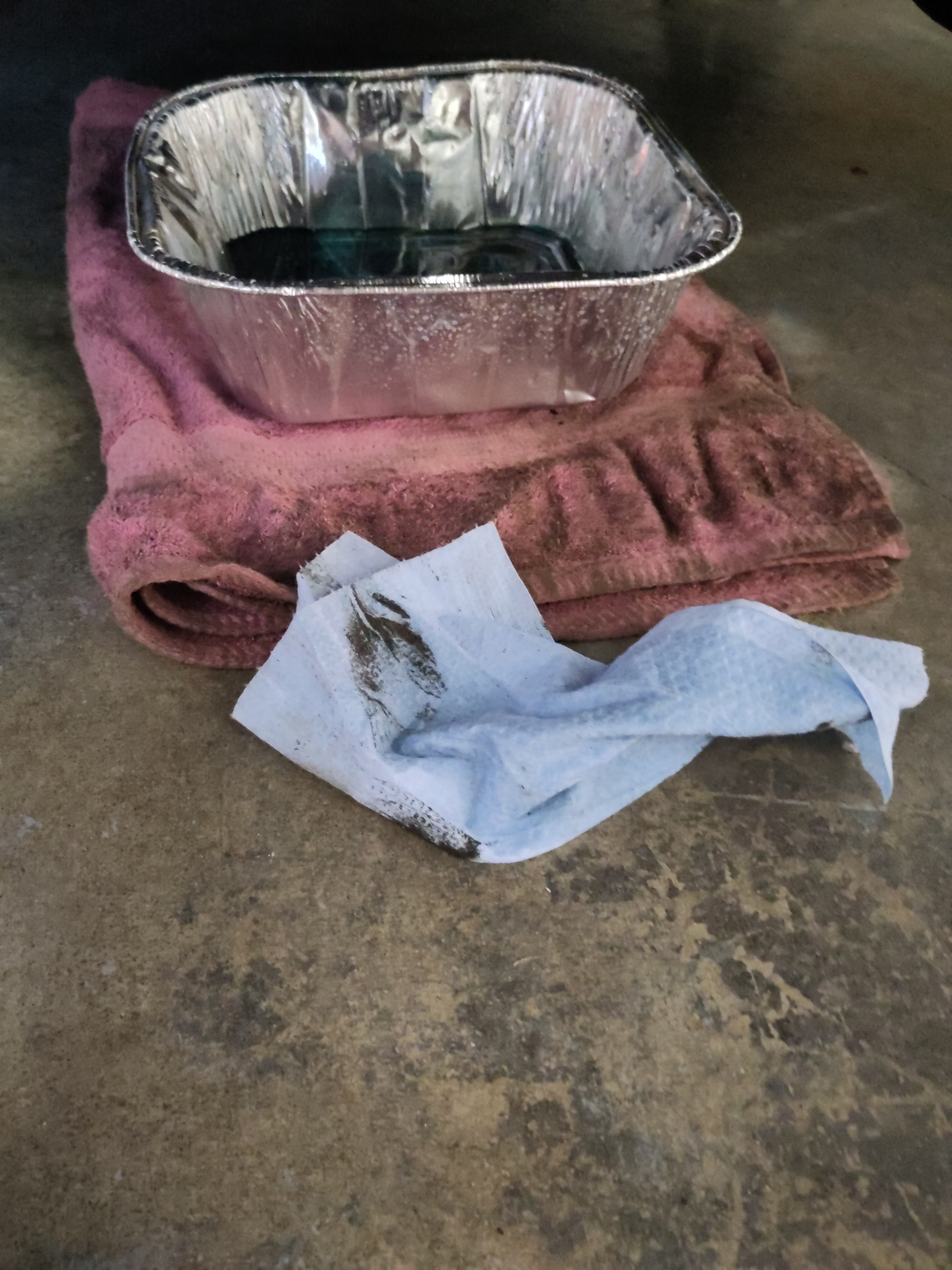
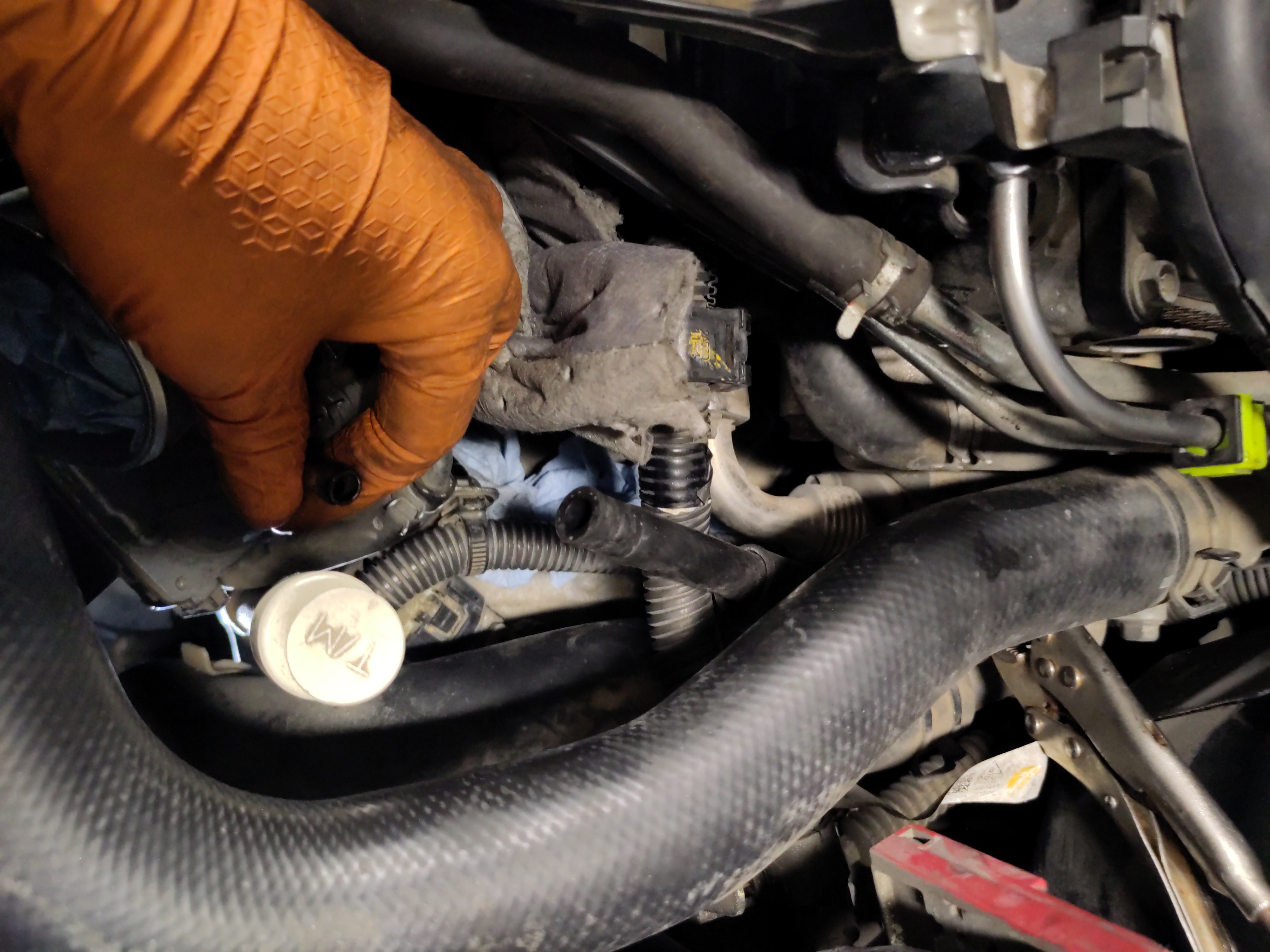
Take the drip pan and the old towel and the placement of the them should approximately aligned with the throttle body. The drip pan and towel there to catch all coolant that will be leaking out for when we remove a coolant hose connection. Having a flash will beneficial to use at this point.
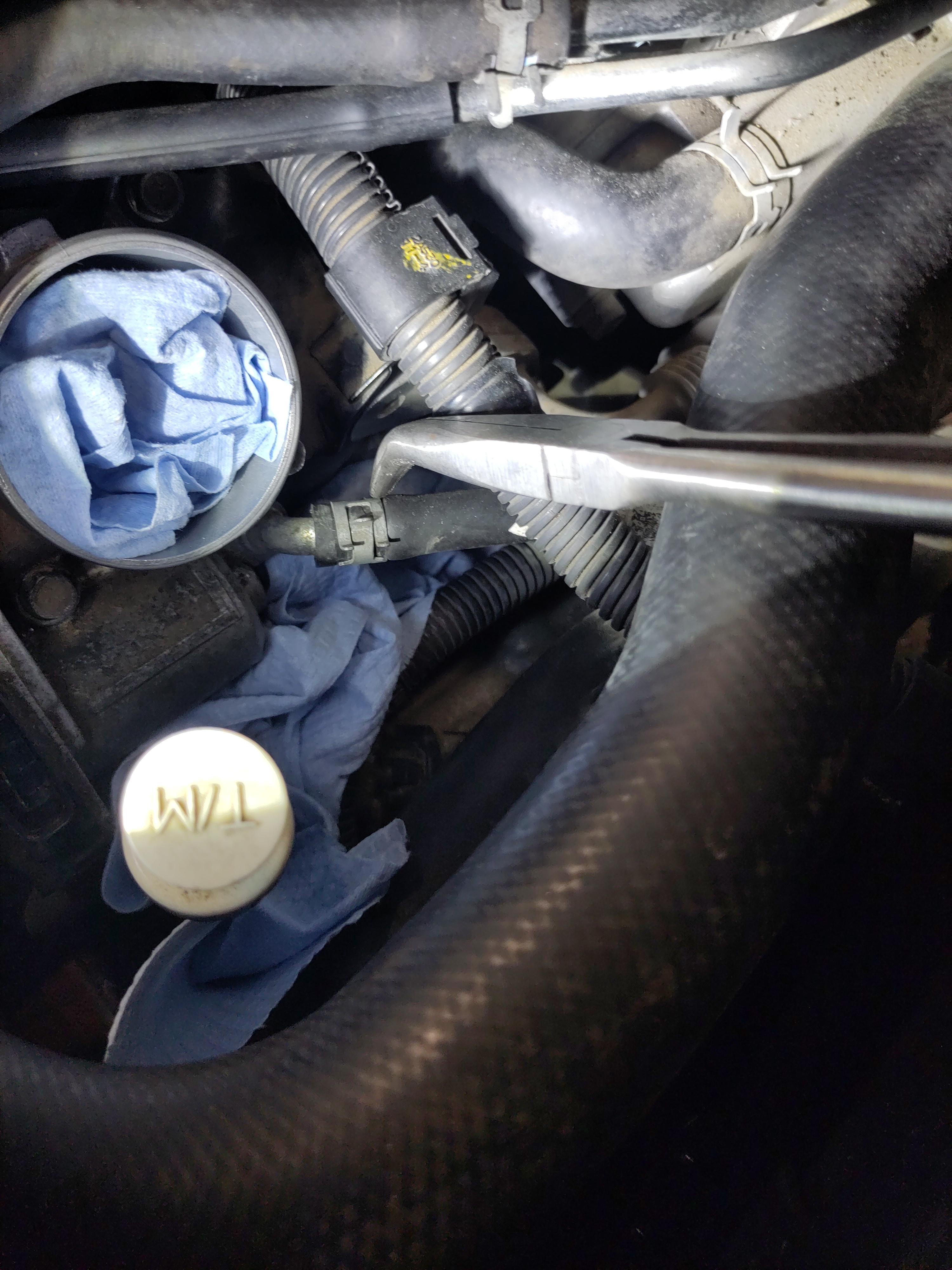
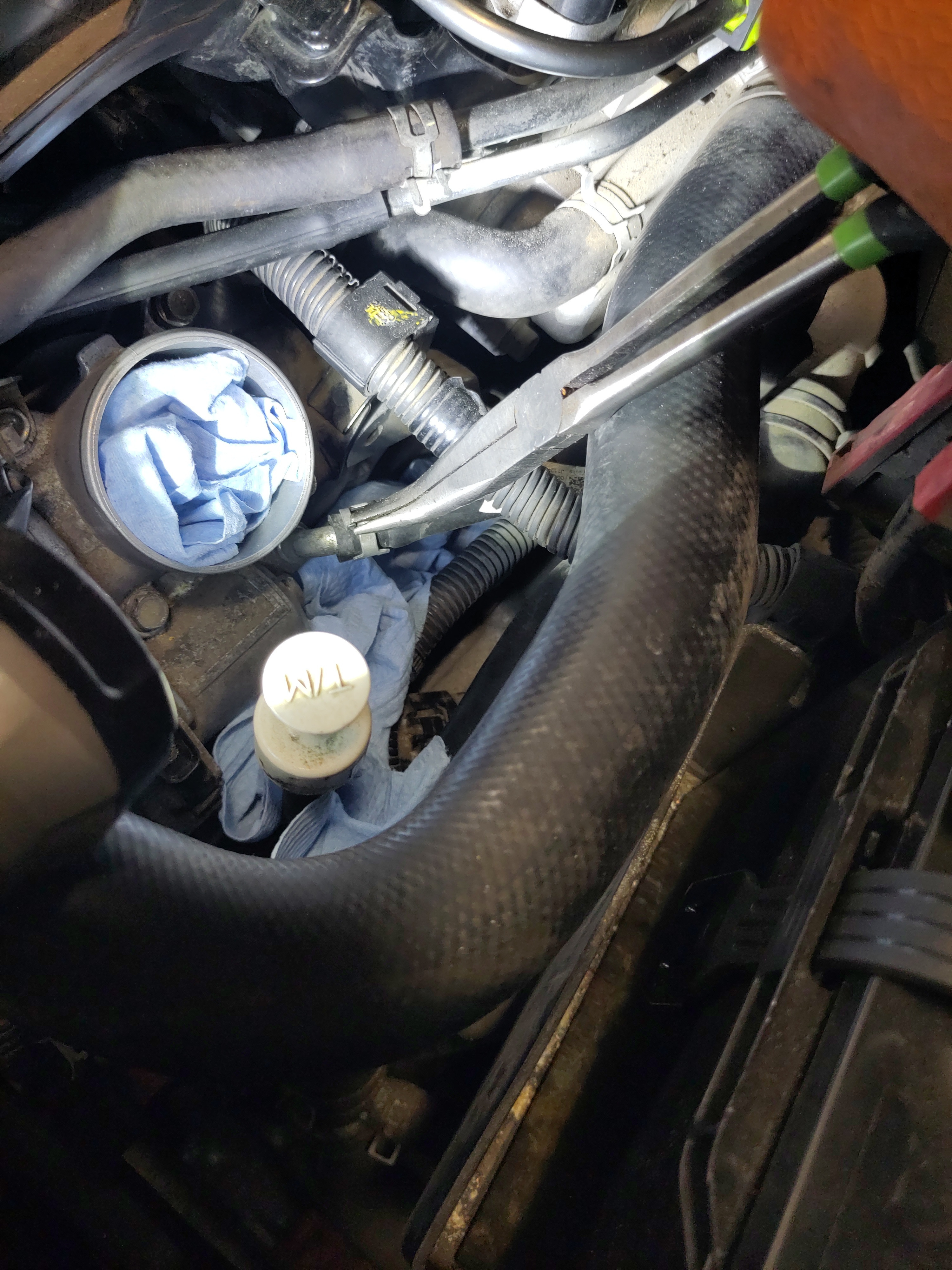
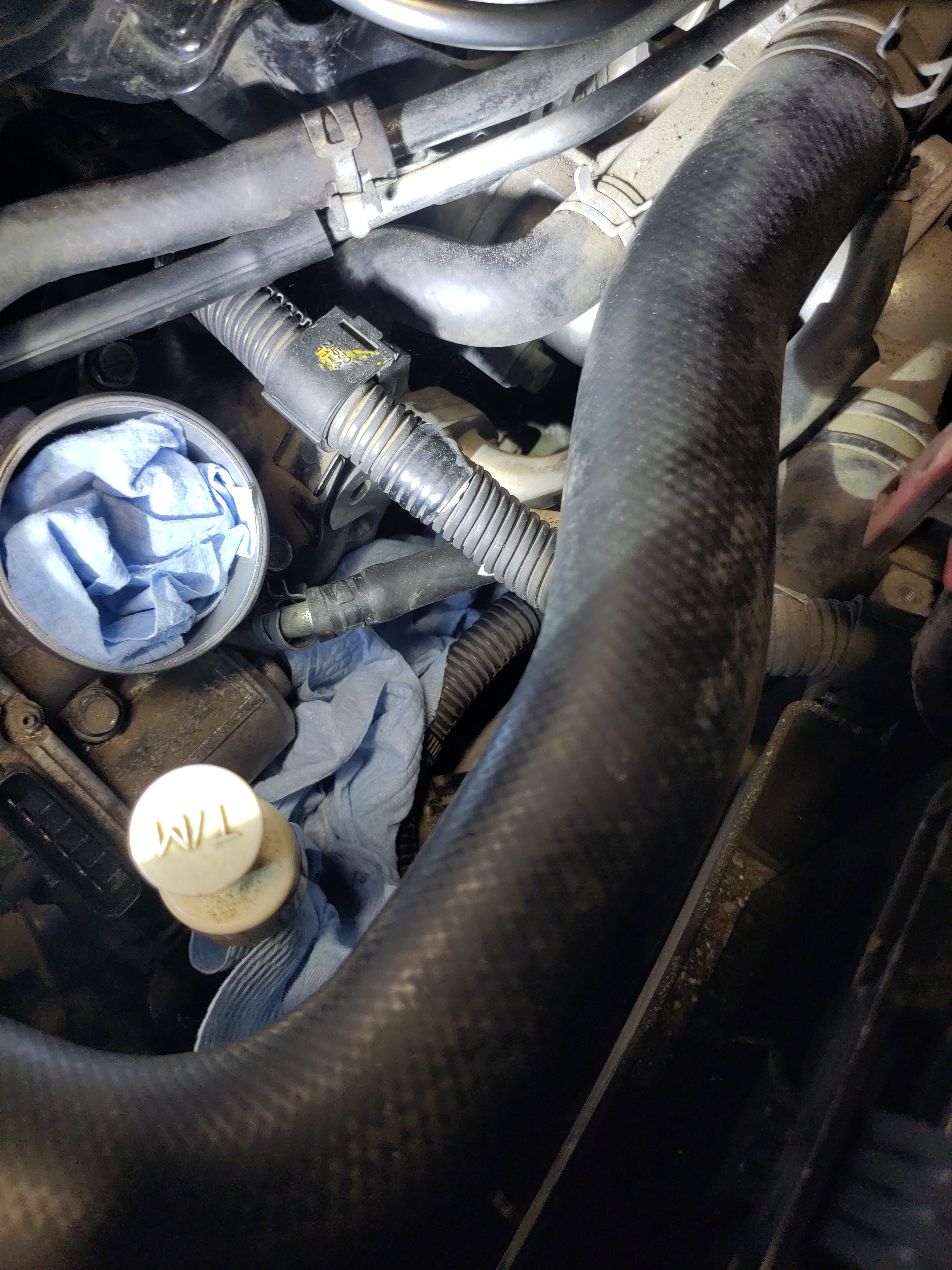
Stuff paper towels or old rags into the crevices and gaps of the engine that are below the coolant hose in order to mitigate a mess or component damage. The hose clamp will be removed by using long reach bent needle nose pliers. Squeezing the nose pliers with the proper angling will aid in removing it. Once it is loose just slide it toward the male end of hose insertion(located on the throttle body) and let it set there.
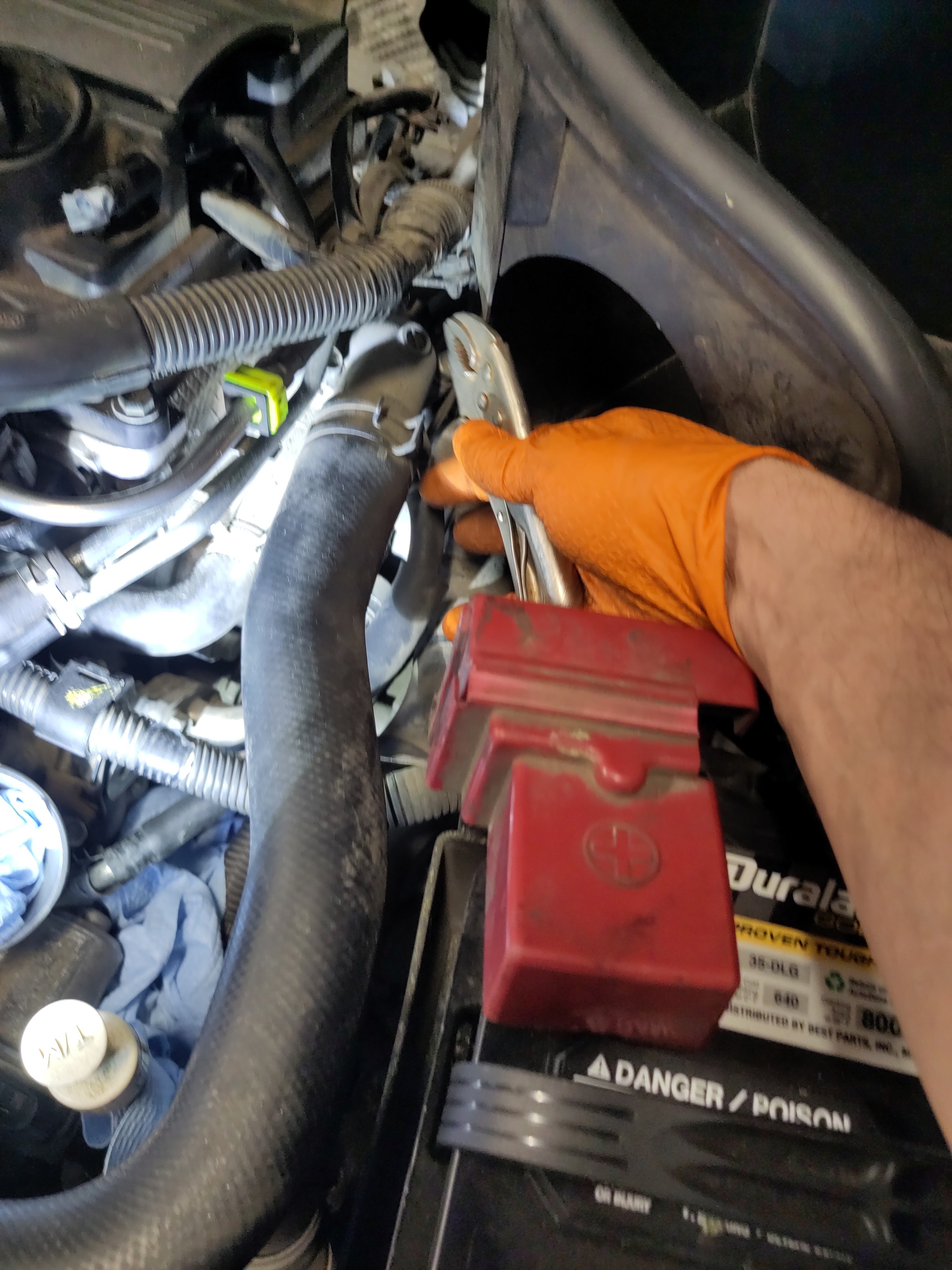
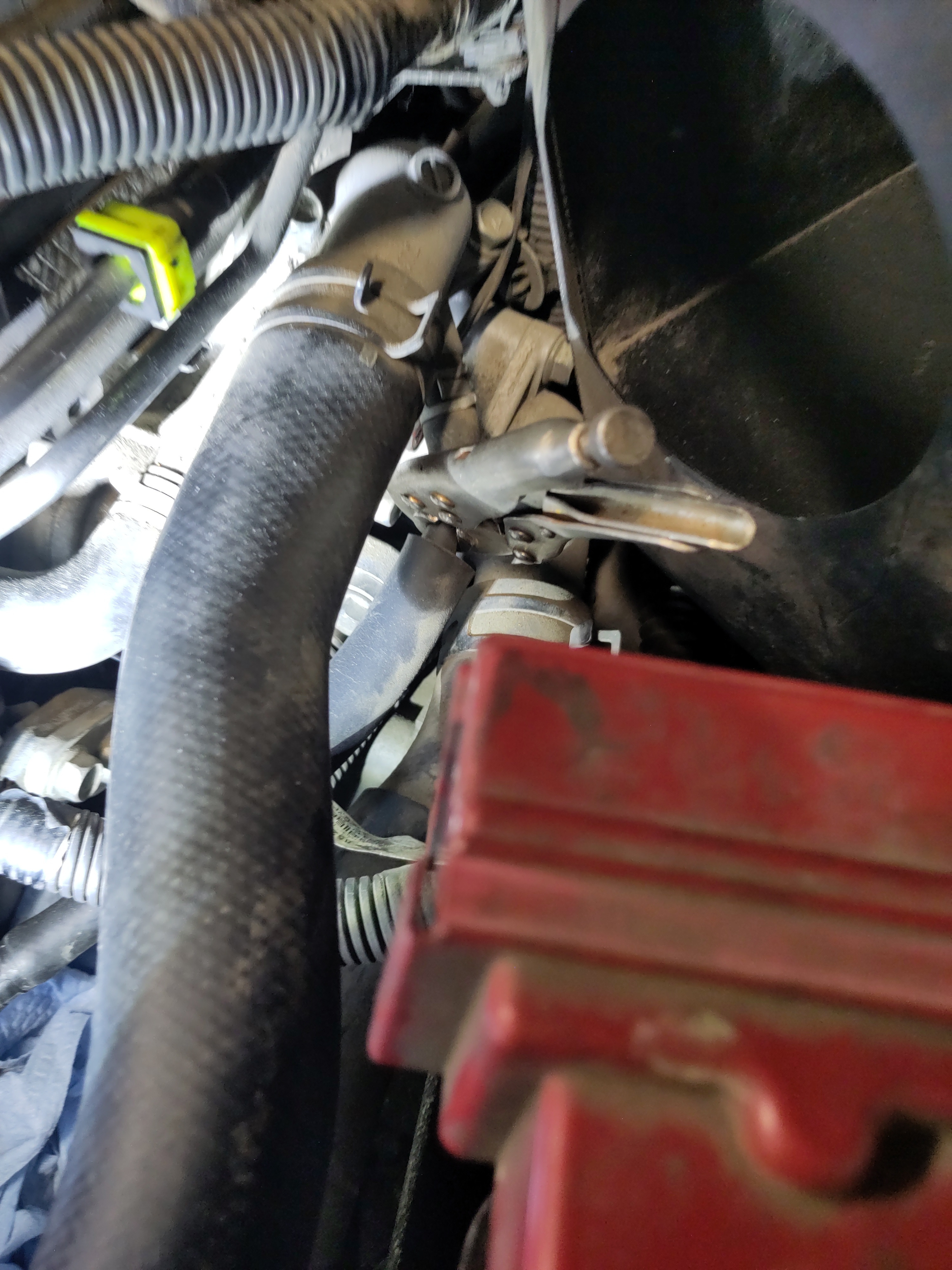
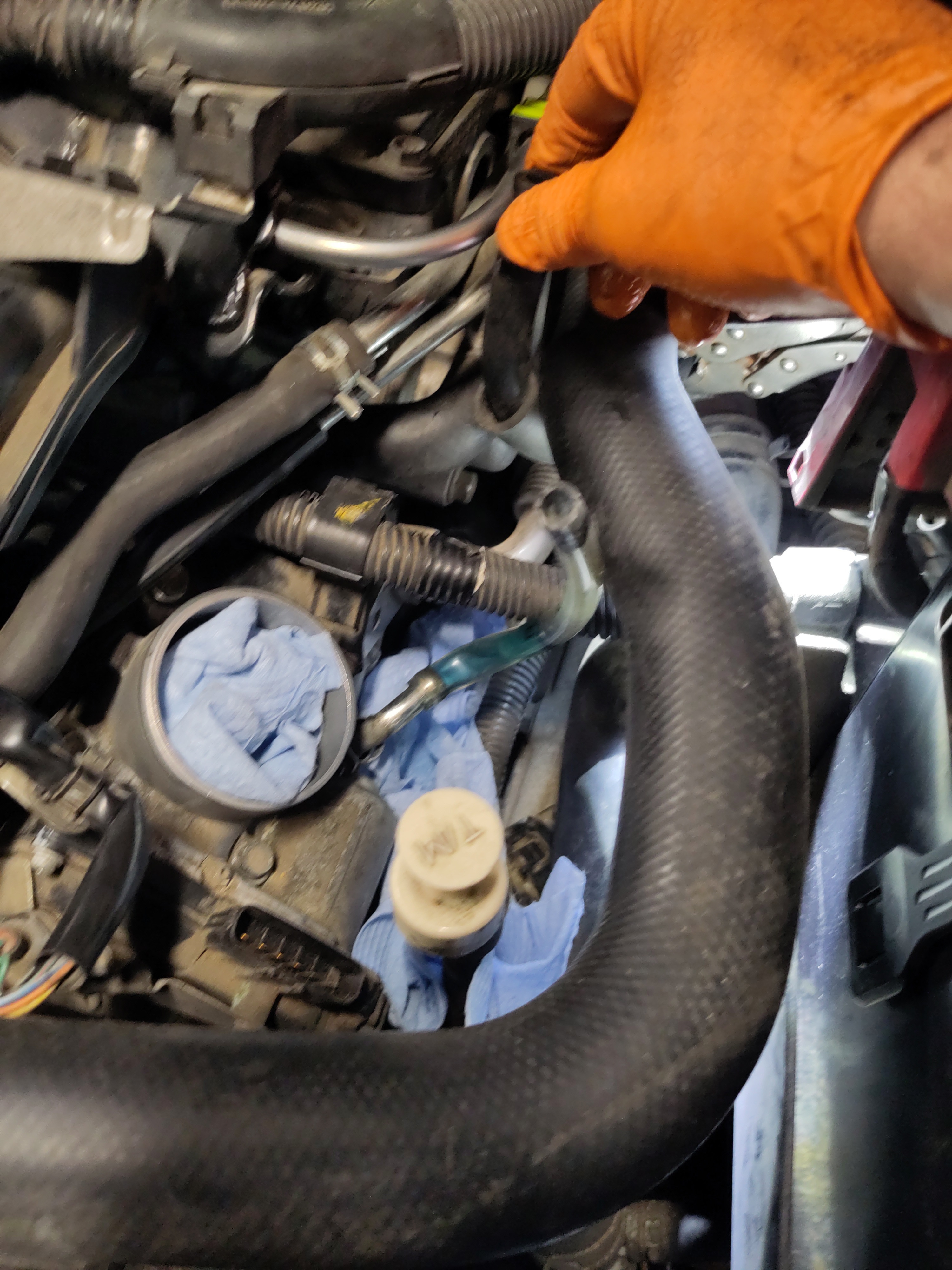
Take the curved jaw locking pliers and place them upstream from the hose clamp the was removed from previous step. The locking pliers will help compressing the hose to create a flow blockage or at least slow the flow rate of the coolant down. Place the bent hose out the way and rip off a piece of a paper towel and insert into the hole to prevent debris or dust falling the hose.
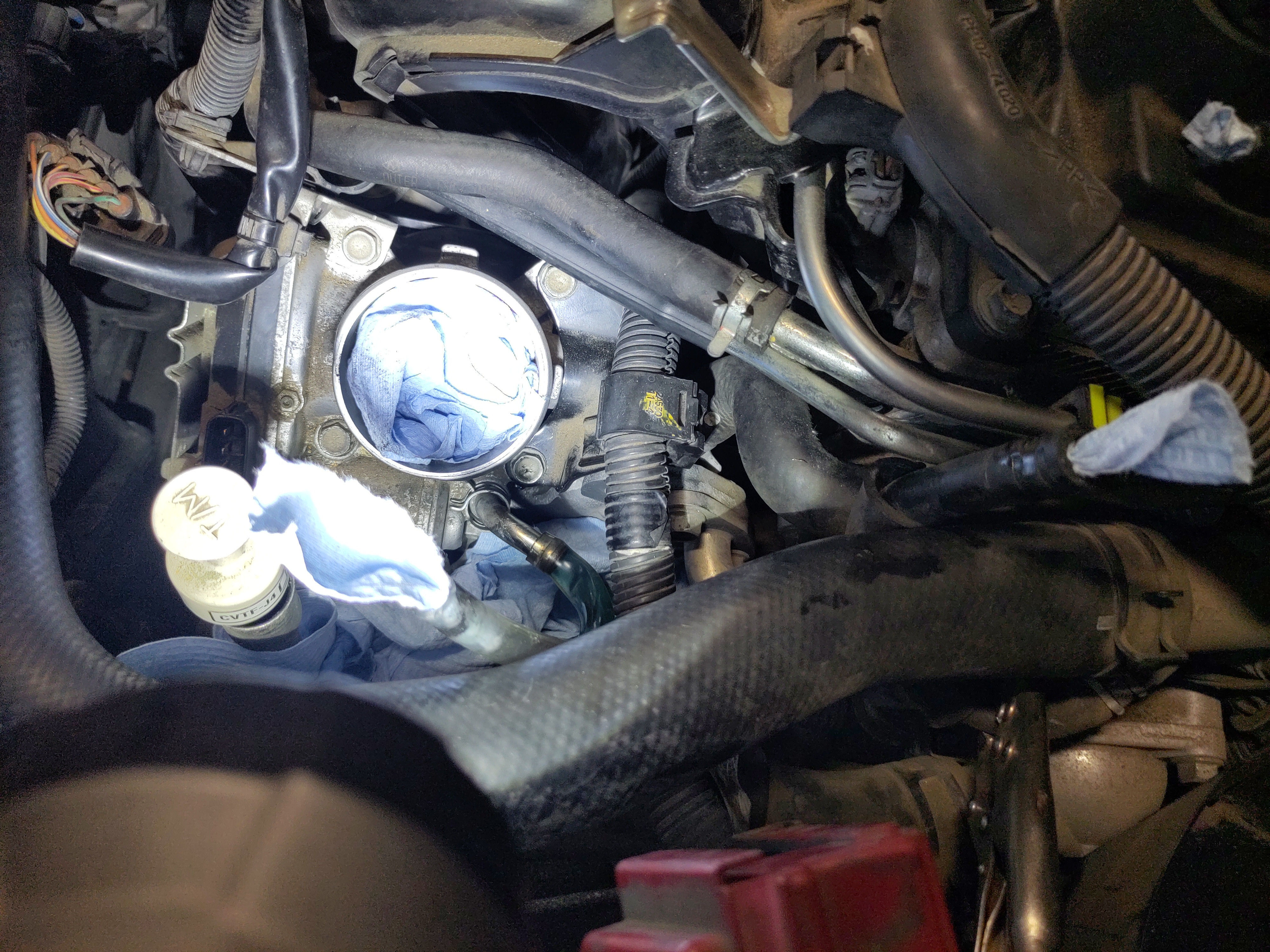
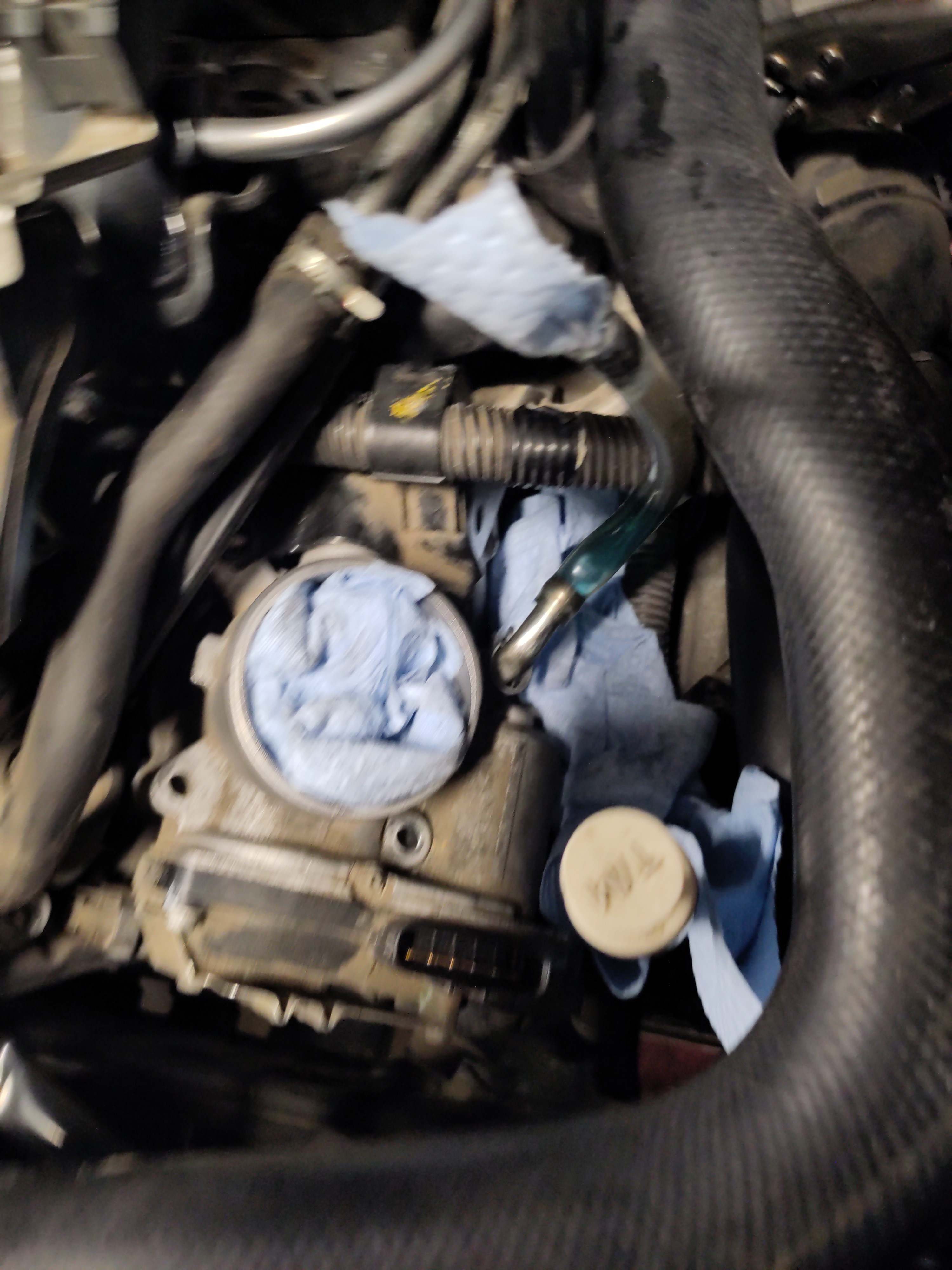
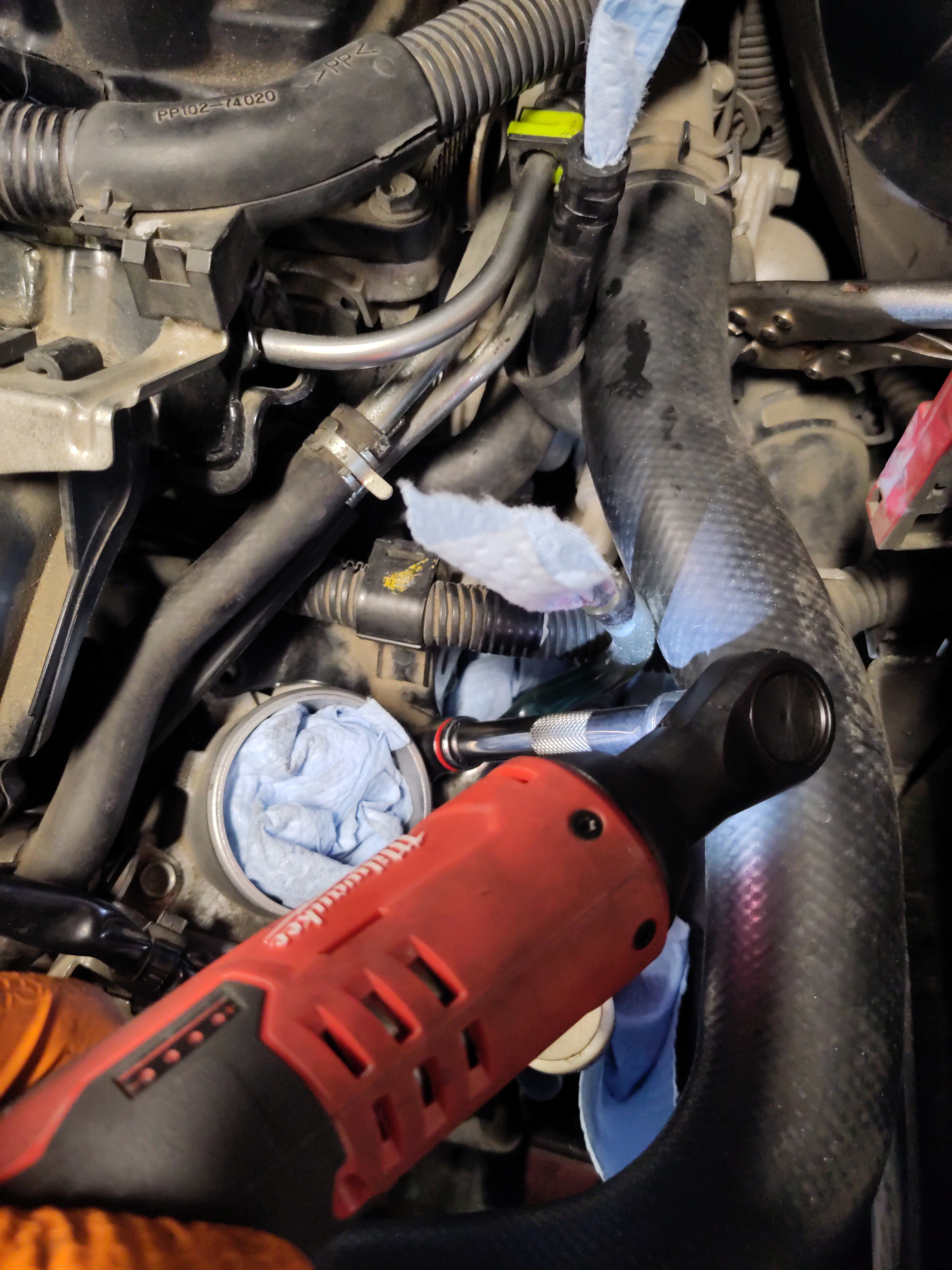
Now try to wiggle the hose off the male end of the throttle body. It may be challenging to remove the hose so it necessary try using the small flat to pry of the hose by placing the the flat head in between the hose and the surface of the male end connection. Once, the hose is removed coolant will begin to flow out of the male end of hose connection. Using the 1/4" clear silicon hose, quickly pull it on top of the male end of the throttle body. If needed it cut into the edge to further expand the clear silicon hose if necessary. Then take some paper towel and stuff the open end of the 1/4" clear silicon hose.
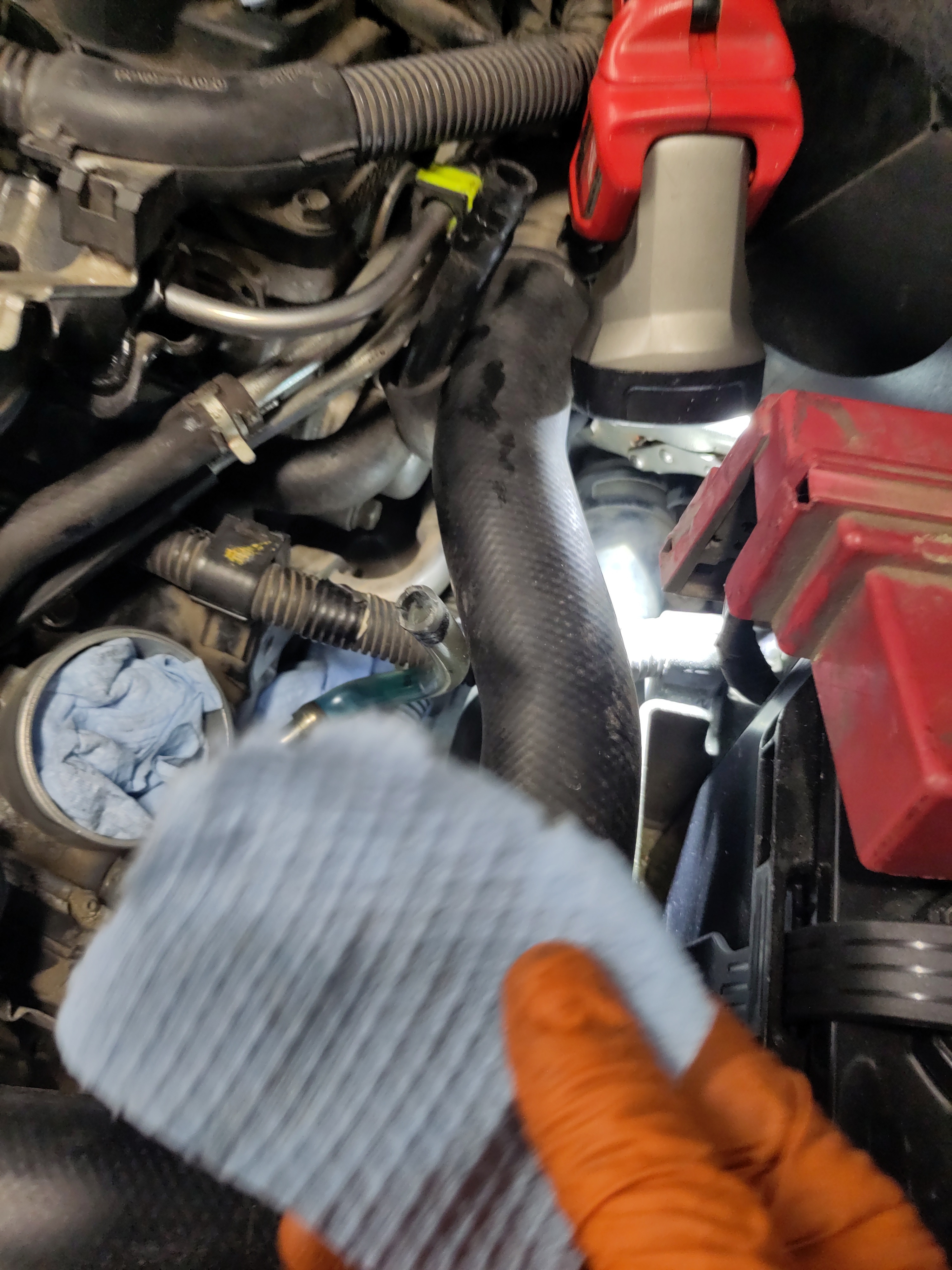
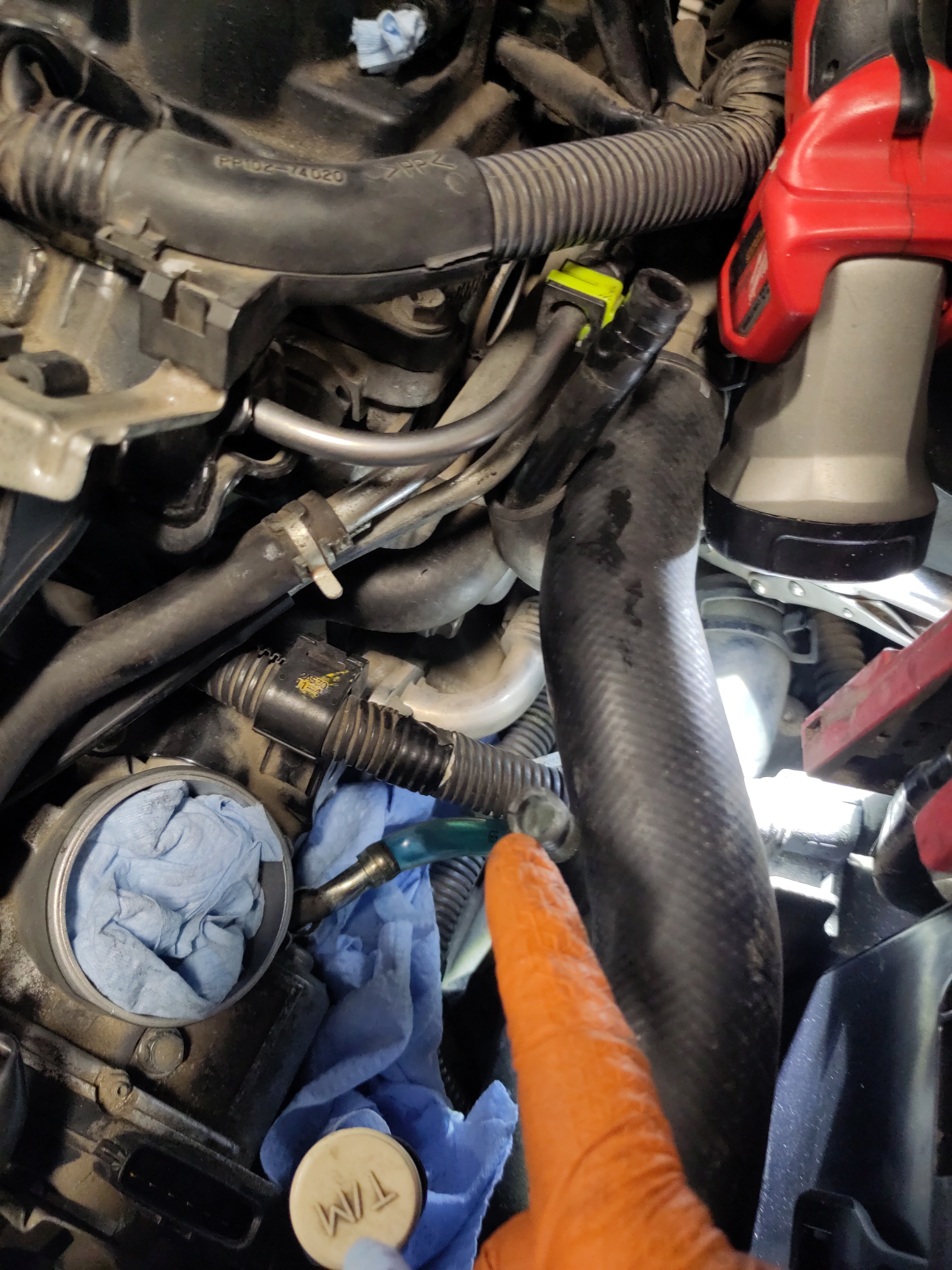
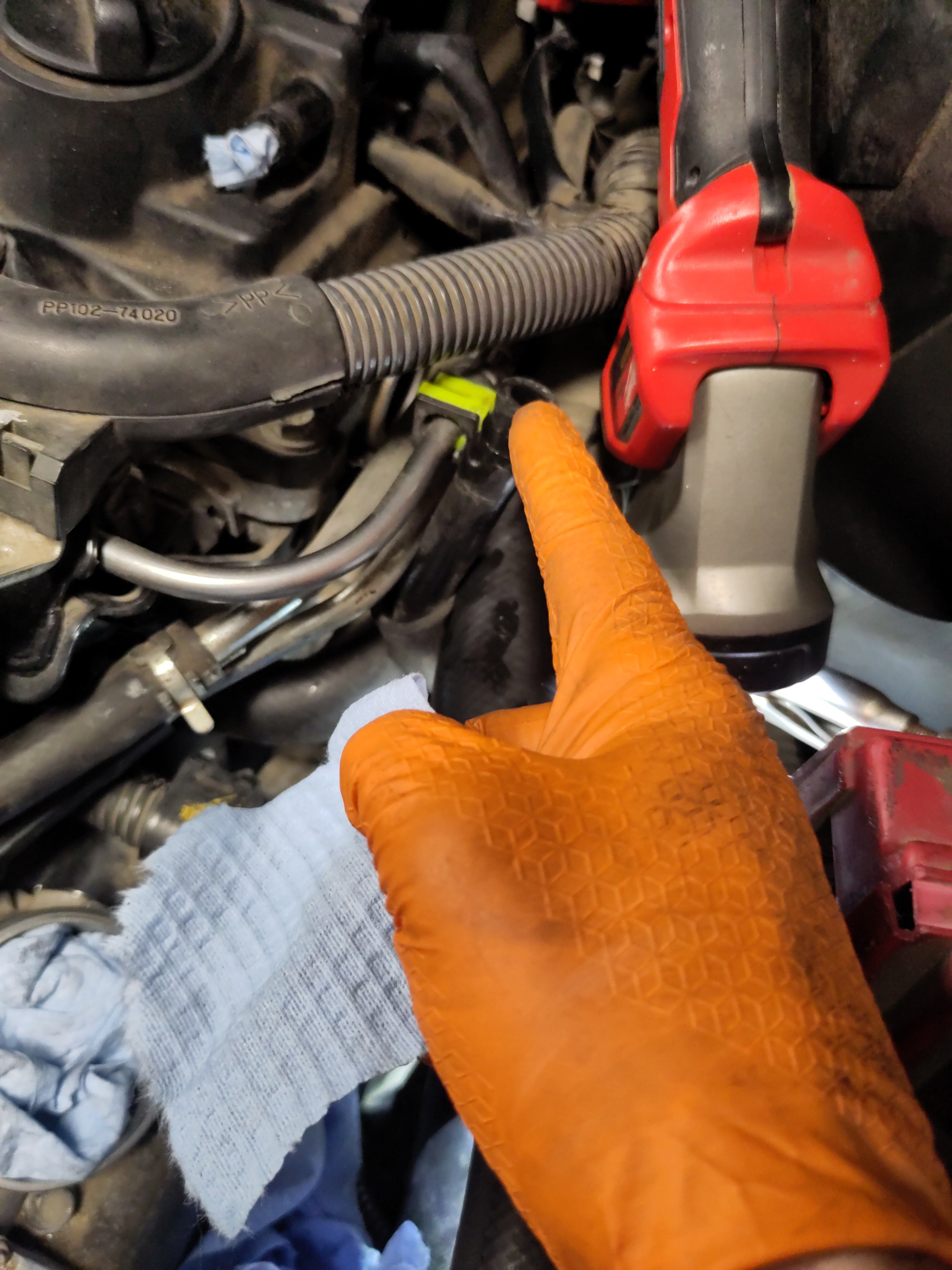
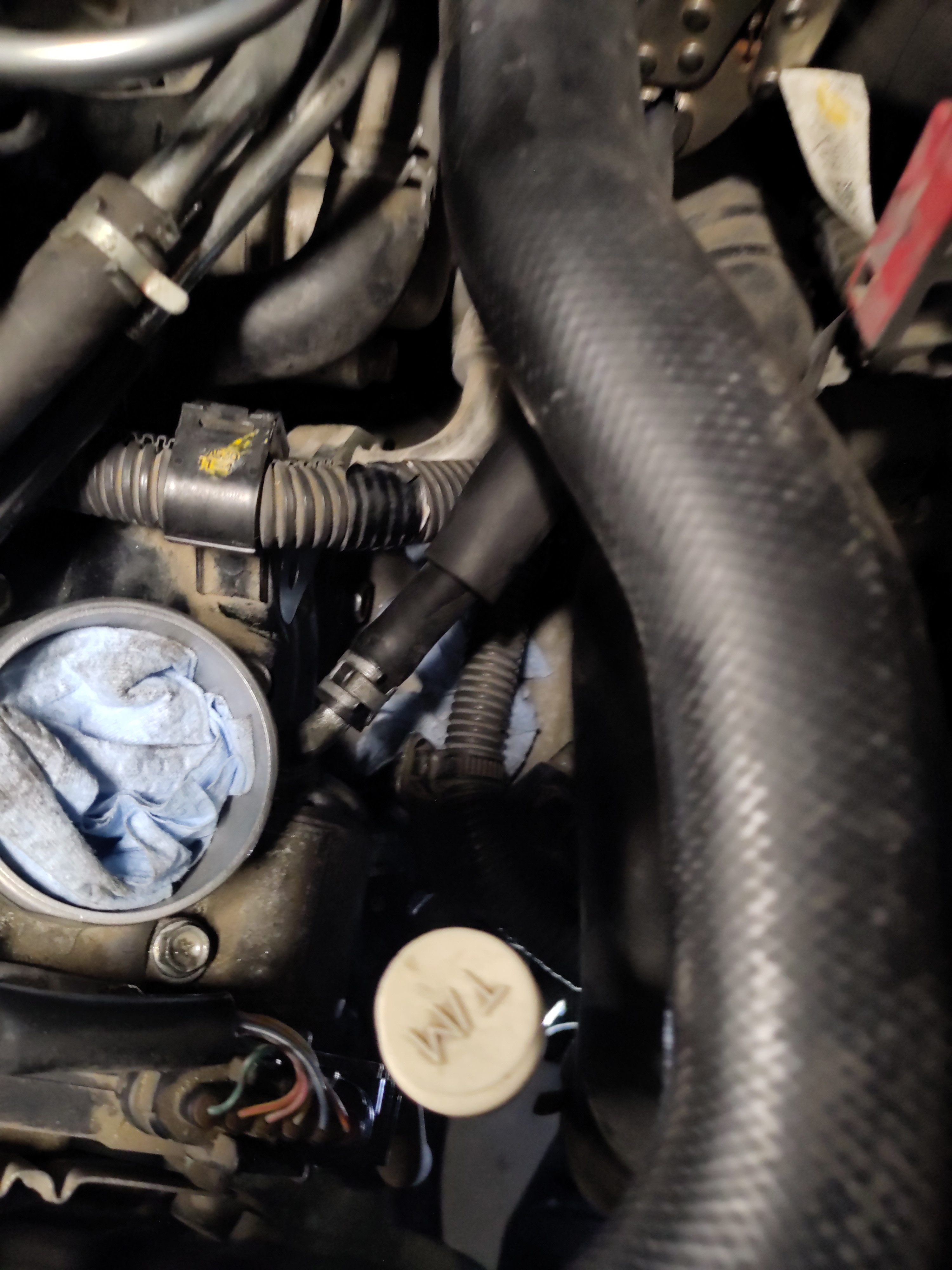
OPTIONAL! There is a small diameter vacuum hose directly underneath a coolant hose. Both hoses are located above throttle body. The hose can be pulled off with ease, there no fasteners on such as a hose clamp securing the hose to the male end. Once the vacuum hose is pulled off, proceed to ripping two small pieces of a paper towel off. The placement of the to small pieces of paper towel will be inserted into the female end of the hose and the male end. The removal of the vacuum hose is ideal if needing to make it more accessible to reach the starter electrical connections which will happen later on.
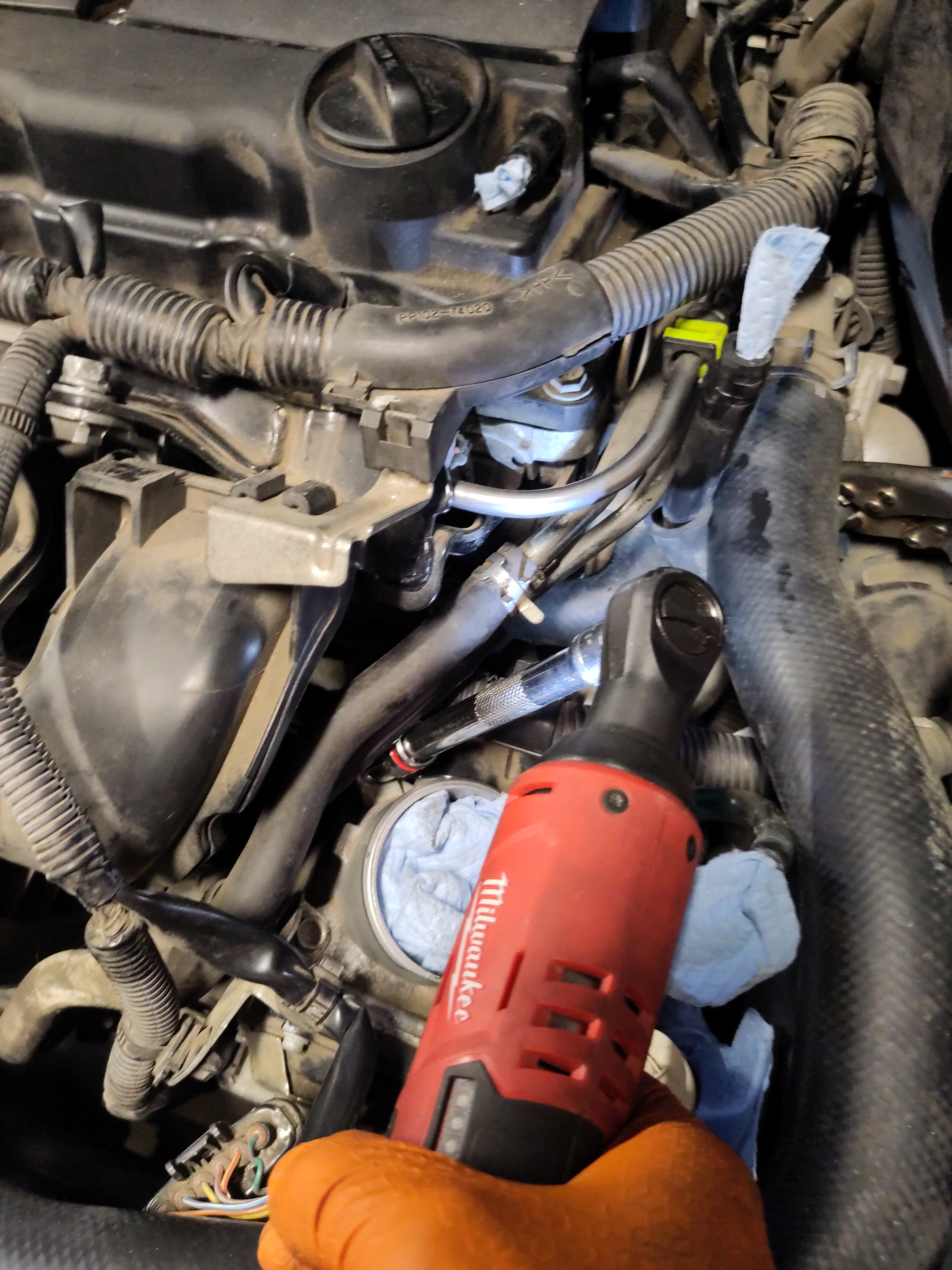
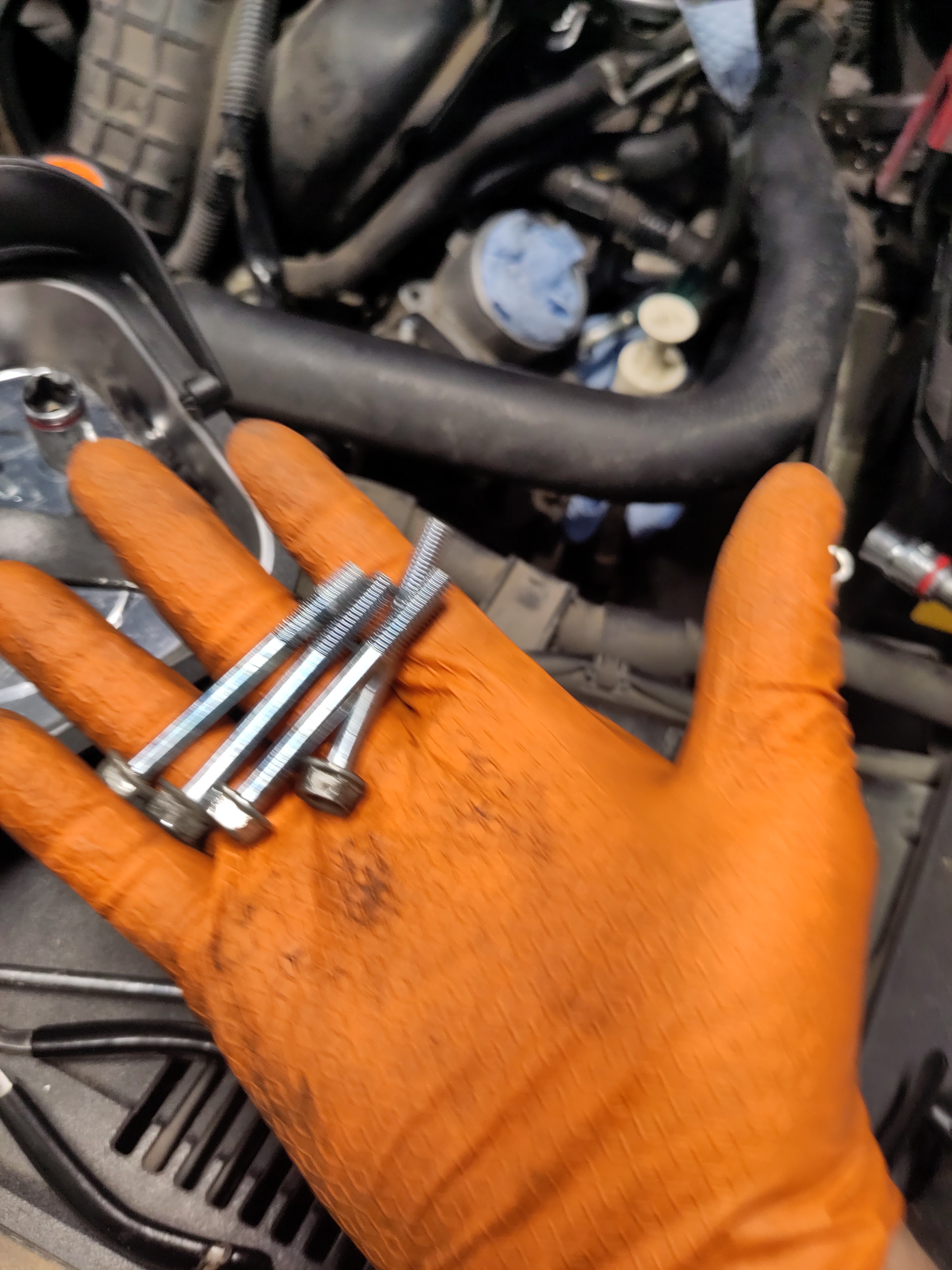
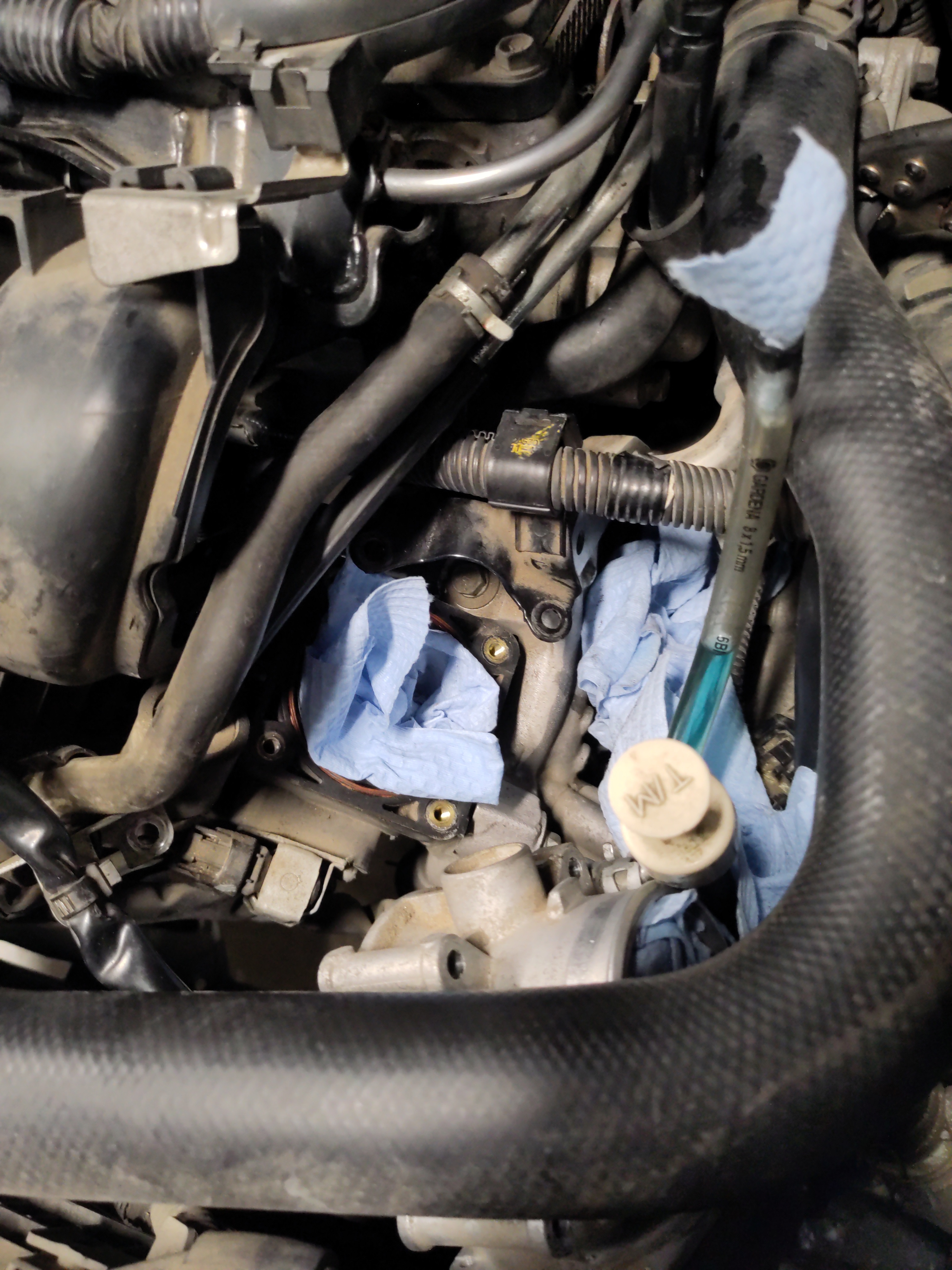
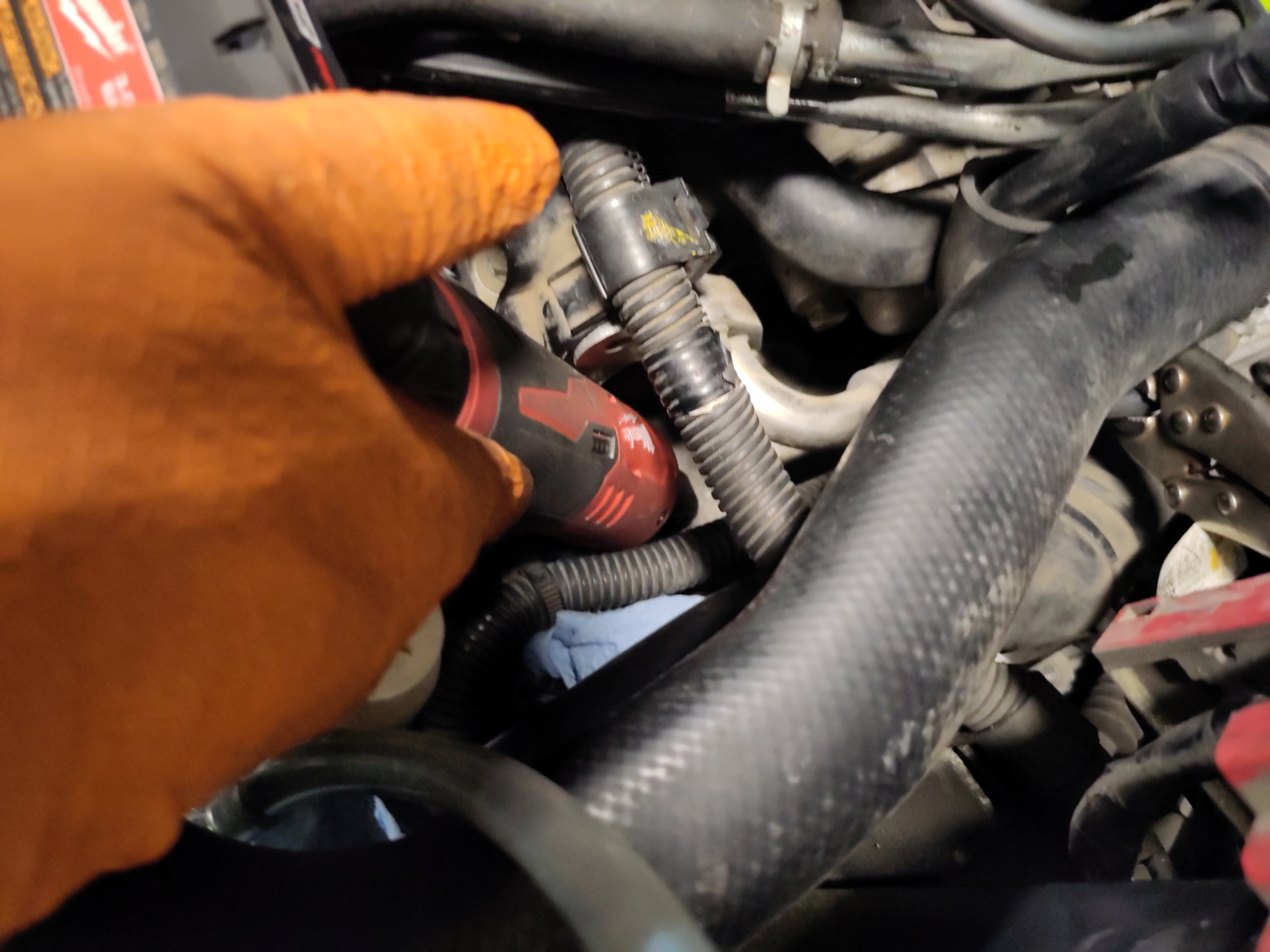
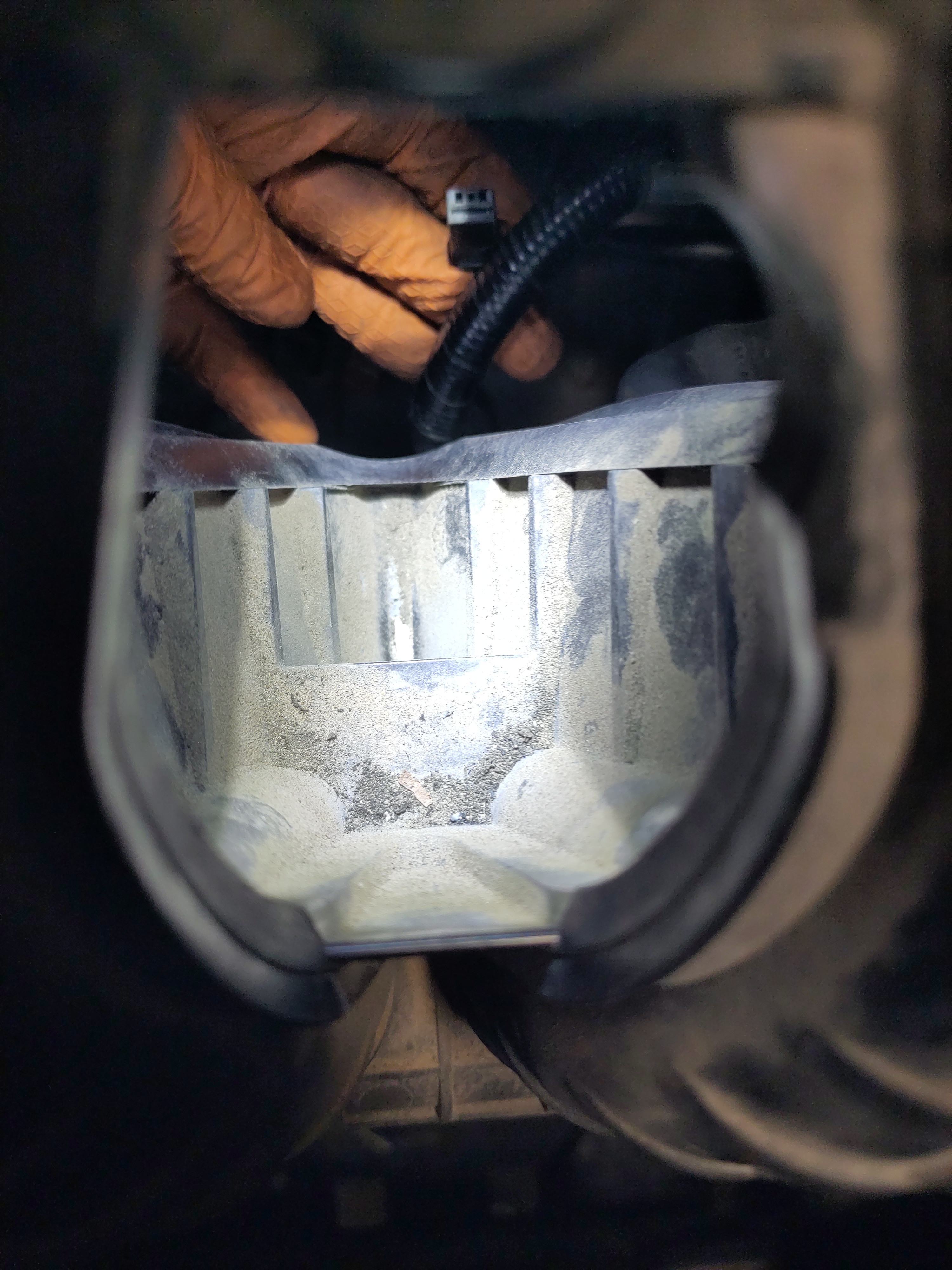
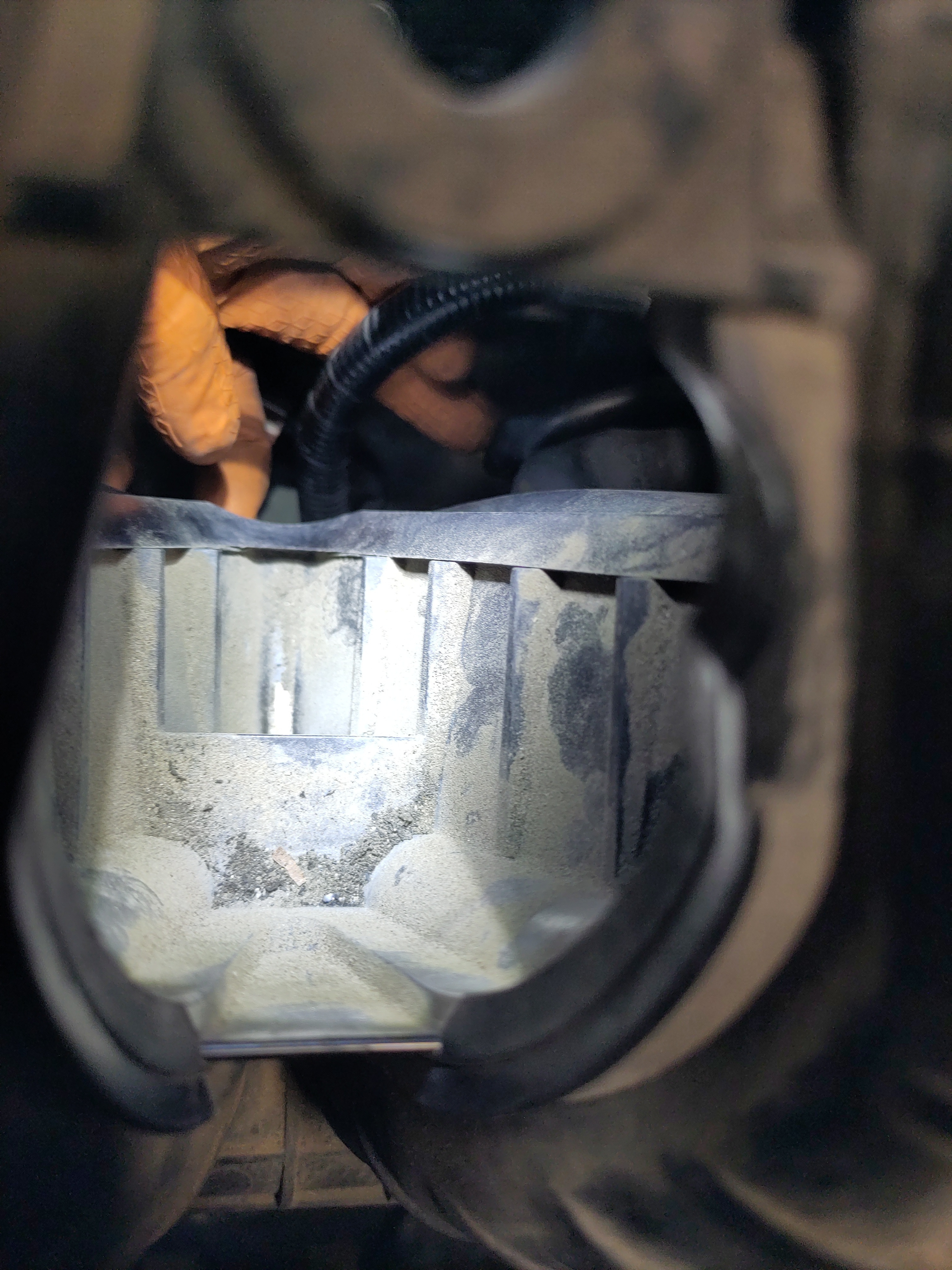
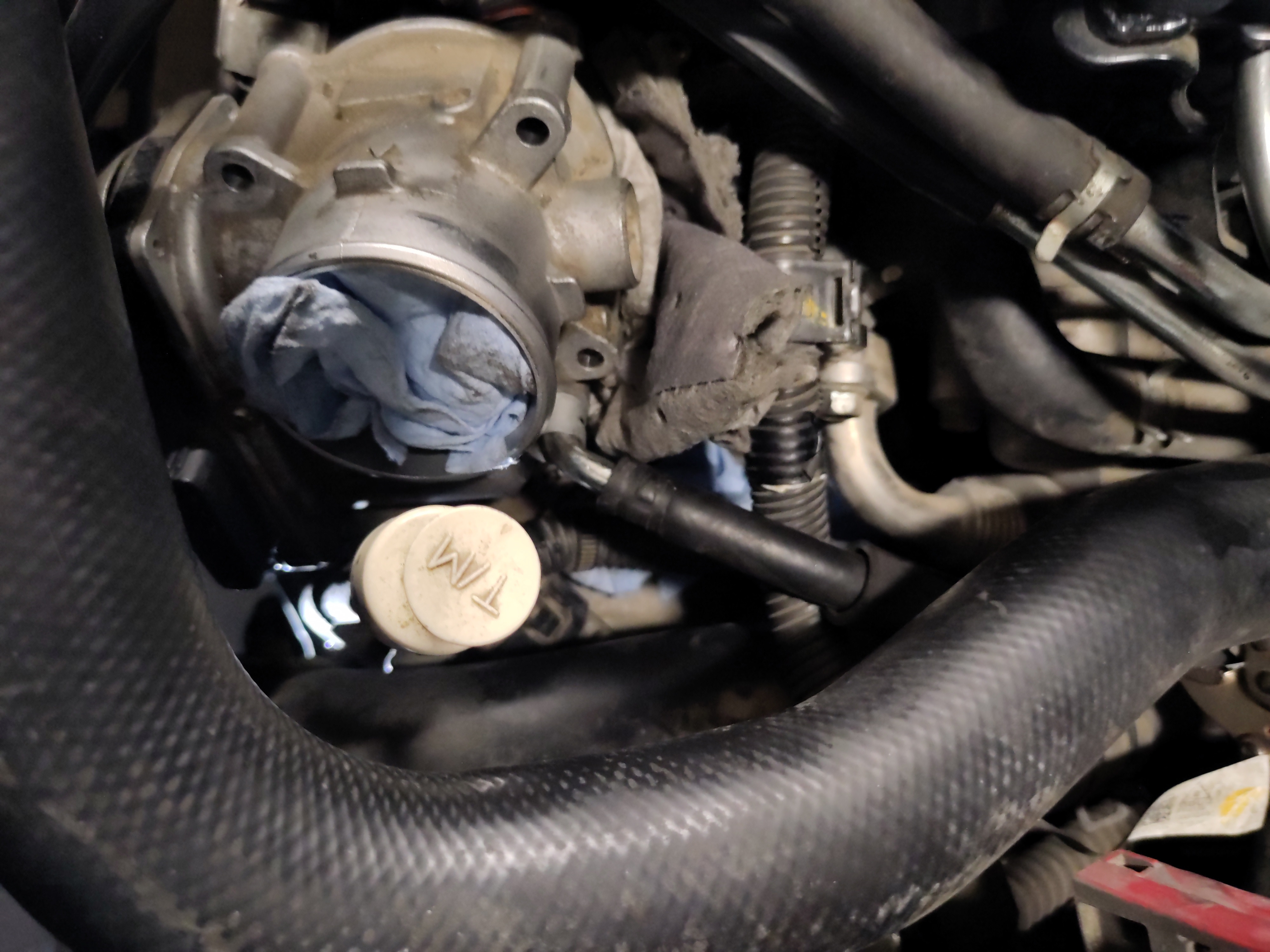
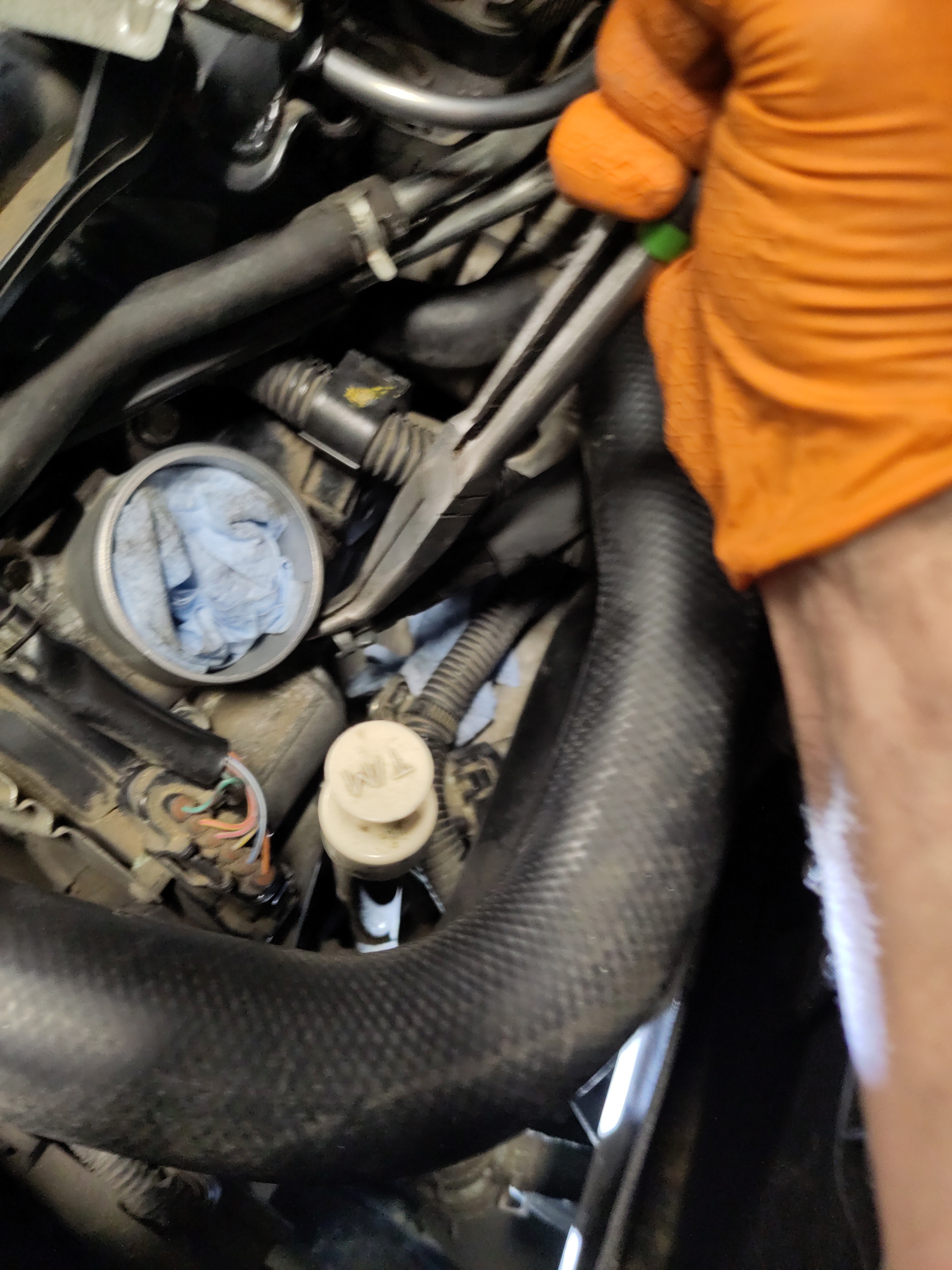
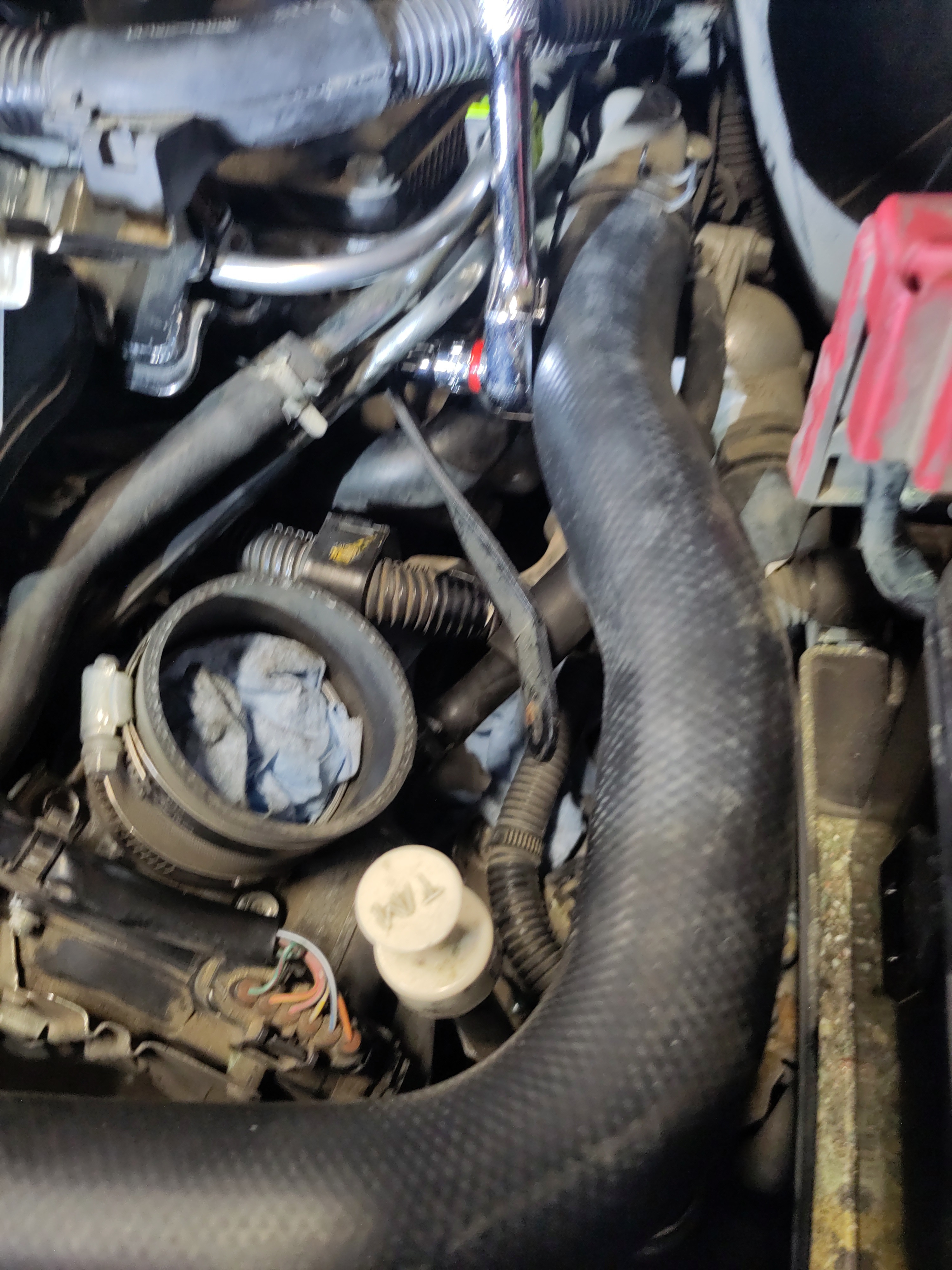
Now to it is time to uninstall the throttle body, but we will not fully remove it just siding it towards you and having it rest up on the coolant hoses and radiator. So the two bolts holding in the starter can be accessible. There are four 10mm bolts securing the throttle body to the engine. 3 of the 4 bolts are holding in place wire hangers/ organizers. It is easy to remove the wire, but I found it easier just to remove it all assembled and place it out of the way. Recommendation, is to use a deep 10mm 6 point point with a 3/8" drive socket wrench with an extension to undo each 10mm bolt. Put the 4 throttle body bolts in the magnetic pan for safe keeping.
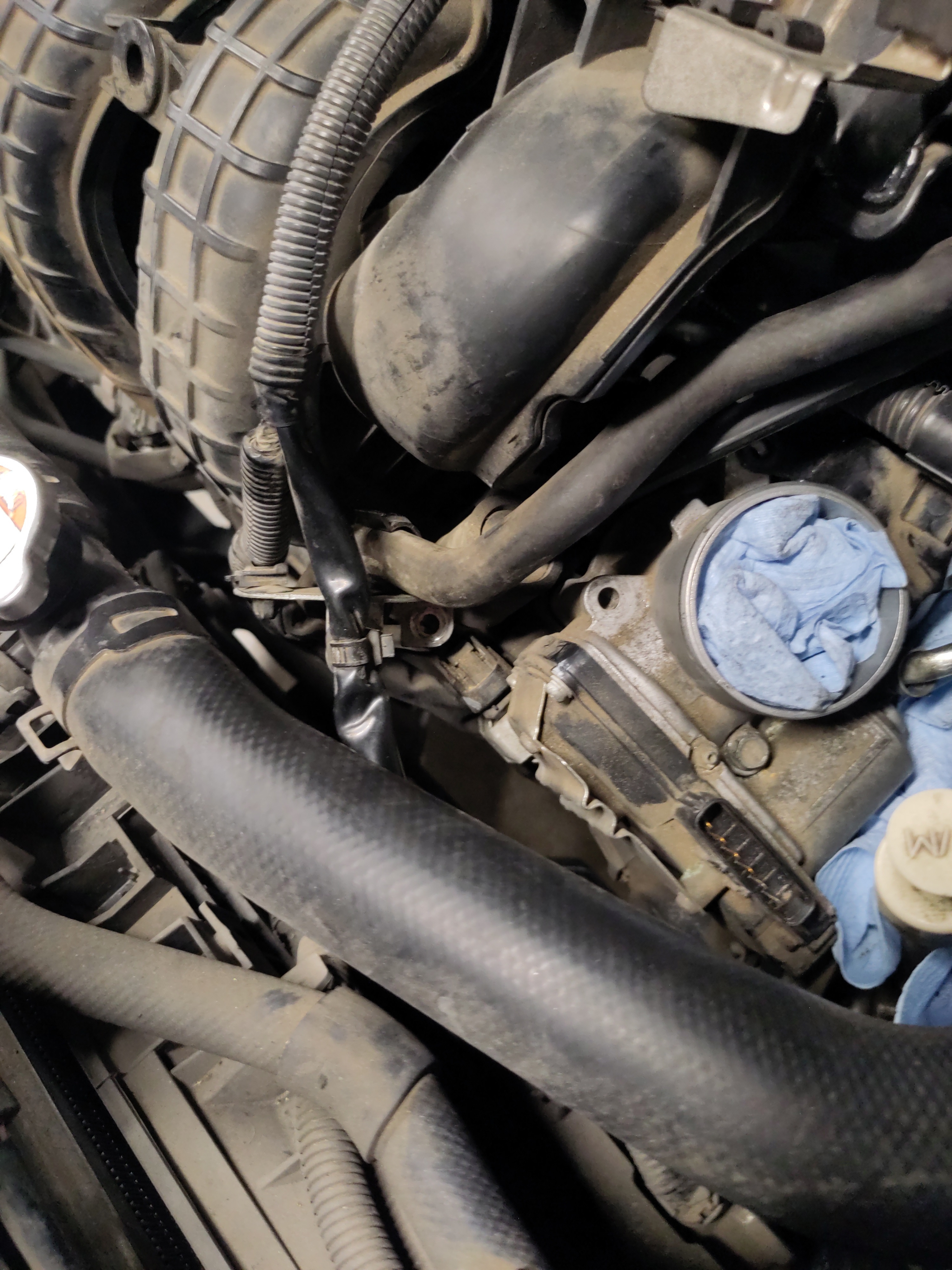
Now move the throttle body towards you and place it underneath the coolant hose and have it properly rested on some of the components. The placement is crucial because if placed wrong coolant may flow out of the 1/4" diameter clear hose. So placing the throttle body underneath the coolant hose and resting partially on the radiator and the fan, it seat snug and didn't impact the job.
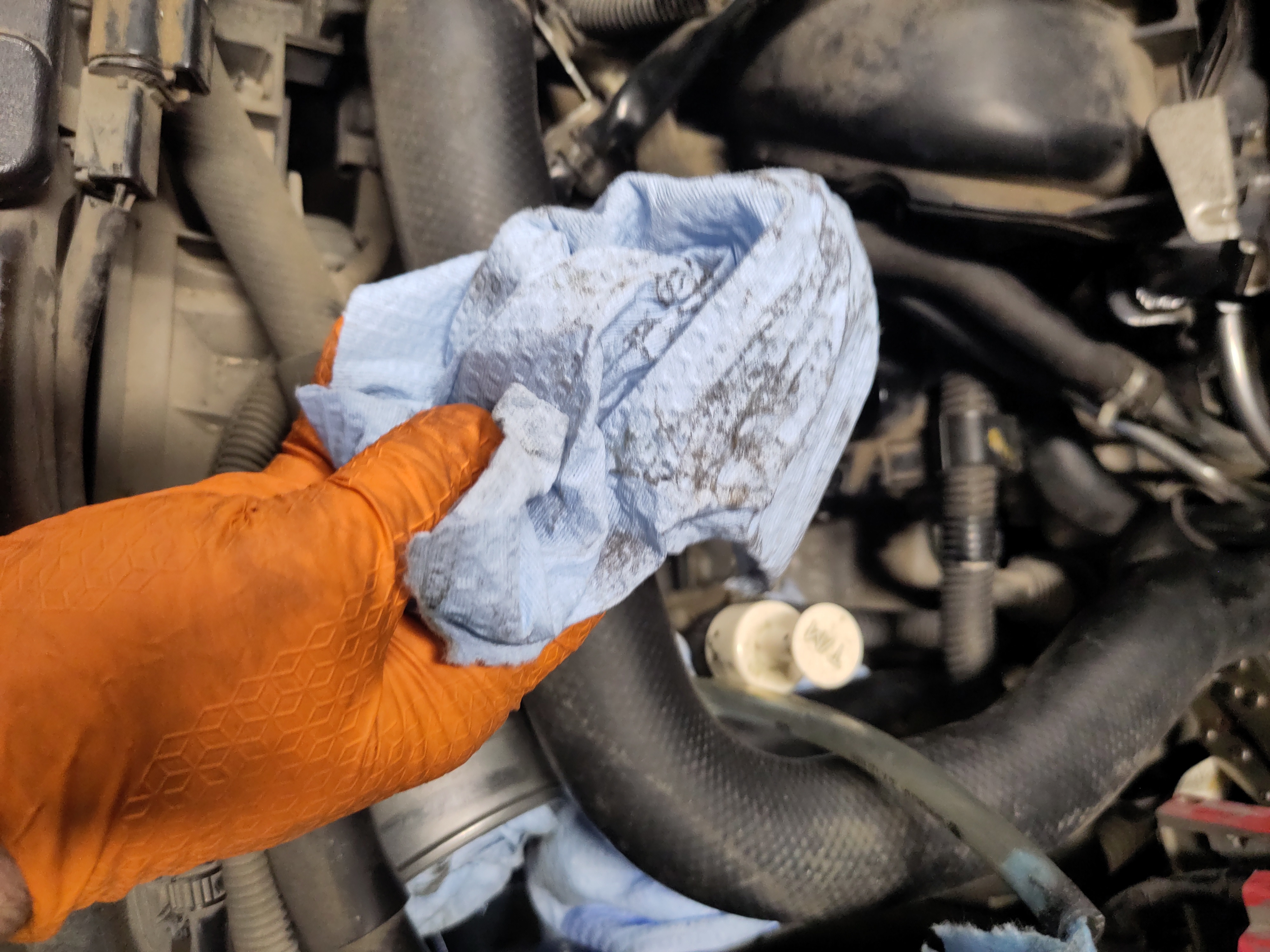
Once the throttle body is out of the way, take a paper towel and place it into the entry way from what the throttle body was seated onto. It is also a good idea to wipe the surrounding area and the inside area with a clean paper towel just to remove any debris. Then insert the paper towel into the entry way to prevent dust or any other debris from entering the engine.
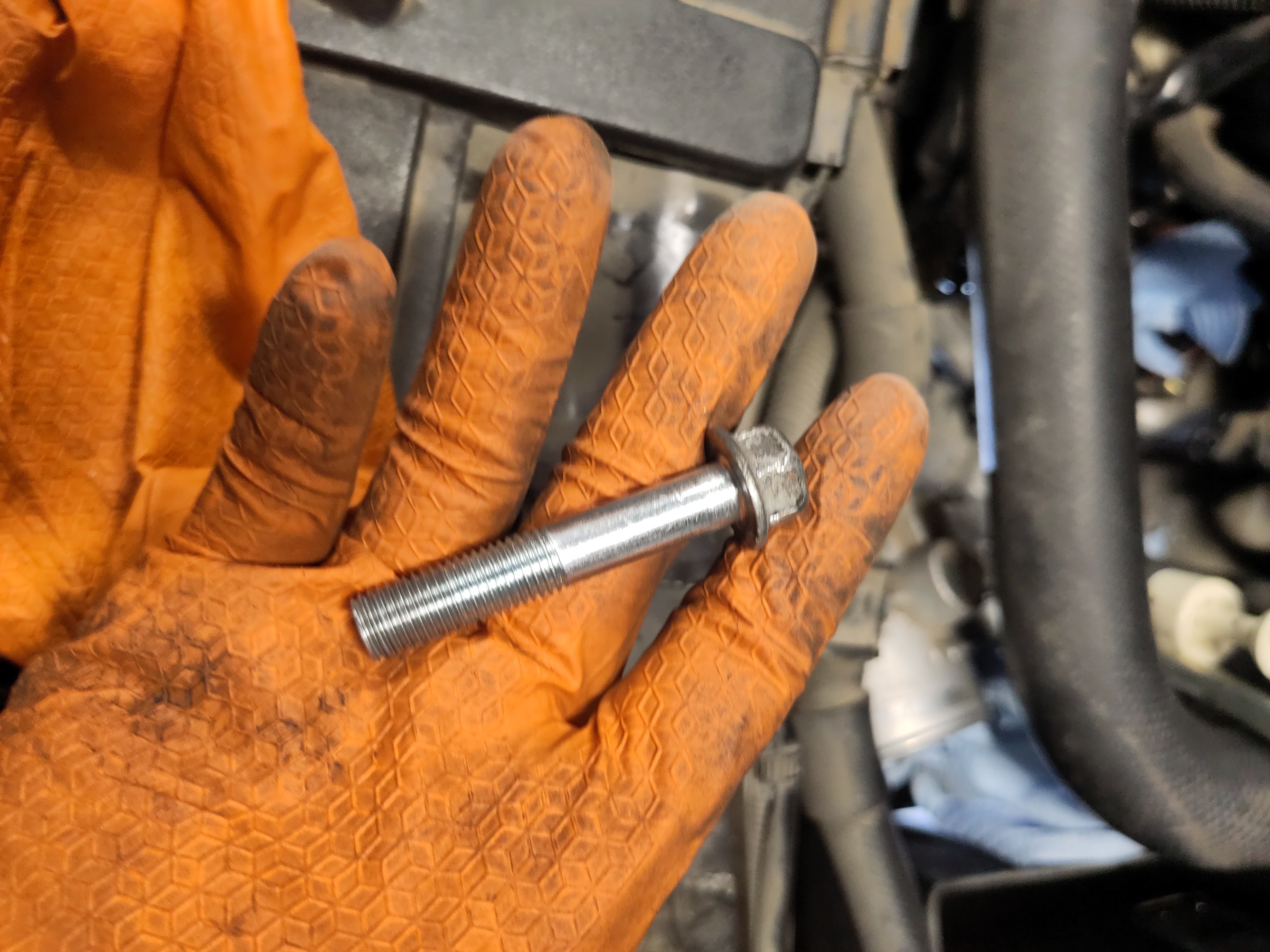
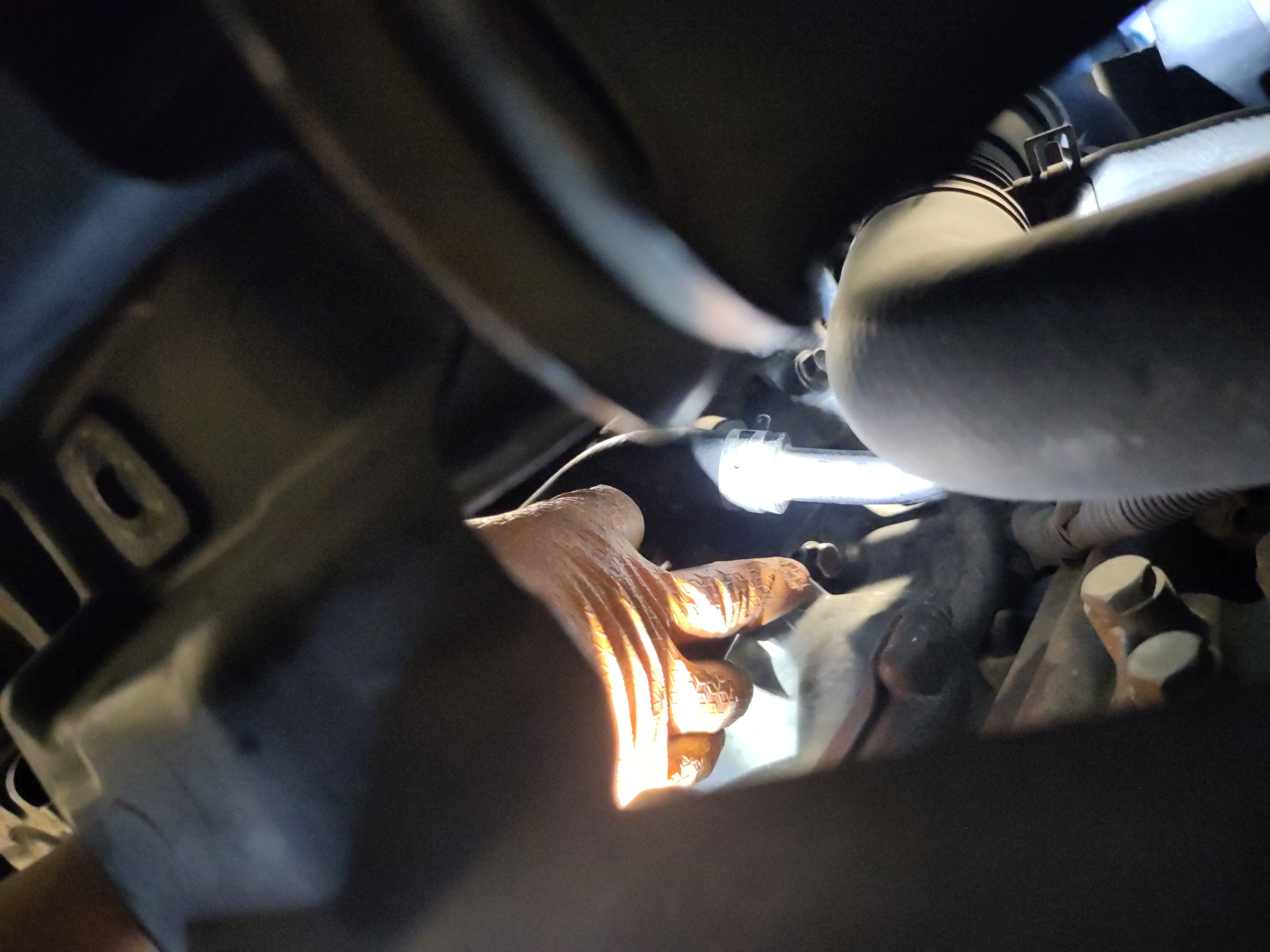
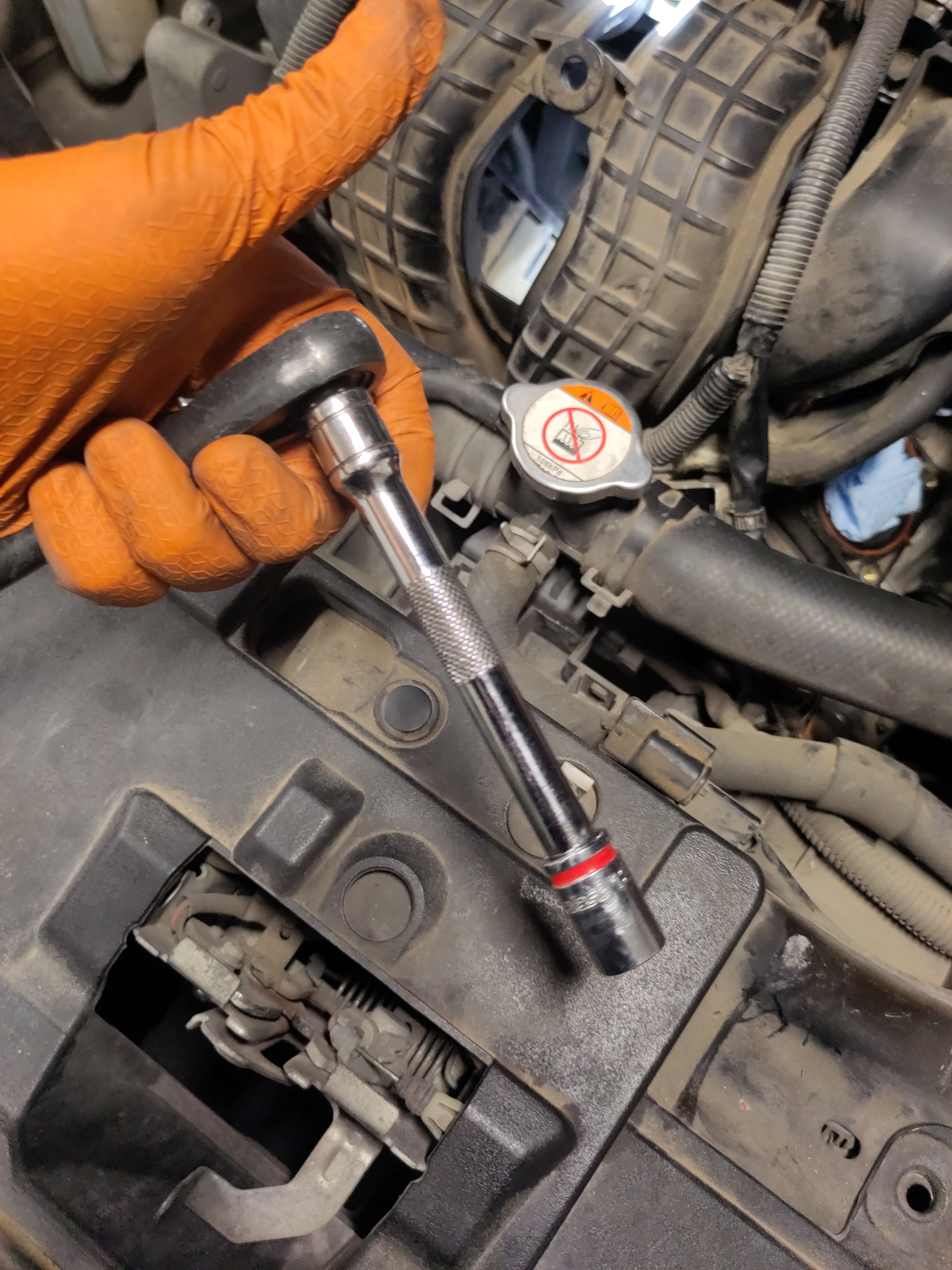
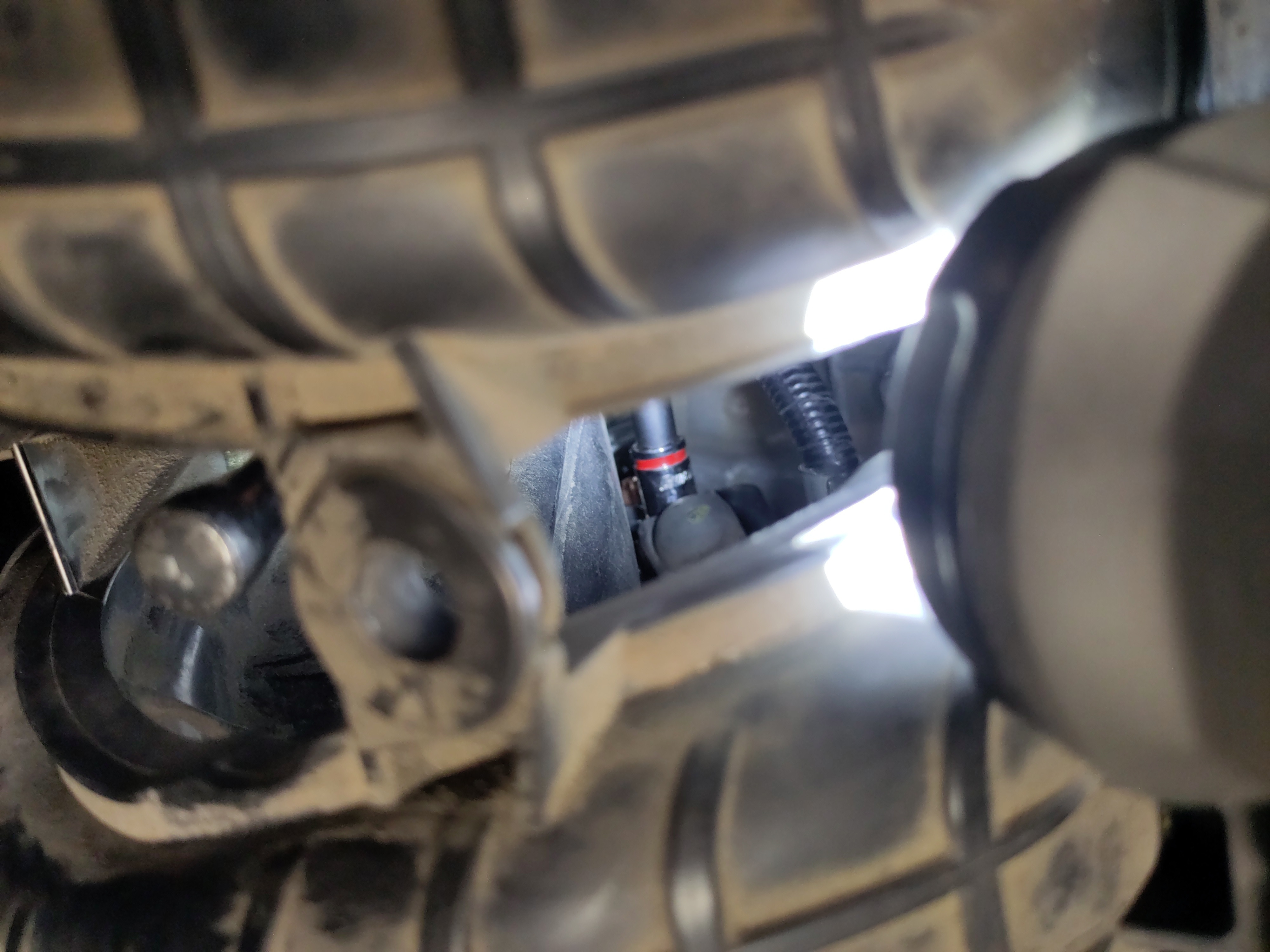
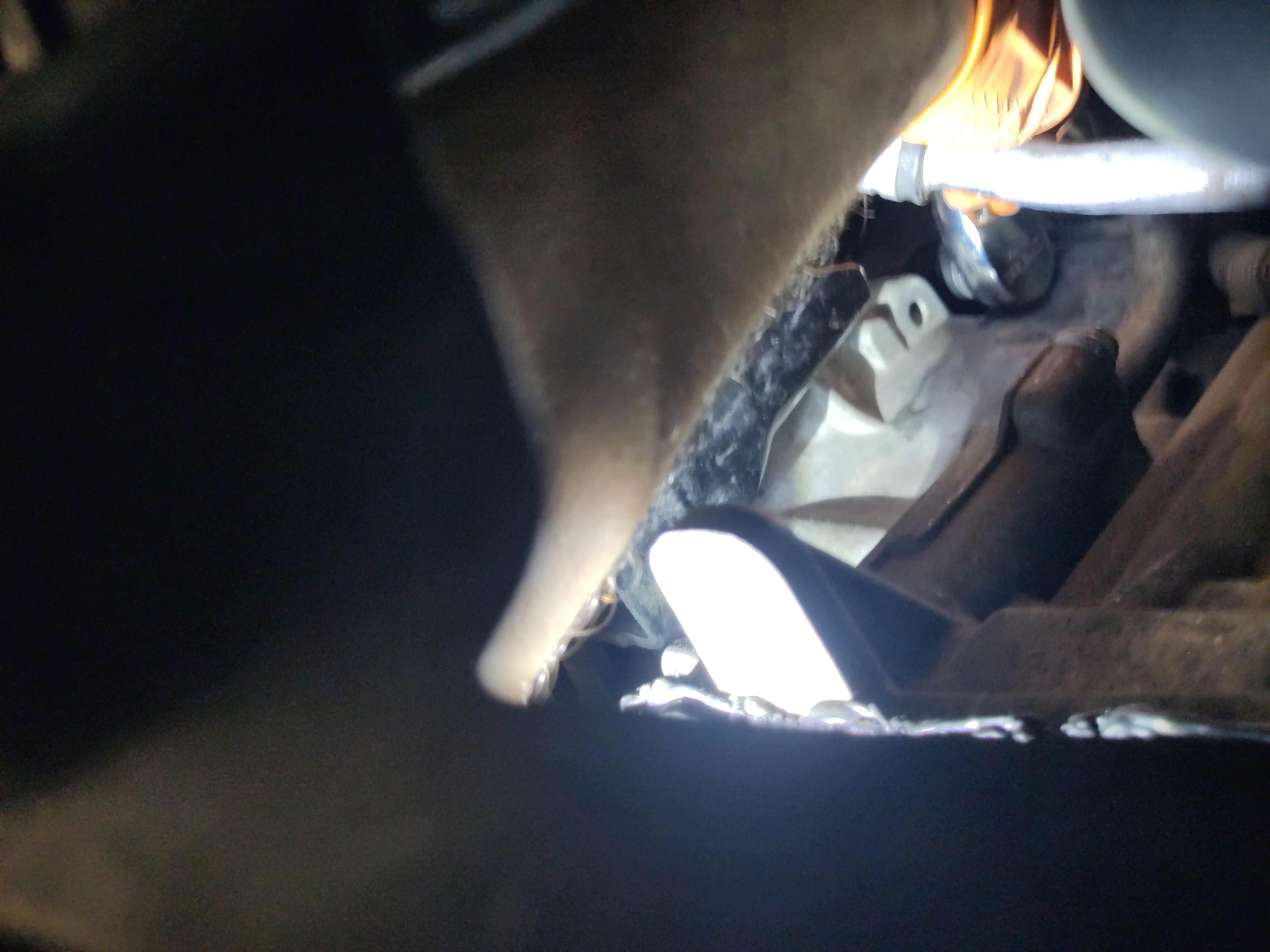
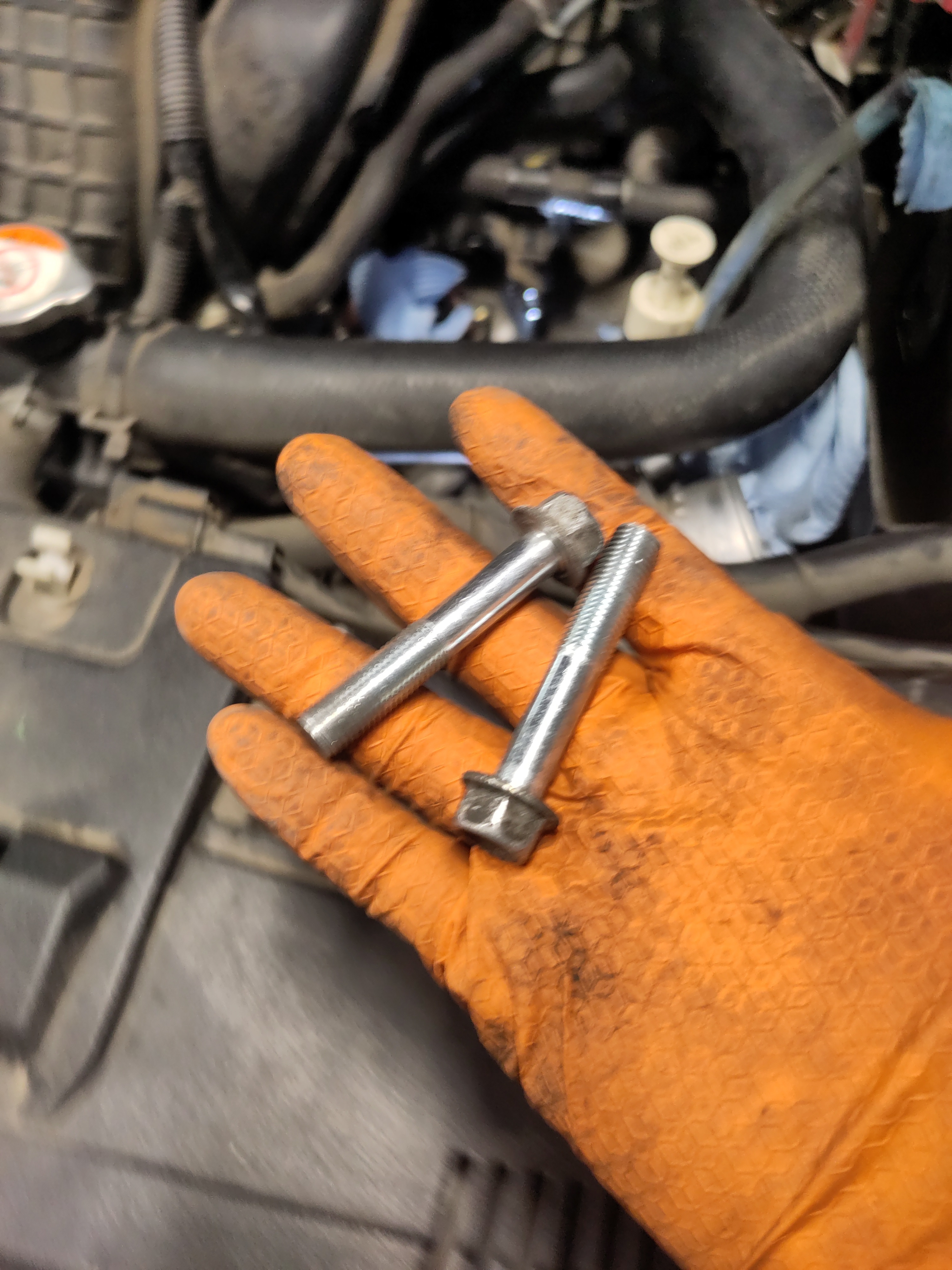
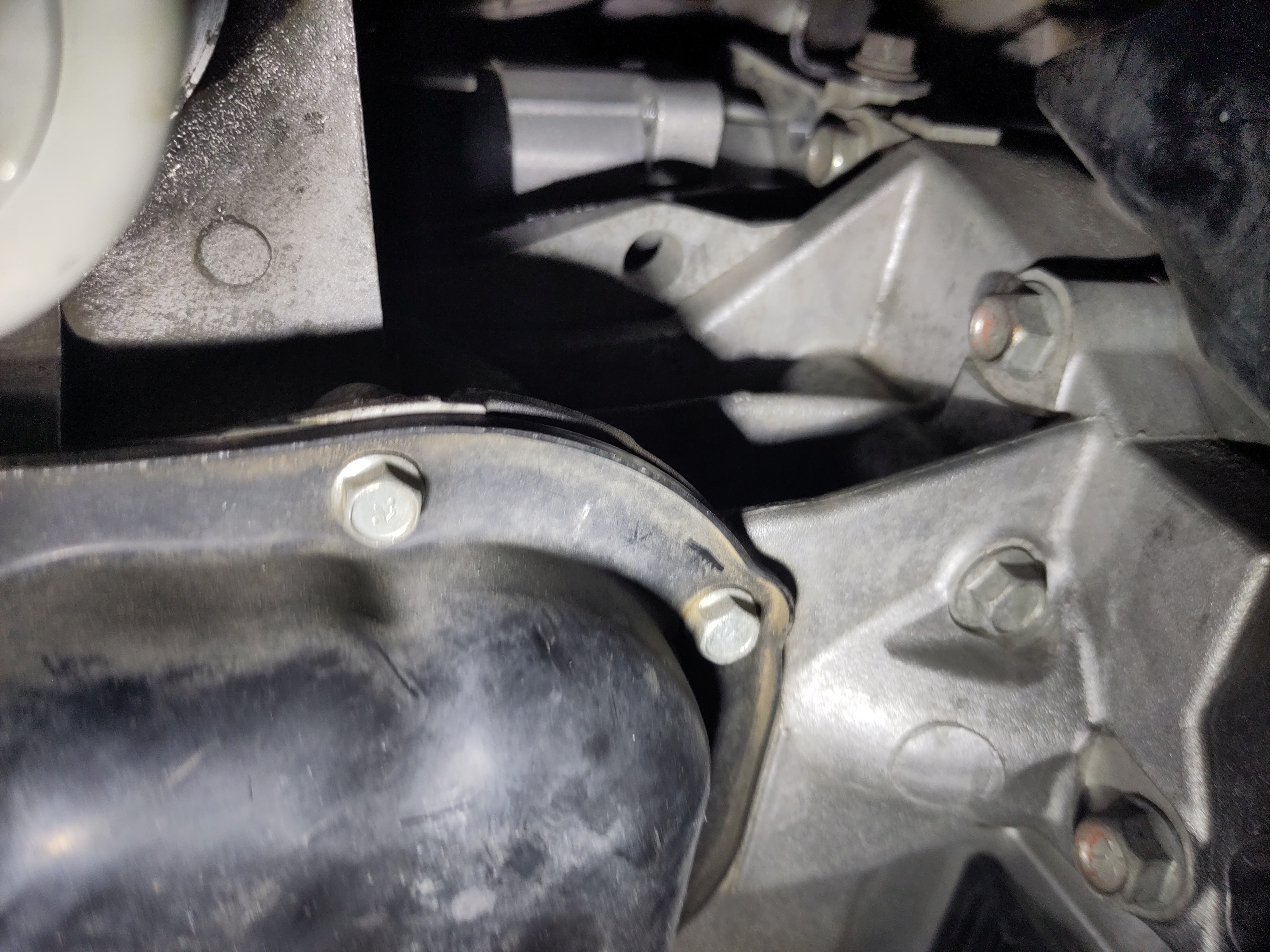
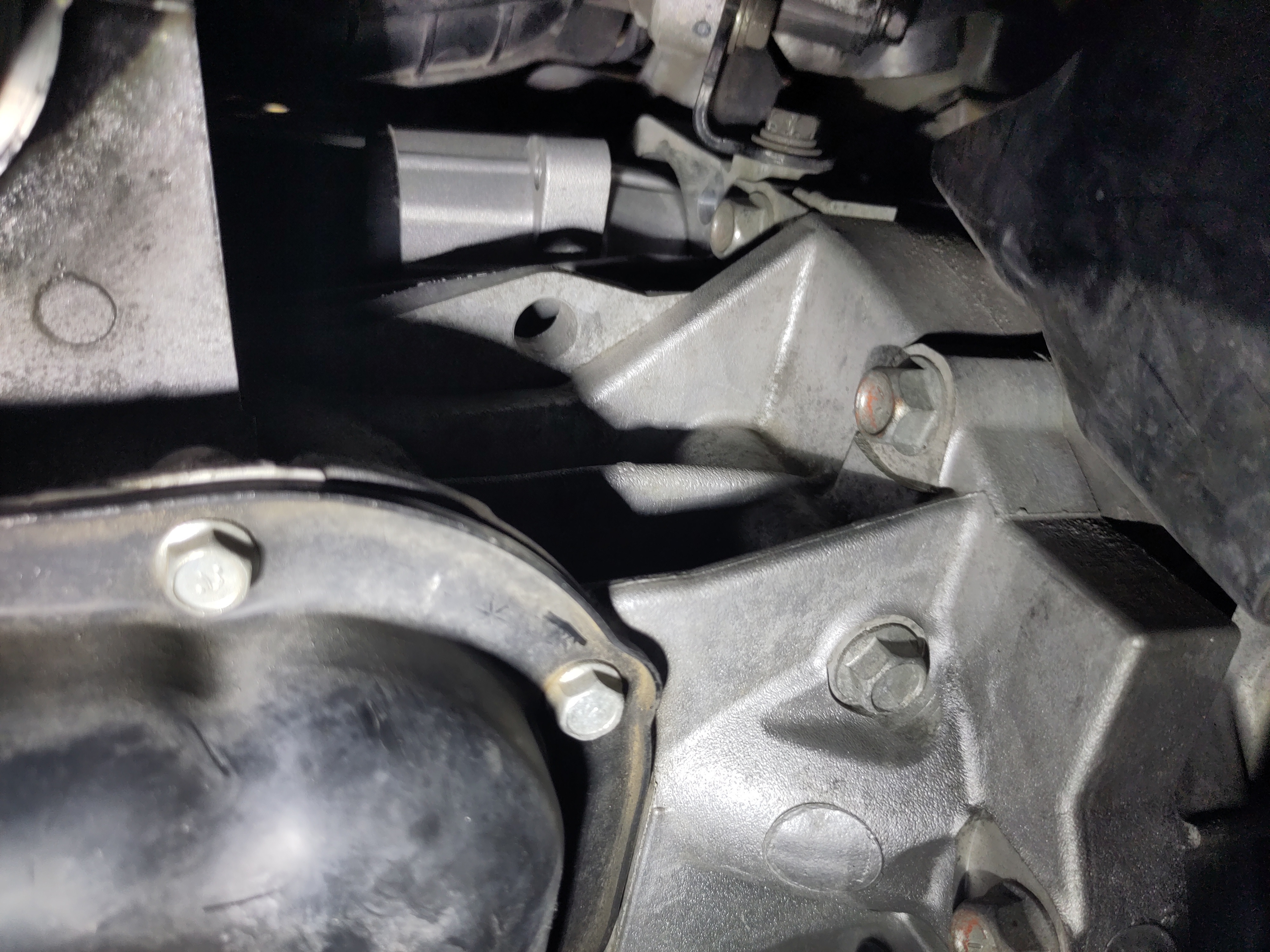
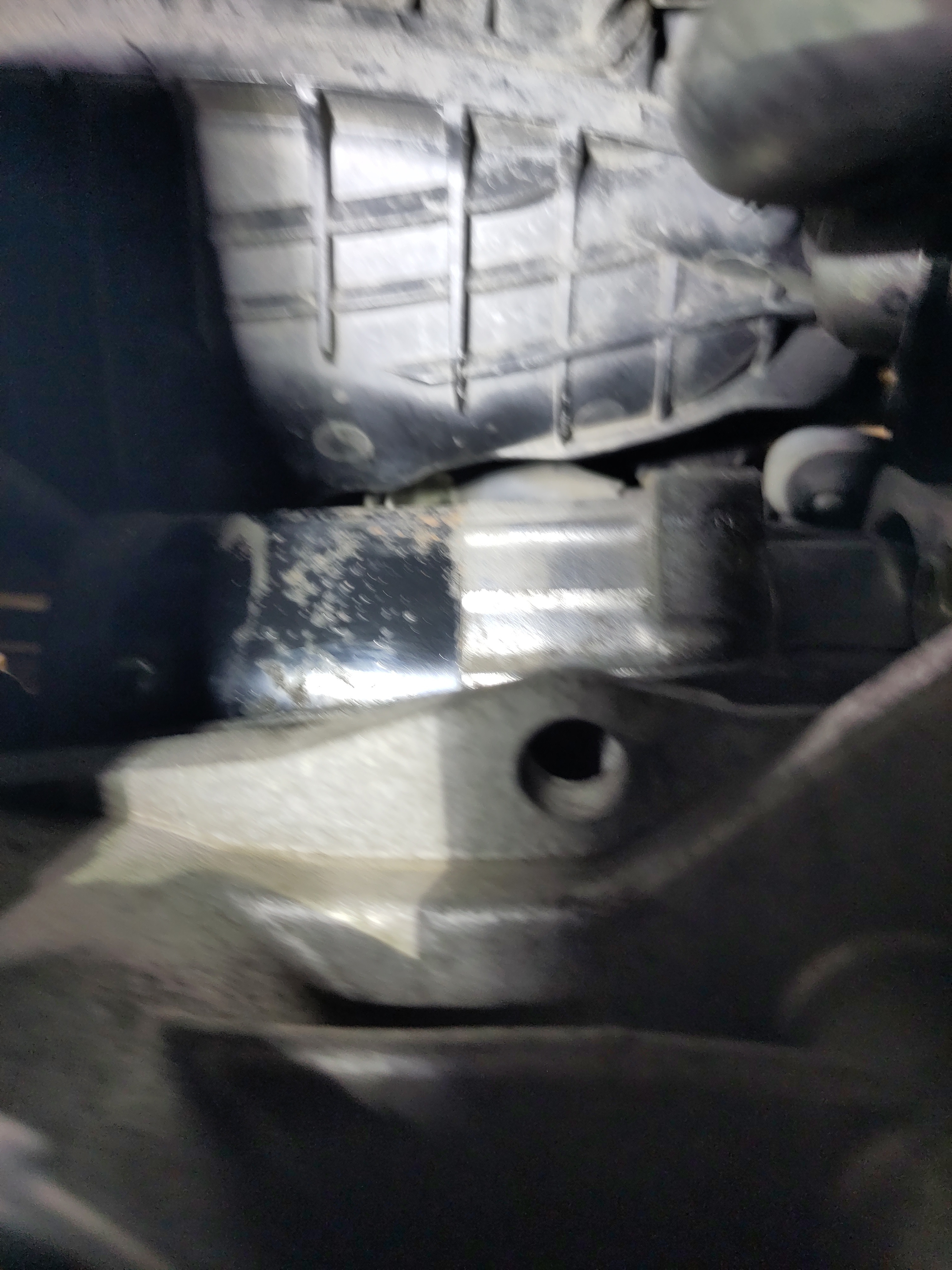
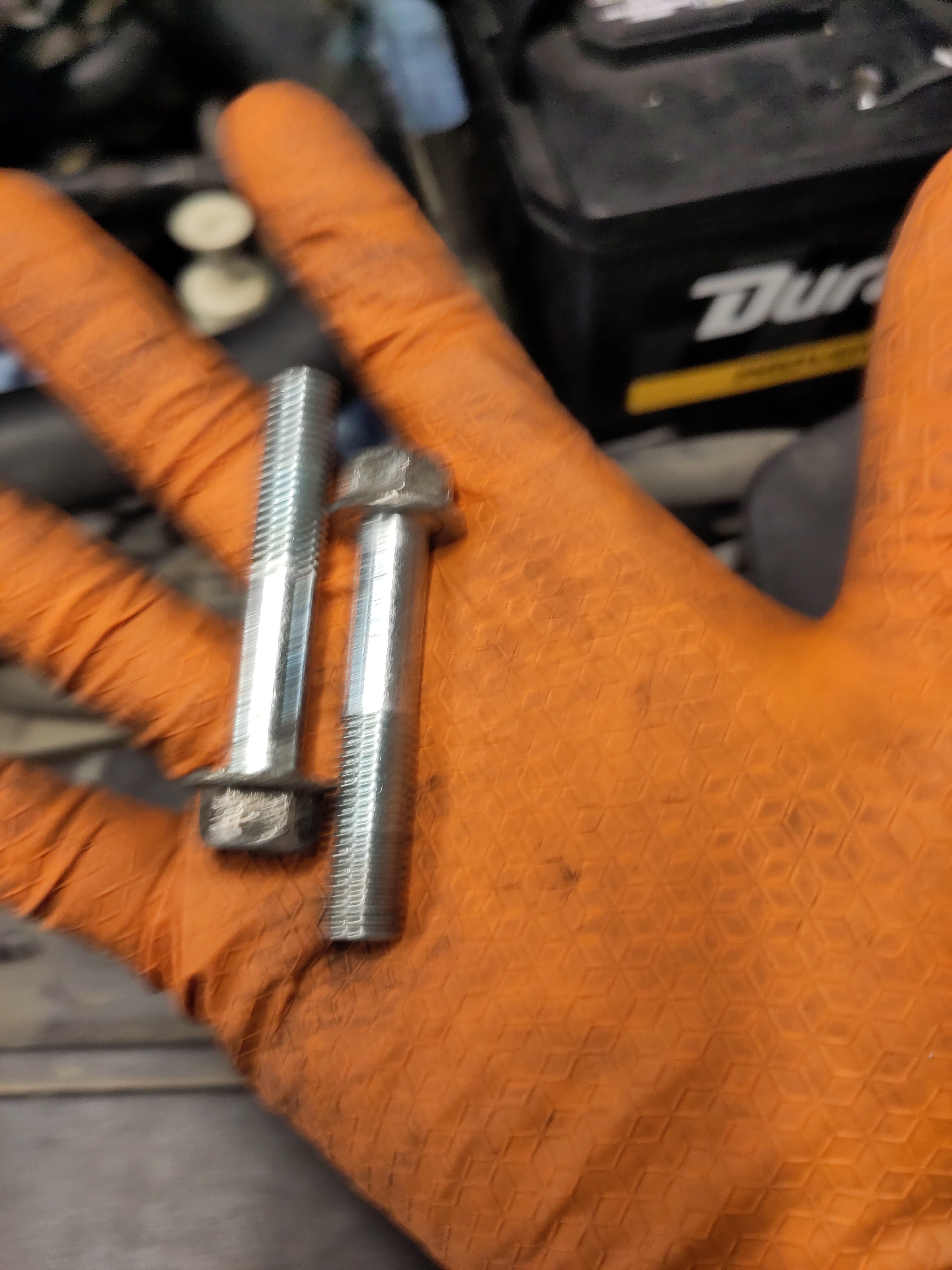
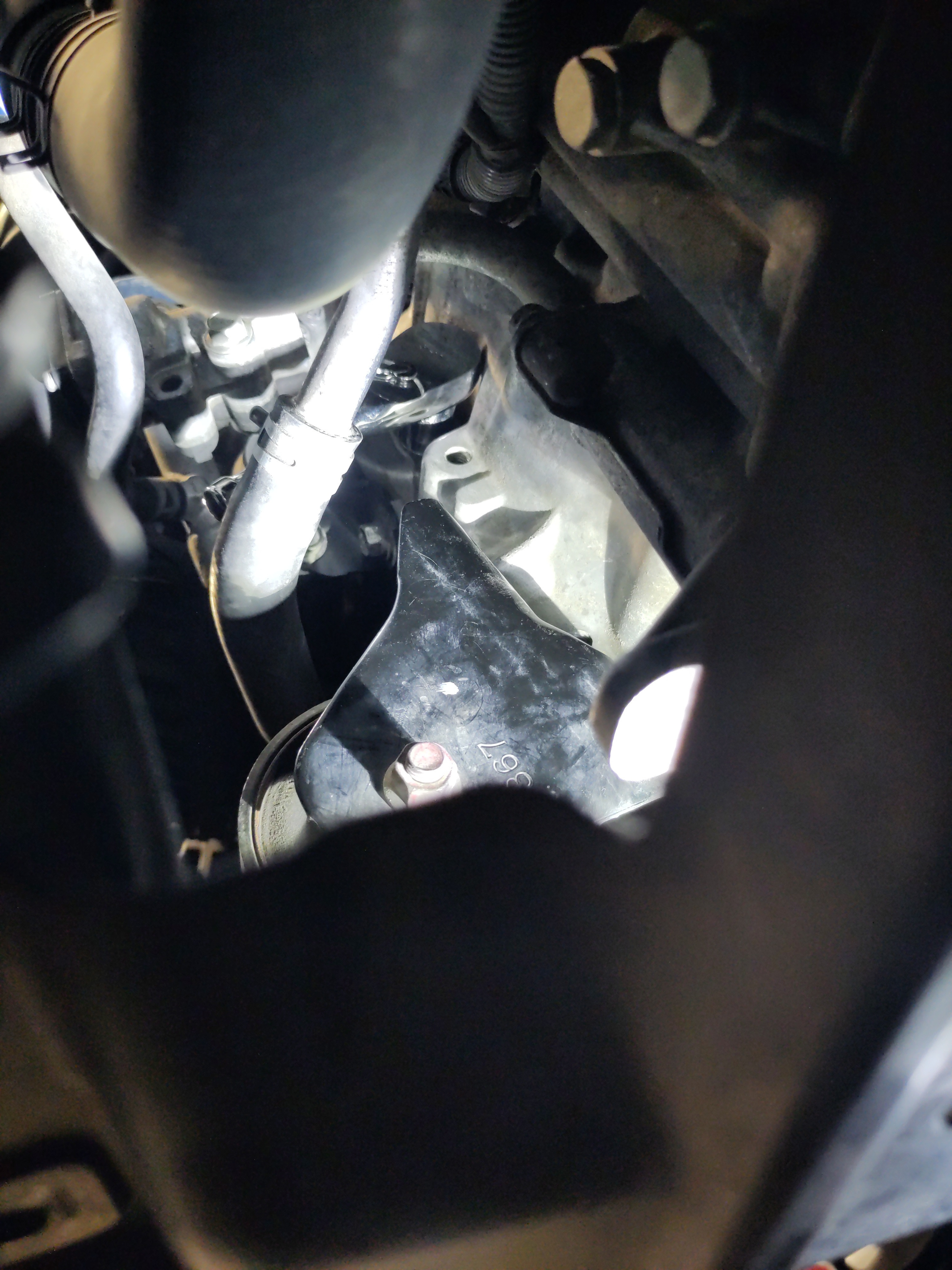
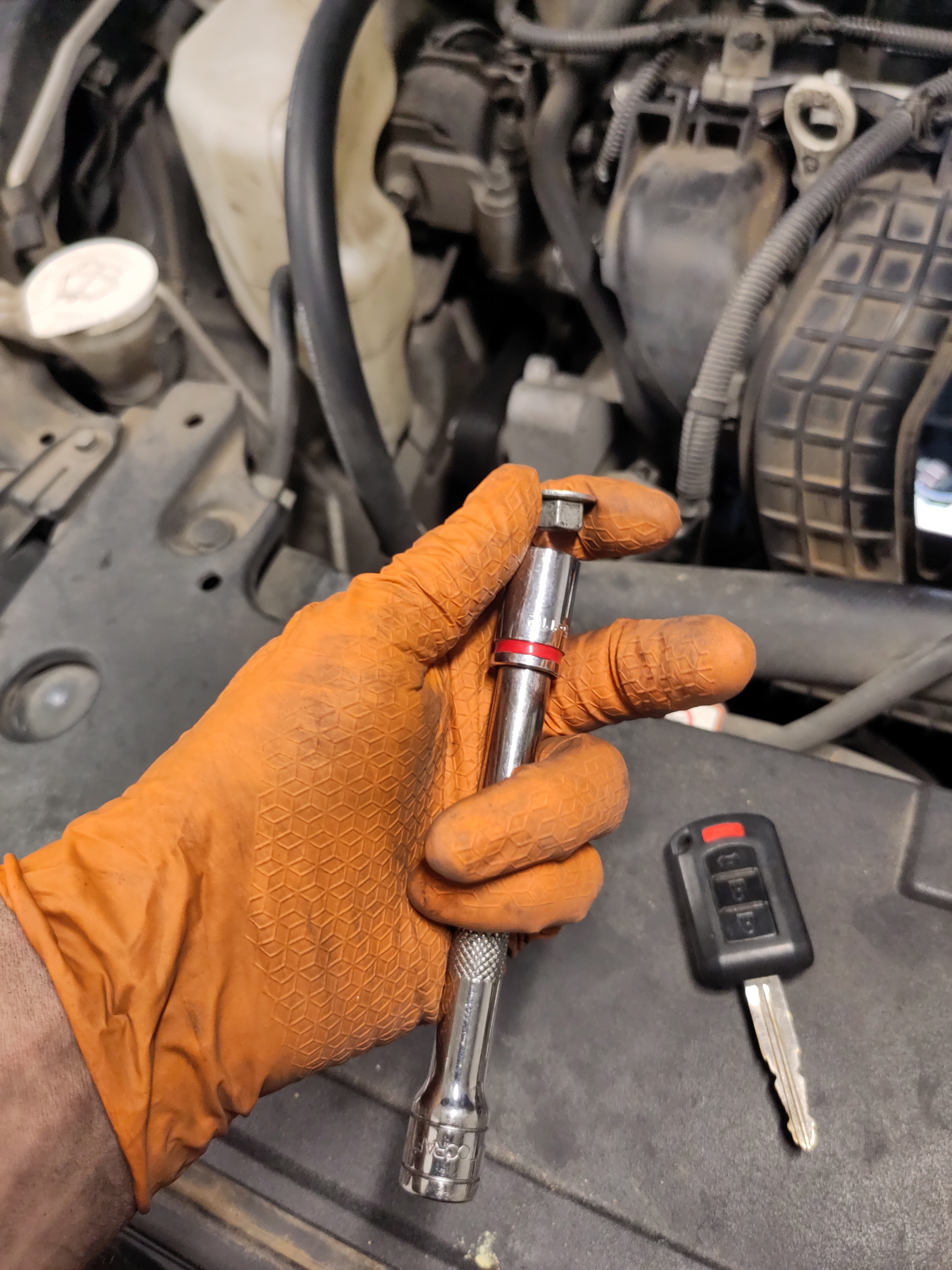
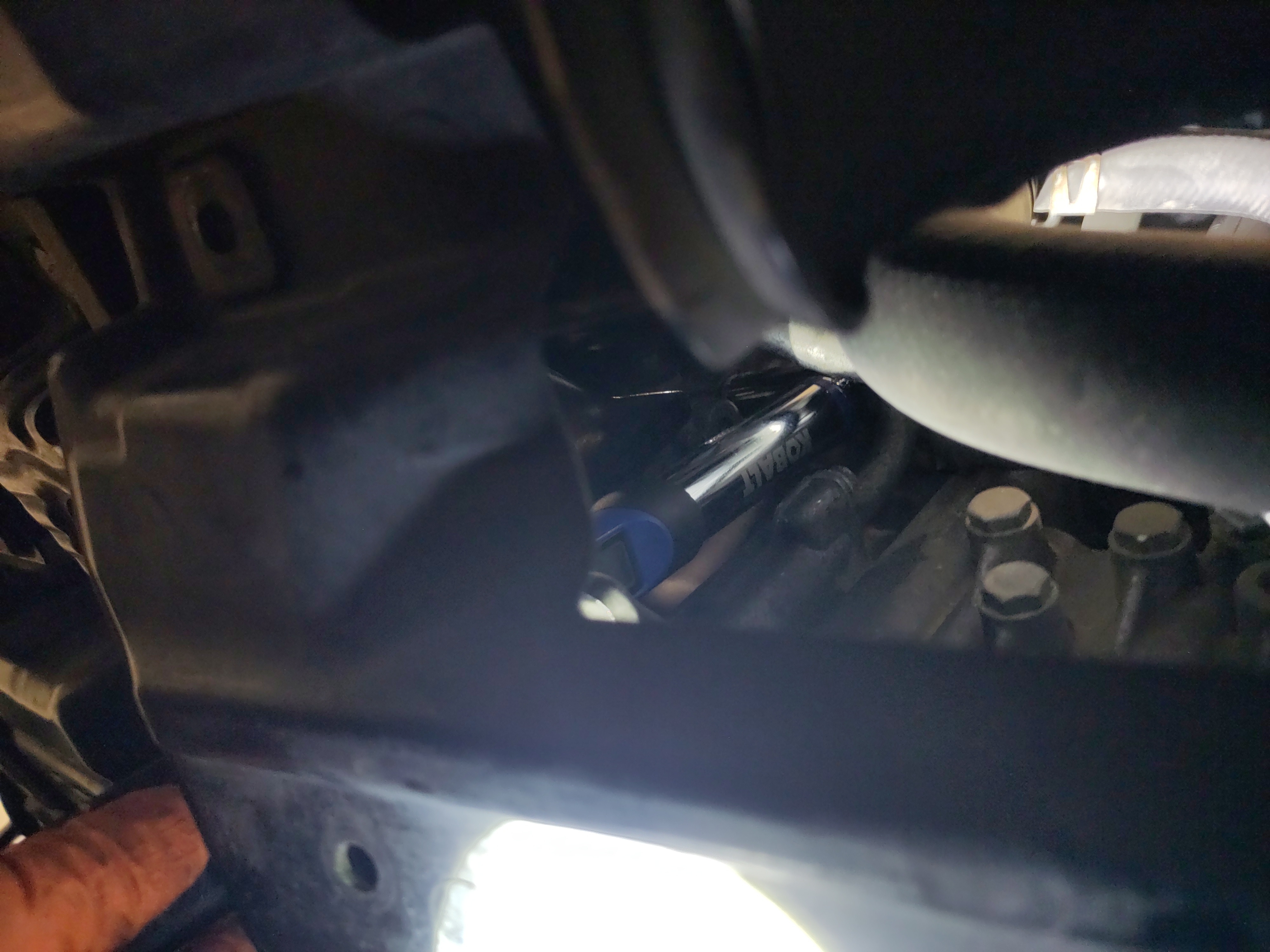
There are two 14mm bolts securing the starter to the transmission both will be removed using 3/8" drive shallow 14mm 6 point socket and 3/8" drive socket wrench with an adjustable angle will help loosen the top bolt. Out of the two bolts the bottom 14mm bolt will be the most challenging and most time consuming to loosen strictly due to the location and leverage. The range of motion on the top bolt is greater than the bottom bolt and a longer handle socket wrench can be useful while initially breaking the bolt free. For the bottom bolt, I found it useful using different tools to assist in getting the bolt free. I used the short 3/8" drive socket wrench with the 14mm deep socket to initially break the bolt free. Using a normal size 3/8" drive will come with a drawback for limited motion, it was not useful as I initially anticipated. However, using a 14 mm opened wrench and 12 point closed end helped in further loosening the bolt. For visibility the use a flashlight and can get dark and difficult to see the bolt. IMPORTANT! Recommendation would be to keep the the bottom 14mm bolt threaded into the starter just to create some with the starter for when disconnecting the electrical connections to the starter. The top bolt once removed should be stored in the magnetic pan for safe keeping.
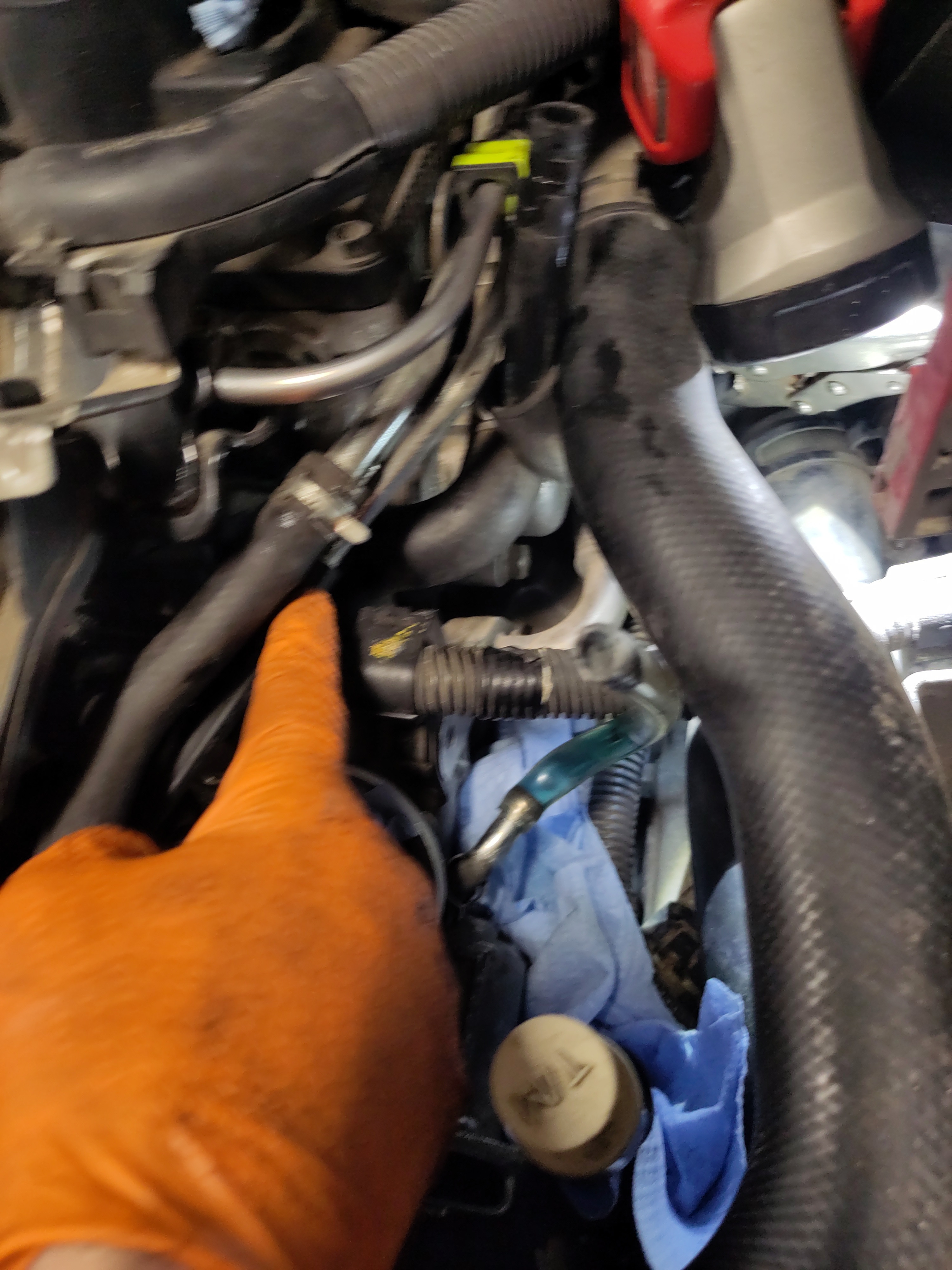
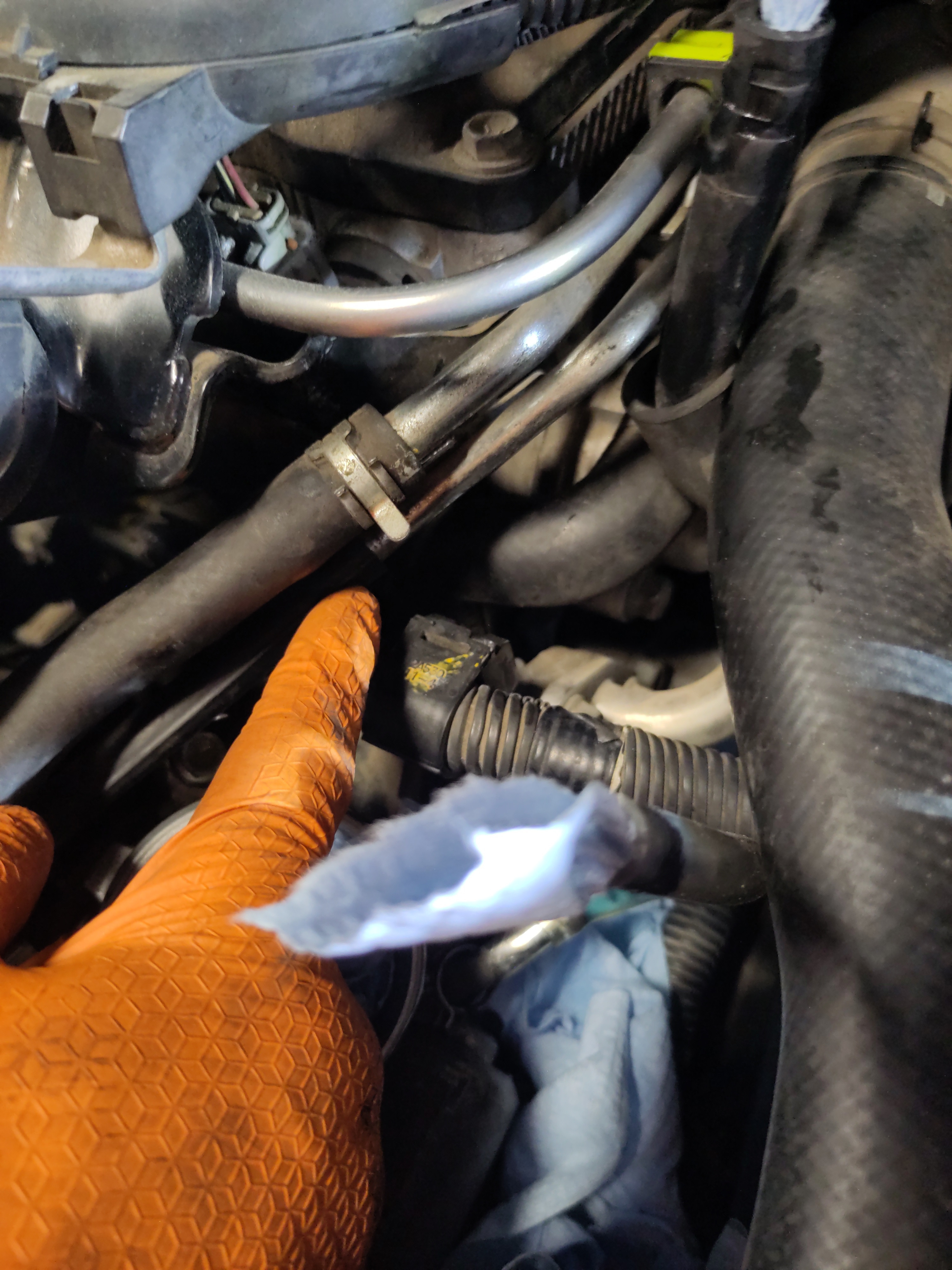
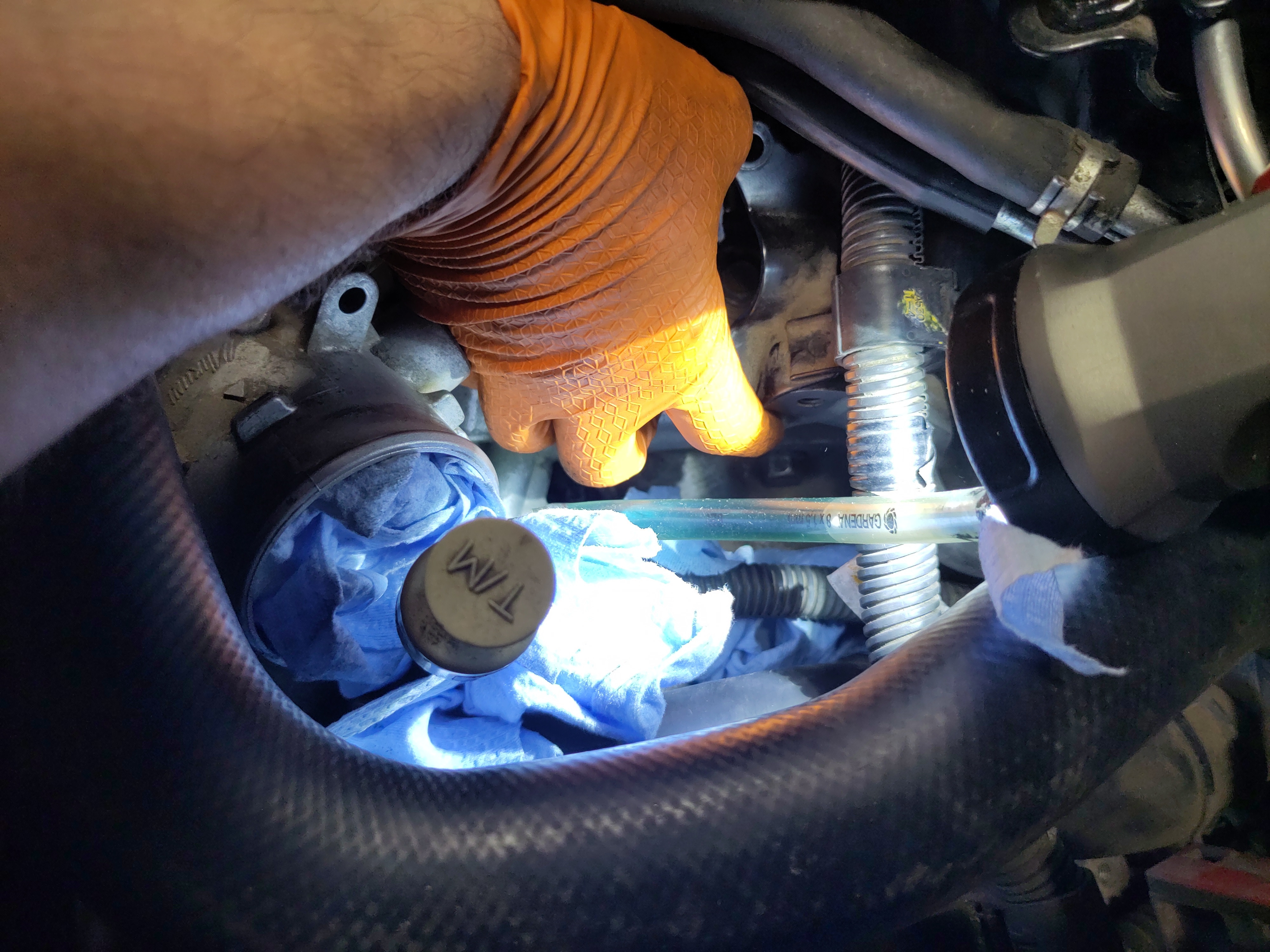
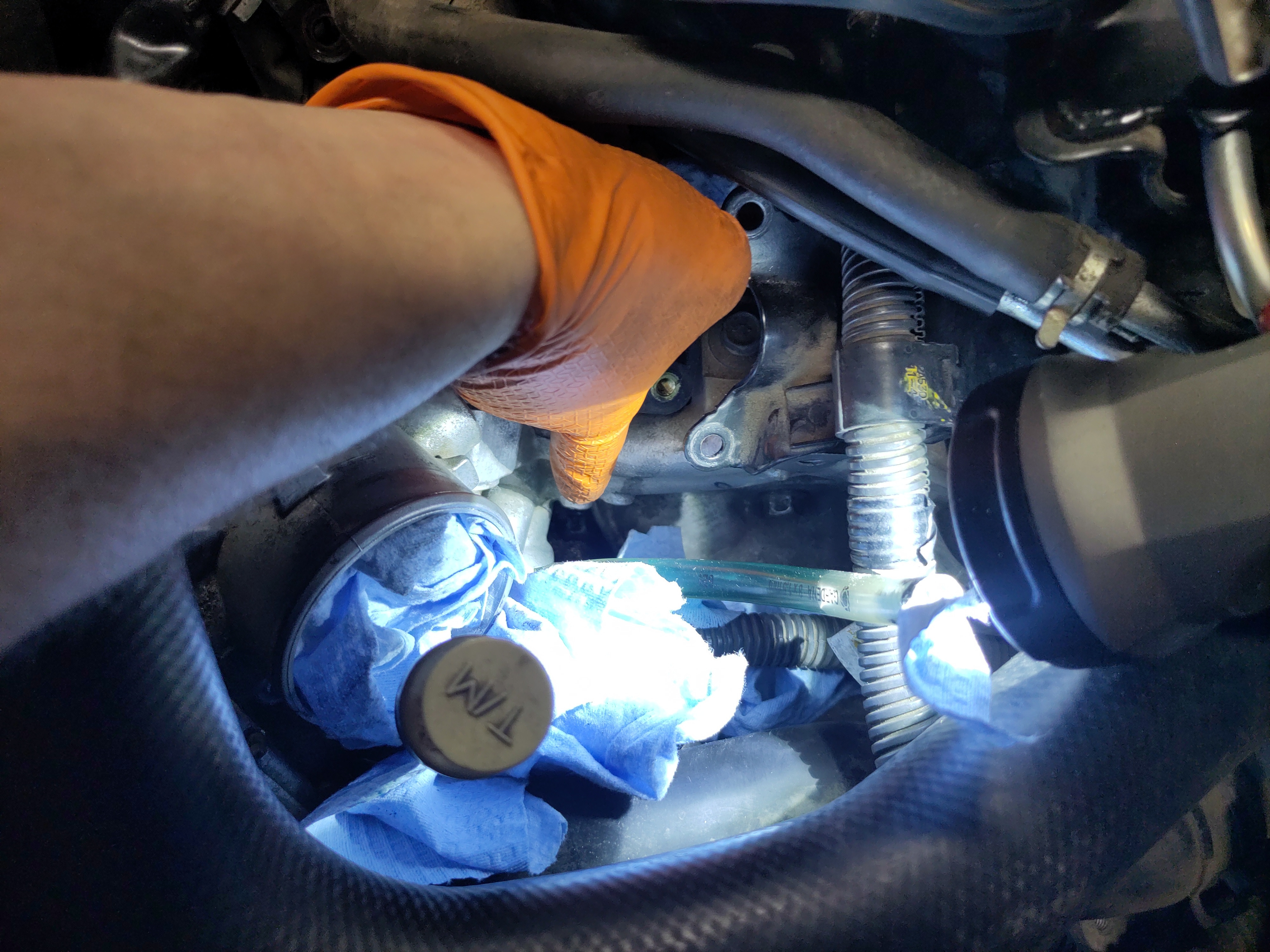
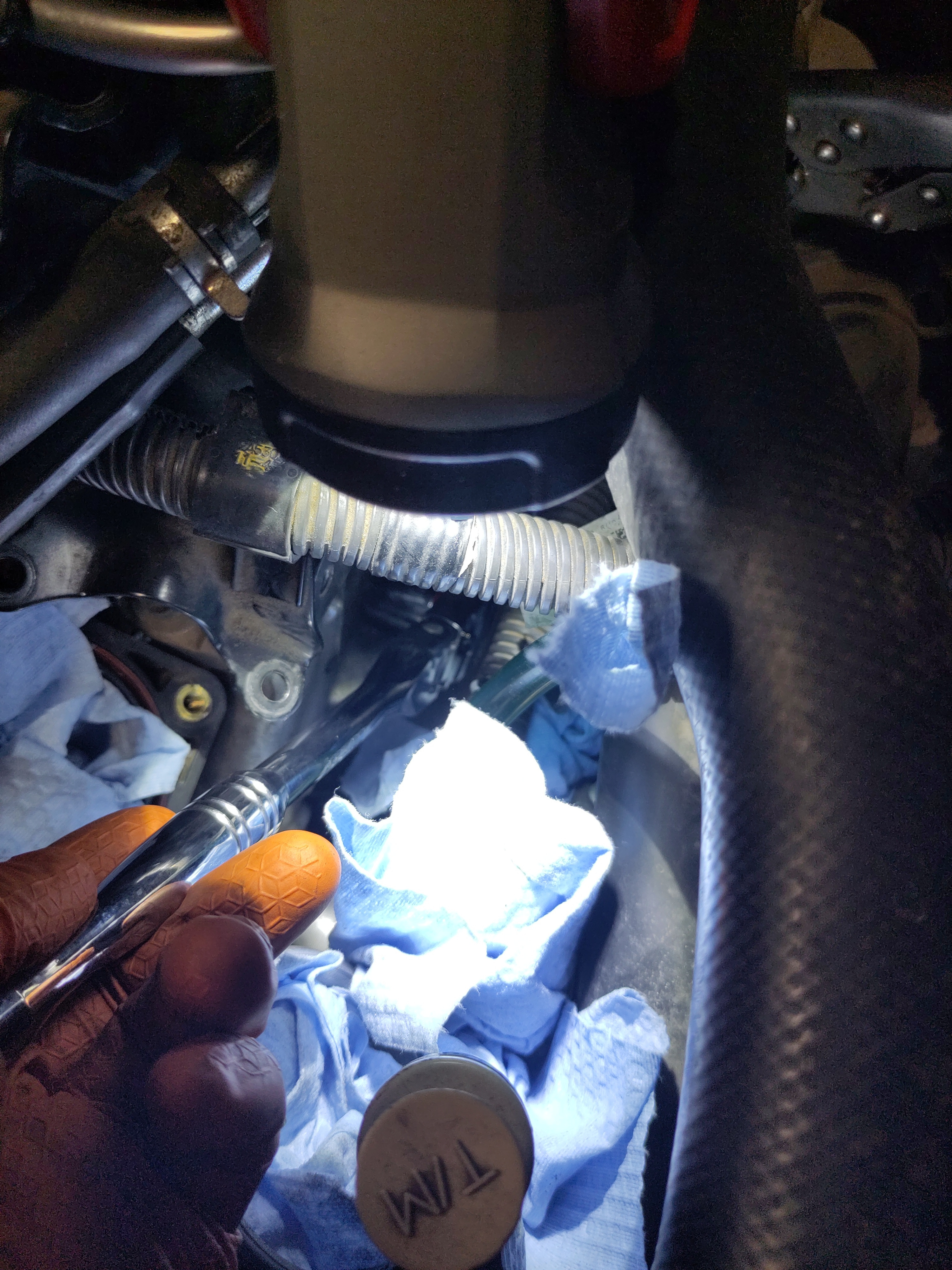
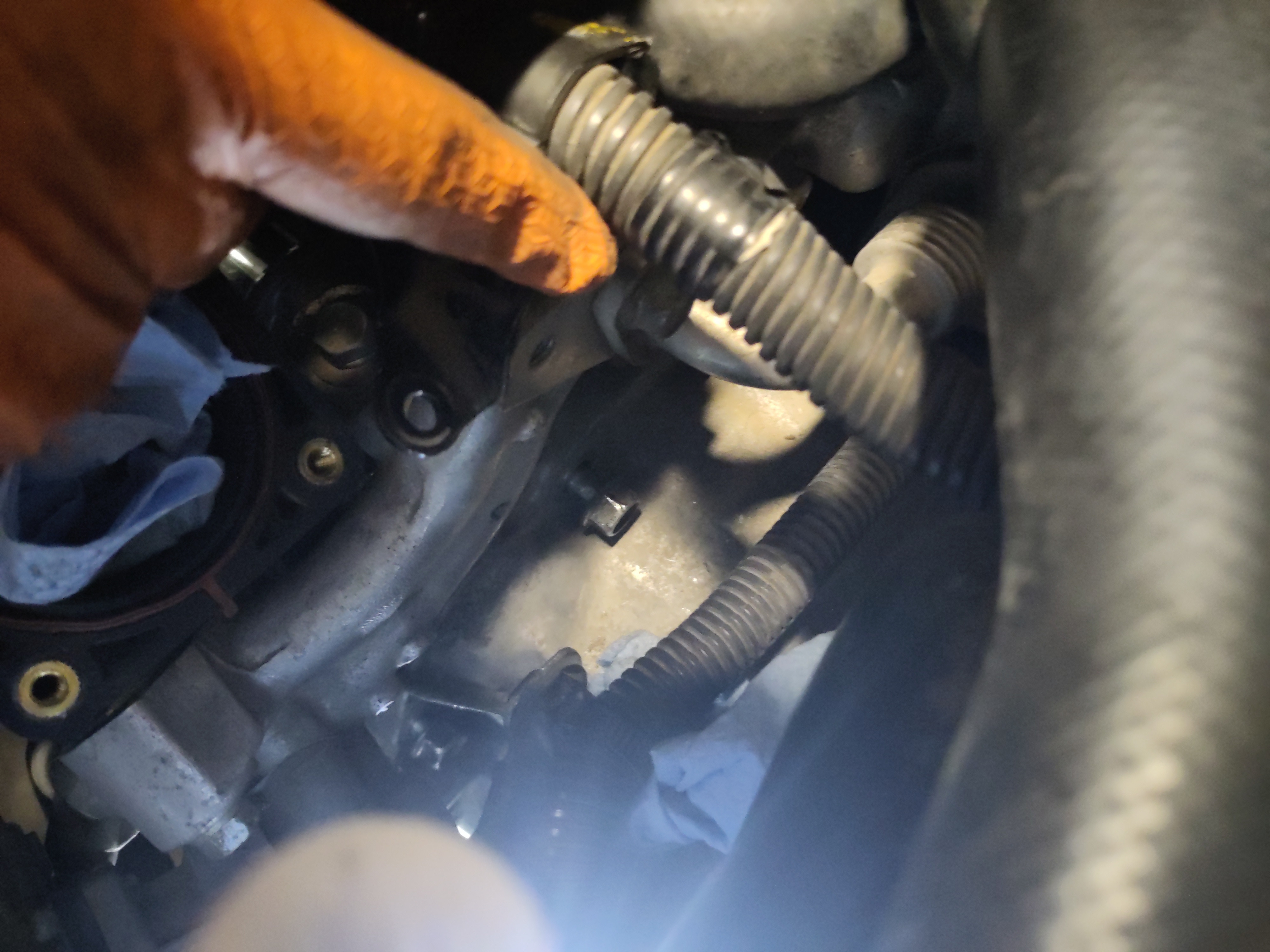
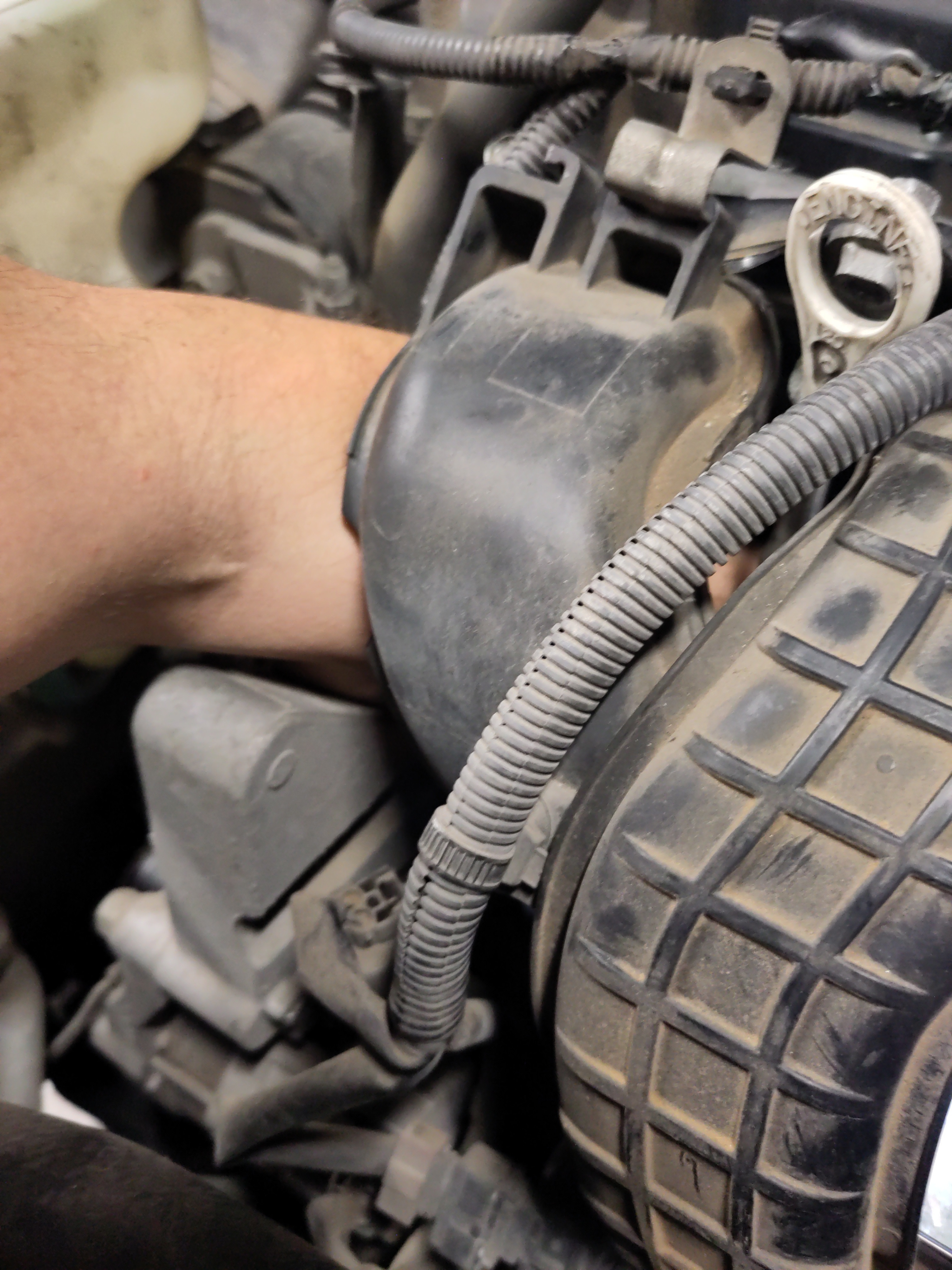
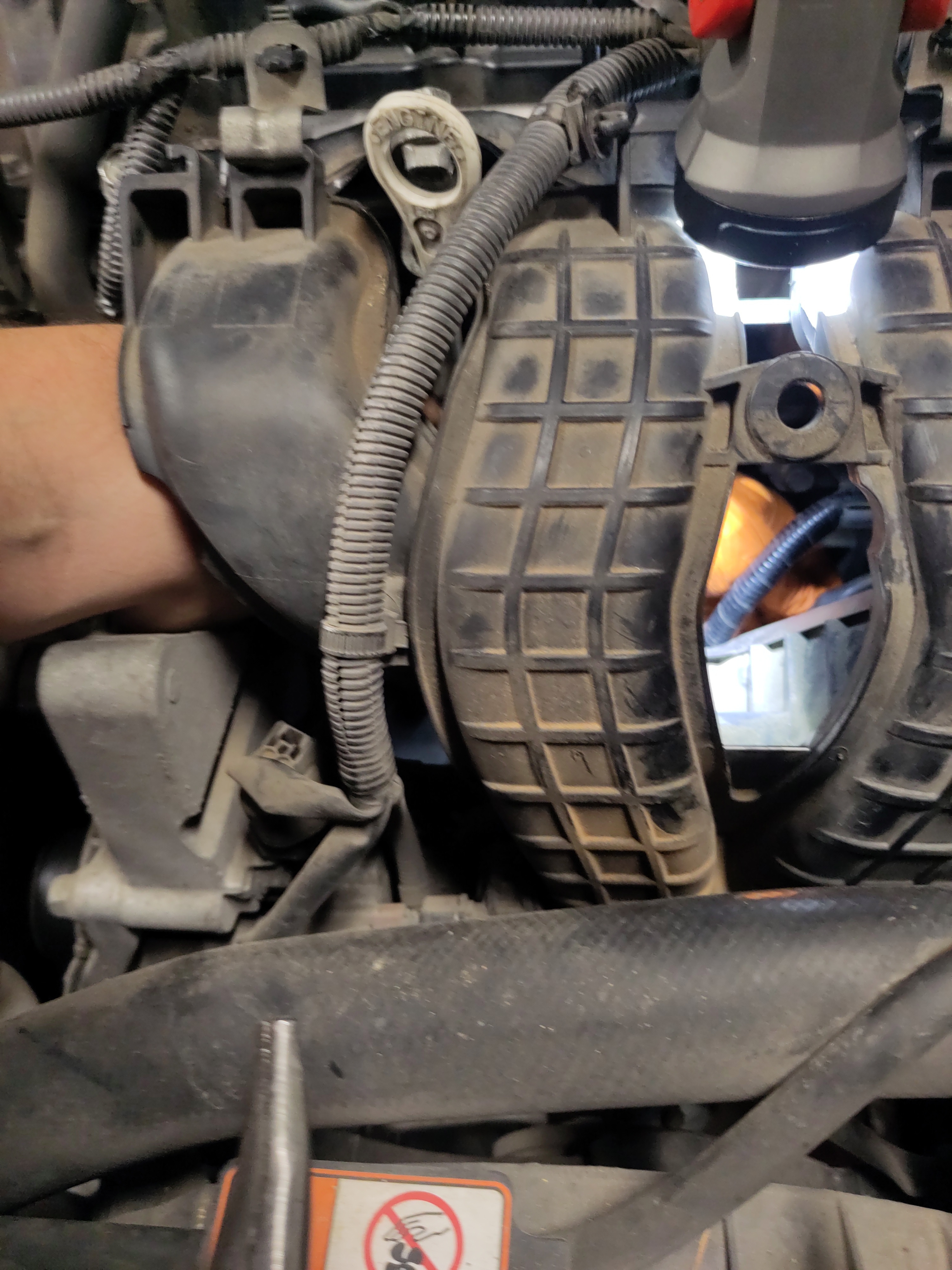
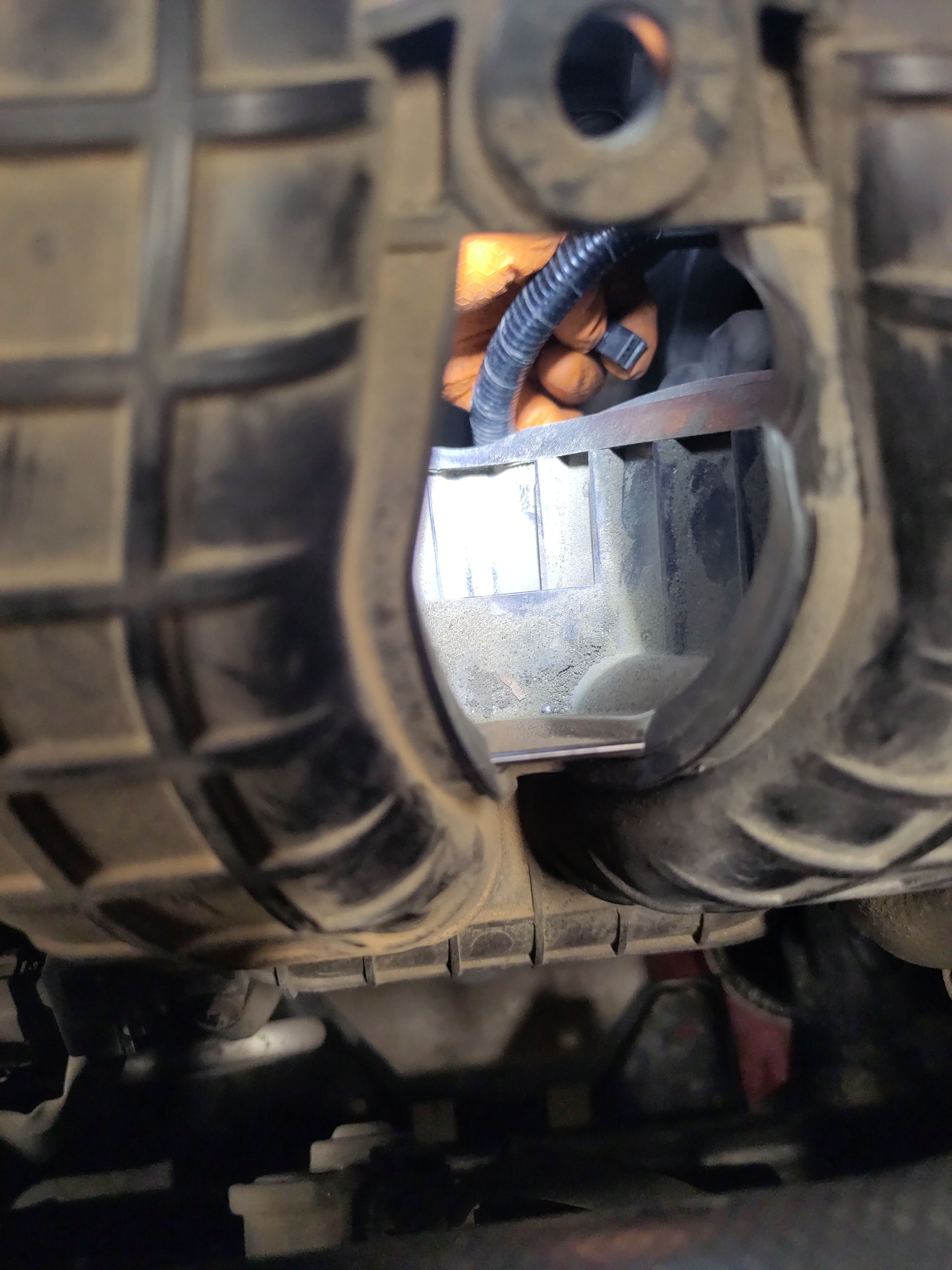
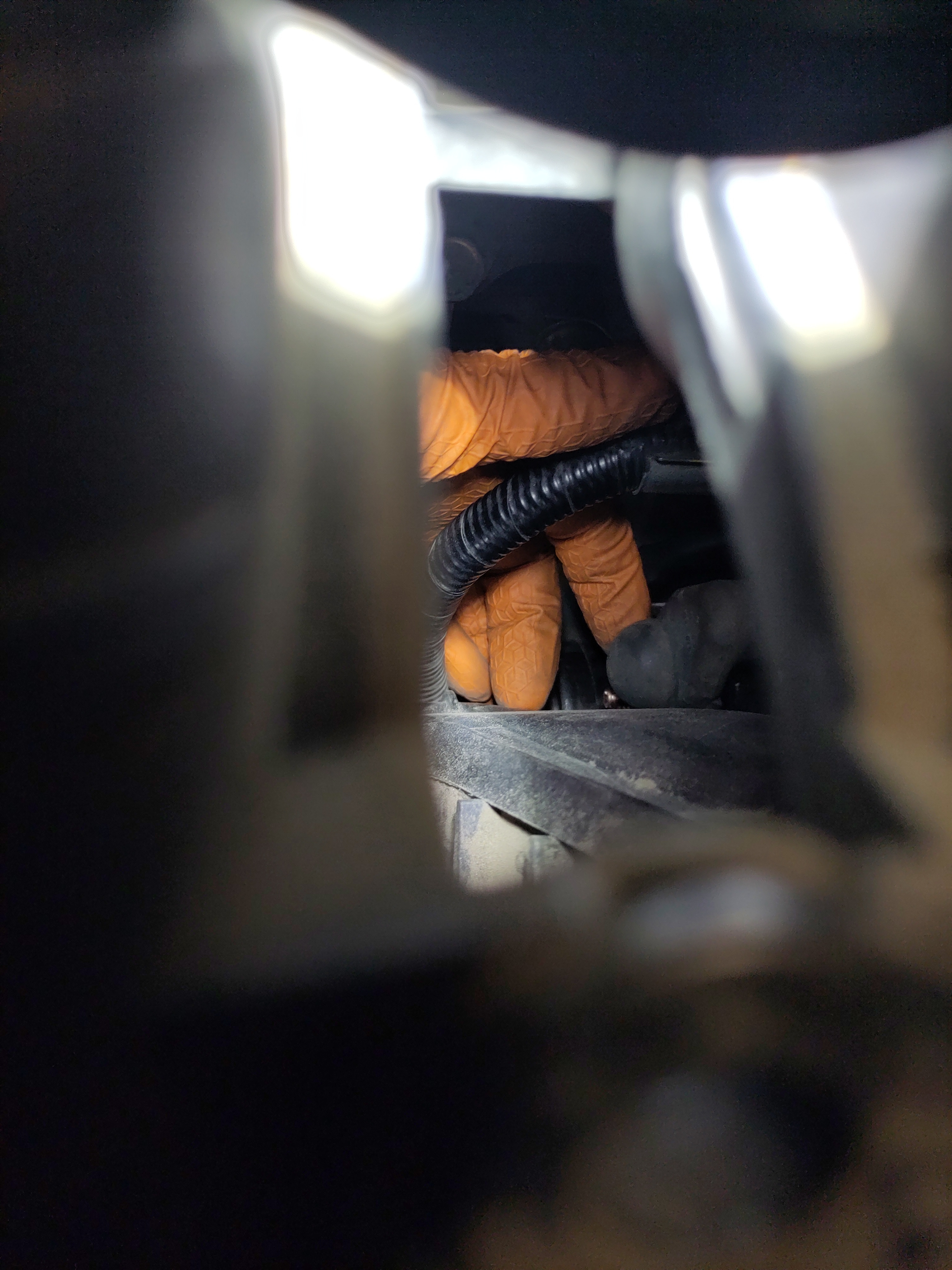
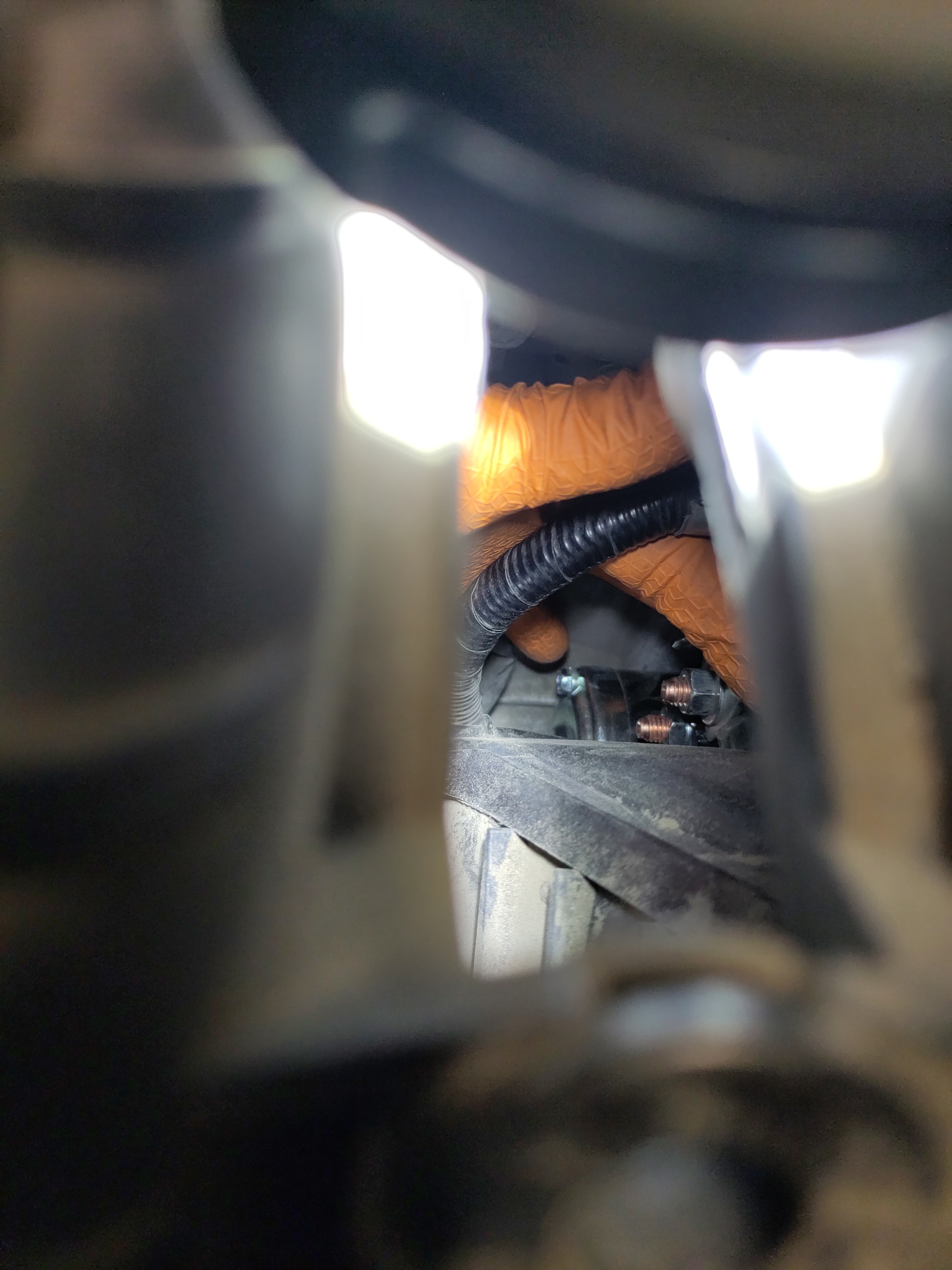
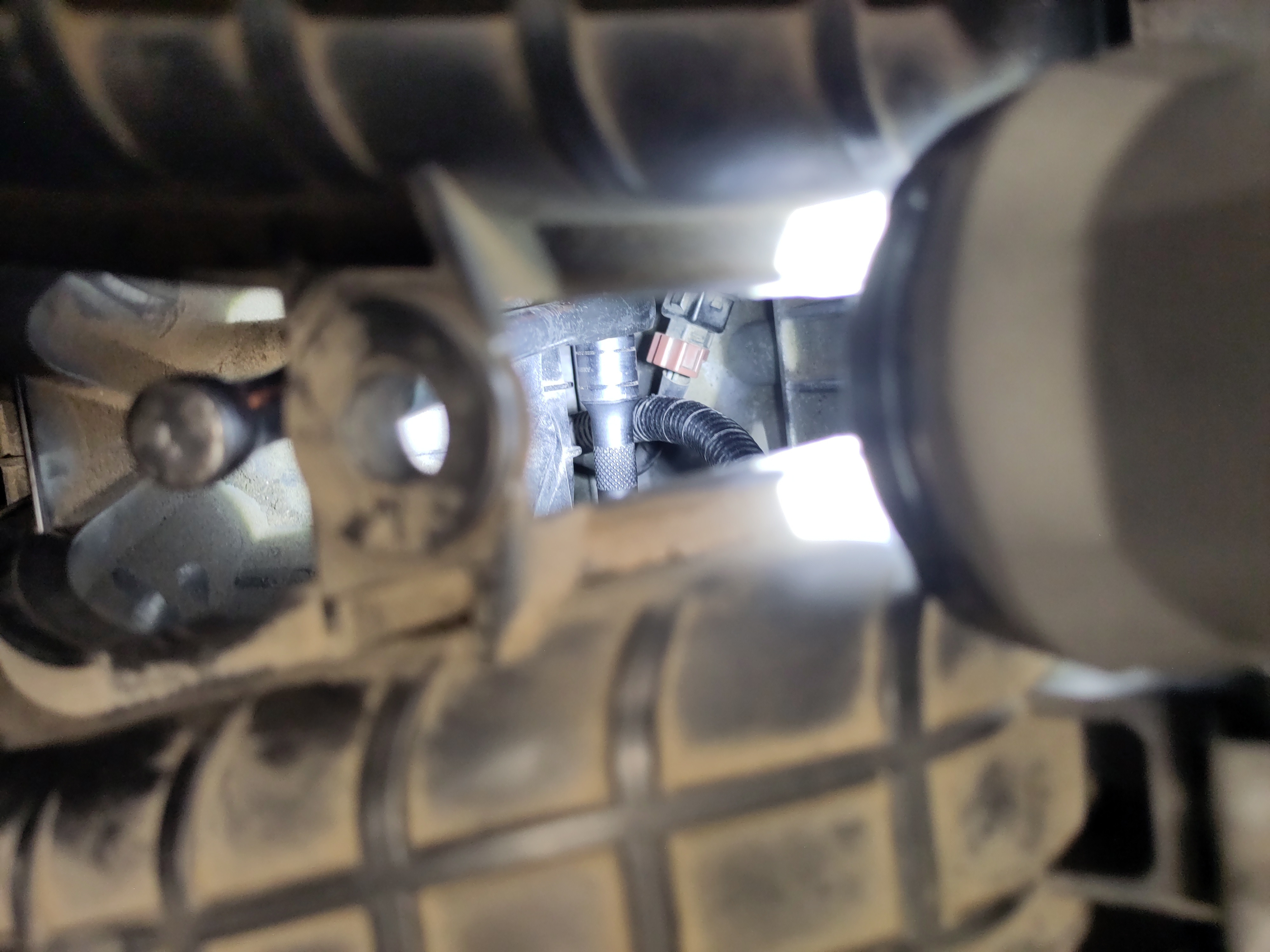
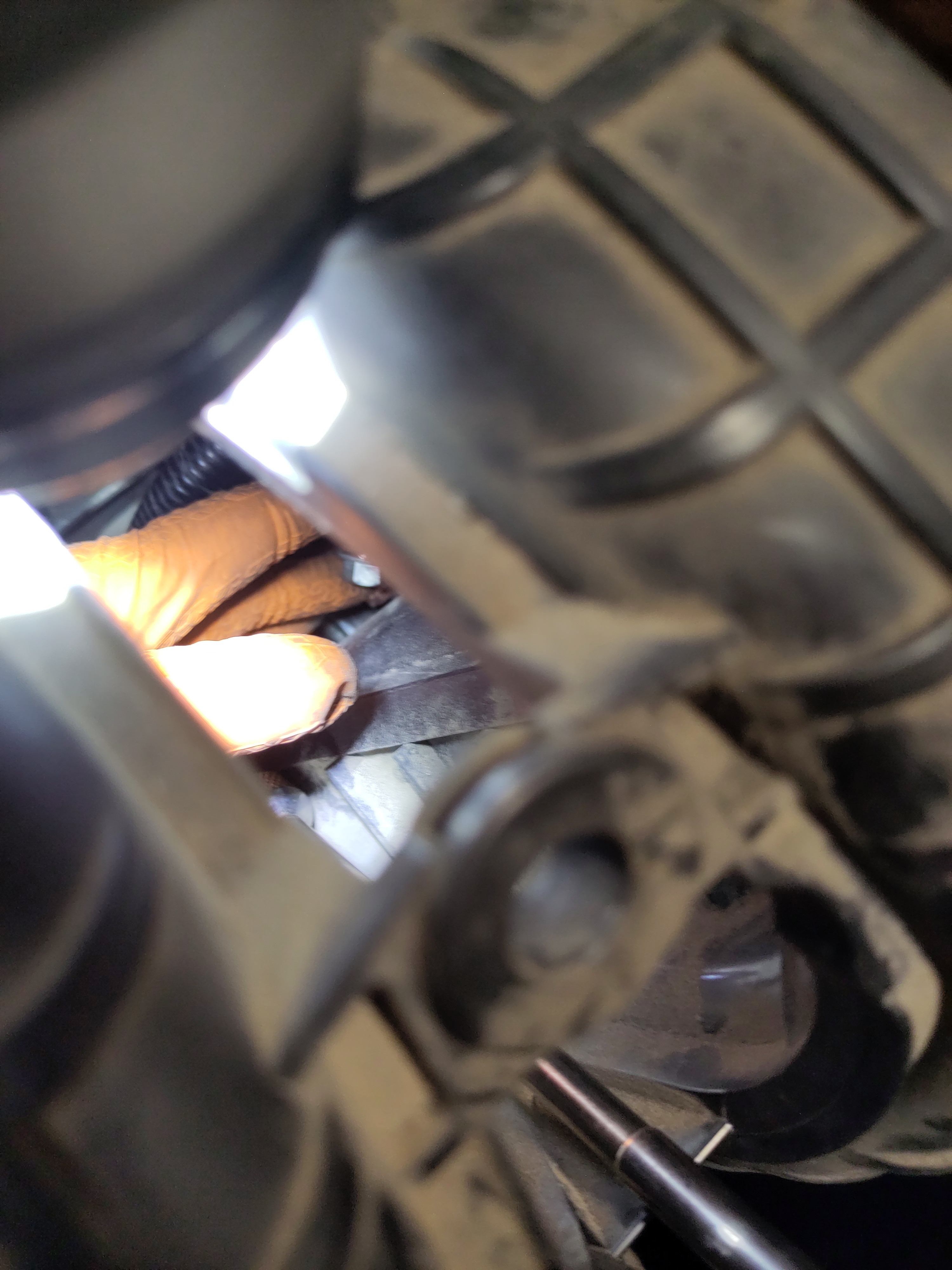
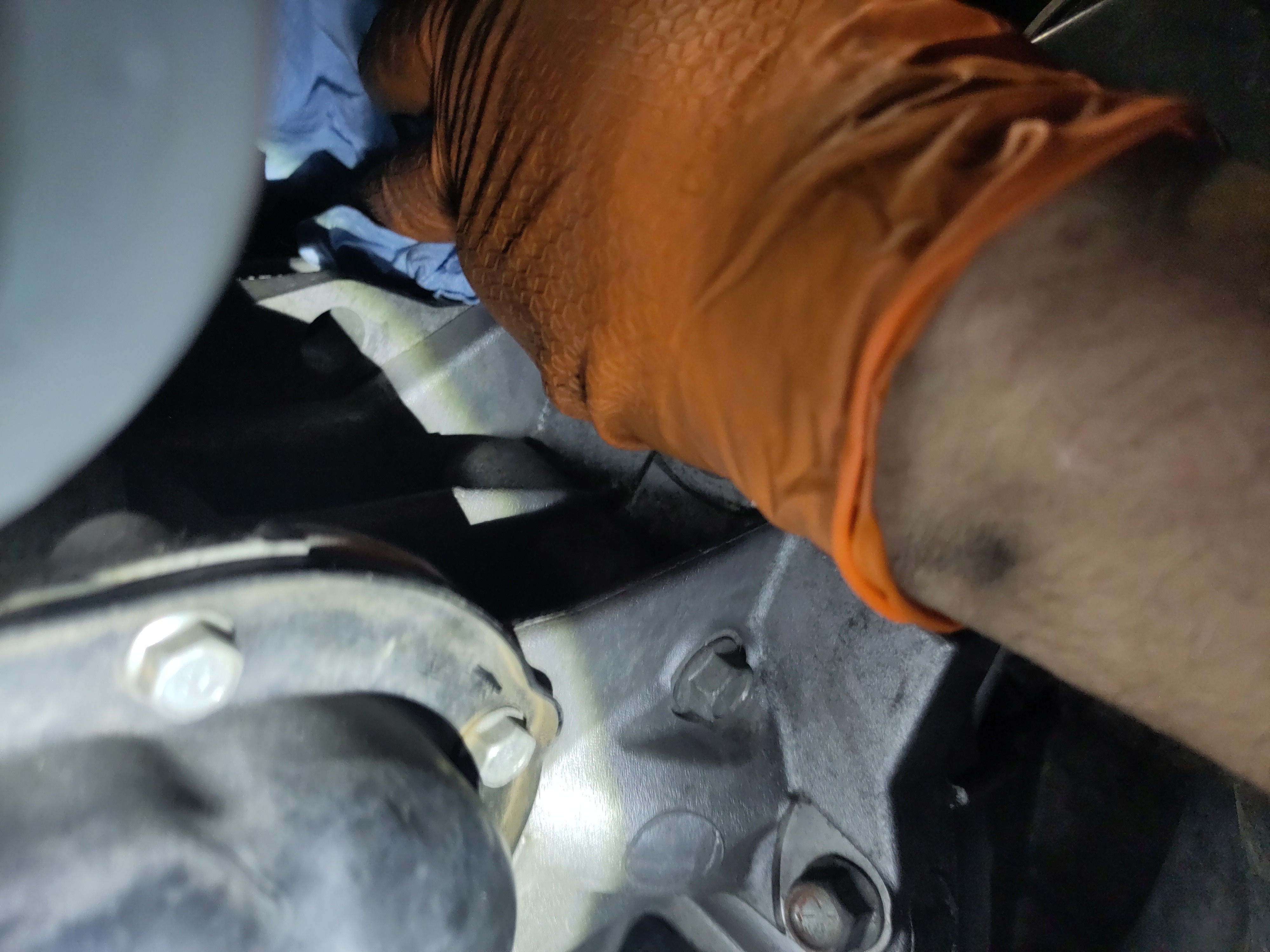
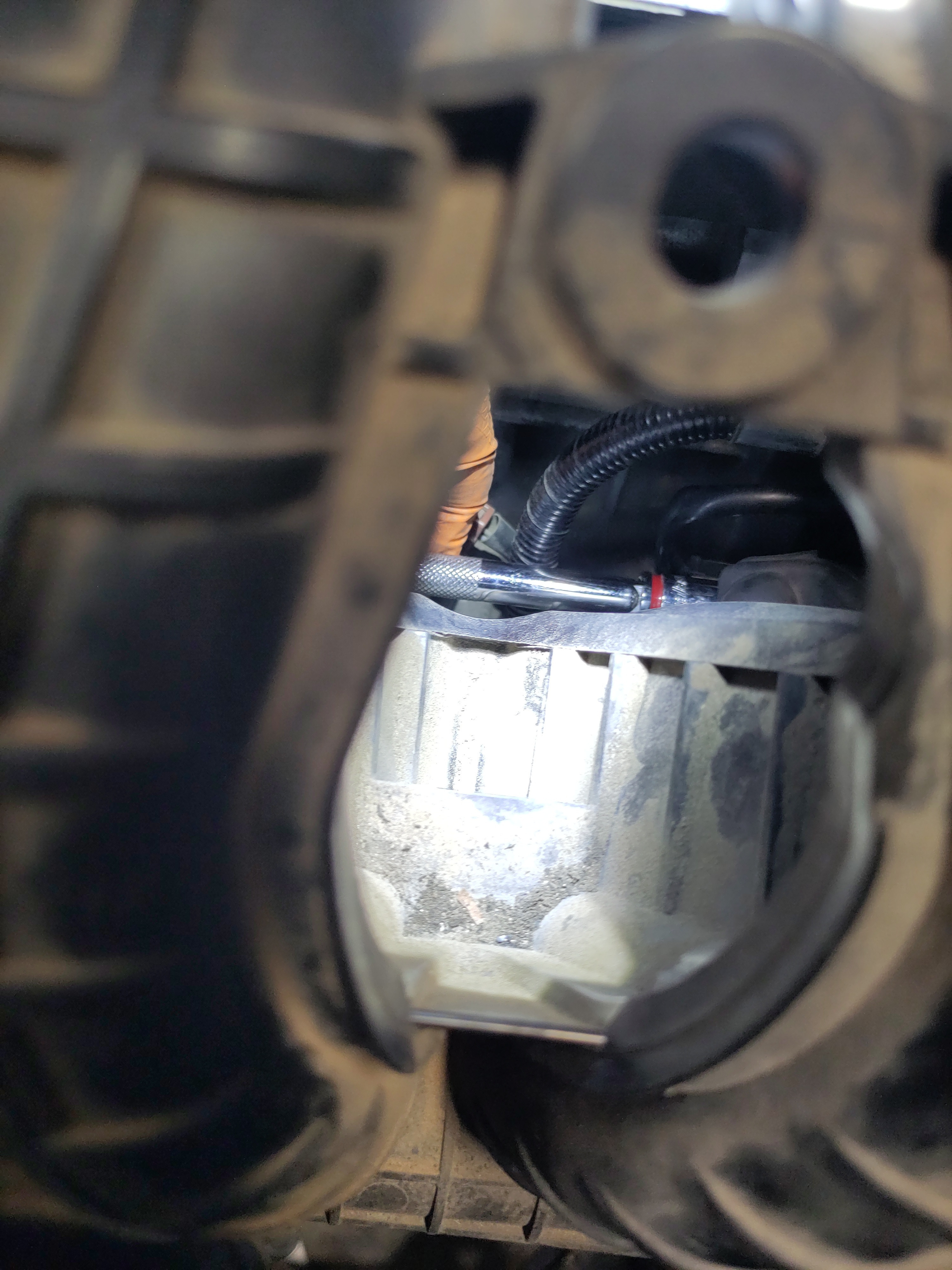
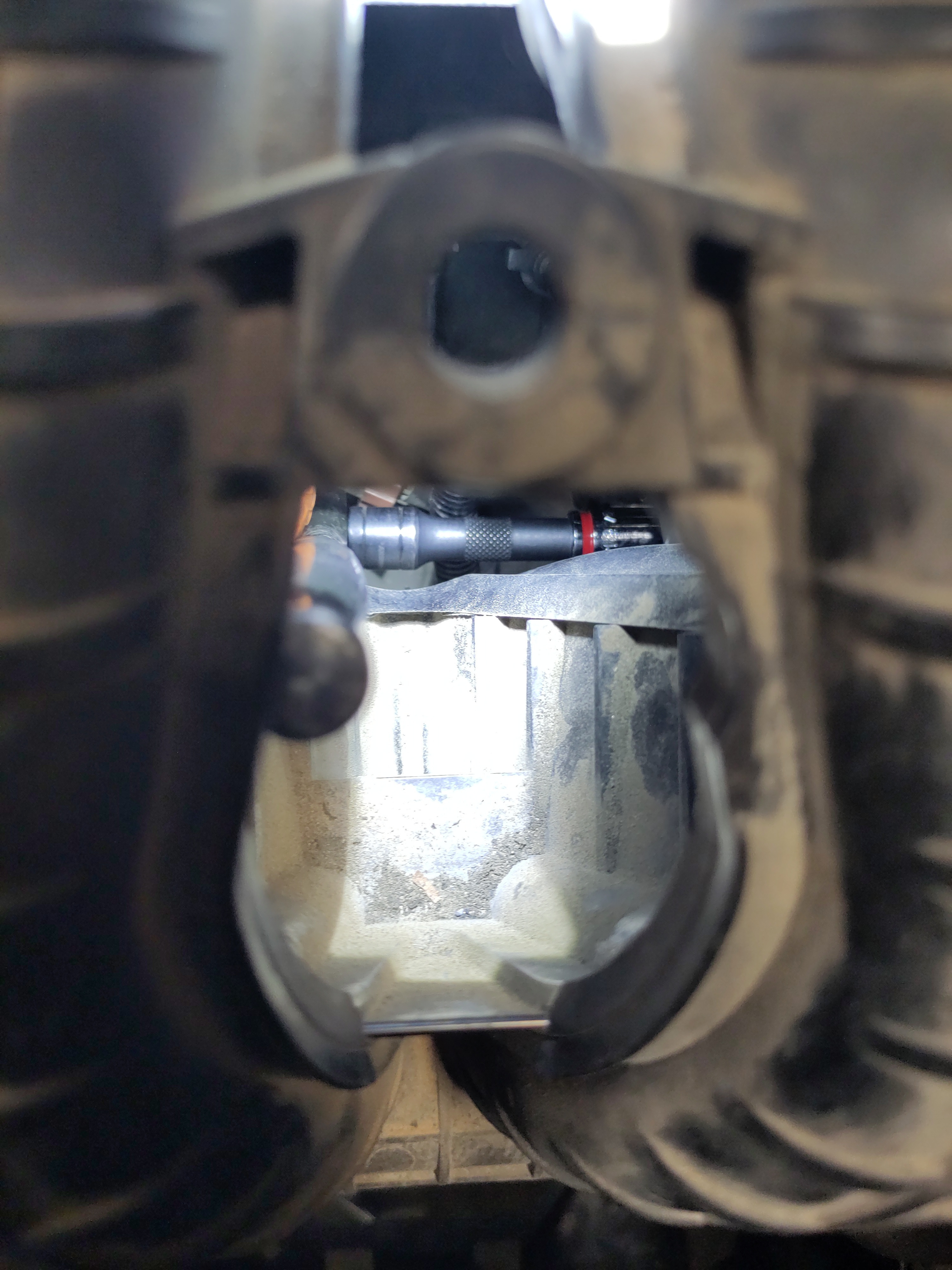
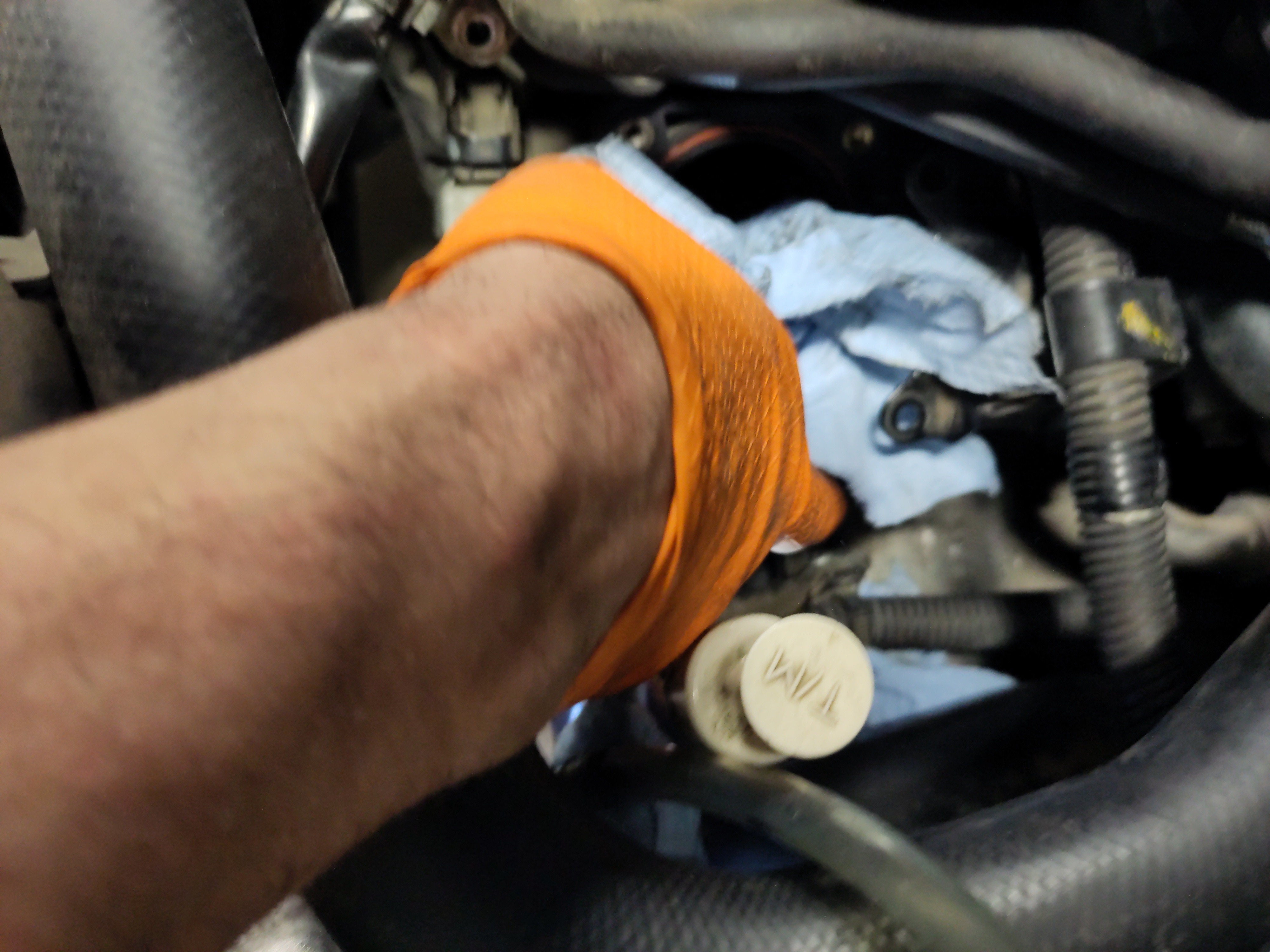
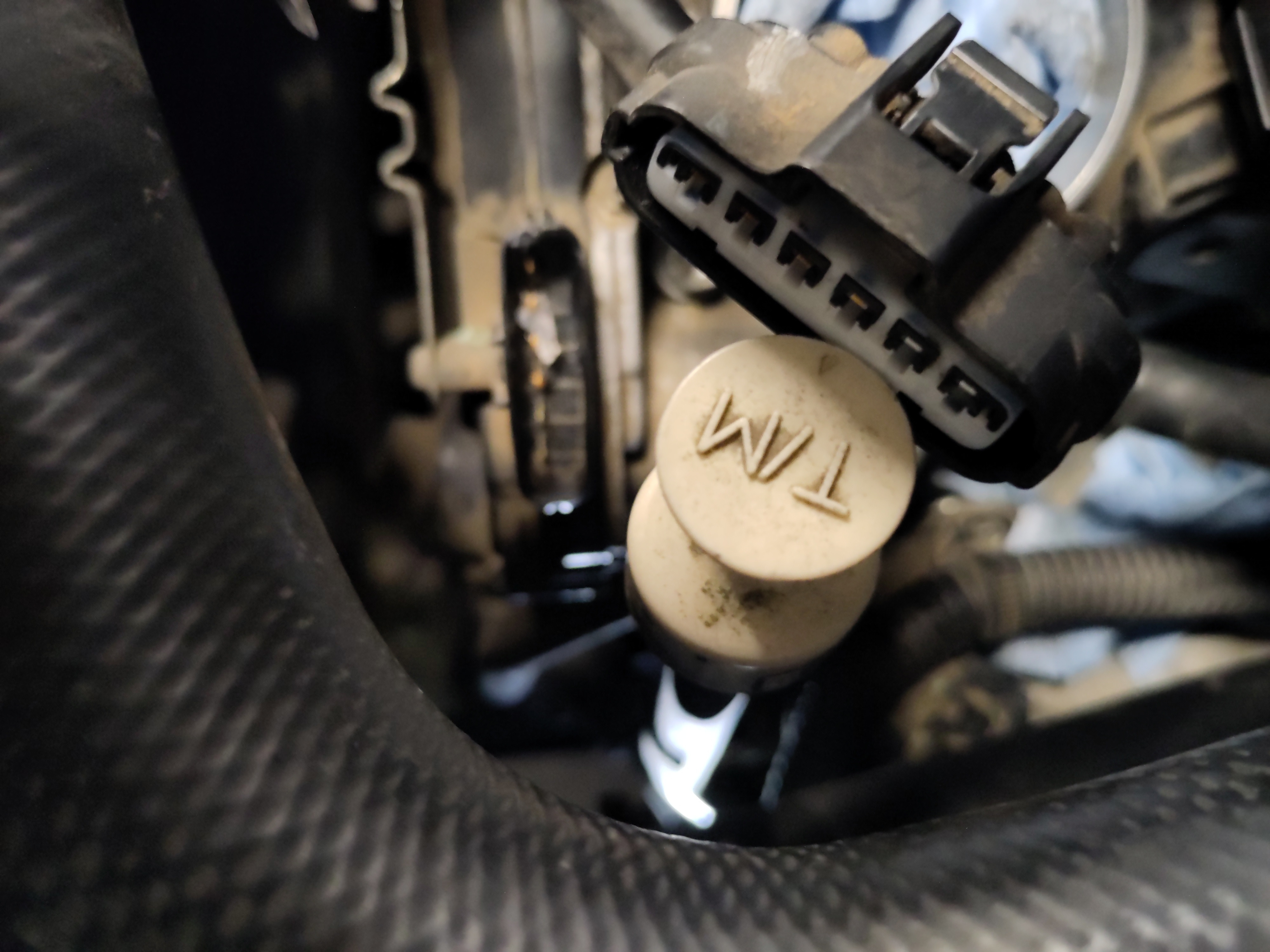
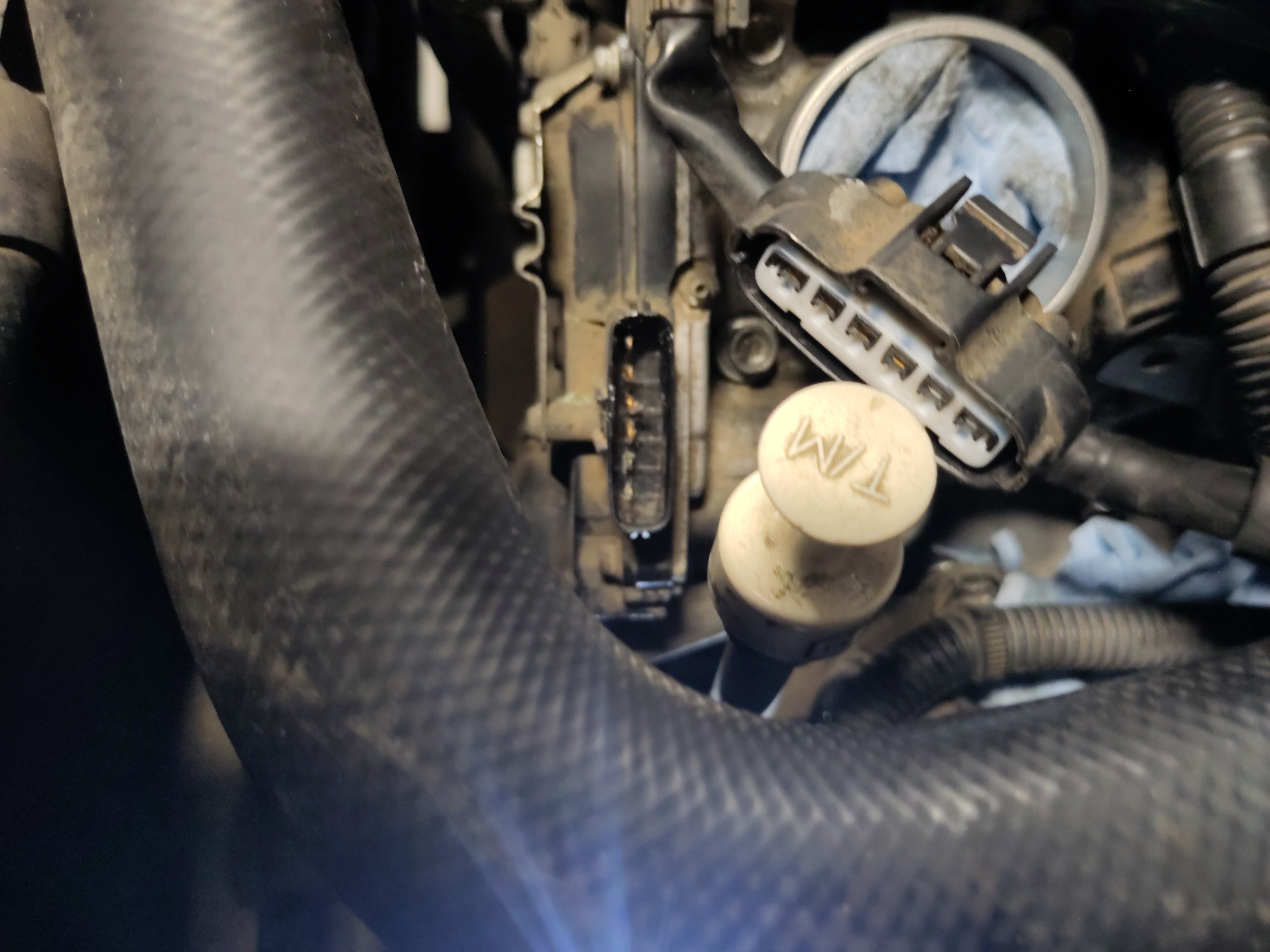
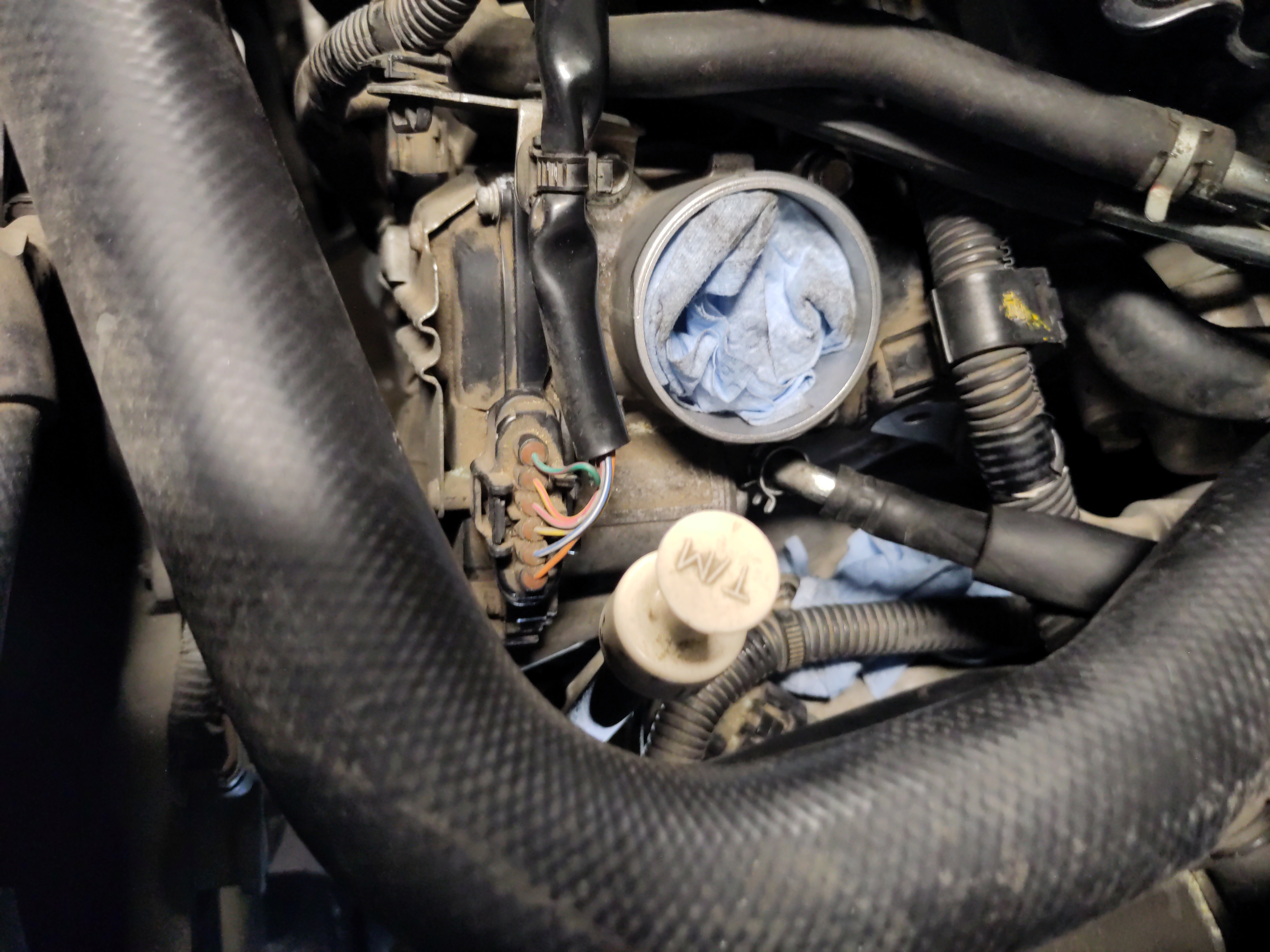
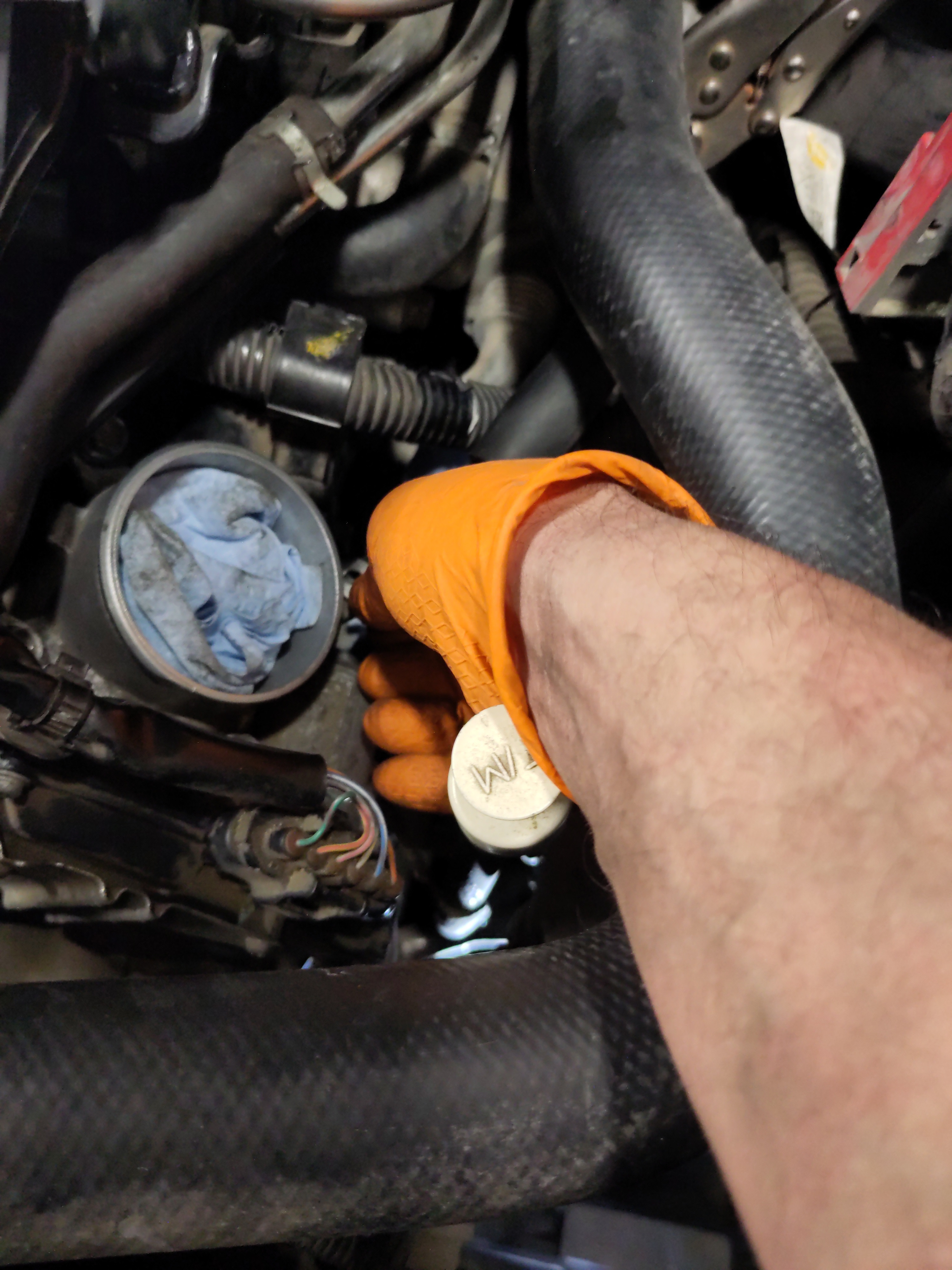
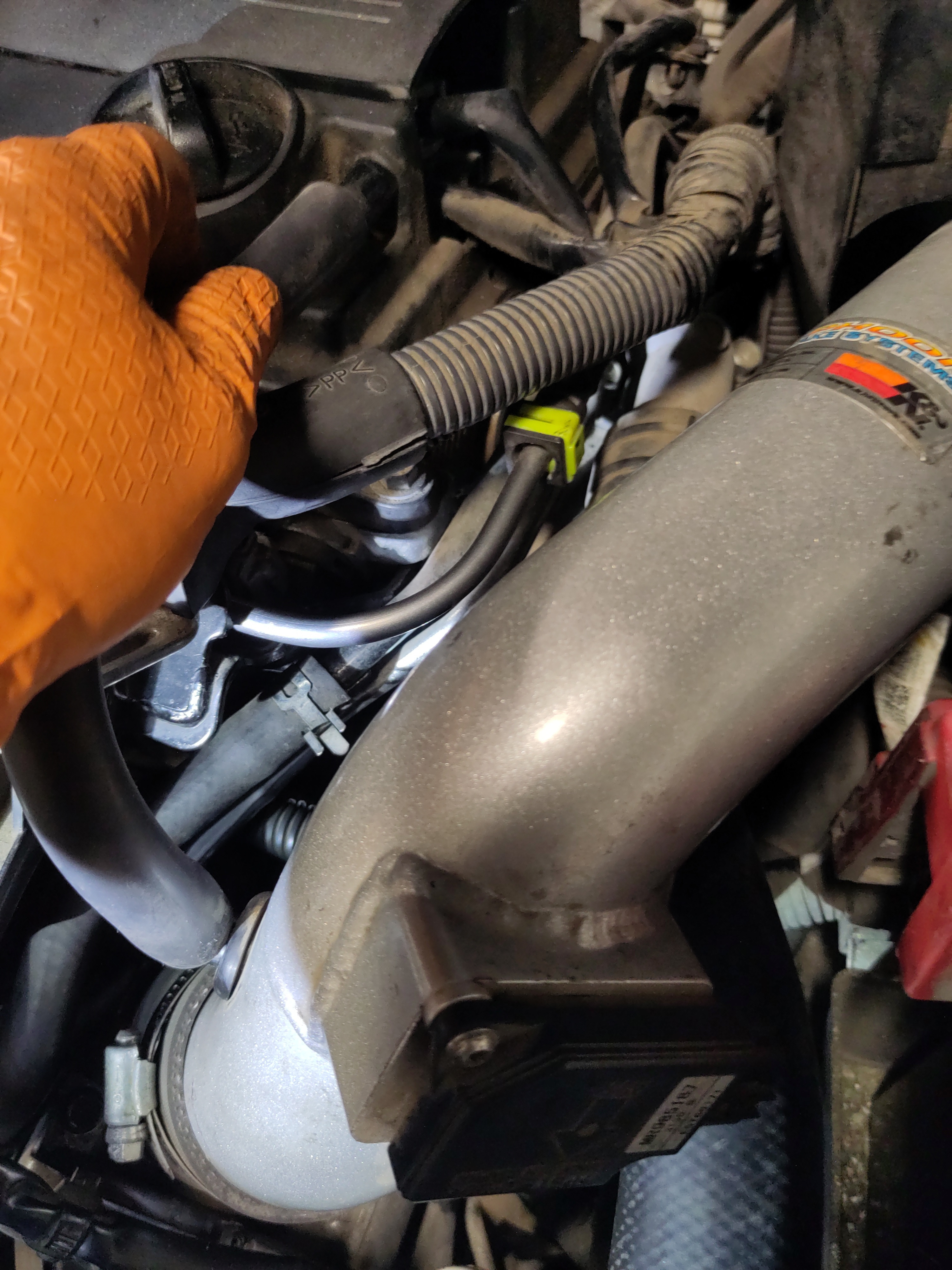
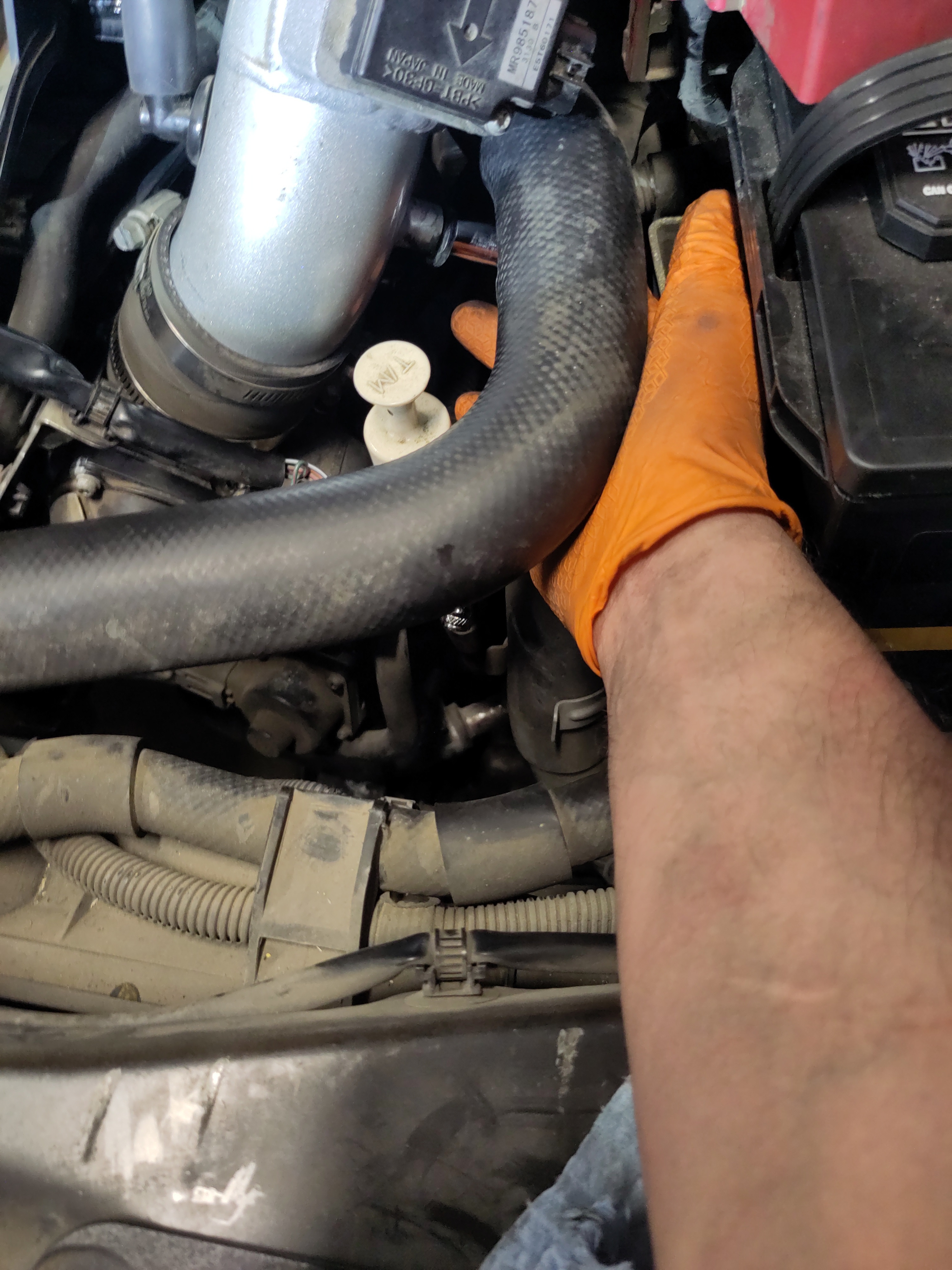
The starter is seated underneath the exhaust manifold which is where the electrical connections are located. It can be challenging in getting to them, but it was permissible by sticking left arm around the refrigeration hose and in between the manifold to create leverage and ease. If it difficult, try removing some hoses or components are hindering the accessibility of loosening the electrical connections. See photos below for a better understanding. There is a four pin electrical connection that will be need to be undone. Using your fingers at the proper angling you can disconnect the electrical connection by
There is a four pin electrical connection that will be need to be undone. Using your fingers at the proper angling you can disconnect the electrical connection by pressing it. If necessary use the tip of nose pliers to press into the pin and pull the wiring harness simultaneously.
There is a rubber boot is concealing the positive terminal of the starter and there is a 12mm nut securing it. Using a 3/8" drive 12 mm 12 point shallow socket with a 3/8" drive socket wrench with an extension, it will be rather easy to undo the nut. If the nut falls into the cracks of the engine then use a magnetic pickup tool to retrieve the nut. Put the nut into the magnetic hardware pan for safe keeping.
Now go under the vehicle using the 14mm 12 point shallow socket and a short handle 3/8" drive to finish removing the starter bolt. Place the bolt with the other starter bolt in magnetic pan for safe keeping.
With the removal of the bottom 14mm bolt, it is time to remove the starter. It can be a tricky and arduous to remove the starter it will require some rotation and pull. It is important to note that the way you pull it out should be remembered because that is how you are gonna install the new starter as far as the range of motion and rotation. Begin by pushing up while pulling it out from the hole. At the same time, the back end of the starter will be needed to swing out towards you close to a 90 degree angle. There is a full tutorial video in the references if it becomes rather difficult to remove it. The range motion and the concurrent movements can make it difficult to remove it because of how compact everything is.
Preparation & Installation:
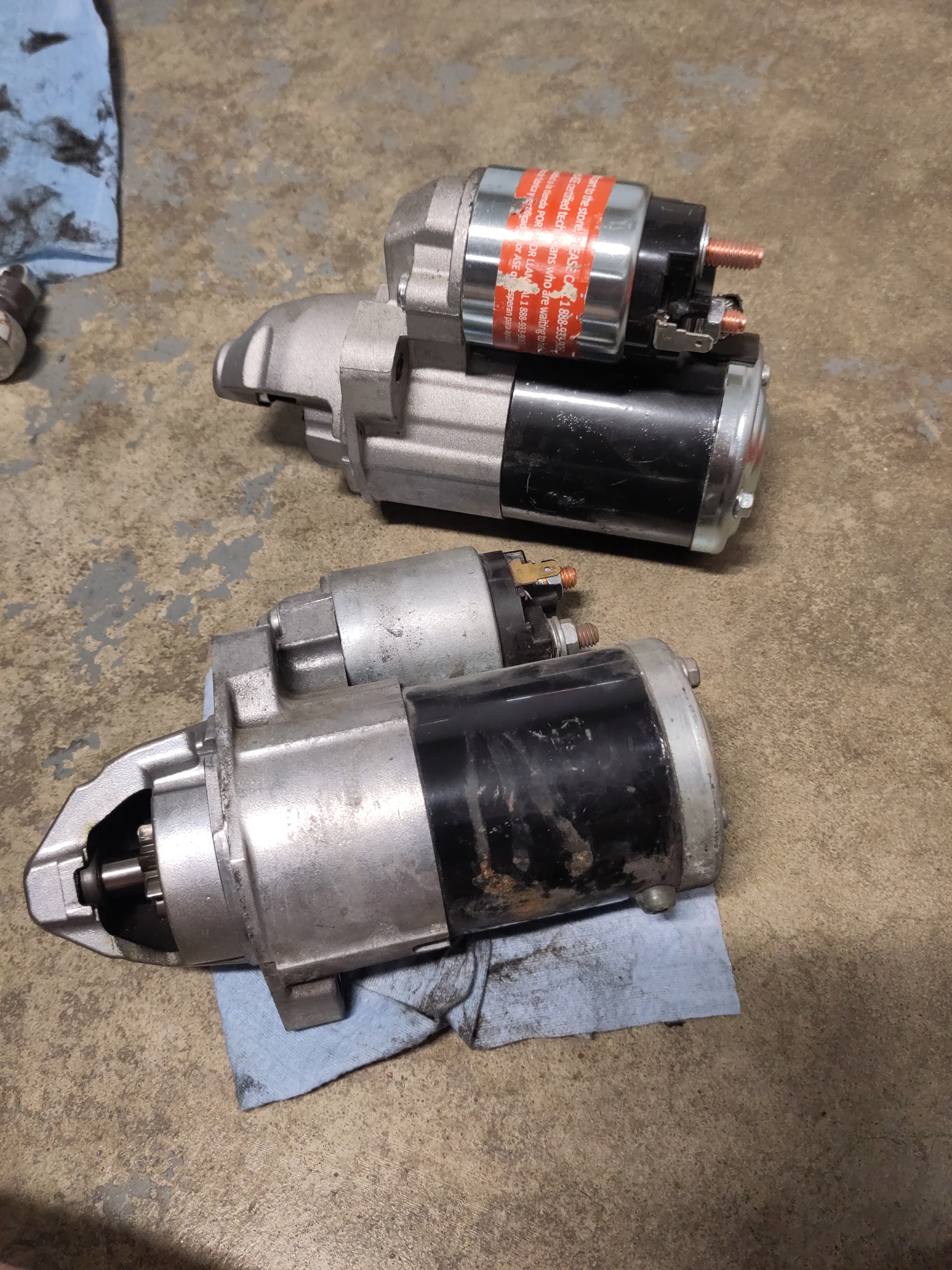
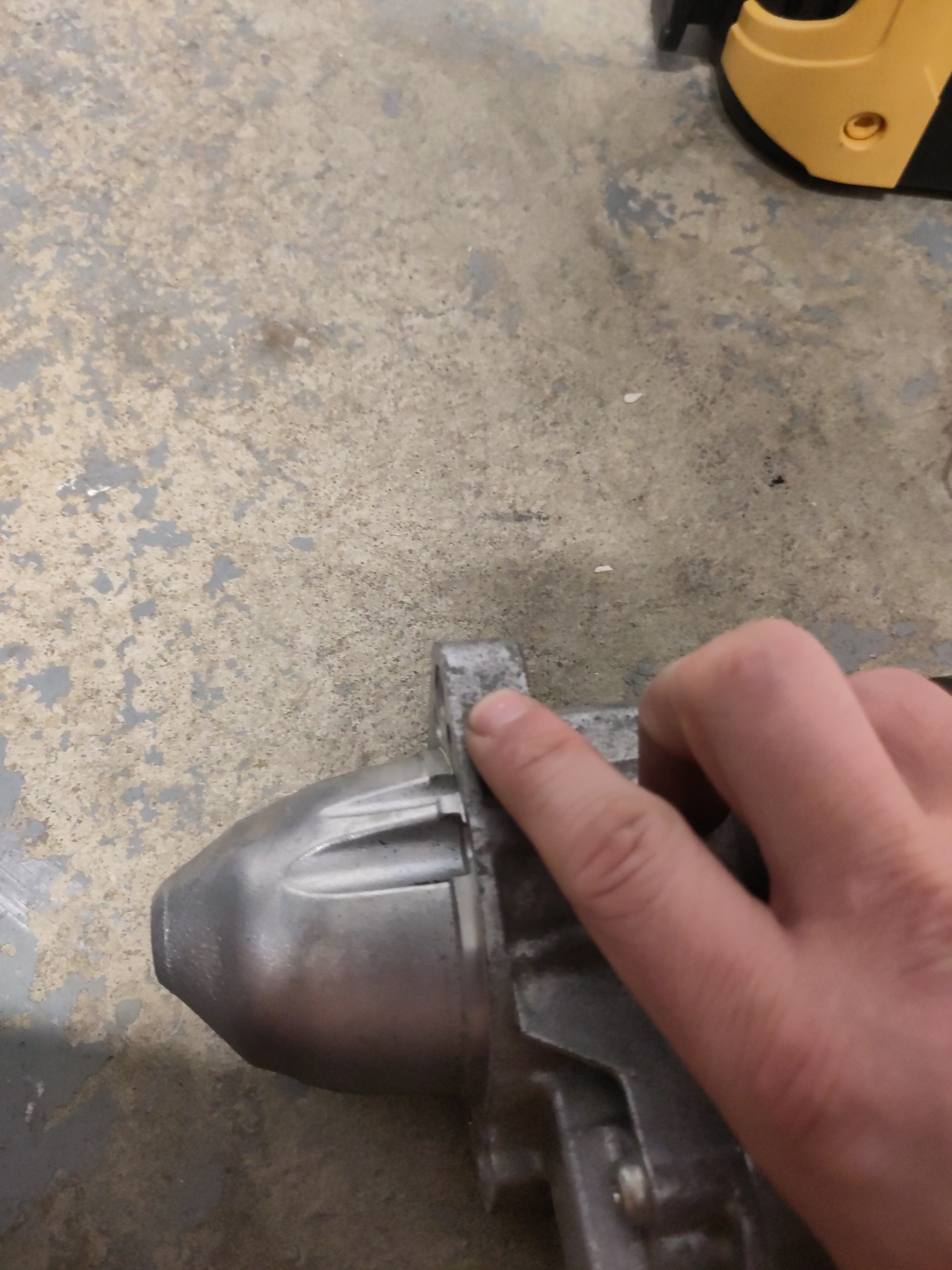
Now it is time to take the new starter and begin to install it. However, it's never a bad idea to compare the old starter to the new one just to ensure compatibility and the condition. The new starter being installed into the 2013 Lancer ES is a re-manufactured/refurbished. It is good to inspect the new one for any signs of wear and tear. The next section of the tutorial will show to test the starter to see if it is fully functioning.
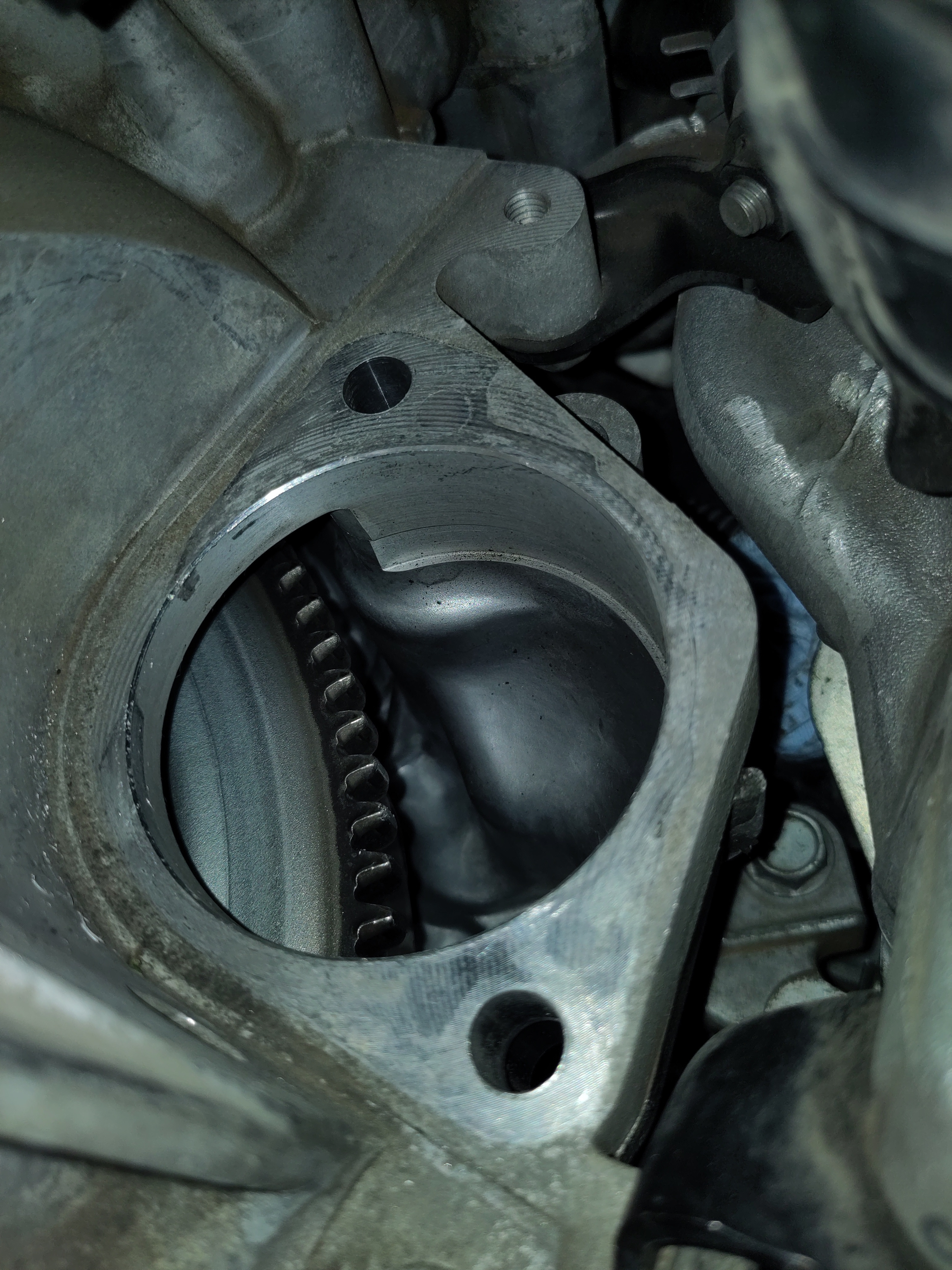
Prior to installing the new starter, it is a good idea to clean the surrounding area of where the starter will be seated by using a dry clean paper towel. Also, using a dry clean paper towel, wipe the inside of the entry point of where the starter is seated which has exposure to the flywheel. Wipe all that down to your best of ability remove any debris.
Next install the starter the same way you removed it by having the solenoid side horizontal when initial going then rotating upwards to get the starter to be properly seated. It will take some wiggling and play just be determined and patient. Watch the full tutorial and pay much attention to the range of motion and rotations to successful placement of the starter.
With the starter properly mounted it is now time to take 14mm bolts and thread them into the holes by hand while compressing the starter to the transmission ensuring the bolts are in alignment with the holes of the starter. Just hand thread the bolts in because the next step will be installing the electrical connections
Place your arm in between the manifold like in step 19 of the removal section, and connect the signal electrical connection to the new starter.
Now put the positive electrical connection wire onto the threaded terminal of starter.It is recommended to use a 3/8" drive shallow 12mm socket with an extension to hand thread the 12mm nut before using a socket wrench. I found this to be better than doing it by hand because of how awkward it is then the risk of dropping the nut. The nut being placed into the shallow socket with extensions prevents this so the focus can be just getting it initially threaded. Once it is threaded on, go a head and use a socket wrench to continue on torquing it down so it has a secure connection. Then place the boot over the connection to protect it.
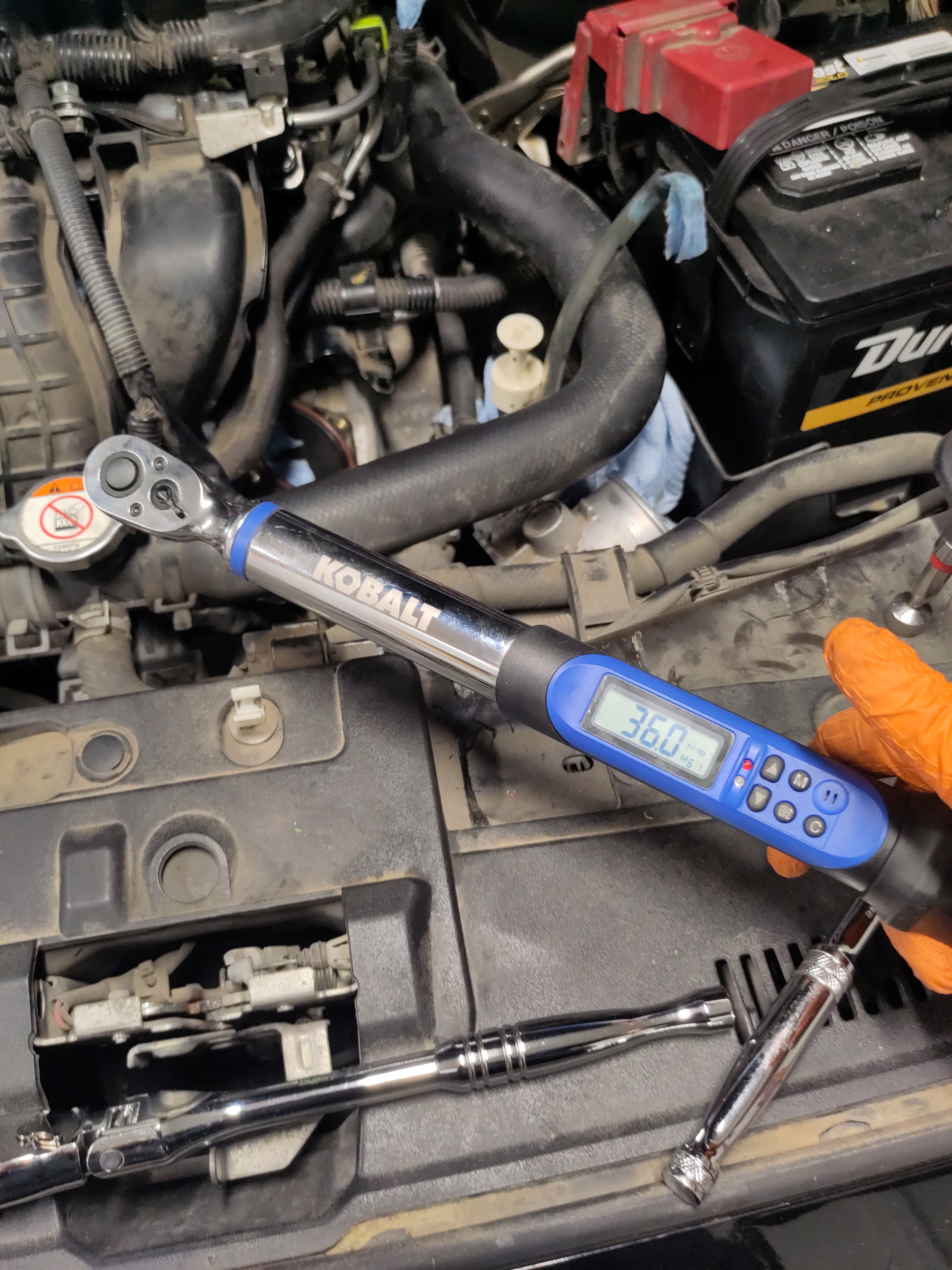
Finish tightening the bolts to the starter by using the tools from the mentioned step 3 of the installation section of this tutorial. Once tightened use a 3/8" drive torque wrench and set it to 36 ft-lbs to torque those bolts to specifications. Note, the bottom bolt can be tricky, but getting the 14mm 6point deep socket should do the trick. The top bolt can be tightened with a 14mm 6 point shallow socket.
It will be easier to re-attach the coolant hose back onto the throttle body before installing it and fastening it. Begin by removing the pieces of the paper towel from the hose ends. This step will have to be quick in order to prevent coolant to be spilled out. I would recommend using the nose pliers to stretch out the hole of the hose of a quick mounting. Ensure to layout clean dry paper towel to absorb spilled coolant. Now remove silicon hose and re-attach the hose onto the male end of the throttle body. Do not install the hose clamp that will happen in a later step just get female end attached to the male end.
Now it is time to reinstall the throttle body before installing, wipe down the surrounding area and remove the paper towel that was inserted into the hole. It a good idea to re-wipe down the entry way of the air intake.
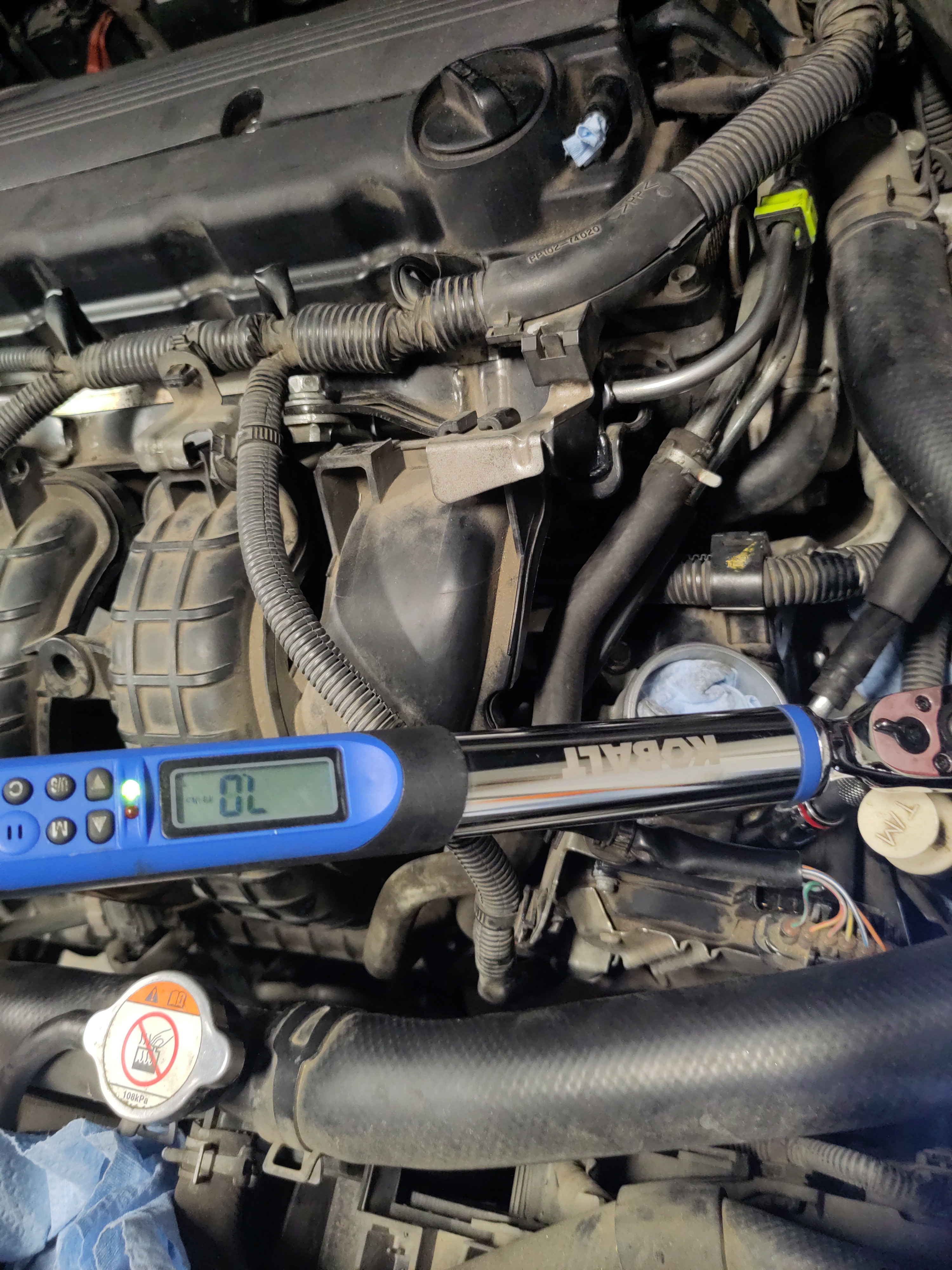
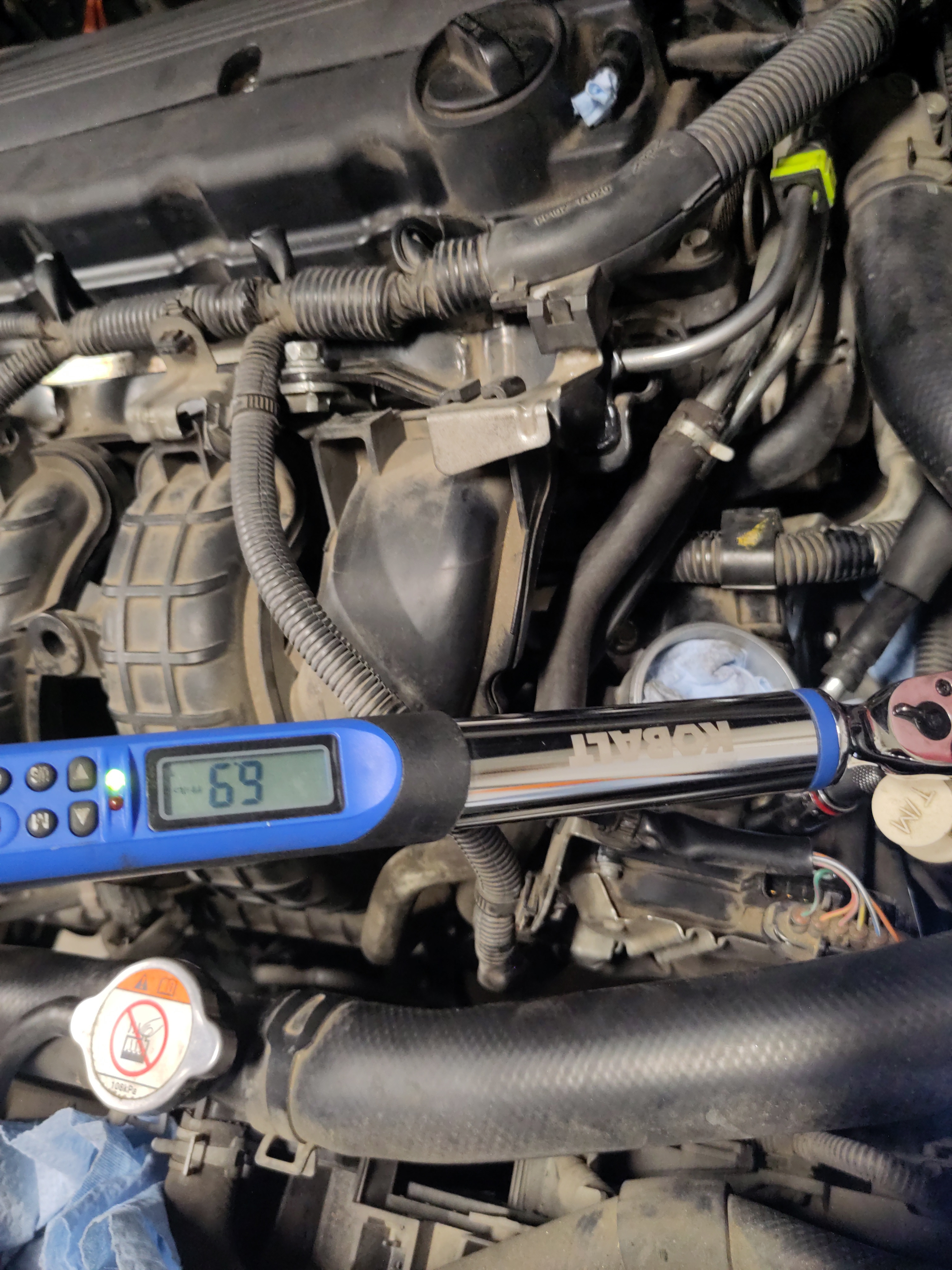
Now place the throttle body in its original position and using the 4x 10mm bolts hand thread them so in order to align the threaded holes. It is important to not just secure one bolt at a time but secure them evening so there is a good seal. As in, secure the bolts diagonally, but evenly. Using a 3/8" drive 10mm shallow socket with an extension will be adequate to hand thread the bolts down following using a 3/8 power tool socket wrench. Finally, torque the bolts using the 3/8" drive torque wrench. The torque specs for the bolts is 7 ft-lbs and the set torque wrench to the specification and begin to secure them. Make sure to line up the electrical hangers to the bolts as well.
Before connecting the electrical connection to the throttle body is would be recommended to use a Q-tip and dielectric grease and apply it to the pins to ensure there secure connection and no corrosion build up occurs over time. Then reconnect the wiring harness to the connection. There should be an audible click to confirm a secure connection.
Using the long reach bent needle nose pliers to secure the hose clamp back onto the throttle body coolant hose. Try to position the hose clamp into the original position of the indentations.
Remove the curved jaw locking pliers from the upstream coolant hose.
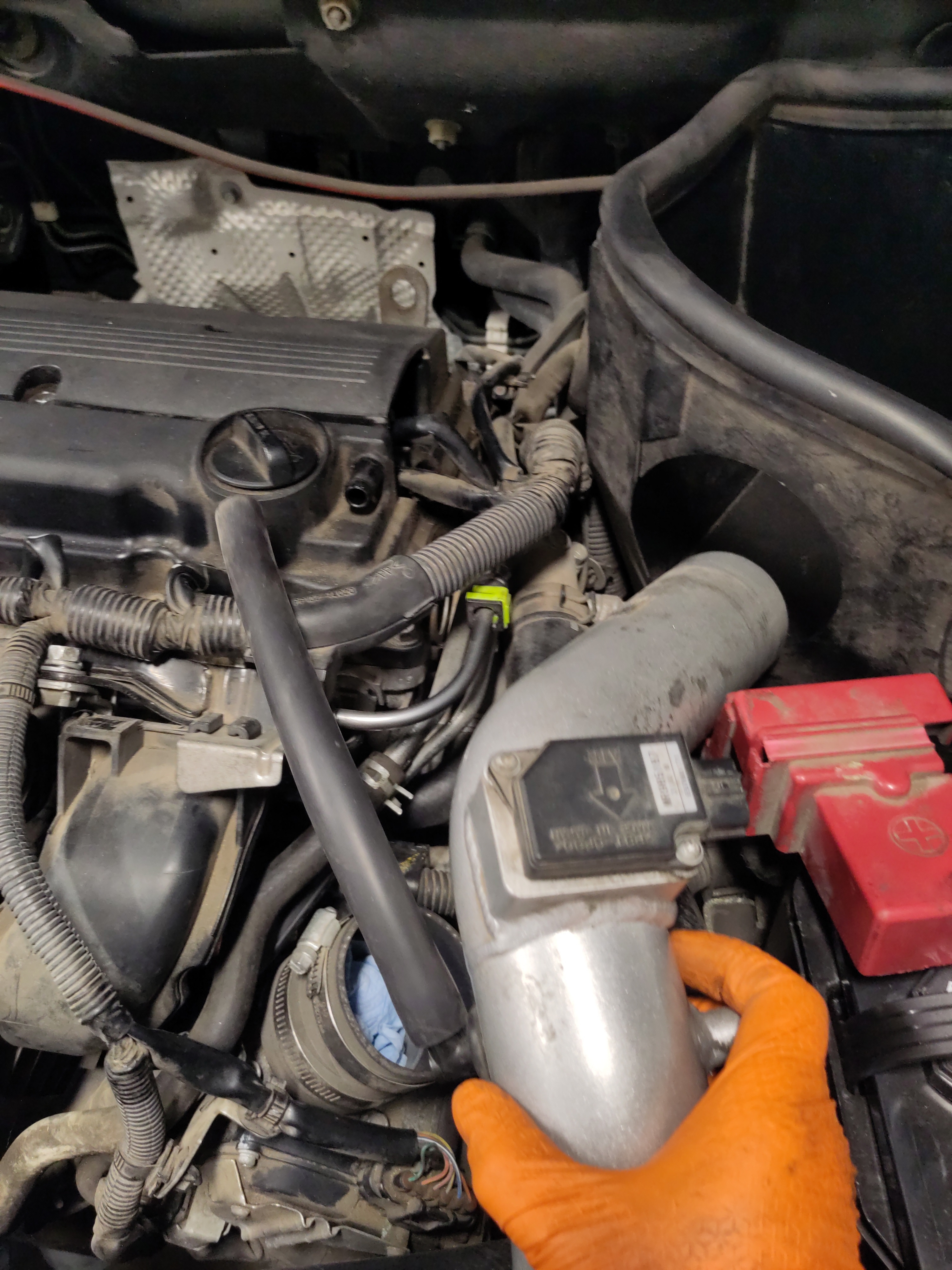
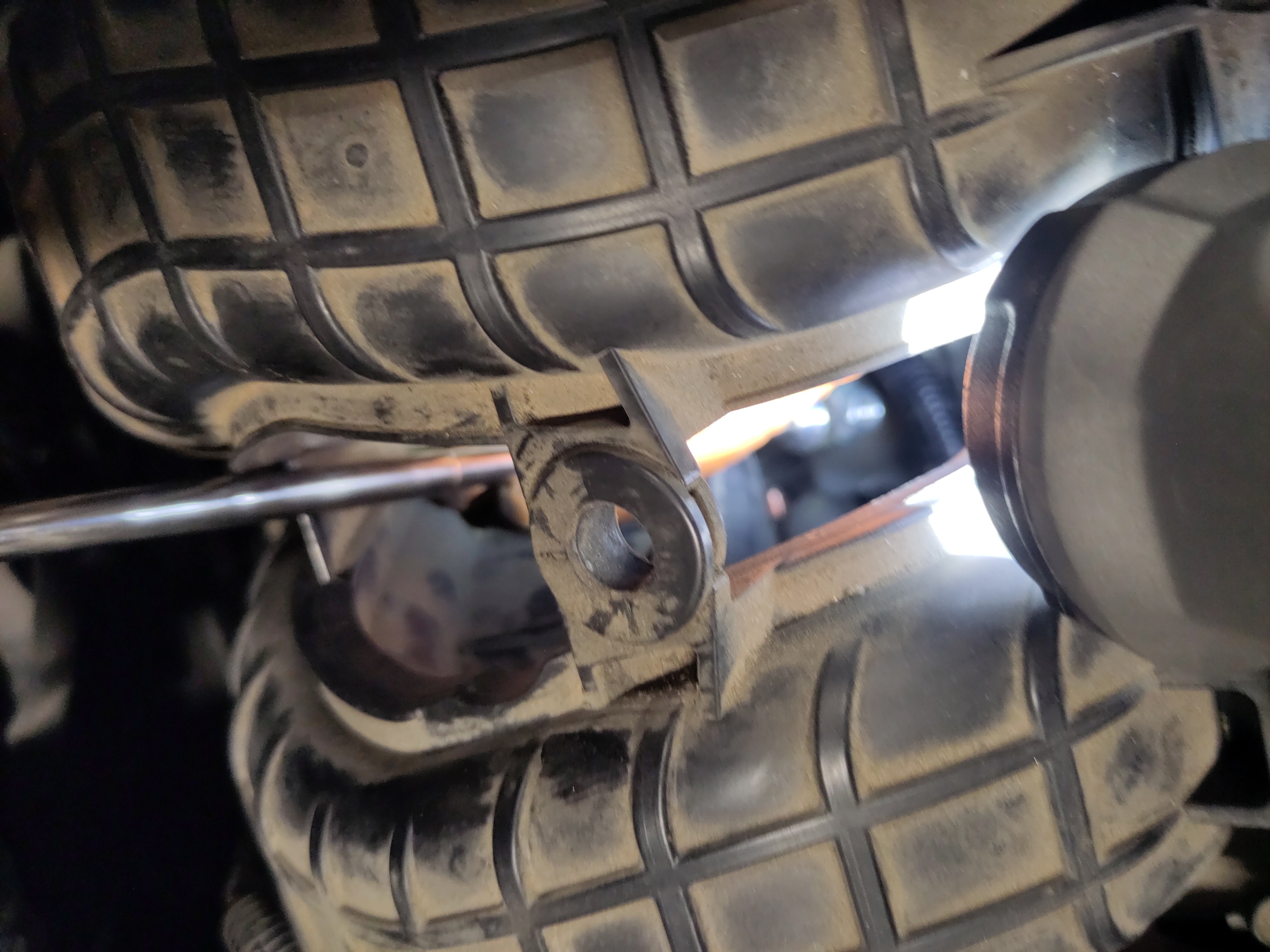
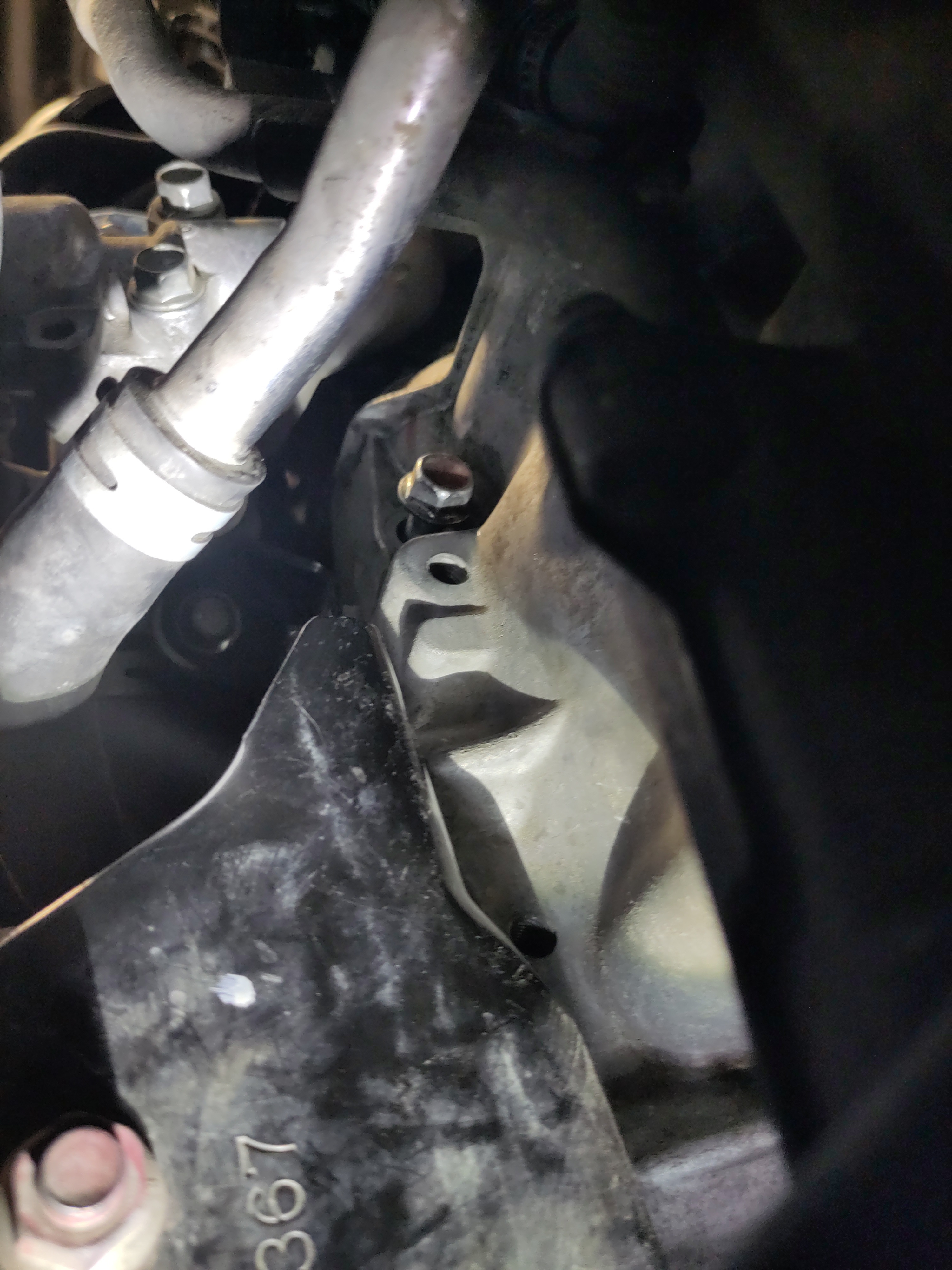
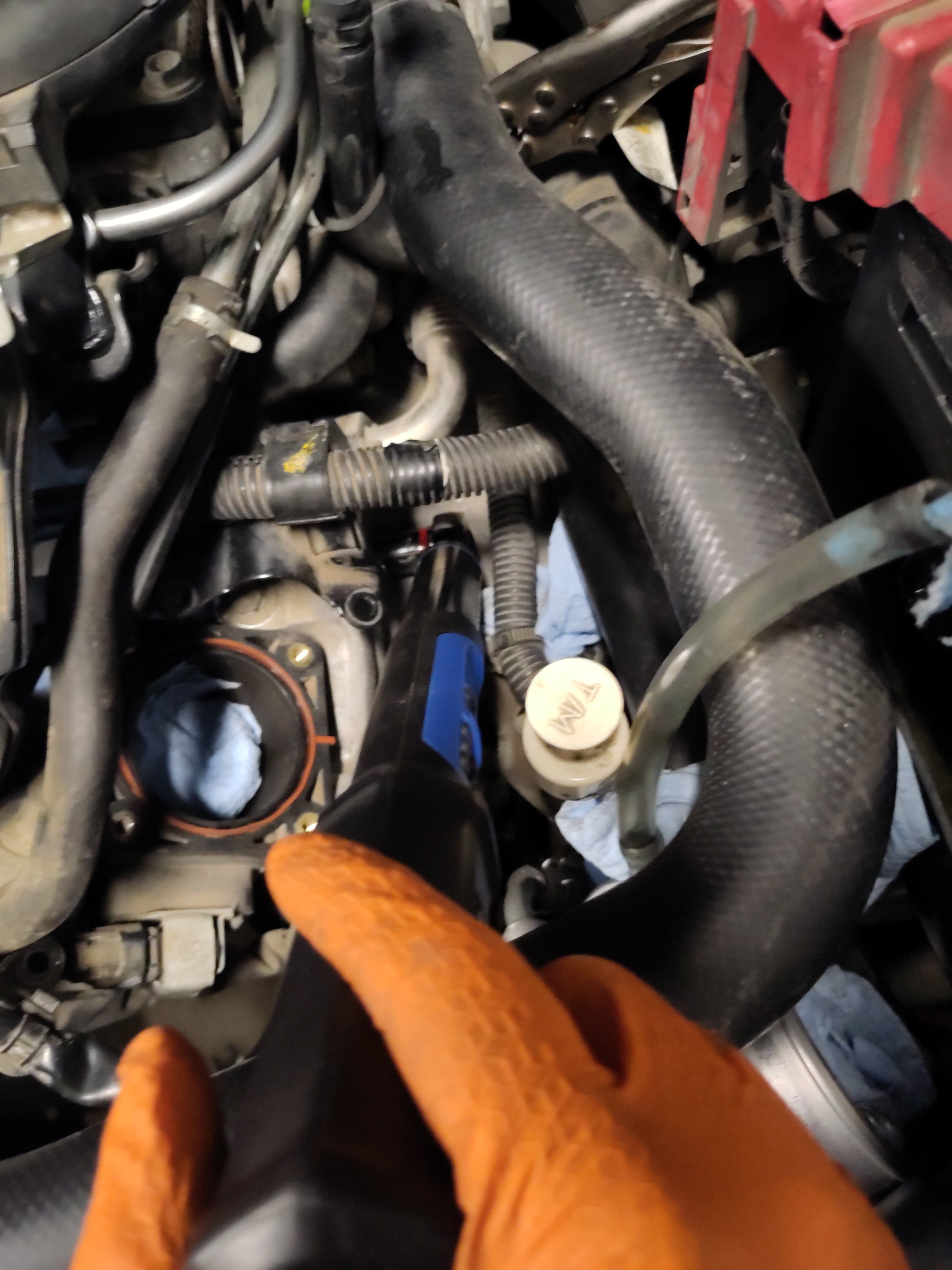
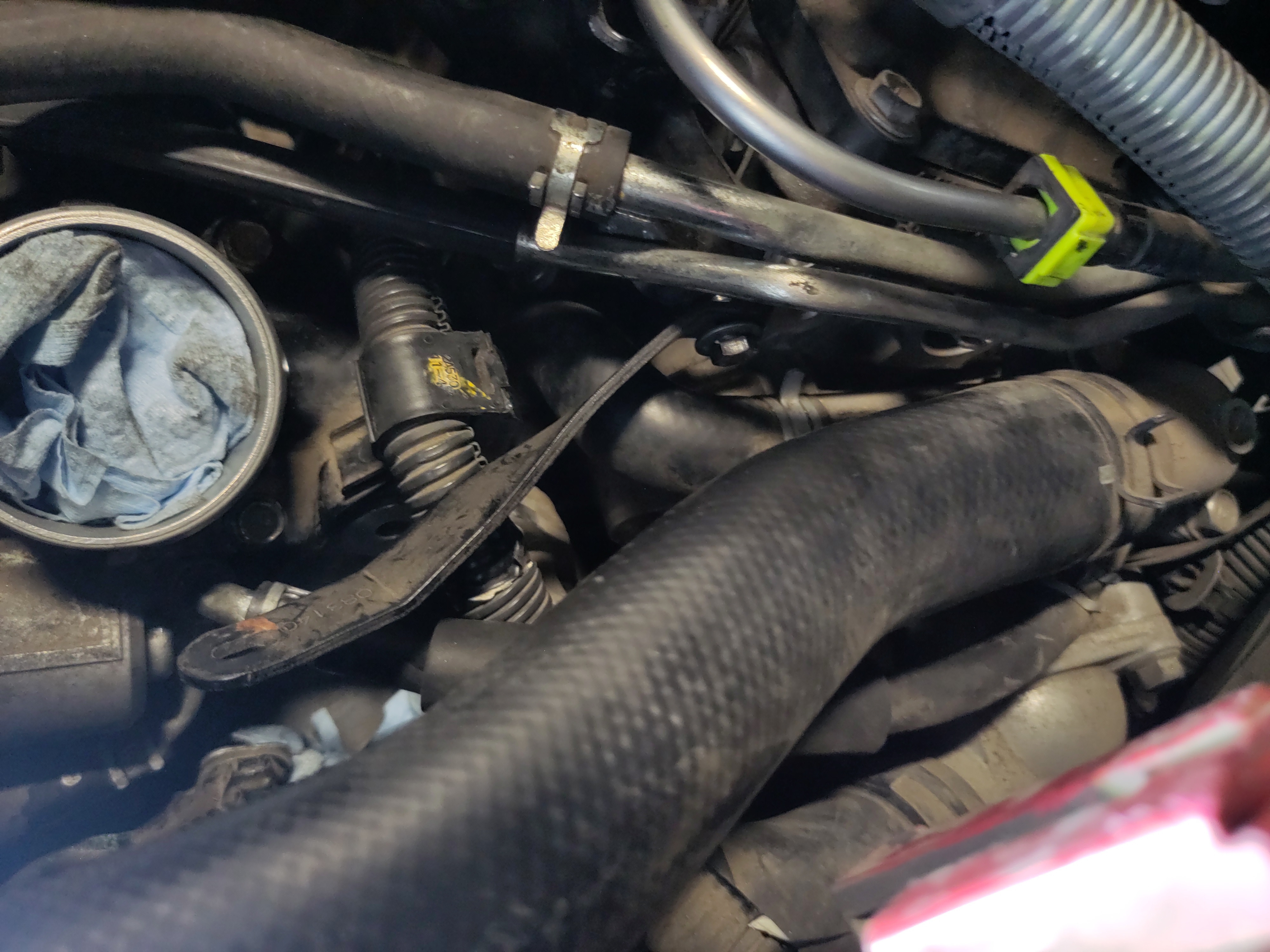
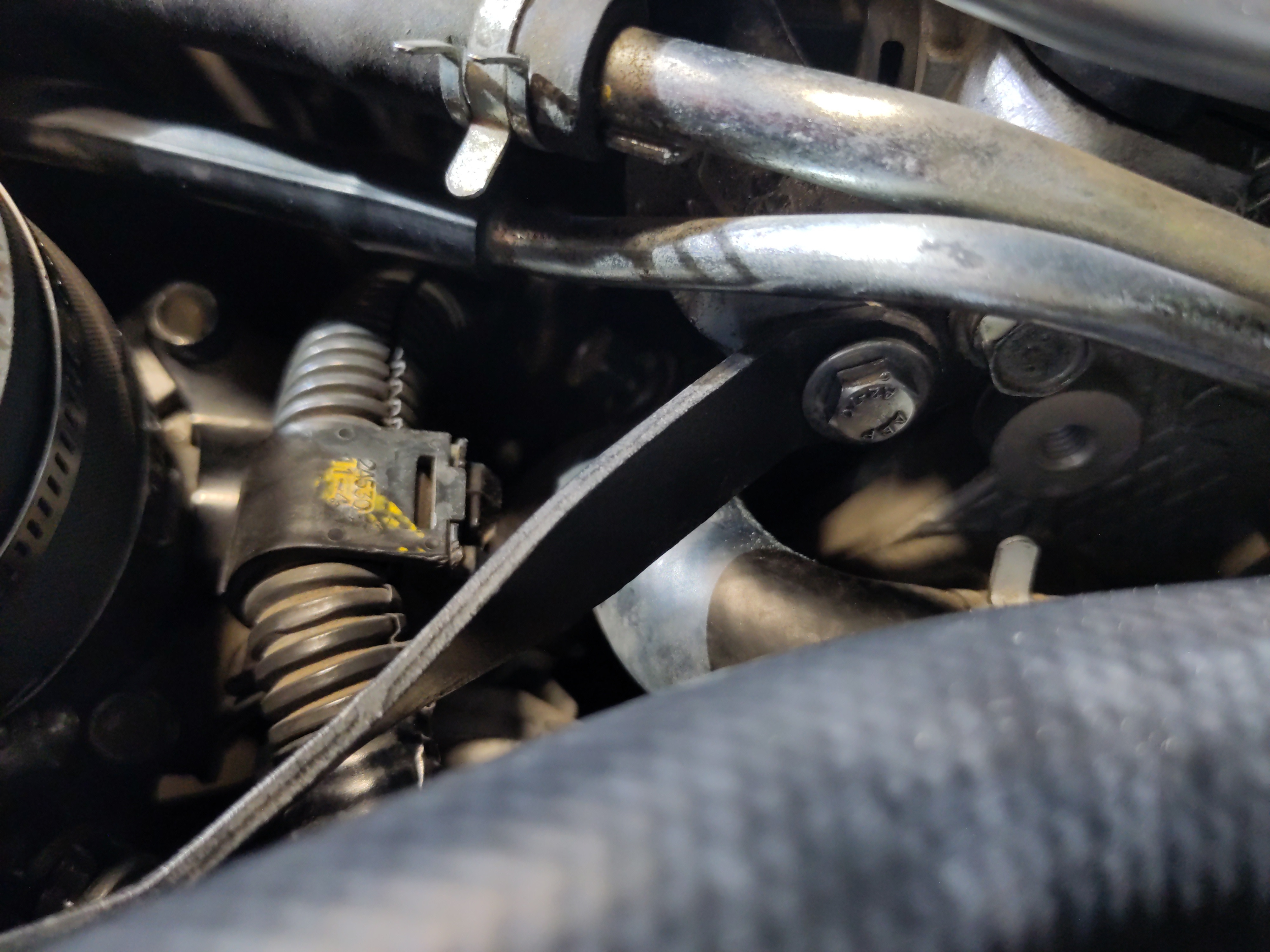
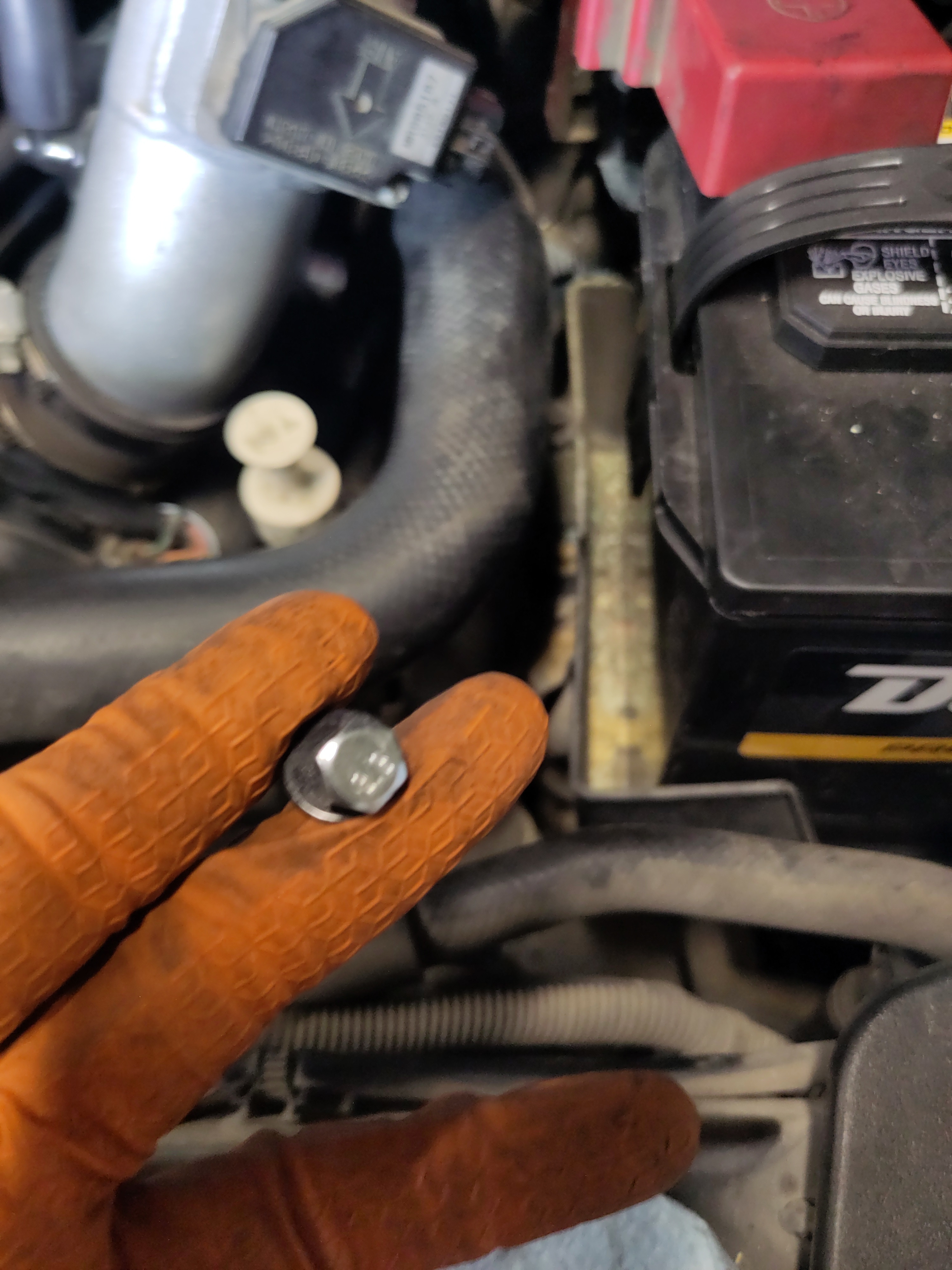
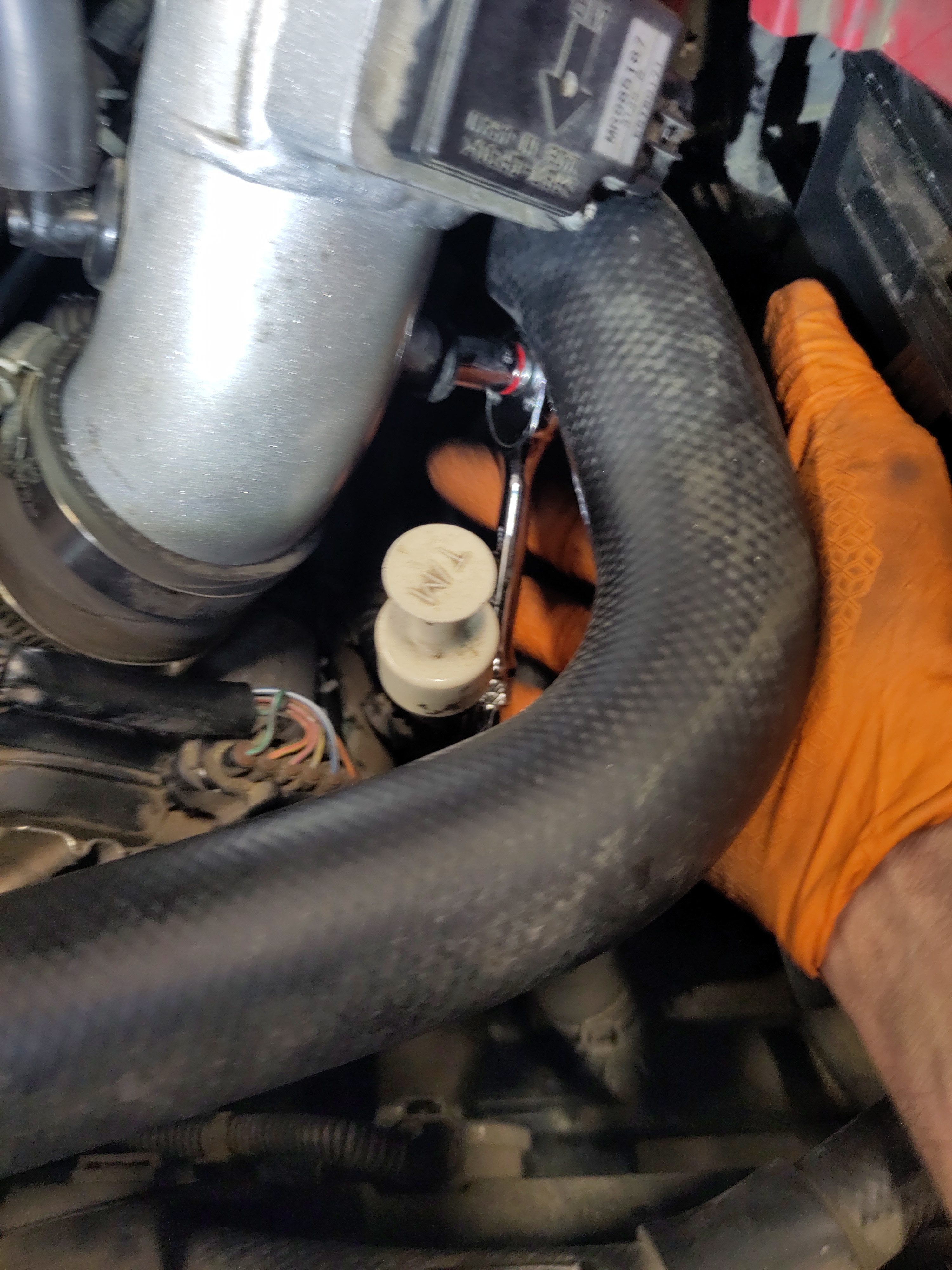
Now there is a support bracket for the air intake that needs to be hand threaded into the threaded hole underneath the vacuum hose. See pictures below. The bolt is 10mm bolt and just needs to be threaded in by hand. The bolt will be torqued down in a later step.
Take the hose and mount it on to the throttle body and line up the hose clamp to where the screw can be easily accessed with a flat head. Make sure the hose clamp is around the hose and the male end of the throttle bottle. Tighten down the hose clamp.
Be sure to remove the paper towel from the throttle body entry point. Install the air intake pipe into the hose and push the intake pipe the hose. Do not tight the hose clamp yet. It will be done in a later step.
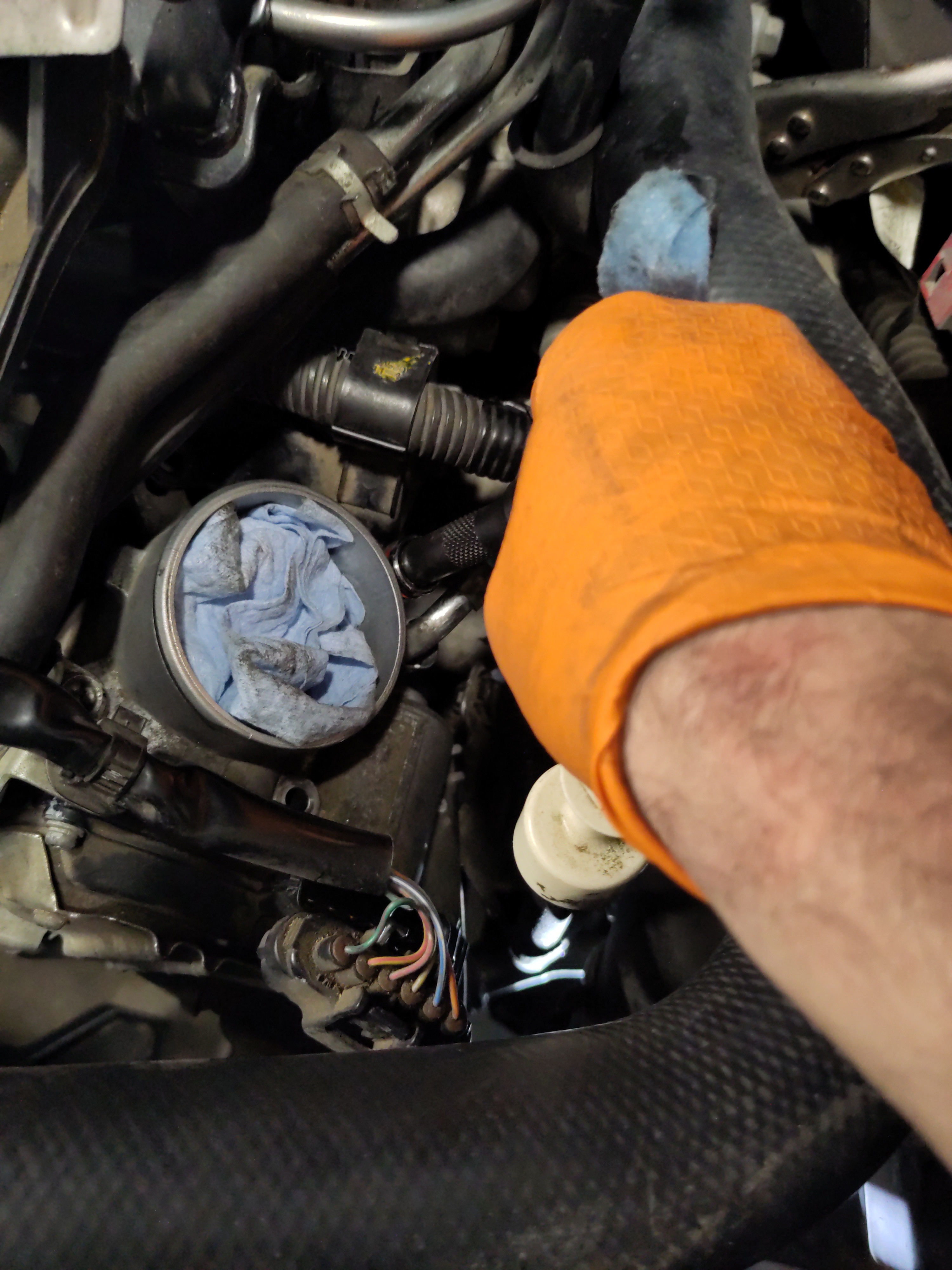
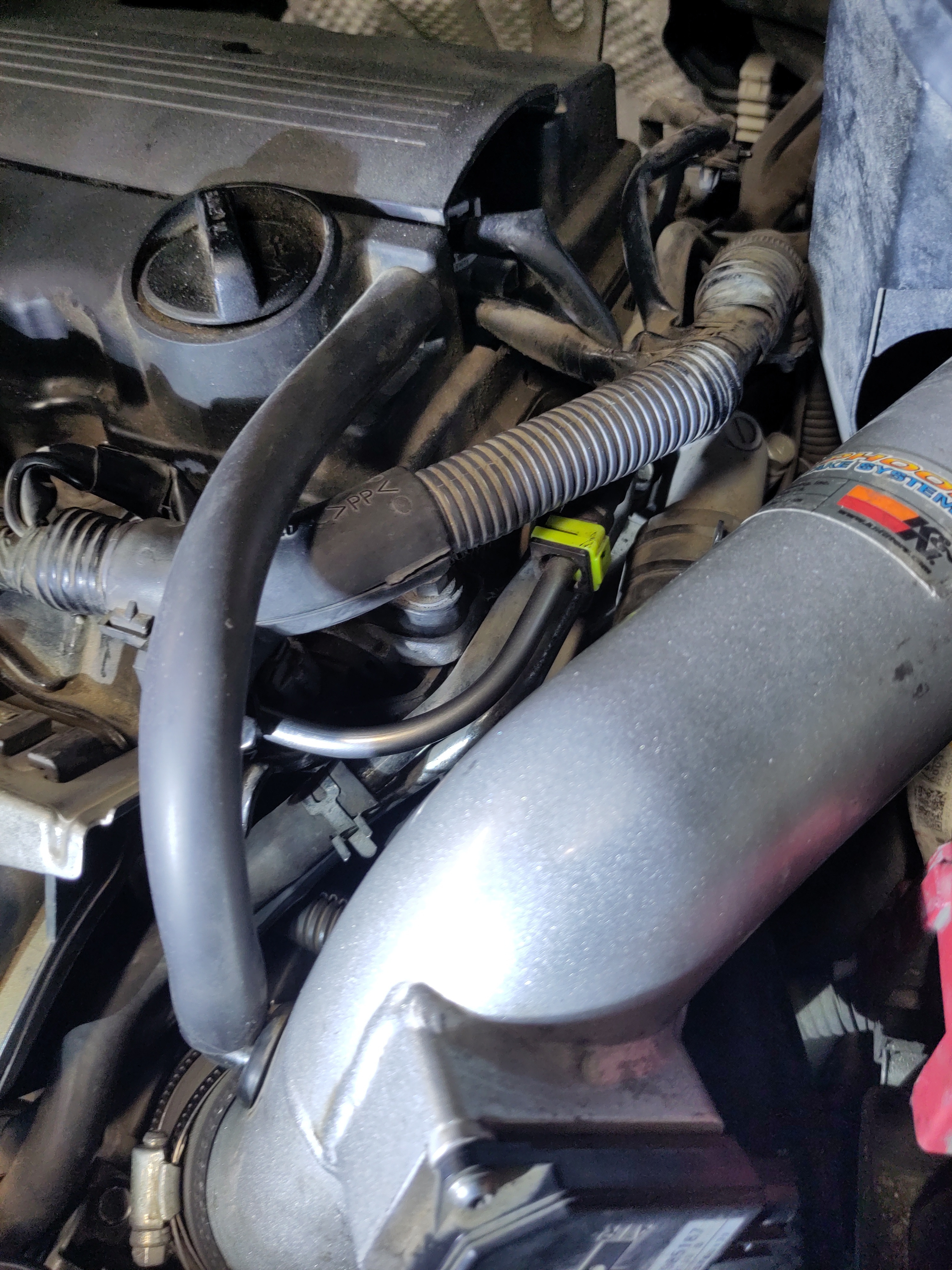
Pull out the piece of paper towel inserted into the vacuum hose and connect the hose connected to the intake pipe to the male end near the oil cap. See photos below for a visual aid.
Take the other 10mm bolt with the washer and hand thread the bolt into the air intake pipe with the support arm. Do not tighten the bolt down yet.
Using the flat head secure the hose clamp. Make sure the hose clamp is tighten in the original position which can be determined by the indentation of the original position of the hose clamp.
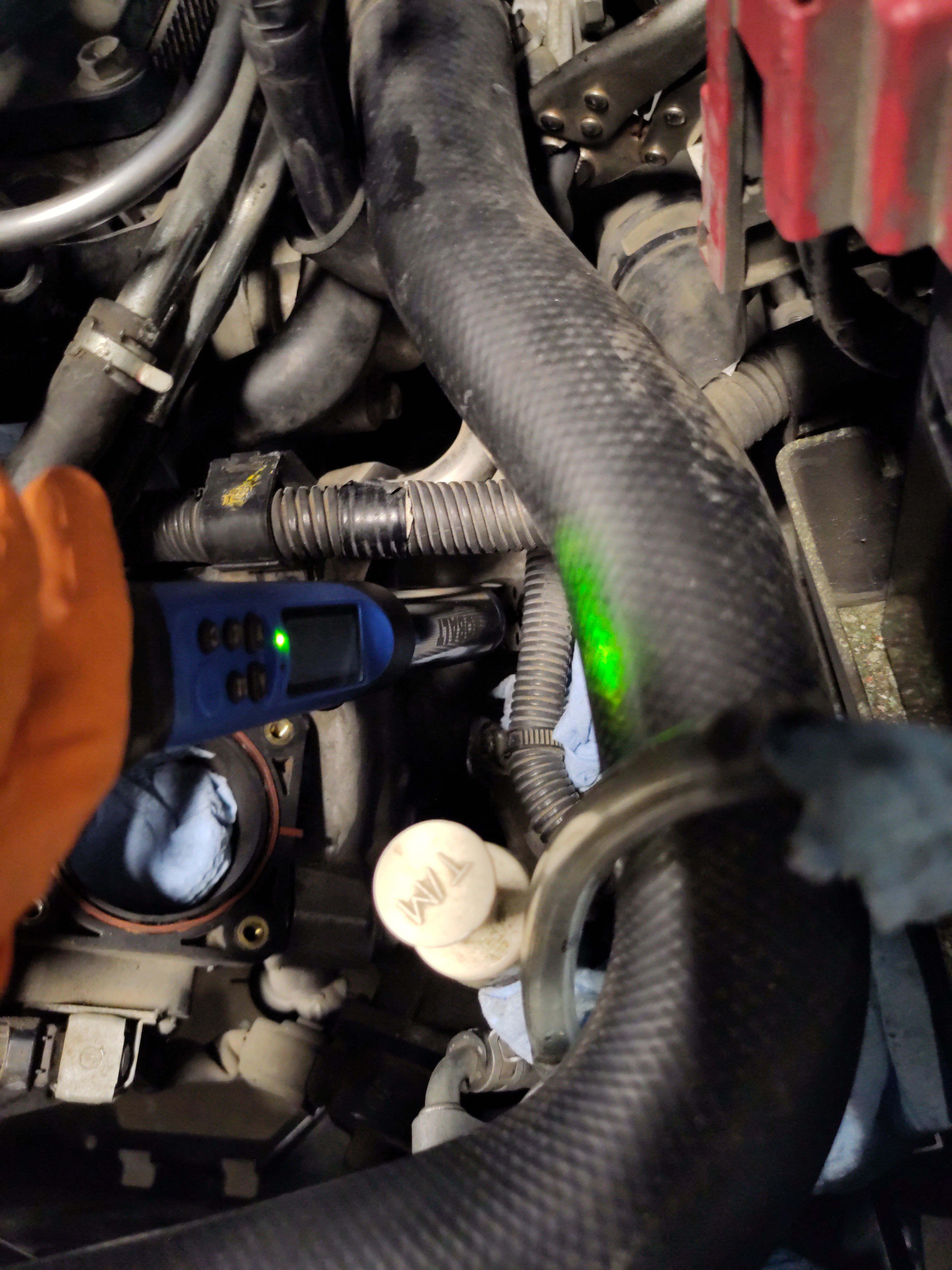
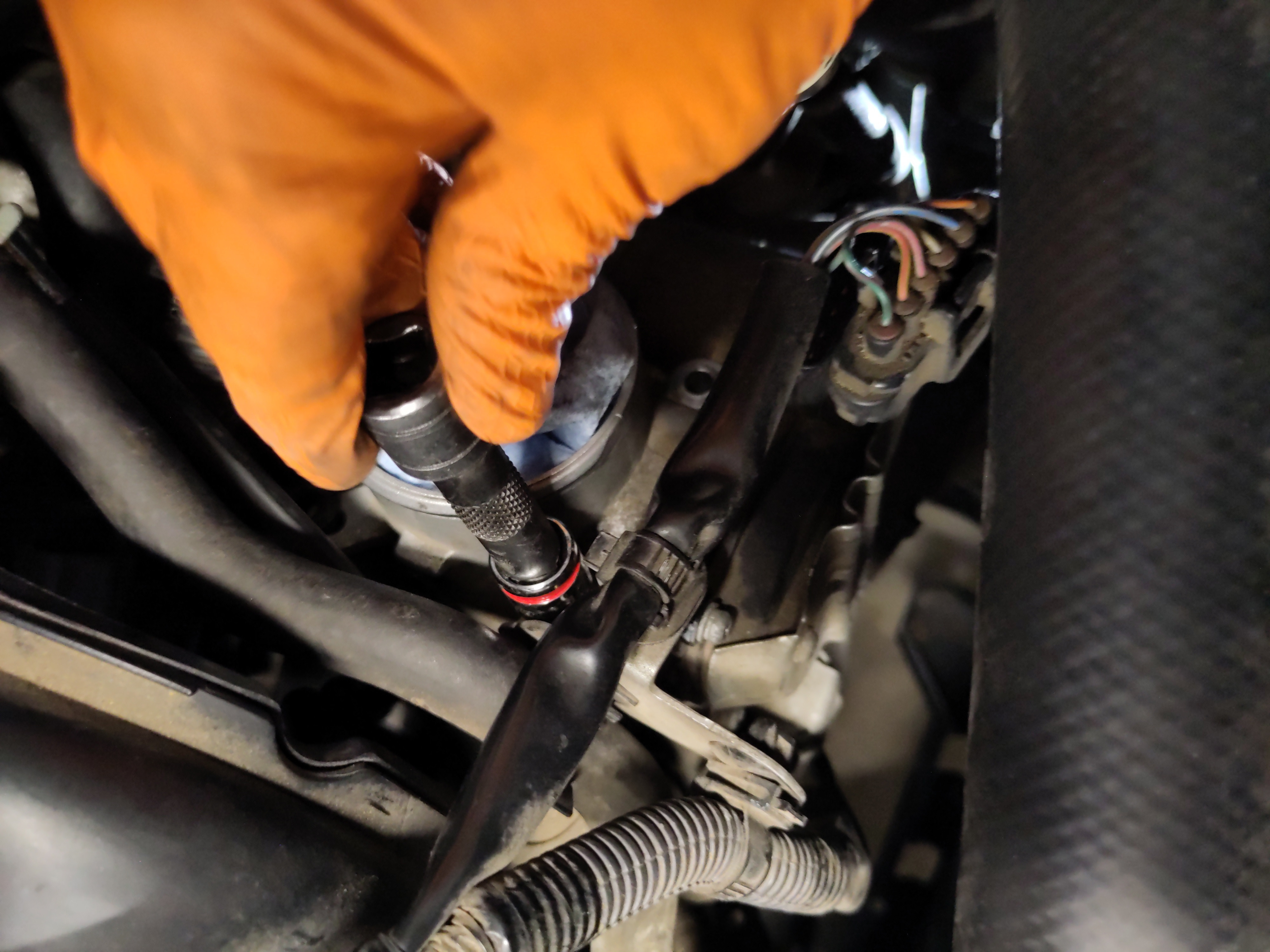
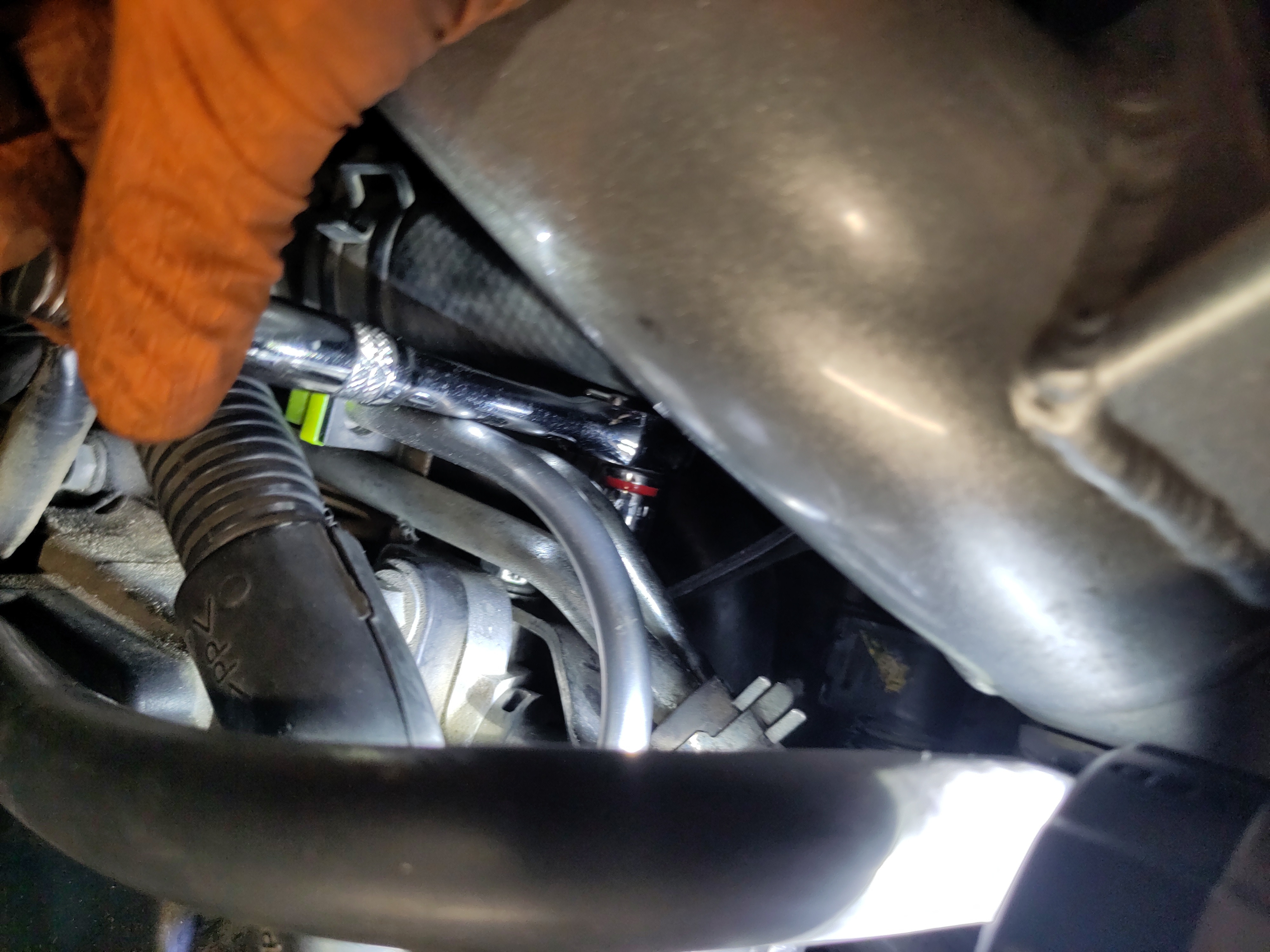
Using the 1/4" drive socket wrench with a 1/4" drive 10mm shallow socket to secure both bolts to the support arm of the air intake pipe. I found it easy to secure the 10mm bolt onto the air intake pipe by placing the socket wrench behind the coolant hose this is illustrated in the pictures below. Also, the bolts just need to be snug, it is unnecessary to over-torque the bolts.
The air filter now can be installed onto the air intake pipe. Make sure the air filter is on there snug and tighten down the hose clamp using a flat head screw driver.
Now apply some dielectric grease with q-tips to the mass air flow sensor electrical connection and connect the wiring harness to the sensor female end. There an audible sound make for confirmation of the secure connection.
Take the air intake plastic vent and secure it with the push pins.
Add the plastic vent connection to the air intake vent. It should clip onto one another.
Finally it is time to reconnect the negative electrical connection to the negative battery terminal, and secure it using a 10mm open ended wrench. It also is a great idea to apply some dielectric grease to both terminal to mitigate corrosion build up.
Testing a Starter:
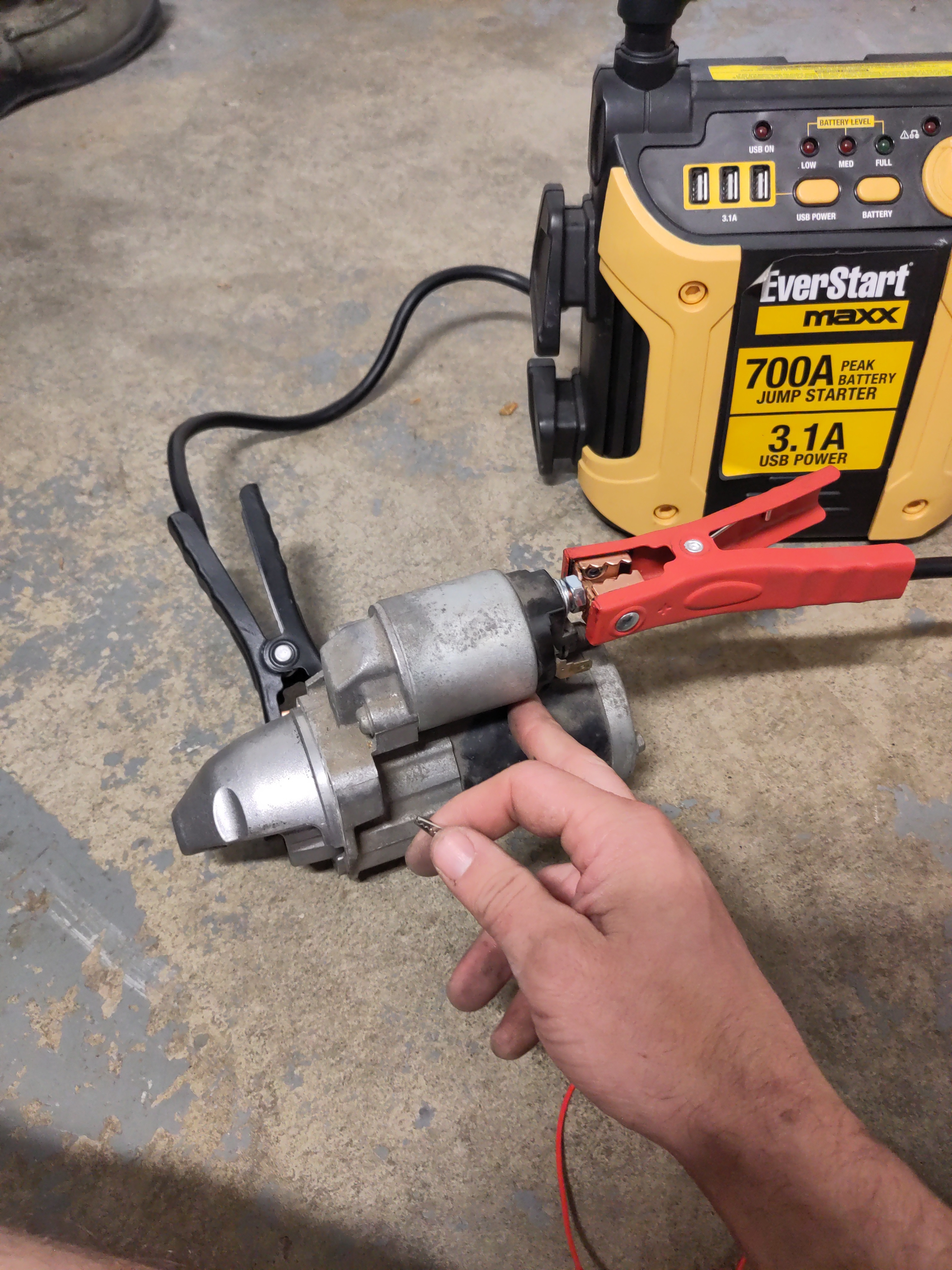
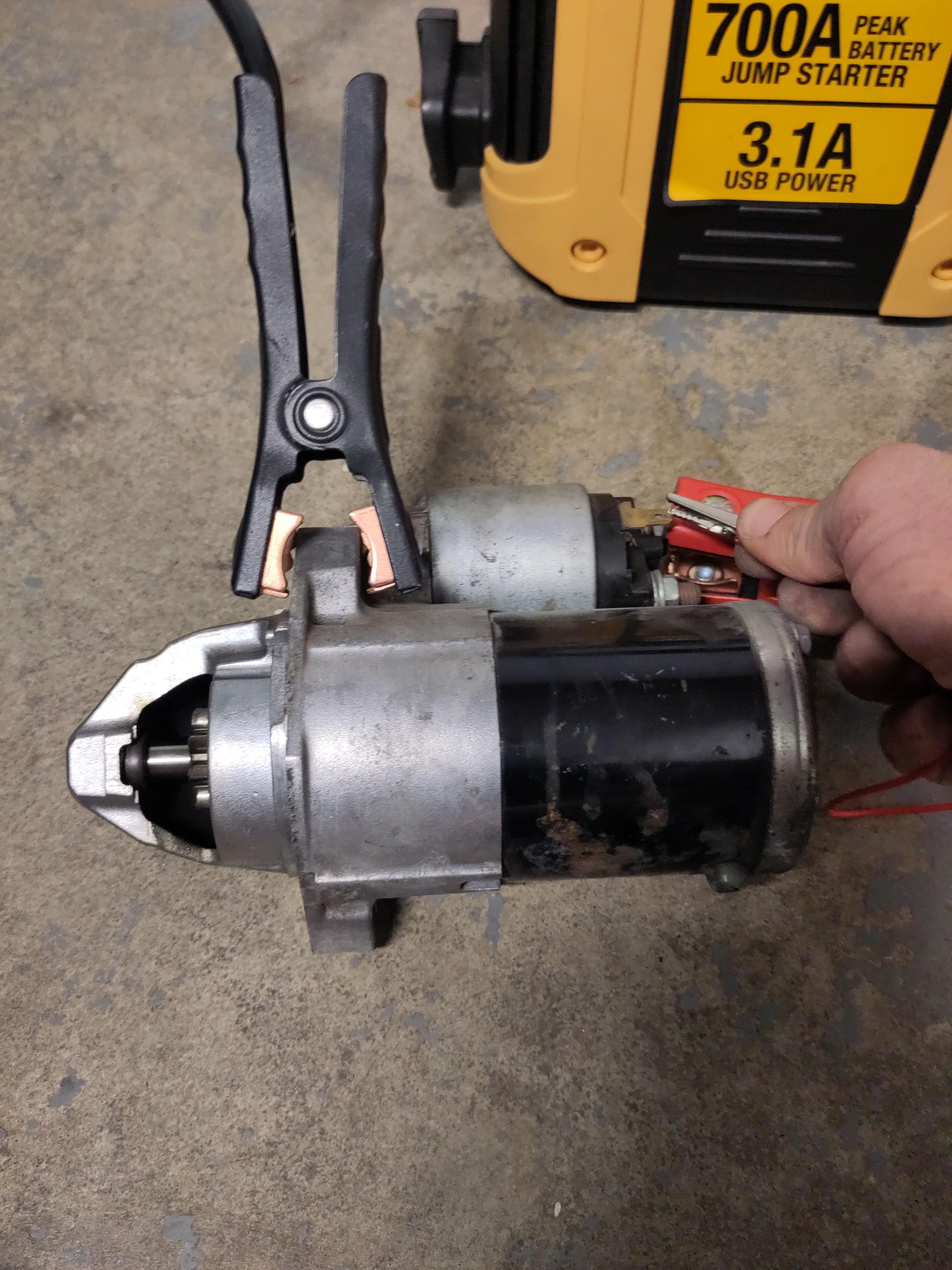
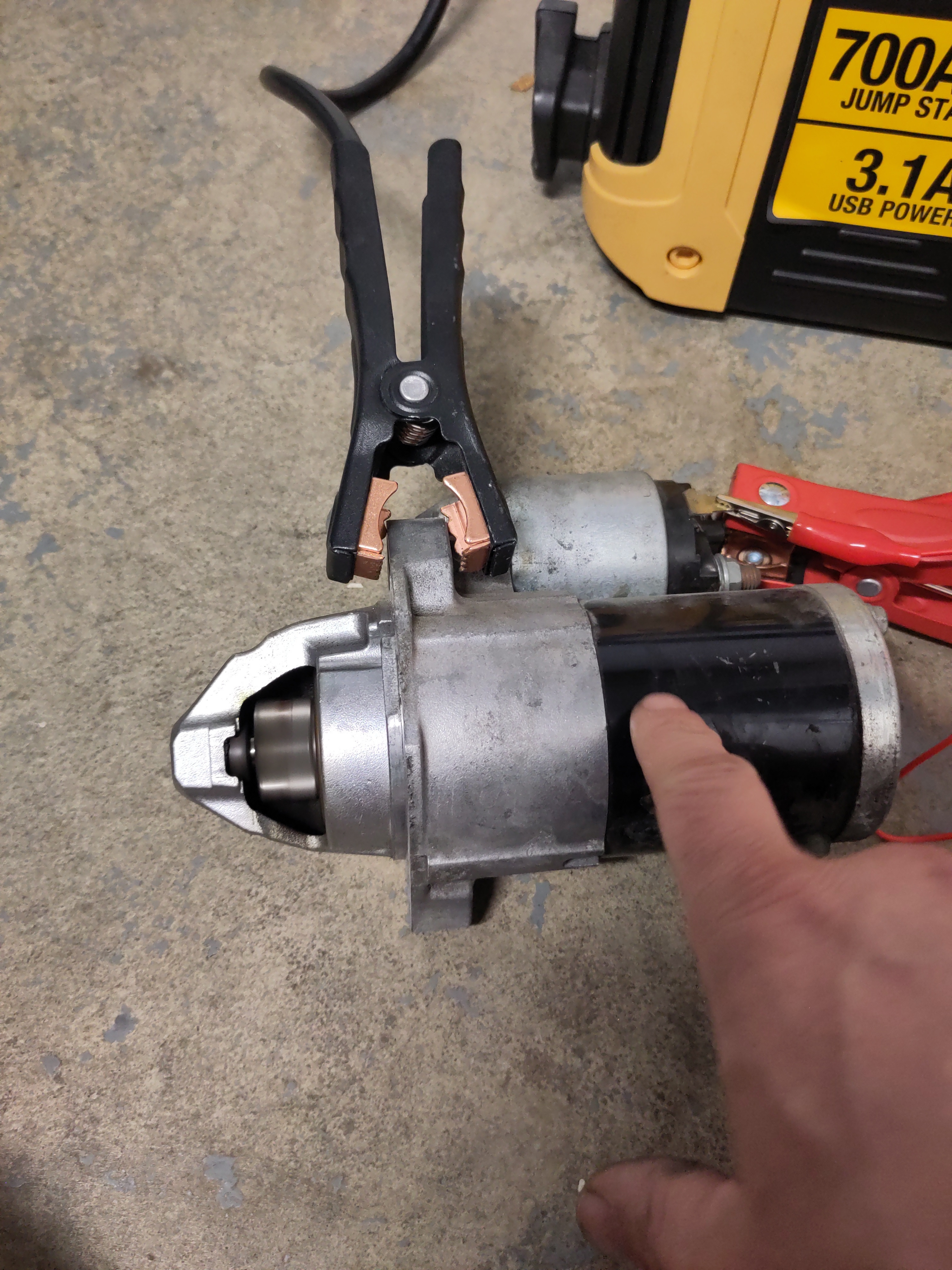
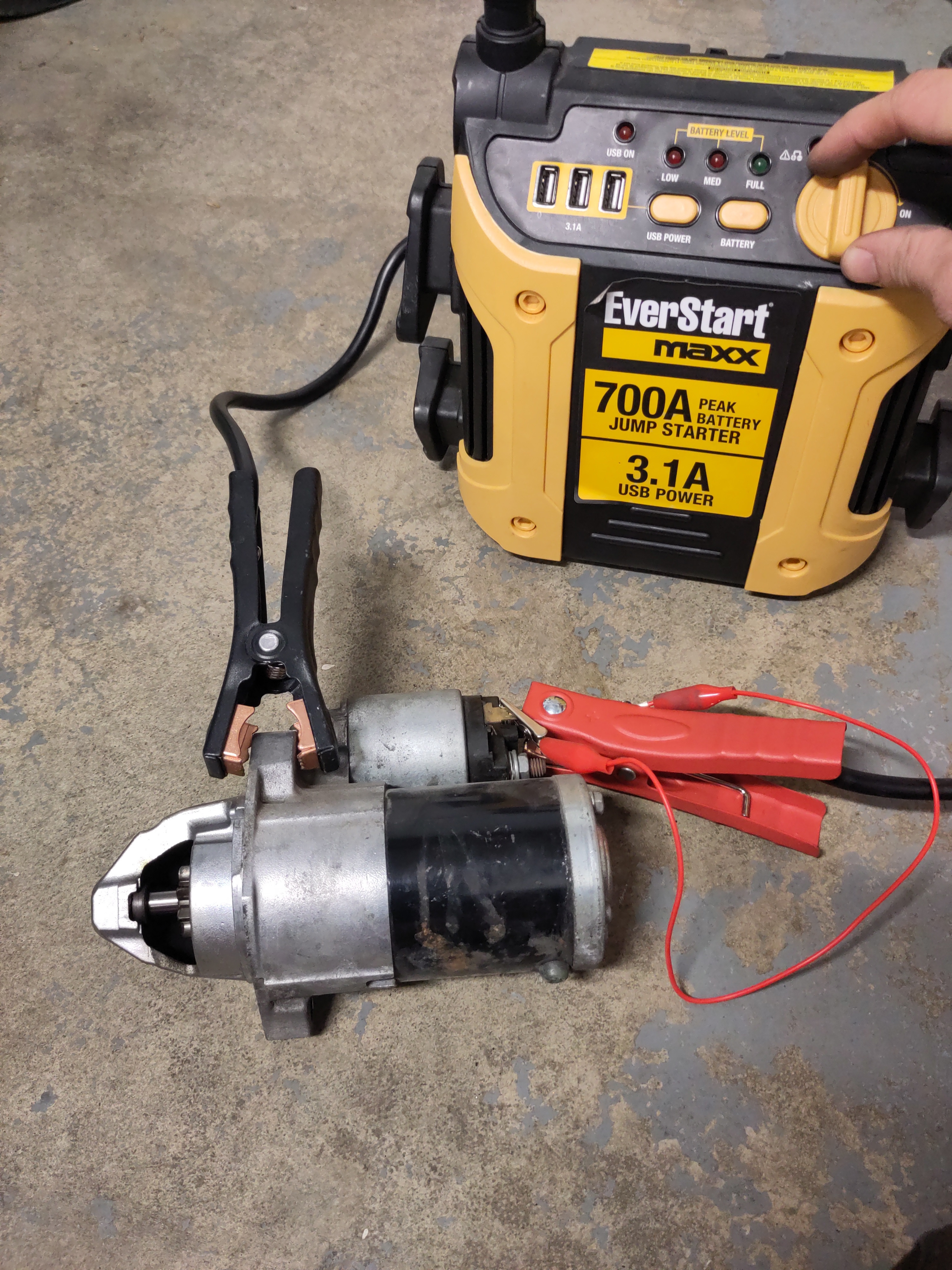
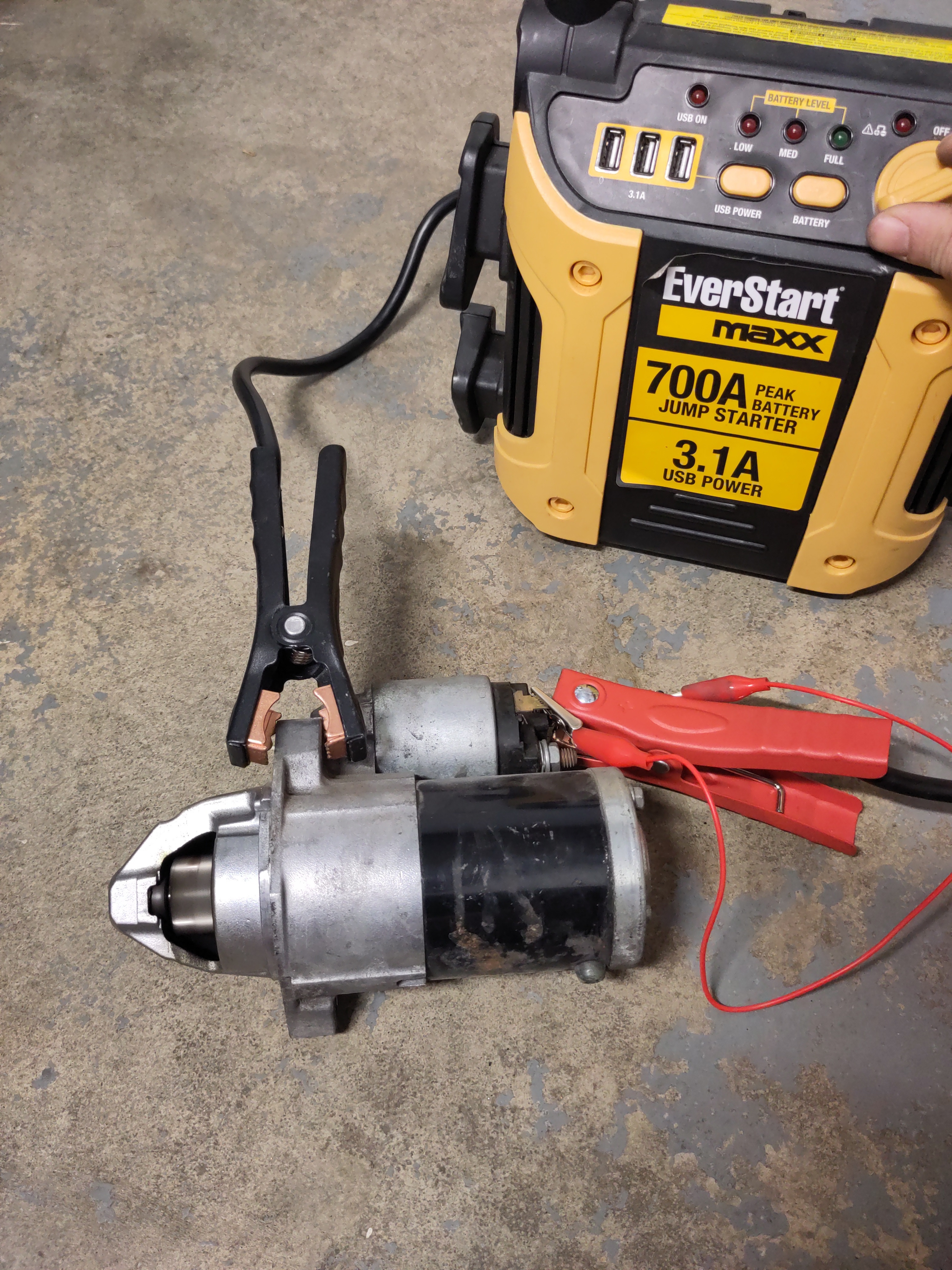
In order to test the starter you will need a battery pack and wire with alligator clips. The steps below with illustrate how to test a starter.
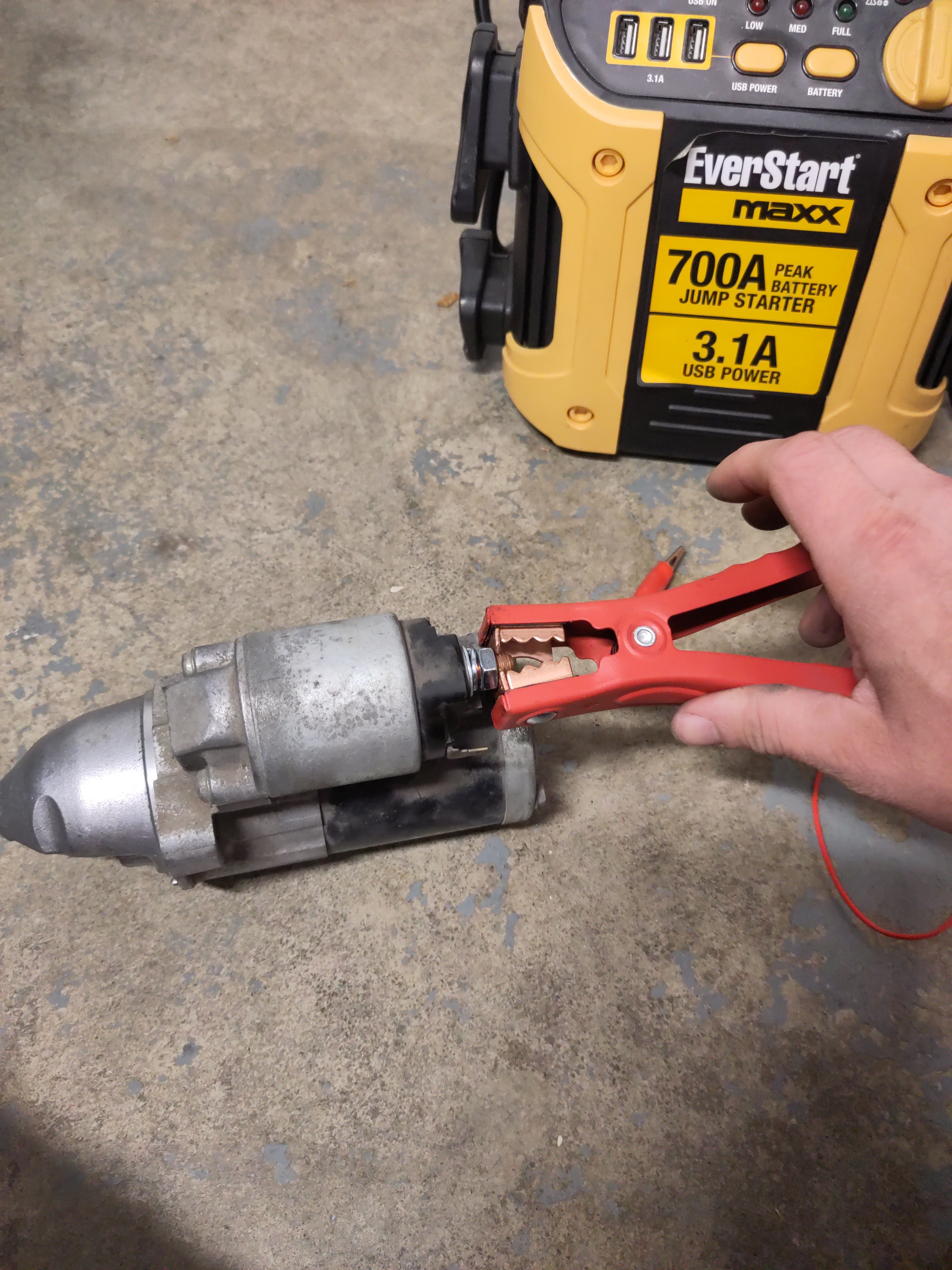
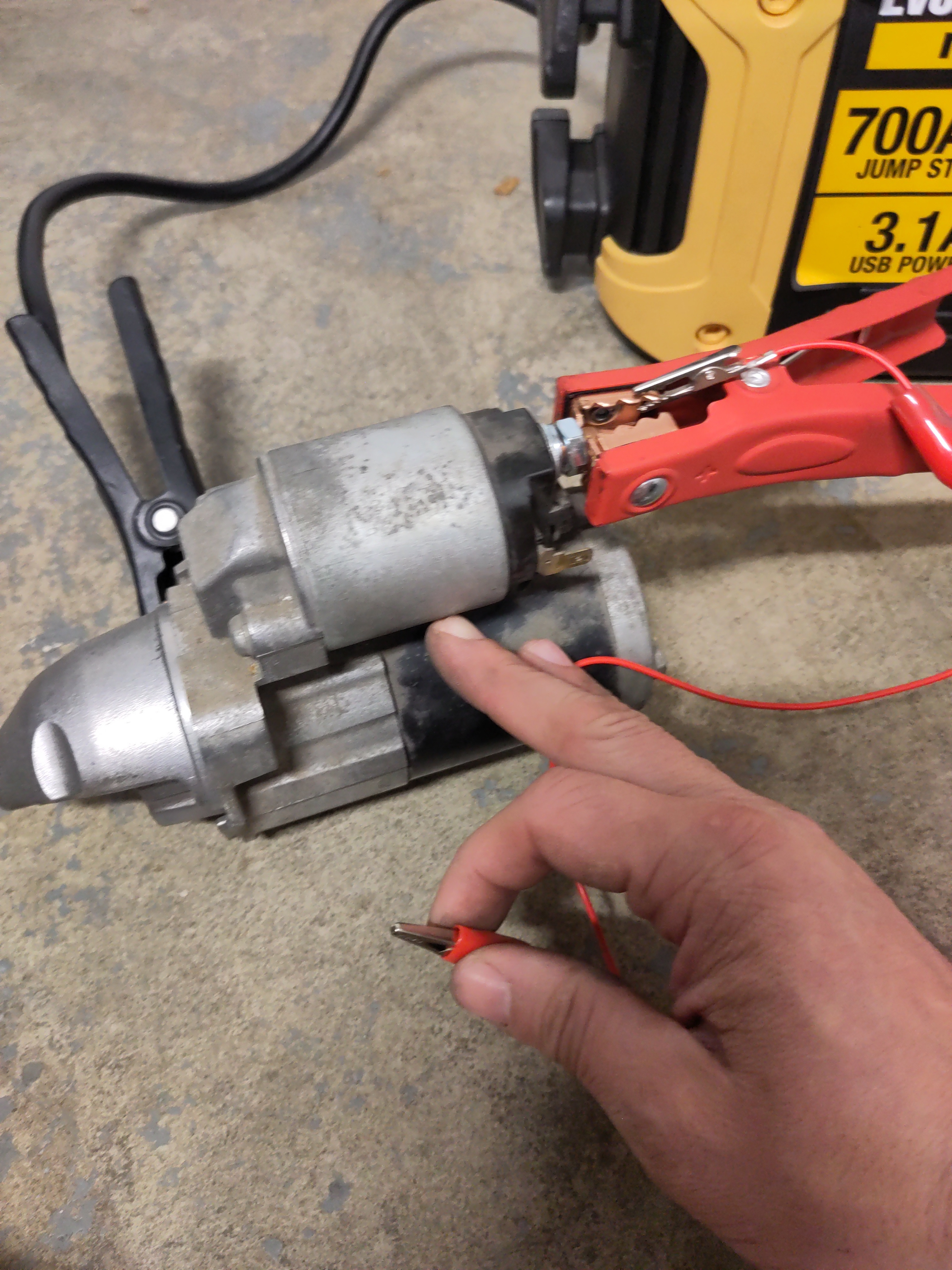
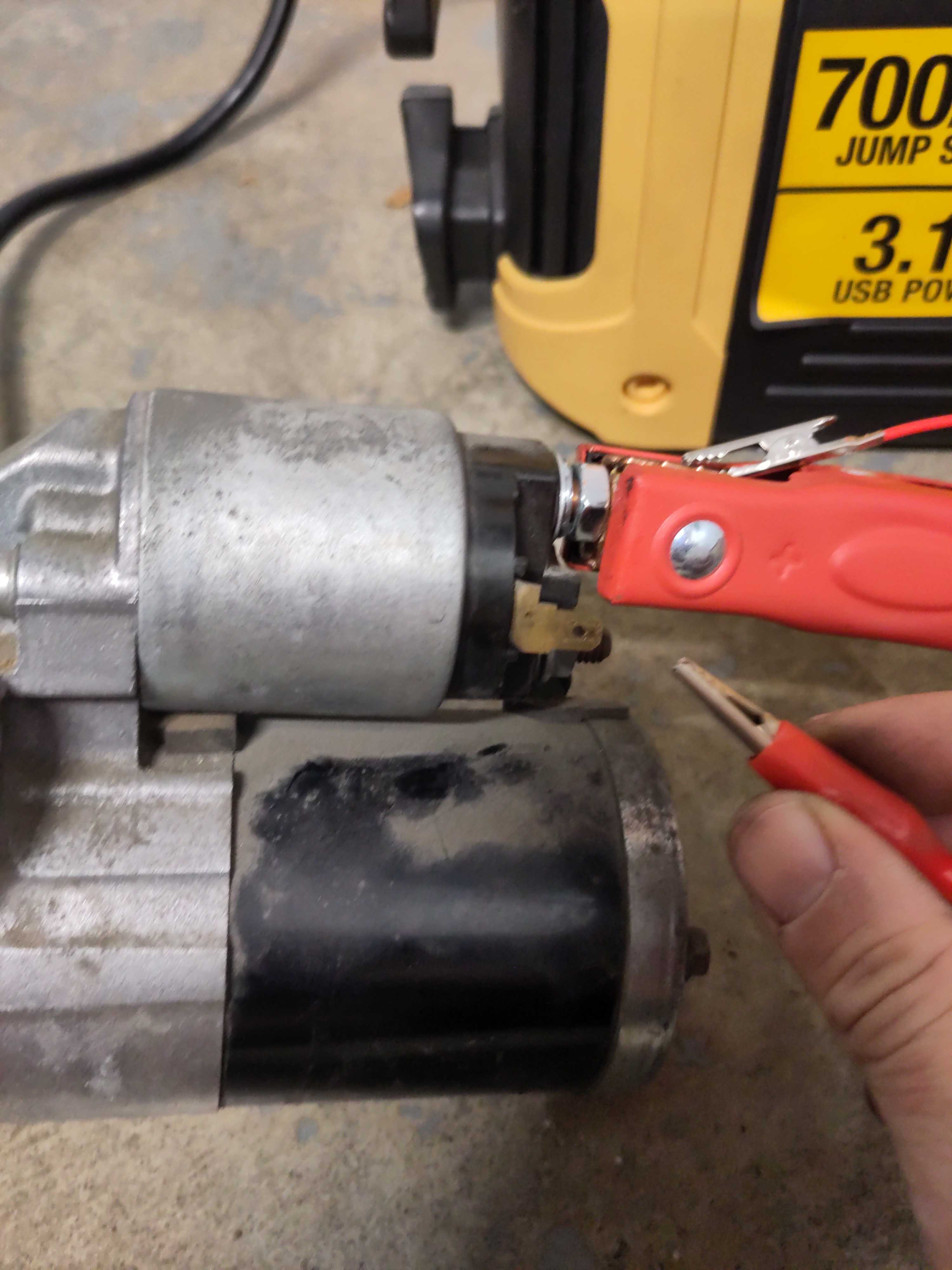
Begin by connecting the the positive jumper cable to the positive terminal of the starter.
The portion of the starter where the bolt are threaded in act as the ground for the electrical connection. So connect the ground jumper cable to the portion of the starter that has the threaded hole.
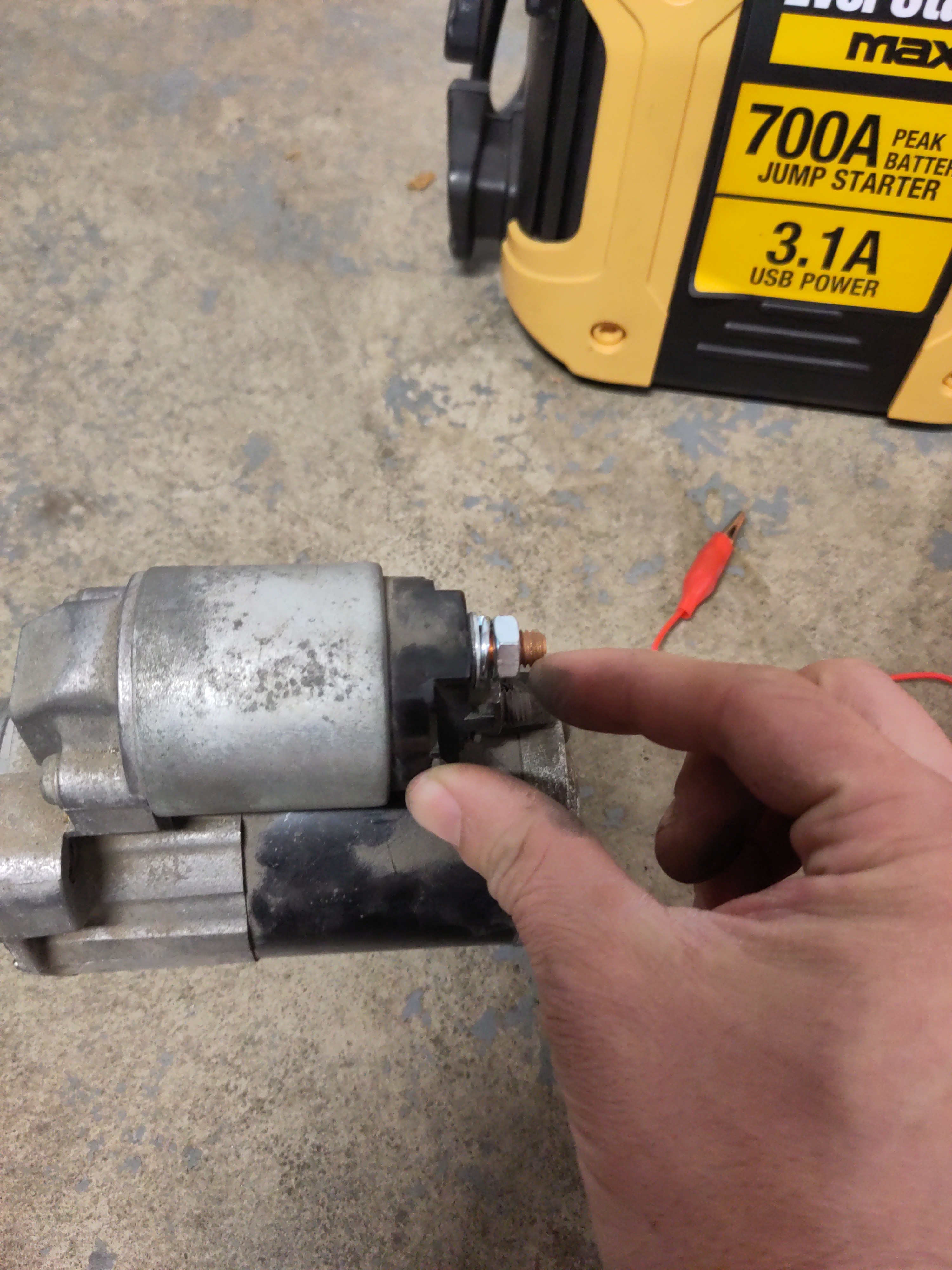
The alligator clips will be determinant to complete the circuit to give the starter power. So connecting one end the the alligator clip to the positive jumper cable connection. The other end will be attached to the male end there the signal wire located on the solenoid of the starter. See pictures below for reference.
Once the alligator clips are connected on both ends. Make sure the battery pack is turned off. Once the connections a secure, go ahead and turn on for the battery pack and it should initialize the starter. It is recommended to change the orientation of the starter and hold because it will jump when it turns on.